
Popular games for collection Taiko no Tatsujin
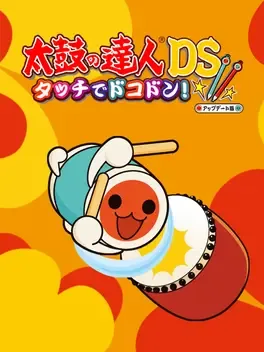
Taiko no Tatsujin DS: Touch de Dokodon is a rhythm game for Nintendo DS by Namco Bandai where you play a Taiko drum to the beat of several songs. There are optional button controls, but the main mode of control is to take two styli and tap on the touch screen, which shows the image of large Taiko drum. The two main gamemodes are Free Play and Daily Dojo. Free Play is exactly as one would expect, and Daily Dojo is a once-a-day challenge on a random song you've unlocked. There are four difficulties: Flower, Bamboo, Tree, and Demon. Demon difficulty, also known as Oni Mode, is initially hidden and must be unlocked. In addition to the actual gameplay, you can also dress up your Taiko character in silly outfits. This does not affect actual gameplay and is only a visual change. There is also a multiplayer mode available. It can be played in single-cart mode, but if an opponent has a copy of the game the outfit they have dressed their Taiko in will appear on whatever character corresponds to which player they are. The game comes with two "Bachi Pens", which are Taiko no Tatsujin-themed styli for use with the game, and is rated A on the CERO rating system (the Japanese equivalent of an E for Everyone on the ESRB rating system).
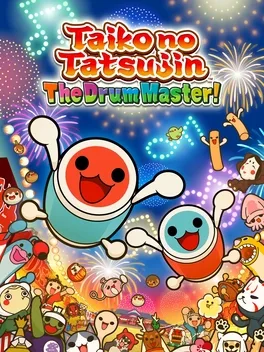
Drum out high scores by accurately playing along with 2 different notes, Don and Ka, in Taiko no Tatsujin: The Drum Master! Includes over 70 songs, local multiplayer mode, and online ranked matches. Light your drumming spirit on fire!
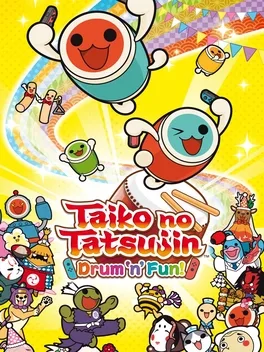
Enjoy the cult classic arcade rhythm game from Japan in the comfort of your own home! Play to the beat using your own drum with a wide variety of new songs and challenge your friends to prove who has the best taiko skills. Use motion controls to enjoy Taiko like never before! Unlock beloved characters to help you on your journey to become a legendary taiko drummer! Utilize the interactive features of the Nintendo Switch to connect, share, and play with family and friends.

A sequel to Taiko no Tatsujin 10, this new title tried to enhance the quality of life for the users by adding the Ura Oni difficulty for the expert players and the Papa Mama Support mode for the young players, it also added the ability to change the sound of the Taiko which already was a thing in the console games, and they removed the Revival Roulette to replace it with the Revival Drumroll minigame.
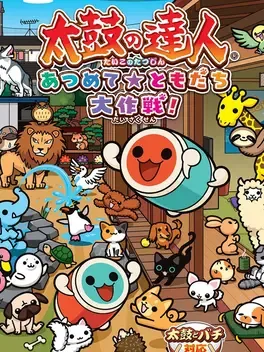
Taiko no Tatsujin: Atsumete - Tomodachi Daisakusen! is the third Taiko videogame for the Wii U home console, and the second console game to be released in occasion of the 15th Anniversary of the Taiko no Tatsujin franchise; as such, the Game + Tatacon bundle of this title also includes a set of promotional goods related to the anniversary celebrations. This installment inherits the signature multiplayer modes from the previous Wii U games (Baton Pass from Wii U Version and Intro Don! from Tokumori), with the addition of the new 'Buddy Attack' single-player mode, in which Taiko sibling Kat-Chan tries to become a popular star by befriending wild animals from the streets with music. Content unlocking through the Mekadon Gacha and DLC supports make their return, as well as the coming of Nintendo-exclusive features to the game like Miiverse support and, for the first time ever, compatibility with Nintendo's Amiibo figurines.
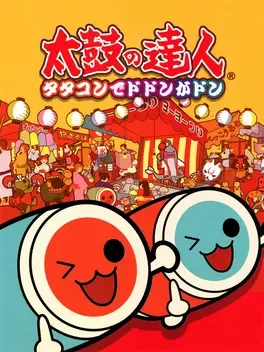
Tatacon de Dodon ga Don was the first Taiko no Tatsujin game to be released on the PlayStation 2, the first console to feature Taiko games. All the first-run copies of the game came with a Tatacon, a small plastic drum which is identical in functionality to the bigger arcade drums. As for the future console Taiko titles, the game can also be played with buttons as the alternative control scheme. Due to the first arcade versions relying on the PS1-grade Namco System 10 board, the game has PS1-grade graphics and longer load times in order to reproduce a good arcade fidelity. For the same reason, the arcade-styled Arcade mode (together with unique ending/Game Over sequences) was ported for the game, together with the (then popular) Battle mode. Arcade mode is also the staple for unlocking secret tracks, for this and the next 3 console games. The console-exclusive features added to the first console Taiko game were a Free mode for playing the songs without the song selection constrains of the Arcade mode, the fast-button pressing Don-Chan Race (the first in many Taiko games for Ps2) and the Safari Mode. Free mode also features console-exclusive options, such as custom Taiko sounds selection and an Auto-Play function for every song, which can be toggled on and off by pressing the Select button in the song selection screen. About Safari mode, it plays much like the Donkey Konga games' Survival mode, in which players clear a number of randomly-chosen songs on a set difficulty, starting with the Tamashii gauge full (and not able to recover ticks from errors). The number of songs changes according to the difficulty selected, and the Safari run is won if the Tamashii gauge isn't empty during the play by missing notes.
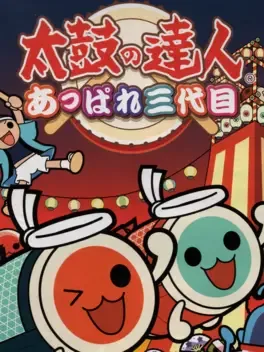
The third home version of the long running drum game Taiko no Tatsujin (A series known as Drum Master in the west). It was the last game in the home series to feature Arcade, Battle and Survival Modes. Three new minigames were added as a bonus. The game is played by hitting the red and blue circle that move from right to left as they overlap with the target market. The red circle signals that you should hit the centre of the drum while the blue means you should hit the rim. The game features 39 songs, 5 of which are secret and needs to be unlocked by playing.
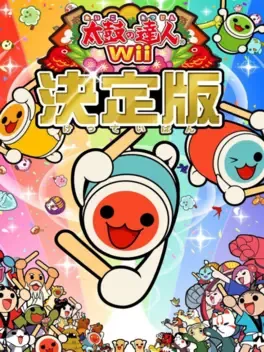
Taiko no Tatsujin Wii: Ketteiban is a rhythm / music game which was released in Japan in 2011.

A sort of "reboot" of the Taiko no Tatsujin series, which can be directly updated with an Internet connection by Namco.
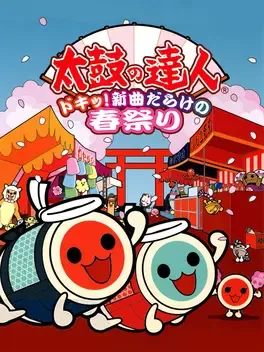
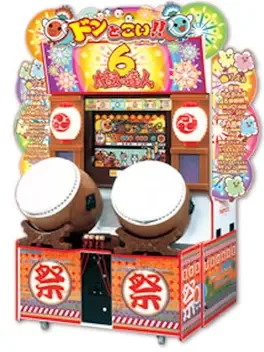
A sequel to Taiko no Tatsujin 5, featuring 32 new songs and no other notable change from its predecessor.
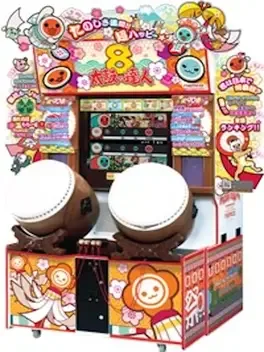
A sequel to Taiko no Tatsujin 7, featuring a new Category for Video Game Music, the new Baizoku, Sanbai, Yonbai modifiers, and a Revival Roulette after the first song failed. This game marked an important moment for the Taiko franchise and its crossover with other video game companies for their OSTs such as Nintendo and Square Enix.
Taiko no Tatsujin Arcade is a rhythm game created by Namco. The first of the Taiko no Tatsujin series, gameplay involves beating a taiko drum in time with music.
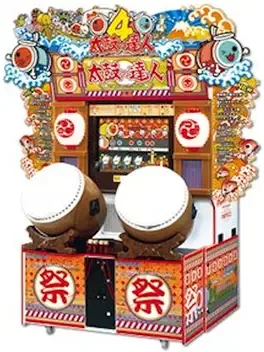
A sequel to Taiko no Tatsujin 3, featuring 33 new songs and voice samples for combos like '50 combo!' '100 combo!' etc.

Portable DX (Deluxe) comes 5 whole years and 6 Nintendo console releases after the release of the last PSP Taiko, Portable 2. The total number of initial songs is 70, and with the additional downloadable songs thereafter (like every Taiko PSP has done), it matches the massive songlists introduced on the Wii. Like the other recent games, the songlist has become a lot more geared towards Namco Originals. Portable DX is also the first console Taiko to show the total number of drumrolls made in the song, and the second console Taiko game to introduce the all new Ura Oni difficulties. Other new mechanics in the game include organizing almost all unlockables in the game into an Achievement list, and a mode called Medley Mode, in which three, five, or eight different songs are put together and played all at once. Two new gameplay modifiers were also added into the game, which randomize the notes to different degrees. The Bell note has been removed from this release and the vestigial function of the analog stick is to produce sounds for fun. ()
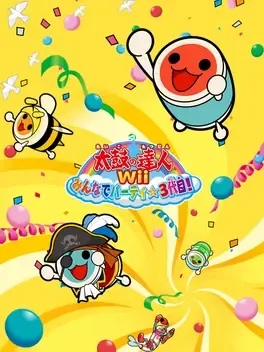
Third Taiko no Tatsujin game released on Wii, featuring ability to support up to four players and seven minigames.

Taiko no Tatsujin: Go! Go! Godaime is the fifth installment of the Taiko no Tatsujin series for PlayStation 2. This version introduces Go-Go Mode, Yam note and Invisible modifier.
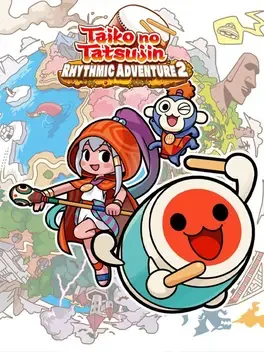
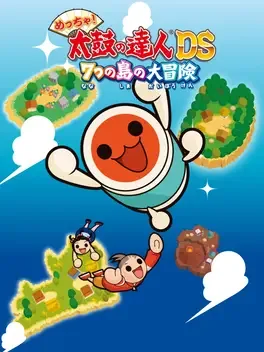
Don-chan and his friends have a great adventure in the mystery spots of the world! Find out the secrets of a mysterious phenomenon occurring around the planet and save the world!
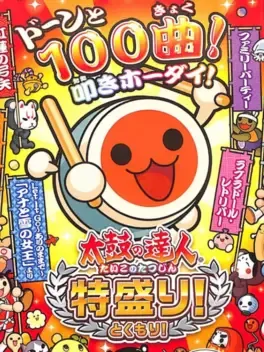
A new Taiko Drum Master game for Wii U with 100 new songs.
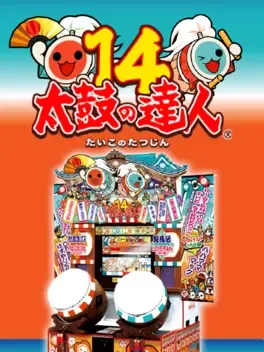
Taiko 14 is the first arcade to feature the alternate scoring method, Shin-uchi Mode, which awards points based on the number of notes you hit and not the notes you hit in a row. You can alternate between regular and Shin-uchi Mode, however the high scores for both modes are different, and Shin-uchi Mode scores are not recorded.
Taiko no Tatsujin Wii is the first Taiko no Tatsujin game released for Nintendo Wii. The game come in two favors: A bundle with the TaTaCon made for Wii console, or only the game itself.
The Taiko Drum Master rhythm game series makes its portable debut.

The 12th Taiko arcade machine, released in December 2008. Taiko 12 marked a plateau as far as development of the series was concerned- the game mechanics and graphics have been perfected over so many different versions. No major fixes or upgrades were made on this version, except for one small thing- instead of 'Taiko no Tatsujin Twelve' being announced on the title screen, it was replaced with the Japanese equivalent 'Jyuu-ni' (which also means twelve).