
Popular games built on game engine Sega System 16
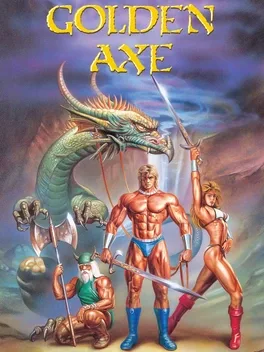
Progress is made through the game by fighting through Death Adder's henchmen, including men armed with clubs and maces, skeleton warriors, and knights. Players are able to attack using their weapon, jump and cast spells that hurt all enemies on the screen. The force of this magic depends on the number of "bars" of magic power currently available. The bars are filled by collecting blue 'magic potions' attained by kicking little sprites who then drop the potions. These sprites appear during regular levels and during bonus stages in between levels. The male warrior Ax is able to cast earth spells. The dwarf Gilius, casts lightning spells and the female warrior Tyris casts fire magic. Each character has a different number of maximum magic bars and varying ranges of attack. Various steeds known as bizarrians are found in the game. These can be ridden when the enemy rider is knocked off, or if one is found dormant. The least powerful steed is known as the Cockatrice, which can be used to knock down enemies with a swipe of its tail. The more powerful dragon, which can either shoot fireballs or breathe fire, is found later in the game.
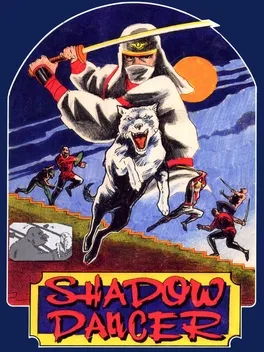
Shadow Dancer is an action platform game developed by Sega for the Sega System 18 arcade system in 1989. A port of the game was published by Sega for the Sega Master System, and ports to several home computers were published by U.S. Gold. It was the first sequel to Shinobi, alongside The Revenge of Shinobi. A similar game titled Shadow Dancer: The Secret of Shinobi was released for the Sega Mega Drive, which features an entirely different set of stages. A terrorist group is planting numerous time bombs throughout the city. The player, a ninja master accompanied by a canine partner, sets out on four missions to dismantle the bombs and destroy the criminal syndicate behind these acts.
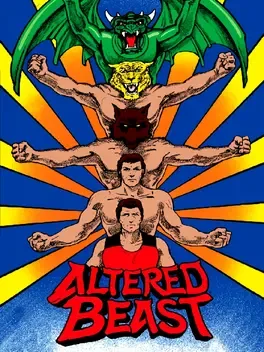
Altered Beast is a 1988 beat 'em up video game developed by Team Shinobi and published by Sega for arcades. Set in Ancient Greece, the game follows a Roman centurion who is resurrected by the Olympian god Zeus to rescue his daughter Athena from Neff, the demonic ruler of the underworld. By collecting three power-ups in a level, the player character can transform into one of five mythical beasts. In the original arcade, the end credits are interspersed with images of actors in costumes for the different characters and monsters of the game, implying the whole game was a film production.
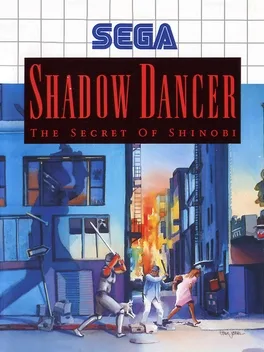
Shadow Dancer on the Master System retains a lot of the arcade game's content, but simplifies the graphics and sound to better suit the hardware. Stage layouts are slightly different, and the decision to use sprites similar in size to the arcade version means that fewer enemies can appear on screen at any one time. Sprite flicker is a common sight, and entire sections of stages are removed to save space. Unlike the arcade version, players cannot backtrack during either side-scrolling or boss sections, limiting player to a very small section of the screen during the boss fights. The most striking omission in the Master System version of Shadow Dancer is the dog as an active character, but it is still available as a game mechanic. When a valid target is onscreen, the player must crouch. While crouched, the ninja magic icon will slowly transform into a a dog head. When the icon is completely full, it will move to the target enemy's location. Pressing attack will cause the dog to appear out of nowhere and attack the enemy. If no valid target exists, the icon will not move and pressing attack while crouched will perform a normal attack. The dog can be called only three times each stage. The Master System version retains the first-person shuriken-throwing bonus rounds, but the one between the second and third stage is the same bonus round used by the Mega Drive version, which makes player to jump from a tall building and attack ninjas in a downward shoot-'em-up fashion. Like the Master System version of Shinobi, ninja magic cannot be used during boss fights. In addition to the previously mentioned problem of being confined to a small section of the screen, this makes the boss fights even more difficult than the arcade version. A small oddity, in the Master System version, Shinobi always bows to the boss before the battle.
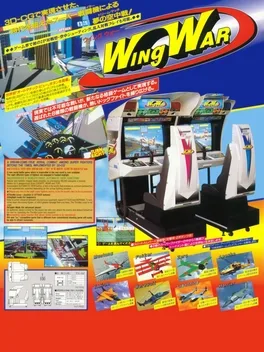
Wing War is an arcade combat flight simulator game developed by Sega AM1 and manufactured by Sega. Released exclusively to Japanese and American arcades in 1994, the game puts players in the cockpit of a variety of both historic and modern aircraft and pits them in an aerial dogfight with a second rival aircraft.
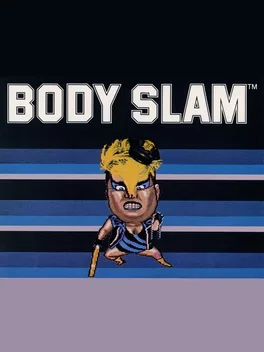
Body Slam, known in Japan as Dump Matsumoto, is a Sega System 16 arcade professional wrestling game developed by Esco Boueki and manufactured by Sega Enterprises, Ltd. Originally endorsed by professional Japanese wrestler Dump Matsumoto, the game was first released to Japanese arcades in May 1986, and was later brought to the United States later that year. One month later in June 1986, Sega R&D 2 released the similar Gokuaku Doumei Dump Matsumoto for the Sega Master System, which shares similar gameplay. Another wrestling game by designer Hiroshi Aso, Wrestle War, would be released in 1989. Body Slam is said to be the first video game to depict female professional wrestling.
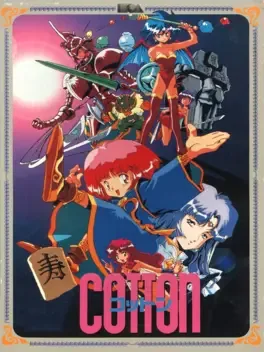
Cotton: Fantastic Night Dreams is a scrolling shooter arcade game, released on Sega's Sega System 16B Arcade system board in 1989. It is the first in the Cotton series of videogames. It was ported to both the Sharp X68000 and the NEC TurboGrafx-CD in 1993. The TurboGrafx-CD version was released on Super CD-ROM and features an enhanced redbook audio soundtrack and voice acting on the Japanese release. The game was later ported to Sony PlayStation under the title Cotton Original in 1999. The PlayStation release combines the enhanced digital CD-ROM soundtrack of TurboGrafx-CD release and the gameplay/graphics of the original Arcade version. A version was ported to the Neo Geo Pocket Color in 2000. Due to hardware limitations the Neo Geo Pocket Color features less detailed graphics and sound compared to previous versions, however it is still a faithful version of the original in terms of gameplay.