
Popular games for franchise Densha de go

Densha de Go! Pocket: Chuuousen-hen (loosely translated to "Go by Train! Pocket: Chūō Line Edition") was released on January 19, 2006, including only the Chūō Main Line. It is a split port, based on the Chuuoo Line portions of Densha de GO! FINAL.

Densha de D Lighting Stage (Train D Lightning Stage) is a three dimensional train battle game based upon Initial D, a popular manga series written and illustrated by Shuichi Shigeno. The protagonist Takumi Fujiwara along with four characters of the series will return in a fast-paced arcade style racing by using densha (Japanese train). Each train compete in unique ways and the game encourage player to "powerslide" the train to keep up their speed by drifting through a turn. There are three game modes; Dramatic Mode, a single player story mode; Battle Mode, a two player battle in split screen; Replay Mode which lets player to replay their memorable battles. Densha de D Lighting Stage is the first game of the series and was released at Comiket 78, on August 14, 2010.
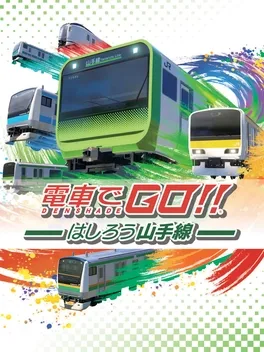
Densha de GO!! finally appears on consoles! Become a train conductor and go around the ever-popular Yamanote Line, now with the addition of the new Takanawa Gateway Station. Enjoy the best at-home train conductor experience while maintaining the the detail of the arcade version. Densha de Go!! Hashirō Yamanote-sen (loosely translated to "Go by Train!! Let's Run the Yamanote Line") is an electric train simulation game developed by Taito and released by Square Enix for the PlayStation 4 exclusively in Japan on December 3, 2020. It will be released on the Nintendo Switch on March 18, 2021. Based on the 2017 arcade game Densha de Go!!, Hashirō Yamanote-sen features the full Yamanote Line (as the original arcade version only included the southern part of it) as well as additional routes that run parallel with it (the Keihin-Tohoku Line, the Saikyo Line, the Ueno-Tokyo Line, and the Narita Express) and the part of the Chuo-Sobu Line from the arcade version. Additionally, this version includes a new objective-based campaign mode and PlayStation VR support.
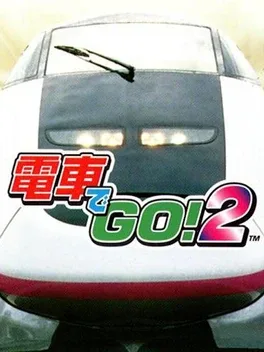
Densha de Go! 2 Kousoku-hen is a train driving simulation game. It was released in the arcades in Japan in 1998. It was ported to PlayStation, Nintendo 64, WonderSwan, Neo Geo Pocket Color, Windows, Dreamcast, and Game Boy Color. The Nintendo 64 version was titled Densha de Go! 64.
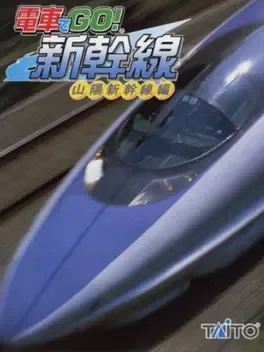
Densha de Go! Shinkansen: Sanyoushinkansen-hen (loosely translated to "Go by Train! Shinkansen: Sanyou Shinkansen Edition") is an electric train driving simulation game developed and published by Taito for the PlayStation 2 in Japan on September 20, 2001. It was later ported to the PC by Unbalance on December 13, 2002. A spin-off of the Densha de Go! series, Shinkansen focuses on the titular high-speed rail line San'yō Shinkansen (through the entire route both ways, between Shin-Ōsaka and Hakata). The game was later ported to the Wii as Densha de Go! Shinkansen EX: Sanyoushinkansen-hen (loosely translated to "Go by Train! Shinkansen EX: Sanyou Shinkansen Edition") on March 1, 2007. This version features a new "Kids Mode" utilizing the Wii Remote's motion control.

Card de Renketsu! Densha de GO! is a train simulator arcade game by Taito released on April 19, 2012 for the 15th anniversary of the Densha de GO! series. For the first time in the series, the player uses cards to compose his train.

Jet de GO! is a spin-off from the famous Densha de GO! series by Taito. Instead of trains, this title focus exclusively on flying planes. Players can take off and land with a Jetstream 31 turboprop, a mid-range Boeing 767 or a long haul Boeing 747. The game modes include Flight mode, Cruise mode and Lesson mode.
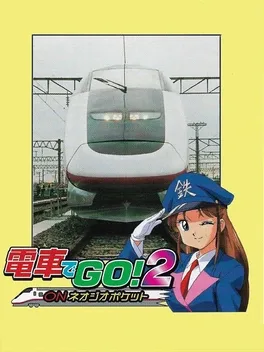
Densha de Go! 2 Kousoku-hen is a train driving simulation game. It was released in the arcades in Japan in 1998. It was ported to PlayStation, Nintendo 64, WonderSwan, Neo Geo Pocket Color, Windows, Dreamcast, and Game Boy Color. The arcade version was also ported to Neo Geo Pocket. The PS1 version was also ported to WonderSwan and Game Boy Color.
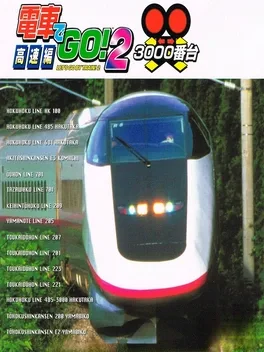
This version is a celebratory release from Taito for having 3000 active Densha de Go! 2 arcade units nation-wide in Japan, titled Densha de Go! 2 Kousoku-hen 3000-bandai. It adds eleven new routes and several new train models. Upgrade kits and new cabinets were made available in August/September 1998. This version was ported to Dreamcast and Windows PC in 2000. It also serves as the basis for 1999's Densha de Go! 64.

Jet de GO! 2 (translated 'Let's go by Airliner! 2') is an airliner simulation featuring passenger jets of Japan Air Lines (JAL). It is the direct sequel of the first Jet de GO! game that was released for PS2 and Windows.
Densha de Go! Final (loosely translated to "Go by Train! Final") is an electric train driving simulation game developed and published by Taito for the PlayStation 2 in Japan on May 27, 2004. It was later ported to the PC by Unbalance on December 17, 2004. Part of the Densha de Go! series, Final features a significantly upgraded graphics and audio, a revamped penalty system (using a point-based system from Densha de Go! Ryojou-hen and Densha de Go! Shinkansen), a combo-based scoring system, an improved Navigation System display, and unlockable route extensions. In addition to standard play, the game includes an alternate play-style where players can instead (or alongside the driver player for two-player multiplayer) act as the train's conductor. Train Conductors must open and close the train doors at the correct time, choose the next correct station to stop at, and make in-car announcements. The game includes four routes: the Yamanote Line, the Chūō Main Line, the Osaka Loop Line, and the Tōkaidō Main Line. Playable in both directions, it features the entirety of the Yamanote Line and Osaka Loop Lines, the Rapid section of the Chūō Main Line between Tokyo and Takao, and the section of the Tōkaidō Main Line between Kyoto and Kobe. This version of the game was later ported to the PlayStation Portable in piecemeal, all part of the "Densha de Go! Pocket" line of releases: - Densha de Go! Pocket: Yamanotesen-hen (loosely translated to "Go by Train! Pocket: Yamanote Line Edition") was released on September 29, 2005, including only the Yamanote Line. - Densha de Go! Pocket: Chuuousen-hen (loosely translated to "Go by Train! Pocket: Chūō Line Edition") was released on January 19, 2006, including only the Chūō Main Line. - Densha de Go! Pocket: Osakakanjousen-hen (loosely translated to "Go by Train! Pocket: Osaka Loop Line Edition") was released on March 30, 2006, including only the Osaka Loop Line. - Densha de Go! Pocket: Toukaidousen-hen (loosely translated to "Go by Train! Pocket: Tōkaidō Line Edition") was released on July 27, 2006, including only the Tōkaidō Main Line. To celebrate the series' 20th anniversary, the game was later released as a standalone plug-and-play unit on February 8, 2018 as Densha de Go! Plug & Play.

Densha de Go! Pocket lets players drive simulated commuter trains in Japan, picking up passengers and adhering to schedules. Densha de GO! Pocket: Yamanotesen-hen is a split port of the Densha de Go! Pocket line to the PlayStation Portable, all of which are based on parts of Densha de GO! FINAL: - Densha de Go! Pocket: Yamanotesen-hen (loosely translated to "Go by Train! Pocket: Yamanote Line Edition") was released on September 29, 2005, including only the Yamanote Line.
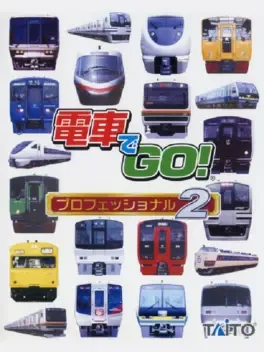
Densha de Go! Professional-shiyou 2 (loosely translated to "Go by Train! Professional Specification 2") is an electric train driving simulation game developed and published by Taito for the PlayStation 2 in Japan on October 25, 2002. It was later ported to the PC by Unbalance on April 30, 2003. The sequel to the 1999 home console entry in the Densha De Go! series, Densha de Go! Professional-shiyou, Professional-shiyou 2 features a graphical upgrade and a new set of real-life train routes: the Shōnan-Shinjuku Line, the Tsurumi Line, the Kosei Line, the Seto-Ōhashi Line, and the Nagasaki Main Line to Sasebo Line. One new feature added to the series is the ability to save and resume route progress, and to start progress from a designated station.

Densha de D: Rising Stage is the 4th entry in the Densha de D series. It's a train racing game that parodies the popular manga series Initial D.

Densha de Go! Tokubetsu-hen: Fukkatsu! Shouwa no Yamanotesen (loosely translated to "Go by Train! Special Edition: Revival! Yamanote Line of the Showa Period") is an electric train driving simulation game developed by Ongakukan and published by Square Enix for the Nintendo DS in Japan on July 22, 2010. A handheld spin-off of the Densha de Go! series (and the only one not developed by Taito, instead developed by the studio behind Train Simulator), Tokubetsu-hen utilizes the platform's dual-screen display to simulate the driver controls using the touchscreen. Celebrating the 100th anniversary of the electrified Yamanote Line in Tokyo, this entry focuses solely on that route with trains both modern (E231-500, 205, and 103) and historical (101, 72, 31, 30, and DeHa 6285). With historical trains, the route appears as it was during the 1950s. The game also includes a quiz about the Yamanote Line as a mini-game.

To celebrate the series' 20th anniversary, Densha de Go! FINAL was later released as a standalone plug-and-play unit on February 8, 2018 as Densha de Go! Plug & Play.
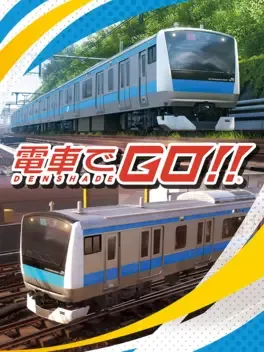
Densha de Go!! (loosely translated to "Go by Train!!") is an electric train simulation game developed by Taito and released by Square Enix for arcades (using PC-based Taito Type X4 hardware) in Japan on November 7, 2017. The first mainline arcade release of the Densha de Go! series in 14 years (after Densha de Go! Ryojou-hen), Densha de Go!! features a deluxe multi-monitor cockpit housing (with four screens, three large ones to form a panoramic view and one touchscreen to display ) resembling E231-500 series trains, and modern high-definition graphics built on Unreal Engine 4. While the game only included parts of the Yamanote Line and the Chuo-Sobu Line from the start, it received additional routes (with new vehicles) in regular bi-yearly updates (including parts of the Osaka Loop Line, the Hanshin Main Line, the Chuo West Line, and the Meitetsu Nagoya Main Line, as well as an extension of the Yamanote Line). In 2019, the game received an alternate "compact" cabinet resembling those used in the original arcade game. It also received two bonus "Fukkoku-ban" game modes, providing a faithful recreation of two of the original arcade games: one for Densha de Go! (on June 26, 2019) and one for Densha de Go! 2: Kousoku-hen 3000-bandai (on September 25, 2019). The game also received a child-friendly spin-off known as Densha de Go!! Kids, which uses a more simplistic cabinet. It later received a revamped console version for the PlayStation 4 and Nintendo Switch in 2020-2021 as Densha de Go!! Hashirou Yamanote-sen. This version is notable for having the full Yamanote Line, as well as routes parallel with it. On March 10th, 2021, the Keihein Tohoku Line was added.

Densha de D: Shining Stage is the 5th entry in the Densha de D series. It's a train racing game that parodies the popular manga series Initial D.

Densha de D: Climax Stage is the 3rd entry in the Densha de D series. It's a train racing game that parodies the popular manga series Initial D.

Densha de D Burning Stage (Train D Burning Stage) is a three dimensional train battle game based upon Initial D, a popular manga series written and illustrated by Shuichi Shigeno; and Densha de Go!, a Japanese train simulation game series originally produced by Taito. The player will compete in a fast-paced arcade style racing by using densha, or Japanese train, where each train is unique and the game encourage player to "powerslide" the train to keep up their speed by drifting through a turn. New to the game are Keihan 800-series train, nine new lines and the game also optimized to support low-spec PC. There are three game modes; Dramatic Mode, a single player story mode; Battle Mode, a two player battle in split screen; Replay Mode which lets player to replay their memorable battles. Densha de D Burning Stage is the second game of the series and was released at Comiket 80, on August 4, 2011.
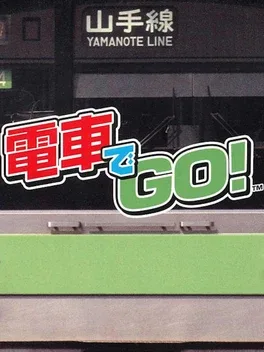
Densha de GO! is a 1997 train simulator arcade game developed and published by Taito in Japan. Players are tasked with driving a train, adhering to the schedule and obeying signals and speed restrictions. It features real-world train lines from Japan, including the Yamanote Line and Keihin-Tohoku Line. The game was ported to the PC, Sega Saturn, and PlayStation. The concept for Densha de Go! was inspired by designer Akira Saito's personal fascination with Japanese train lines and railroads. He wanted to create a game that allowed players to familiarize themselves with driving a train. The controls were his primary focus as he wanted them to be accurate and responsive, and to mimic the controls of a real train—his father worked for the Kyoto City Transportation Bureau Facilities Division, which made this easier to accomplish. Saito included real-world railroads and trains to appeal towards other railroad enthusiasts, thinking that it could also attract more "ordinary" players for its realistic, familiar theme. As arcades at the time were dominated primarily by racing and fighting games, he believed its unique concept could make it stand out. Densha de Go! is among Taito's most successful games, preceded only by Space Invaders. The PlayStation version sold over one million copies. The game was well-received by critics for its controls, attention to detail, and unique concept. Some felt that its home releases lacked enough content and had poor visuals. It was followed by a long series of sequels, spin-offs, and reimaginings, beginning with Densha de Go! 2 in 1999.
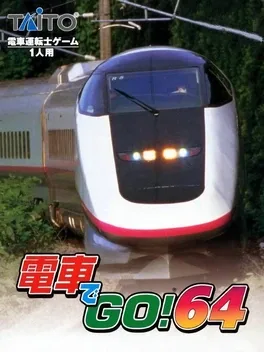
The Nintendo 64 version of Densha de GO! 2 Kousoku-hen was released as Densha de GO! 64. It added both a new Beginner mode and Voice Recognition Unit compatibility.

A spin-off of the Densha de Go! series, Shinkansen focuses on the titular high-speed rail line San'yō Shinkansen (through the entire route both ways, between Shin-Ōsaka and Hakata). The game was later ported to the Wii as Densha de Go! Shinkansen EX: Sanyoushinkansen-hen (loosely translated to "Go by Train! Shinkansen EX: Sanyou Shinkansen Edition") on March 1, 2007. This version features a new "Kids Mode" utilizing the Wii Remote's motion control.
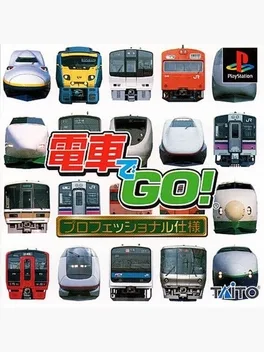
A train simulation game by Taito featuring the lines from Densha de Go! 1 and 2, as well as some Kantou area portions of the Toukaidou Line. Some of the strictness of the previous games was reduced through a number of features, including the addition of a panel at left which allowed the user to see a map of the upcoming track segment, including showing speed limits, which greatly reduced the required amount of track memorization, and allowed the player more time to react. The overall reduction of strictness in the game reflected Taito's shift in emphasis from arcade to home-play versions as time went on.