
Popular games for franchise Kamen Rider
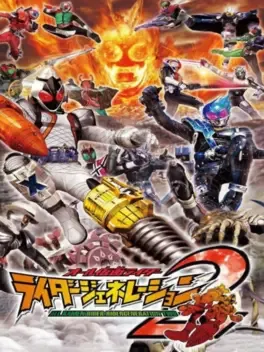
All Kamen Rider: Rider Generation 2 is the sequel to the 2D Beat 'Em Up sidescoller video game, All Kamen Rider: Rider Generation, published by Bandai Namco. It was released on August 2, 2012 for the Nintendo DS and the Sony PSP.
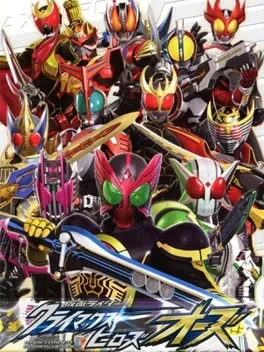
Kamen Rider: Climax Heroes OOO is a Japanese fighting game developed by Eighting and Bandai Namco Entertainment for the PlayStation Portable and Nintendo Wii. Serving as the sequel to Climax Heroes W, it is the third installment of the Kamen Rider: Climax series and features all Heisei-era Riders up until OOO as playable characters. A sequel featuring Fourze was released in 2011.
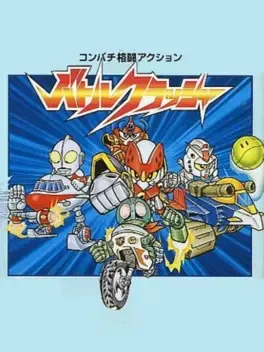
Battle Crusher is a fighting game released on the Game Boy.
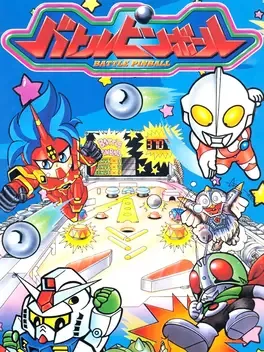
Battle Pinball is a multi-table pinball game exclusive for the Super Famicom and part of Banpresto’s "Compati Hero Series" that brings together the licenses for Ultraman, Kamen Rider and Gundam. The game contains four tables, each themed to a different hero: Kamen Rider, who fights in dusty wastelands with a number of his recurring enemies; Ultraman, who fights in a city against various kaiju; Knight Gundam, who fights in space; and Banpresto’s own original character Fighter Roar, whose stage is set under the ocean. Each table also has three screens, each with their own set of paddles, and the player attempts to earn highscores from the various features on each table.
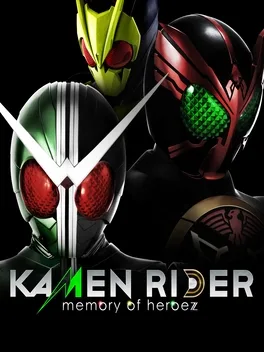
Kamen Rider: Memory of Heroez is a much more evolved Kamen Rider experience than previous console titles. The player must battle while cleverly operating form changes and utilizing gadgets that have appeared in the Kamen Rider series.
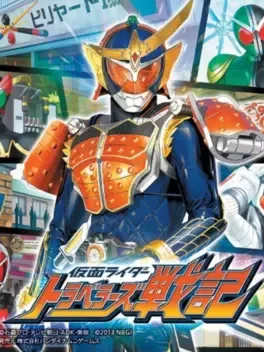
Kamen Rider: Travelers Senki is an action-adventure brawler based on the Kamen Rider franchise.
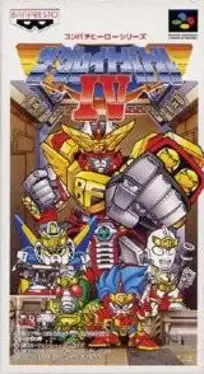
The Great Battle IV is the fourth entry in Banpresto's Compati Hero series for the Super Famicom. The game is a crossover action game title involving the characters from Kamen Rider, Ultraman, and Mobile Suit Gundam franchise respectively. Gameplay is similar to Mega Man X.
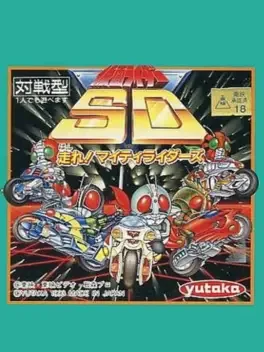
Race against generations of Kamen Rider! -Kamen Rider 1- -Kamen Rider 2- -Kamen Rider V3- -Kamen Rider Riderman- -Kamen Rider X- -Kamen Rider Amazon- -Kamen Rider Stronger- -Kamen Rider Skyrider- -Kamen Rider Super-J- -Kamen Rider ZX-
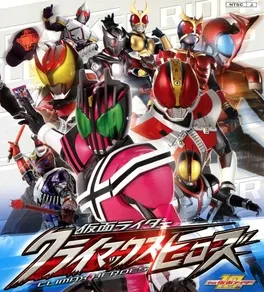
Kamen Rider: Climax Heroes is a 3D crossover fighting game featuring the heroes of 10 different Kamen Rider TV series, from Kuuga through to Decade. The story is set in the Decade universe, where the worlds of the other nine Riders are all combining into one, and they must work together to save their worlds before they are completely destroyed. The game plays much like other 3D fighters such as Tekken, with the major addition being the so-called "Form Change" system that allows each Rider to transform during battle, and even in the middle of a combo. The main story mode is "Decade Mode", where the player must complete various missions with different characters to proceed through the story. There are also standard Versus, Survival, and Training modes. The game also includes a simple control option for younger players.
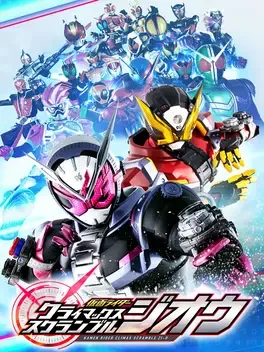
Kamen Rider: Climax Scramble, is a Japanese fighting game developed by Eighting and Bandai Namco Entertainment exclusively for the Nintendo Switch. Serving as the sequel to Kamen Rider: Climax Fighters, it is the second installment of the Climax Fighters reboot and the seventh overall installment of the Kamen Rider: Climax series. Celebrating the 20th anniversary of the franchise, the game features all the Riders within the Heisei-era that ended with Zi-O as playable characters.
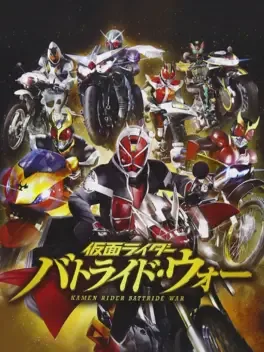
Kamen Rider: Battride War is a video game based on the Kamen Rider Series, released for the PlayStation 3 on May 23, 2013. Done in the style of Dynasty Warriors, the player controls one of the Kamen Riders as he battles through a series of enemies. The game mainly features the protagonists of the Heisei era of Kamen Rider, starting with 2000's Kamen Rider Kuuga and featuring up to 2013's Kamen Rider Wizard. Showa-era Kamen Riders were originally meant to be released as downloadable content, but only two alternate versions of characters were released instead. A limited edition of the game was released that has a soundtrack that includes the original theme songs from the TV series and films.
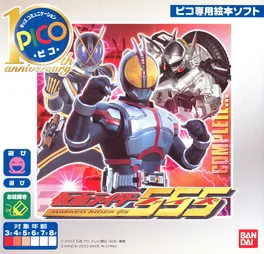
Kamen Rider 555 (2003) is a Miscellaneous game, developed and published by Bandai, which was released in Japan in 2003.
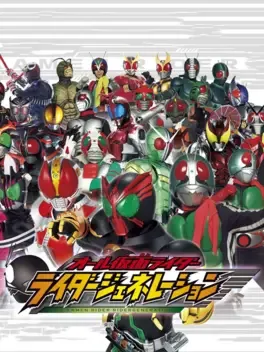
All Kamen Rider: Rider Generation is a 2D Beat 'Em Up sidescoller published by Bandai Namco for the Nintendo DS. It was released on August 4, 2011. It was followed by a sequel the next year, All Kamen Rider: Rider Generation 2.
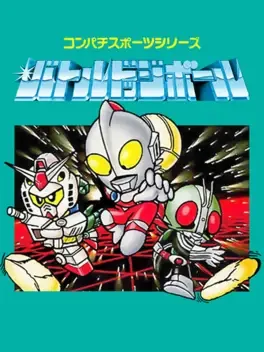
A crossover combat dodgeball game featuring characters from Mobile Suit Gundam, Ultraman and Kamen Rider. Similarly to Technos's Super Dodge Ball, each combatant has a health meter which depletes whenever they are hit by the dodgeball. Stronger throws cause more damage and once a character's HP is depleted, they leave the arena.
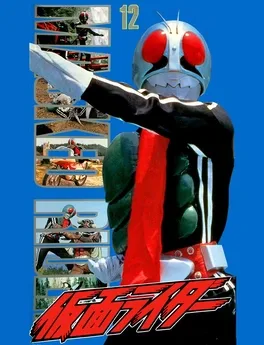
Kamen Rider is a beat 'em up developed by Sun L and published by Bandai for the Super Famicom platform. It is based on the Kamen Rider tokusatsu TV show, specifically the very first incarnation which ran between 1971-1973. The player assumes the role of Takeshi Hongo, the first Kamen Rider, as he fights through the minions and kaijin (human-sized kaiju) of the evil organization Shocker in a series of brawler stages not unlike Final Fight or Double Dragon. The game can also be played co-operatively with a second player who plays as Hayato Ichimoto: the second Kamen Rider. At any time the two players can transform into their Kamen Rider personas, necessary for delivering the final blows on bosses. Kamen Rider was only released on the Super Famicom in Japan.
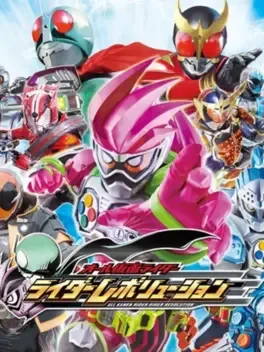
All Kamen Rider: Rider Revolution is a 2D beat ’em up side-scroller and the sequel to the DS game All Kamen Rider: Rider Generation 2, as well as the third entry in the All Kamen Rider Series. The game delivers fast, combo-driven close-range combat as you take on stages with multiple riders, each bringing distinct abilities to your fighting style.
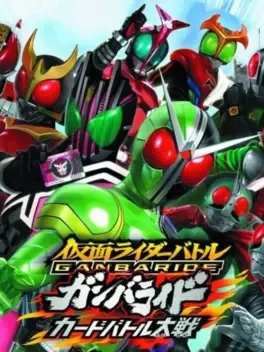
Kamen Rider Battle: Ganbaride Card Battle Taisen is a modified port of the arcade game Kamen Rider Battle: Ganbaride.
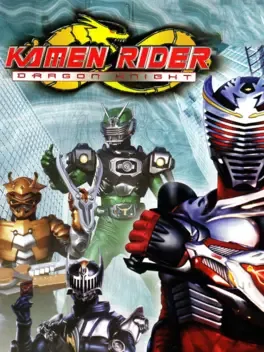
Play as all 13 Kamen Riders from the Kamen Rider Dragon Knight TV series, each with their own unique Contract Beasts, Advent cards, and special abilities. More than 65 exciting missions on Ventara will test the skill of your Kamen Riders. Battle head to head with your favorite Kamen Riders in a unique battle system utilizing Contract Beasts and Advent cards. Earn extra Advent cards and unlock additional special abilities that could be used on multiple game modes. Simple but versatile controls allow players of all skill levels to pull off their favorite Kamen Rider moves from the show. This game was released only in USA.
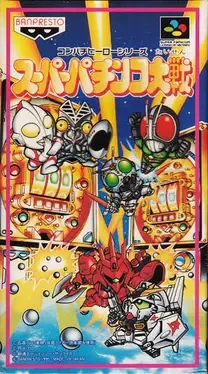
Super Pachinko Taisen is a Miscellaneous game, published by Banpresto, which was released in Japan in 1995.
Hit-Point's follow-up to Neko Atsume has players collecting the heroes and villains of the famous tokusatsu franchise.
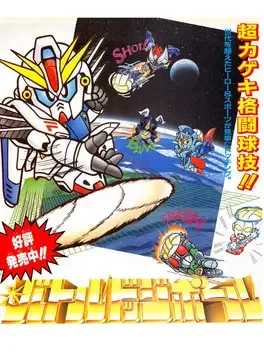
Battle Dodge Ball is a part of the Japanese exclusive Compati Hero Series. Gundam, Kamen Rider V3, and Ultraman Taro are the main representatives of the 'heroes' side of the six teams in Battle Dodge Ball, with Zeong, Ika Devil, and Zetton rounding out as the villains. The general gist of the game is that you can choose one of the six teams. You then fight each of the other five teams once per round in a short dodgeball game, two-on-two. Unlike normal dodgeball, you are not knocked out with a single hit. Rather, in Battle Dodge Ball, each character has a specific amount of HP. Once he takes enough hits to lose all his HP, he is out of the match. The game also adds an RPG element in the ability to gain experience at the end of a match, win or lose, which can then be used to power up stats of your team's players.
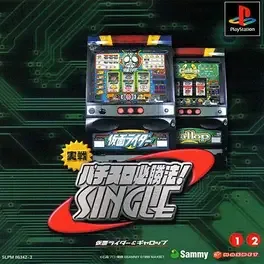
A compilation disc featuring horse racing and Kamen Rider-themed Pachi-slot games