
BananaTron
Buy
Could be interesting
Players attempt to hit targets with the bottom of a constantly swinging pendulum.
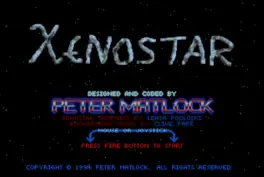
Xenostar is a Sinistar-inspired released for the Amiga from 1994.
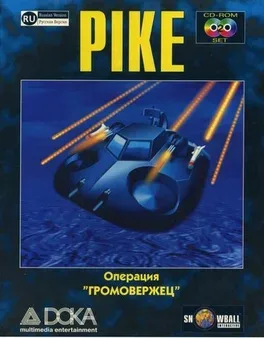
A Russian language top-down shooter.
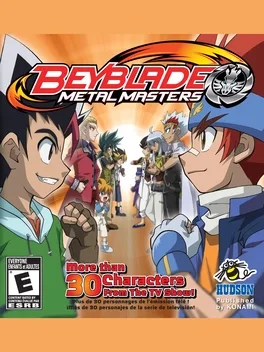
The fourth Nintendo DS entry in the Beyblade: Metal Masters series.
A Pang arcade clone.
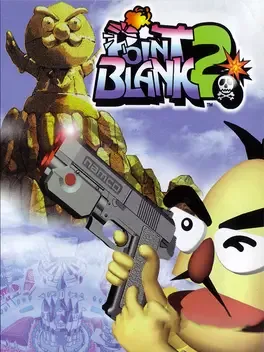
Point Blank 2 is the sequel to the now classic arcade game Point Blank, which was converted to the PlayStation in 1998. Using the Namco built GunCon (an arcade-like light gun), it offers 70 new shooting galleries, different party modes and a new single-player game.
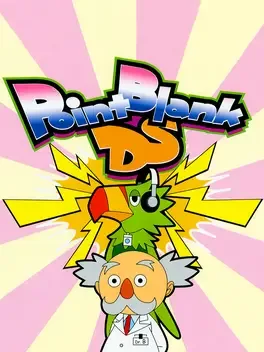
Point Blank DS turns your stylus into a light gun in this port of classic arcade game
Super Tetris 3 is yet another version of the famous soviet puzzle game. However, despite what the title may suggest, contained within are actually four different versions of Tetris: Tetris Classic, Familiss, Sparkliss, and Magicaliss. Tetris Classic, of course, is the basic version of the game, which comes with an endless mode and a 25-line "standard" mode. Familiss, as the name might suggest, is a family mode for up to four players simultaneously. Sparkliss, meanwhile, is very similar to Bombliss from Super Tetris 2, only with a medieval fantasy theme and different explosion patterns. Sparkliss includes both a stage mode and a puzzle mode. The most unique mode is Magicaliss, which has never shown up on any other version of Tetris. In Magicaliss, pieces come in three basic colors, and by rotating the piece, the player can choose between them. Creating a line entirely out of one color will clear all blocks on the screen of that color. There are also grey pieces, which can only be cleared by creating a line made entirely from one color, which will cause all grey blocks on screen to become that color. There are also rare rainbow pieces which will act as any color. Besides these additions, the game itself is basic Tetris. Tetris Classic, Sparkliss, and Magicaliss can also be played in a two-player battle mode, besides the four-player Familiss mode.
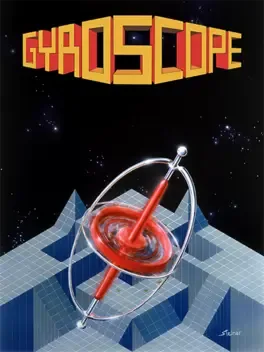
Gyroscope is based on the Atari arcade game Marble Madness, the gameplay is very similar except the player controls a spinning gyroscope rather than a marble. The game is presented in isometric 3D. The player must guide the gyroscope from the top of the course to the bottom within an allotted time limit. If the gyroscope topples off the edge, a life is lost. Hazards on the course include potholes, aliens and glass slopes which cause the gyroscope to spin in random directions. There are five courses comprising four screens each. The gyroscope had to land on a marked square to complete each level.
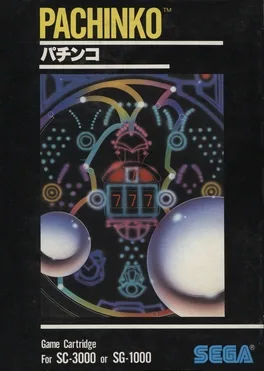
Press 1 on the alpha-numeric keyboard. A giant Pachinko game appears on your TV. You and your opponent are at the lower part of the screen. The digital readout scoreboard will appear at the bottom of the screen when play begins. The left hand control maneuvers the player at the left. The right hand control maneuvers the player at the right. Push the joystick left to go left. Push it right to go right. You can play another person or the computer. To signal the computer you're in the game, press the action button or move the joystick of your hand control in any direction. If the computer does not get a response from either of the hand controls, it will play by itself. Each of the players on the screen has an energizer. Press the action button to flip up your energizer and hit one of the balls. When you hit the ball with your energizer, it will change to your color and rocket back into play. If your energizer is completely raised when it hits, the ball will continue its same horizontal direction. If your energizer is not completely raised, the horizontal direction of the ball is reversed. A player will move at one-half normal speed when the action button is depressed. If a ball hits a player, it will begin to lose its energy. If your opponent's ball hits the rotor at your side of the screen, the ball will change to your color. If your ball hits your opponent's rotor, the ball will change to your opponent's color. The Magic Mountain is centered at the bottom of the playing field. If you bounce the ball off the Magic Mountain, the numbers in the cups will change. You have a better chance of scoring in the cups on your side of the screen, so it's good strategy to get higher numbers in the cups on your side and lower numbers in the cups on your opponent's side. CAUTION! BEWARE OF THE TROUBLESHOOTER! He's the unpredictable, uncontrollable spoilsport who keeps running back and forth across the center of the screen. The Troubleshooter is a lot of trouble because he keeps trying to take your ball out of play and shoot it over to your opponent. The game ends at 100 points or any pre-agreed multiple of 100 points. You can also play against the clock. To play again, press the RESET key on the alpha-numeric keyboard and then press 1.