


Buy
Could be interesting

Blood Bros. is a 1990 arcade game developed and published by TAD Corporation in Japan and Europe, while it was later published in North America by Fabtek. It is a spiritual sequel to Cabal, with almost identical mechanics. A bootleg of this game is known as West Story. In 'Blood Bros., two blood brothers, a cowboy and an Indian, team-up to hunt down "the most wanted outlaw in Dodge City," Big Bad John. The gameplay mechanics are extremely similar to TAD Corp.'s earlier machine, Cabal, however this game did not seem to appear as a trackball-controlled variant. The player's characters are seen from behind. Some screens feature protective walls (which can get damaged and shattered by enemy fire). The players have limitless ammunition for their primary gun, but a limited number of sticks of dynamite, with which they must fend off enemy troops. An enemy gauge at the bottom of the screen depletes as foes are destroyed and certain structural features of the screen (usually the ones that collapse when destroyed, rather than simply shattering) are brought down. At the successful completion of a level by fully depleting the enemy gauge, all the remaining buildings onscreen collapse and the player progresses to the next stage, reprising the amusing "victory dance walk" into the horizon from Cabal. Boss fights, however, start from the beginning if a player dies. Power-ups appear from time to time, being released from objects destroyed onscreen or special characters who may run across, such as the small Indian Chief figure or warthogs. Points and weaponry can also be dispensed from the tin can, if you shoot it into the air and juggle it with subsequent shots. Some power-ups give special weapons with increased firepower, others grant extra dynamite or additional points. Two players could play this game, cooperatively, simultaneously.

A great commander ruled an eastern plain for a long time, but his mind completely changed one day. He formed a mysterious army under his command and took several women as hostages to his palace. His evil power extended to his neighbouring countries and the princess of western country, fell into his hand.

Gather up your posse of friends, build a team, and kick some butt in the best looking multiplayer third person shooter for mobile. This intense online bullet fest offers the deadliest weapons in the galaxy to aid in your quest for glory...
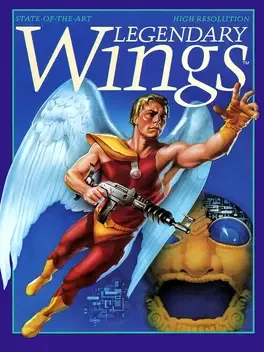
Legendary Wings is a fantasy-themed shoot-'em-up game released by Capcom as a coin-operated video game in 1986. The player takes control of a young soldier equipped with magical wings who must save the world from a malfunctioning supercomputer. Legendary Wings is set in a distant future where an alien supercomputer named "Dark", which has been helping human civilization achieve a new state of enlightenment since ancient times, has suddenly rebelled against mankind. Two young warriors are given the Wings of Love and Courage by the God of War Ares in order to destroy Dark and ensure mankind's survival. The coin-op version of Legendary Wings can be played by up to two players simultaneously, with a second player being allowed to join the game at any time or even continue after a game over. The game's controls consists of an eight-way joystick and two buttons which changes depending on the context. The game consists of five areas with two different playing styles: the first segment in each stage is a top-view vertical scrolling segment in which the player flies across the sky, shooting at airborne enemies with their gun while dropping bombs at ground enemies, in order to reach the palace at the end of segment. When the player defeats the guardian and gains entrance to the palace, the game switches to a side-scrolling perspective, in which the player moves towards their goal on foot (by walking, crouching, and climbing ladders, as well jumping) until reaching the boss at the end, in which the player character will begin to fly with their wings again. In addition to the regular levels there are two optional levels that are accessible from the vertical-scrolling segment: a trap level in which the player is forced to escape from if they're sucked by the giant mechanical face on each area; and a hidden bonus level where the player can obtain various treasure chests to increase their score.

A vertical-scrolling shoot-'em-up from Face for the PC Engine. It was never released outside of Japan. It was eventually followed by a sequel, Hanii on the Road. Hanii in the Sky is a shoot-'em-up by Face, an obscure PC Engine developer best known in the west for Money Puzzle Exchanger. The player controls the eponymous Hanii, a sentient haniwa figurine, as they shoot down legions of demonic spirits and youkai in the air. He is set to this task by ancient Japanese deity Izanagi, with the ultimate goal of rescuing his wife/sister deity Izanami. The chief feature of Hanii in the Sky is the protagonist's ability to change the direction of their weapon, allowing the player to shoot in eight different directions total. This is often required to defeat enemy waves emerging from all sides of the screen as well as the fast-moving bosses. The player can also upgrade Hanii's weaponry, allowing him to fire in more directions simultaneously, as well as purchase health refills and other useful items from Izanagi. Hanii in the Sky was eventually followed by a sequel: Hanii on the Road. Unlike Sky, Hanii on the Road is more of a ground-based auto-scrolling action platformer with lane-switching.

Originally titled "Fantasy Zone Gear: Opa Opa Jr. no Bōken", this game is technically a sequel to the first Fantasy Zone, but got released under the same name outside of Japan. Like the other Fantasy Zone titles, this is a side-scrolling shooter where you can fly through the levels in both directions, with a boss fight waiting after you destroyed all "base" enemies (they are bigger than the regular enemies and static). Along the way you can upgrade your ship in shops, if you collect enough coins from destroyed enemies.

Retro tank battles with a modern shine! Featuring 4 player PVP, couch co-op, destructible environments, 9 game modes, and more.
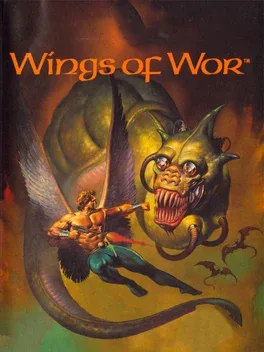
Gynoug, known in North America as Wings of Wor, is a 1991 scrolling shooter video game developed by Masaya and published by NCS Corporation for the Sega Genesis. The game was released in North America and Europe in 1991 and in Japan on January 25, 1991, and re-released on the Wii Virtual Console exclusively in Japan on May 20, 2008.
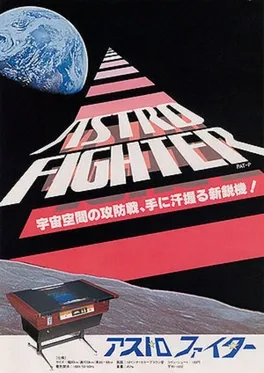
The game of Astro Fighter consists of 4 waves and a refueling stage, which are then repeated with increasingly higher difficulty. The player's task is to eliminate the four successive waves of different types of attacking craft, while avoiding being hit by missiles and bombs, and then refuel by shooting the 'GS' ship before repeating the process. The player starts with 3 lives and receives a bonus life on reaching a score of 5000. 300 bonus points are received for shooting each 6 falling bombs and for 950 for hitting the GS ship accurately on the first shot. A very large bonus of 10,000 is given for getting through 4 waves and refueling by using exactly 2 shots more than the minimum needed. As the higher levels of Astro Fighter are difficult to survive consistently, even for the best players, the highest scores have been achieved by the achieving the 10,000 bonus deliberately.
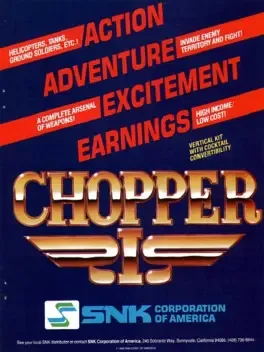
Chopper I is a 1988 arcade hall video game, developed by SNK. The objective of this top-down game is to infiltrate enemy territory and essentially destroy all objects. The game can be played with 1 or 2 players; both players, each occupying one helicopter, play simultaneously.