
Black Out


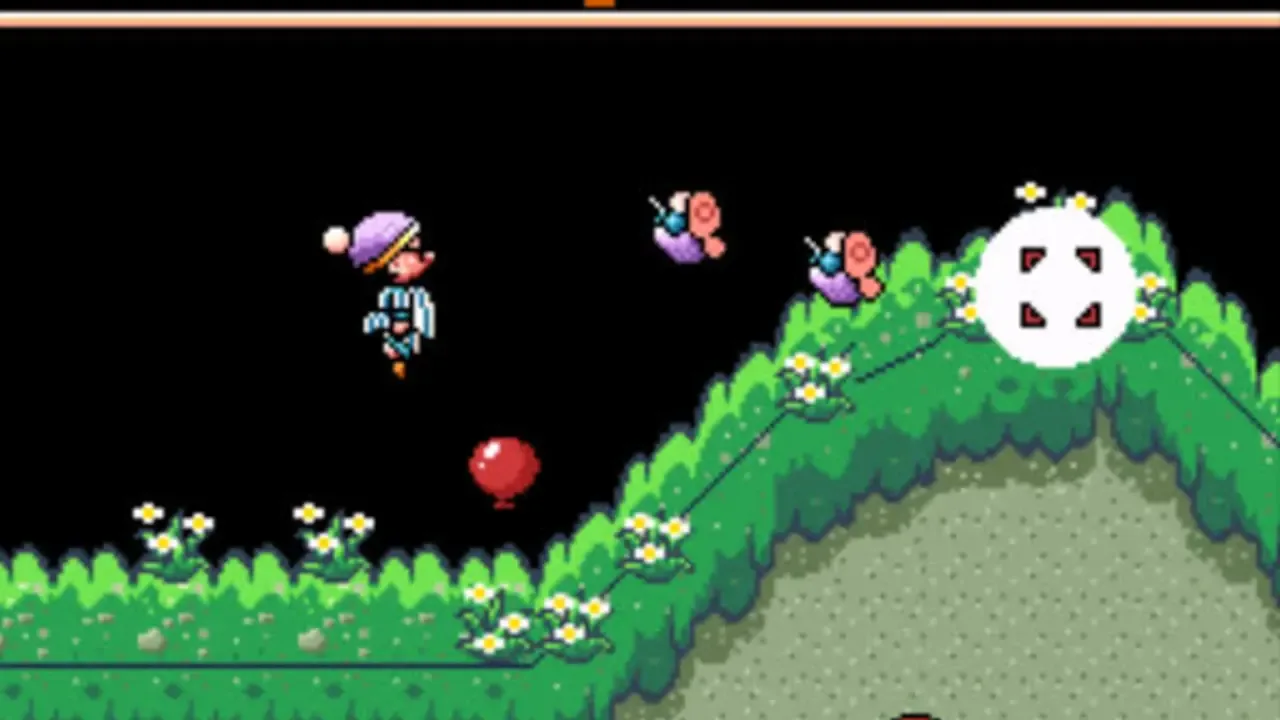
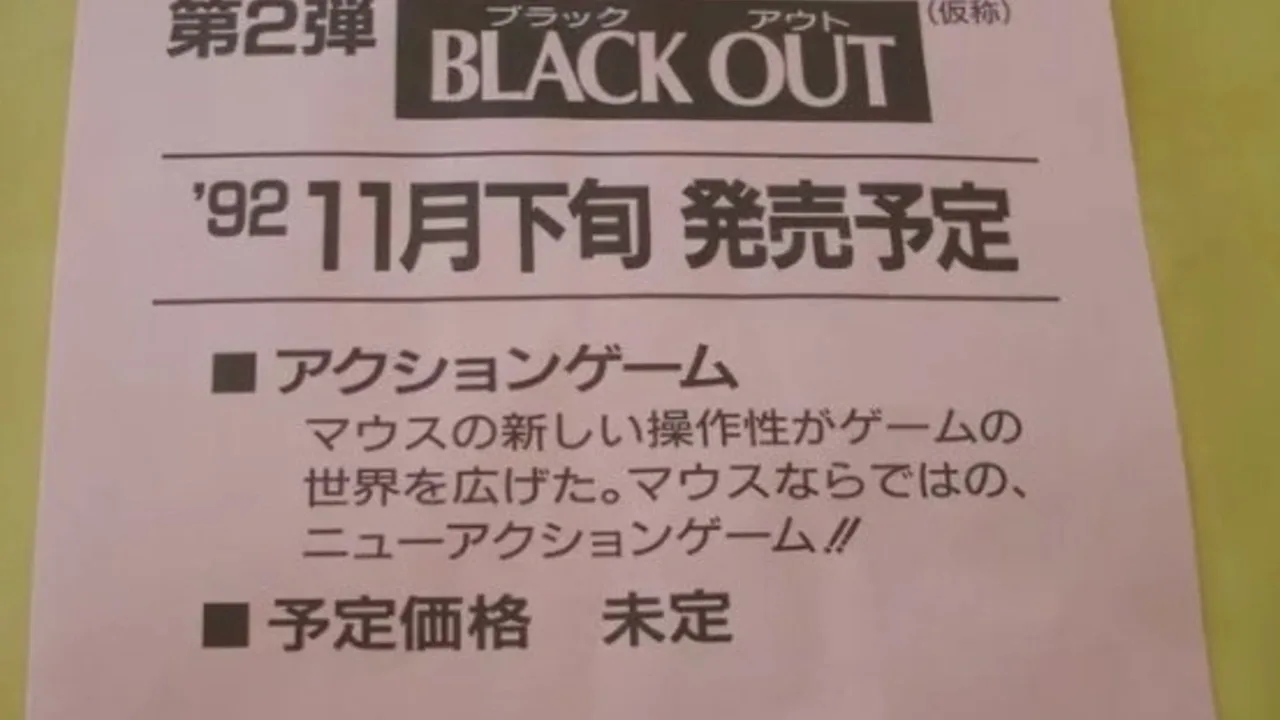
Could be interesting

Tiki, a sneaker-wearing kiwi who must save his lover Phee Phee and several of his other kiwi chick friends who have been kiwi-napped by a large blue leopard seal. The player has to navigate a scrolling maze-like level, at the end of which they release one of Tiki's kiwi chick friends trapped in a cage.

Mr. Tuff is a 2D platform game in development by Sales Curve Interactive (SCI) and presumably set to be published by Ocean in 1994-1995. The game was done by the same people as Super SWIV, and as such, the graphics are incredibly polished. The game was apparently too ambitious, and was never fully complete (although the game engine and graphics certainly indicate that it is close). The game follows a demolition robot known as Mr. Tuff. After the entire population of earth escapes to the planet Utopia, the army robots take over the world. It is up to Mr. Tuff to save the world for the peaceful domestic robots. The levels involve standard platform action, though there are a few shooter-esce hoverboard levels. Each world is set up into standard levels and a boss level.
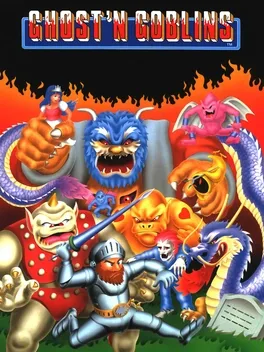
Ghosts 'n Goblins is a platform game where the player controls a knight, named Sir Arthur, who must defeat zombies, ogres, demons, cyclops, dragons and other monsters in order to rescue Princess Prin Prin, who has been kidnapped by Satan, king of Demon World. Along the way the player can pick up new weapons, bonuses and extra suits of armor that can help in this task. The game is often considered very difficult by arcade standards and is commonly regarded as one of the most difficult games ever released. The game is considered by Gametrailers.com to be the world's second most difficult game ever made. The player can only be hit twice before losing a life (the first hit takes away Arthur's armor, and the player must continue on in his underwear until completing the level, or finding replacement armor). If the player loses a life, he is returned to the start of the level, or the halfway point if he has managed to get that far. Furthermore, each life can only last a certain length of time (generally around three minutes), the clock being reset at the start of a level. If the clock does run out, the player instantly loses that life. After defeating the final boss, but only with the cross weapon (if the player does not have the cross weapon, they will be prompted that it is needed to defeat the boss and restart at the beginning of level 5 and must repeat round 5 and 6 again regardless if the weapon is obtained immediately or not) for the first time the player is informed that the battle was "a trap devised by Satan". The player must then replay the entire game on a higher difficulty level to reach the genuine final battle.

As the title states, this is the home conversion of the arcade rail-shooter based on the film Terminator 2: Judgement Day. Up to two players shoot through future and present levels as robotic killers reprogrammed to serve the human resistance. Both players wield a machine gun with infinite ammo that lowers its firing rate (overheats) as it is continuously fired. A secondary weapon (missile launchers in the future, shotguns in the present) has limited ammo but deals heavy damage. Powerups inside the game world include secondary weapon ammo and coolant for the machine guns, and are shot to be collected. T2: The Arcade Game features seven levels based on specific scenes or general concepts in the film. The first four levels act as a prelude, as the player guns down waves of metal Terminators across a post-apocalyptic Battlefield, a besieged Human Hideout, and through the security checkpoints of the enemy supercomputer SkyNet. After destroying the computer, players travel back in time to protect John and Sarah Connor, while also destroying every scrap of SkyNet research at the headquarters of its manufacturer. From there, players must fend off the indestructible T-1000 until the final showdown in the Steel Mill. Assets from the movie are used when possible, such as voice clips from Arnold Schwarzenegger, and close-up digital stills of Robert Patrick for the final battle against the T-1000. The Genesis and SNES versions also support lightguns (the Menacer and Super Scope, respectively).
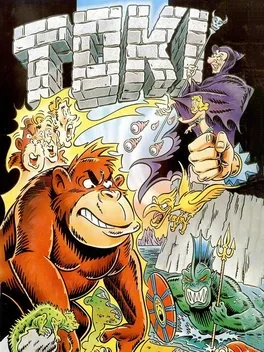
The hero of the game is a young jungle-man named Toki. One day the evil wizard Dr. Stark kidnaps his girlfriend Wanda. When Toki tries to save her, he is turned into a monkey! Now Toki has to find Dr. Stark in his palace, rescue Wanda, and become a human being again!

Super Donkey is an unreleased platformer starring an unnamed proto-Rayman-like aviator/explorer who resembles the main character of Nintendo's earlier game Sky Skipper. Two builds were found, though neither one has any sound or music and the onscreen timer is non-functional in both. Judging by the name and some unused sprites, this might have been a Donkey Kong-related project. Various elements of Super Donkey would eventually be used in Super Mario World 2: Yoshi's Island.

The thirteenth game of the NES version of Action 52. You play as a female character. Your goal is to walk through the dungeons and destroy ghosts by throwing crosses at them.

Wile E's Revenge was the sequel to Road Runner's Death Valley Rally. In this game, you took the role of Wile E Coyote, and chased the Road Runner through various locations in the United States.

A cancelled Kirby game for the Nintendo GameCube. It would be a 2D platformer with 3D graphics, and one of the features announced would be a 4 player co-op. Even though the game was never released, many of its features would later be used in new games in the series, like the graphic style in the Return to Dreamland and the co-op in Star Allies. This is the first of three different iterations of Kirby games that were cancelled around the same time. The other ones are an isometric-view platformer and a pop-up style 2D platformer.

Densetsu no Starfy for the Game Boy, and later for the Game Boy Color was a tentative Starfy title which was eventually canceled, though it was eventually released in the form of Densetsu no Starfy for the Game Boy Advance on September 6, 2002. Any initial plans of releasing Densetsu no Starfy for the Game Boy Color were abandoned in anticipation of the release of the Game Boy Advance.