
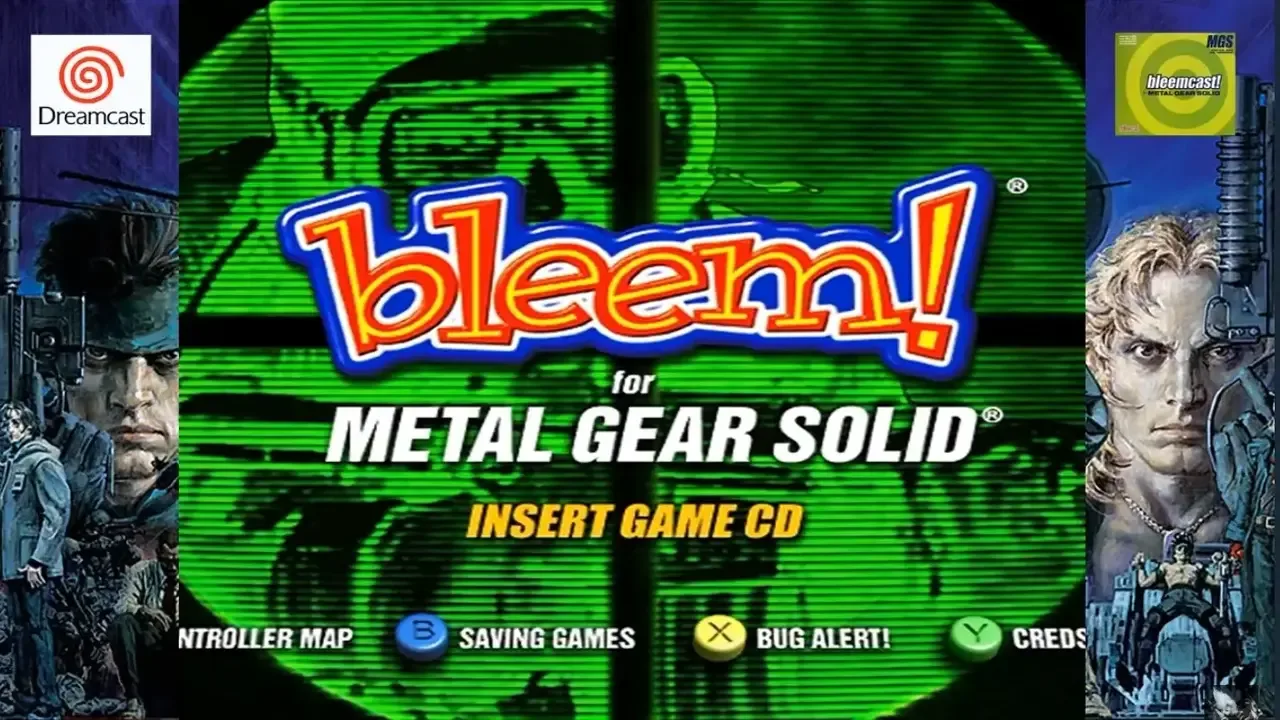
Bleemcast! for Metal Gear Solid


Buy
Could be interesting
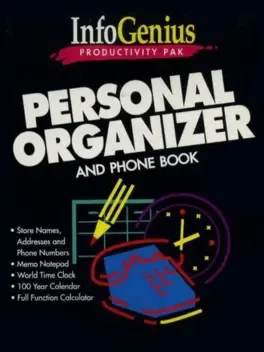
Get it all together with the Personal Organizer! A phone book, a day planner, and a calendar all in one. Store up to 90 names and phone numbers. Keep track of appointments and events with the built-in day planner, and find dates up until the year 2000 with the built-in calendar. Also featured is a complete listing of the most often used 800 numbers, a world clock with over 75 cities, a fully functioning calculator and a notepad.
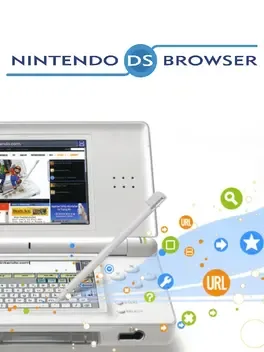
A web browser for the Nintendo DS that runs on Opera 8.5
Flipnote Studio is an application for the Nintendo DSi that can be downloaded at no cost from the Nintendo DSi Shop.

The StudyBox, released by Fukutake Publishing Co, Ltd., was much like a tape player for the Famicom. The accessory was small enough to fit on top of the Famicom, to plug into the connector. Also like a tape player, the top of the StudyBox would open to reveal the compartment where tapes were played. The StudyBox itself did not have the standard Play, Stop, Pause, Fast Forward and Rewind buttons on the system, as would be expected with a tape player. Instead, the student (presumably) would use the Famicom controller and on-screen cues to play the tapes. We don’t exactly know what the tapes would do. The purpose of the StudyBox was to make the Famicom more educational, giving students the ability to learn about whatever information was contained on the tapes. The tapes were, of course, only sound and voice, without visuals to accompany the studying.
Sleep Clock is not just an alarm clock: you can use it to record and analyse your sleeping patterns, which helps you to manage your sense of well-being.
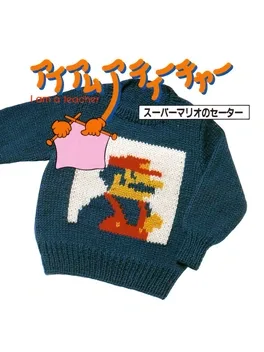
I Am a Teacher: Super Mario Sweater was designed to be a sewing simulator. Players can design sweaters, adding pictures of famous characters such as Mario, Luigi, Peach and Bowser in the process. It was devised by Royal industries Co. Ltd., a Japanese appliance and sewing machine company. The company realized that they could profit from a sweater-design program, which led to the development of this game.
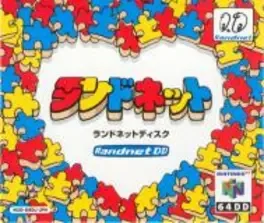
The Randnet Disk is the Disk for Nintendo 64 DD that allowed the players to access the internet via the Randnet service, only released in Japan.
Little Sound Dj is a Game Boy music sequencer used by video game musicians, Grammy winners, and chiptune virtuosos over the world. It is regularly praised for being intuitive, fast and fun. Features include: 4-channel, 4-bit Game Boy sound Dual sample playback Waveform synthesizer Speech Sync options (analog, Game Boy, MIDI, VST)
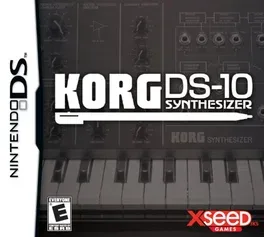
KORG DS-10 is a music creation program for the Nintendo DS that emulates the Korg MS range of synthesizers. The DS-10 creates sound with two analogue synthesizer emulators, each with two Voltage-Controlled Oscillators (the Korg MS-10 had only one VCO). The VCOs feature a sawtooth, a pulse (with a non-modifiable pulse width), a triangle and a noise waveform. There is also a four-part drum machine that uses the same sound creation techniques as the synthesizers. The sounds made by each of the synthesizer emulators are modified using virtual knobs to change the value of standard synthesizer parameters such as cutoff frequency and waveform shape. Additionally there is a screen where users can patch certain parameters to be modified by an LFO, the envelope generator, or VCO2.
Also known as Play-Yan Micro, it was a special cartridge which added media player capabilities to the Game Boy Micro. It is an updated version of the original Play-Yan, which had been marketed for the Game Boy Advance SP. This iteration is not compatible with the microgames which were released for the original version.