
Famista '89: Kaimaku-ban!!

Buy
Part of collection:
Famista
(last 3 games)
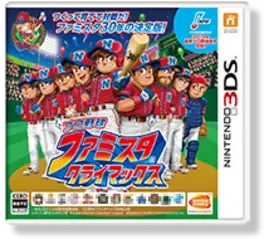
Bandai Namco's comedic baseball series brings new modes and features along with the return of old favorites, including multiple league representation and several zany mini-games.
Part of collection:
Family Stadium
(last 3 games)
Bandai Namco's comedic baseball series brings new modes and features along with the return of old favorites, including multiple league representation and several zany mini-games.
Part of franchise:
Family Stadium
(last 3 games)
Bandai Namco's comedic baseball series brings new modes and features along with the return of old favorites, including multiple league representation and several zany mini-games.
Could be interesting
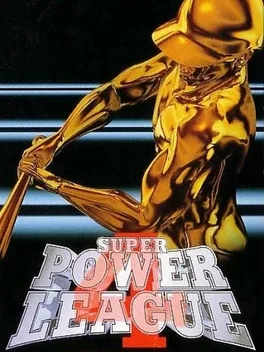
Super Power League 4 is a Sports game, developed by Now Production and published by Hudson, which was released in Japan in 1996.
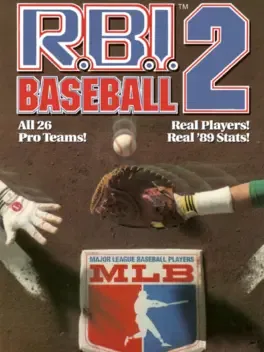
R.B.I. Baseball first set the standard as the only baseball game for play on the NES to use real players and their stats. R.B.I. Baseball 2 raises the standard to a new level: You get all 26 pro teams, each with a roster of 24 real players. Every player comes with his actual 1989 stats. There's instant replay, as well as new and improved animation, graphics, music and sound effects to make the game come alive. As the manager, you get the designated-hitter rule, switch-hitting, and your own lineup of starters and subs. It's so great, it's approved by the Major League Baseball Players Association!
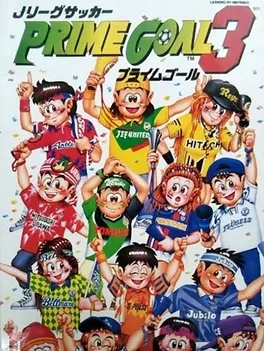
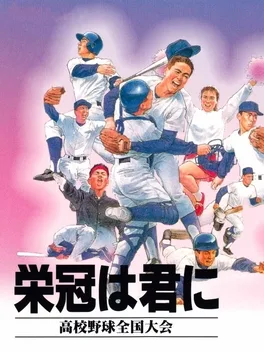
Eikan ha Kimi ni: Koukou Yakyuu Zenkoku Taikai is a baseball video game developed and published by Artdink.
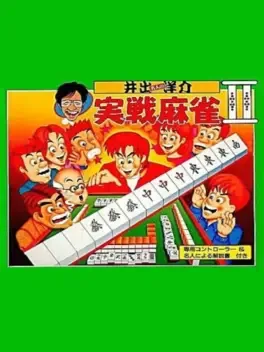
Ide Yousuke Meijin no Jissen Mahjong II is a Miscellaneous game, developed by Arc System Works and published by Capcom, which was released in Japan in 1991.
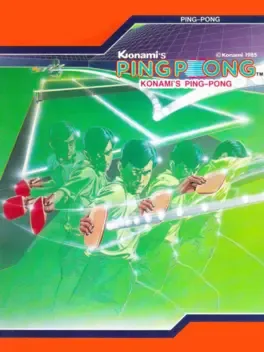
A playable if simplistic Table Tennis simulation for one or two players. Ping Pong offers three different types of shot; Top spin, Back Spin and Smash. The actual gameplay centers on shot timing and shot choice, with the players' bats moving automatically to track the movement of the ball. In the single player mode, the player can opt to play the game on any one of five different skill levels.
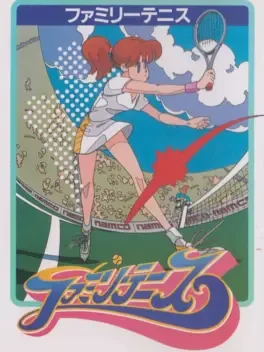
Family Tennis is Namco's first tennis game, it features a roster of sixteen players (twelve male and four female) all based on real-life professional tennis players at the time, such as Ivan Lendl, Boris Becker, Mats Wilander, Martina Navratilova and Steffi Graf. The game includes six tournaments, including the Australian Open, Wimbledon and the U.S. Open, and offers play on grass, clay, and hardcourts, as well as a unique "cosmo" surface that takes place in outer space with astronaut ballboys. There are three modes of play to choose from: exhibition, tournament and world tour. Exhibition mode consists of a single exhibition match for one or two players, while Tournament mode allows up to eight players to face off in a singles tourney. Both of these modes also include a "Watch" option, in which all players are controlled by the computer. World Tour mode takes the player through an entire year on tour playing against computer-controlled opponents, using a password save system. Doubles matches aren't available in any mode though.
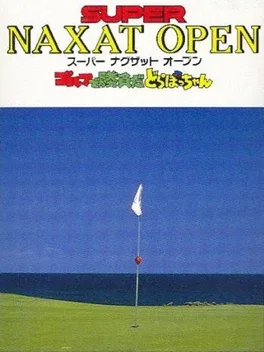
A Super Famicom golf game featuring characters from Naxat's Dorabocchan franchise, best known in the US as Spike McFang.
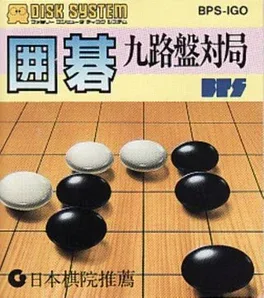
A Japan-only Go game developed and published by Bullet-Proof Software for the Famicom Disk System. Igo: Kyuu Roban Taikyoku ("Go: 9 Row Grid Boardgame") is a Go video game that was originally released for the Famicom Disk System on August 11, 1987 in Japan. It was the first Famicom game developed by Bullet-Proof Software: a development studio operating out of Hawaii that would later be responsible for Nintendo's version of Tetris, among other games. This version of Go is better suited for beginners, as it contains simpler 9x9 grids rather than the regulation 19x19. Igo: Kyuu Roban Taikyoku has a credit for Edge Computing on its title screen; it is assumed some of the game's coding was taken from Edge's C64 game Micro Go.
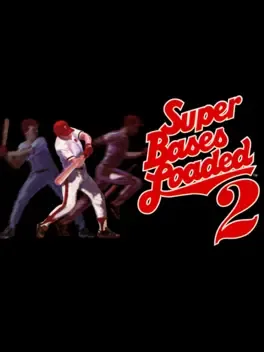
Super Bases Loaded 2 is the 16-bit remake of the original NES versions. It features the modes Exhibition, Season, and All Star and features a battery backup that will allow the player to keep track of stats and resume play at their own leisure. The game also allows the player to create their own team and use them in either exhibition or season mode. It does feature a full 162-game season, but does not feature any MLB license, instead it consists of two fantasy leagues with seven teams to each league, along with three generic stadiums. The DSP chip is also utilized to give's the appearance of realistic 3D movement of the players.