
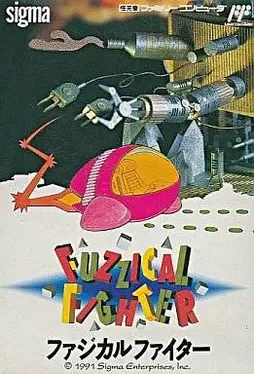
Fuzzical Fighter
Buy
Could be interesting

Released in September 2004, Zoids Vs. III looks and plays similarly to its predecessors, offering fast-paced robot action in wide-open battlefields. New to the series is the ability to perform sliding turns in battle and take to the sky outright and battle opponents in the air. Another upgrade is the ability to engage in four-player split-screen battles (as opposed to the predecessors' two-player versus modes), in configurations from 1 vs 3, 2 on 2 matches, and battle royale free-for-alls, with human players or CPU bots. Modes include Story Mode, Battle Mode, VS Mode, Zoids Fist Mode, and a Zoids Museum Mode. Futhermore, even more Zoids and pilots (including many from Fuzors, and Saga) were added, many of which must be unlocked.
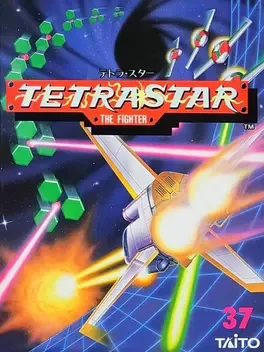
Tetrastar The Fighter is a 3D shooter by Home Data and published by Taito. In the year 2089, humanity forms an alliance with the intergalactic Baal empire but soon Earth finds out about the alien's true intentions. A group of resistance assembles the project Tetrastar to prepare for the potential upcoming threat. But the project lead by the general Nelson is soon put on hold and a short lived peace settles in. But the whole thing was nothing more than a hostile invasion and the Baal empire finally breaks the alliance and attacks Earth. The player's first mission is to prevent New York to be destroyed and then to retrieve Omega, the faithful robot navigator, to warp to the alien's mother world. The Tetrastar super fighter can move around the screen and fire a standard Vulcan gun. Special weapons become available later in the game from Bombs (WID), Homing Missiles (AAM), Napalm Bombs (NAP) and the powerful Bio Cannon (BIO) - they are accessible via the Select button and triggered by pressing A. They all come in limited quantities and must be refilled by picking up power-pods along the way. Tetrastar features nice stages and cutscenes between them unfold the game's episodic story.
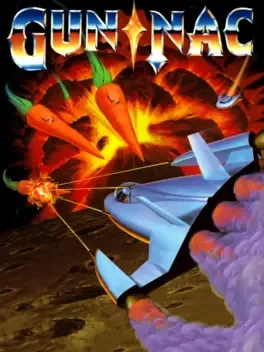
The most happening place in the universe is the trendy, upscale solar system of IOTA Synthetica, part of the Galactic Federation of artificial stars. It's as far from dirty old Earth as can be... But don't sign up to go yet! A strange cosmic energy field with a major attitude has engulfed the system, and the most outrageous things are happening. Ordinary inanimate objects are coming to life - harmless little animals are becoming rabid giants - and the freaked-out residents are under attack! The only Galactic Commander who can handle this ordeal is the eccentric renegade called Gun-Nac. He can oust this aura that's threatening the destruction of comfortable artificial life as we know it. But where in the universe is he? He could be as far away as Earth, searching for a new Game Pak. Commander Gun-Nac, if you read this, call H.Q., A.S.A.P., O.K.? We N.E.E.D. you!
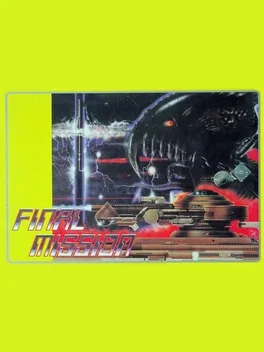
The Japanese version of S.C.A.T.: Special Cybernetic Attack Team, Final Mission, was released a year before the American version and there are a few differences between the two. The game's opening story sequence is completely different, showing the obliteration of various cities before the alien invasion begins. Instead of a selectable male or female main character, both players control palette-swapped male soldiers, one of whom is Russian, which was inconceivable for the western market. The game's difficulty was made easier for the American version as well. Instead of six lives, the player begins with only three lives and any upgrade they possess is lost whenever their character is hit. The player's satellites also function differently. Instead of orbiting automatically, they're aligned by the player while moving the character left or right. Their firepower was also weaker. The map shown before each stage in the American version was not featured in the original Japanese version.
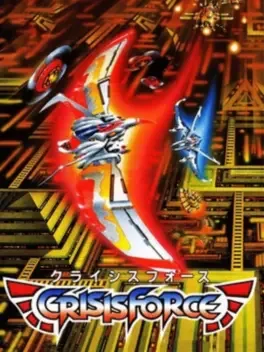
The denizens of Atlantis have arisen after a slumber of 10,000 years, and only Asuka and Maya can save the world from destruction in their Aurawing aircraft! Crisis Force was Konami's last shoot-'em-up game for the Famicom, and it pushes the hardware to its absolute limits.
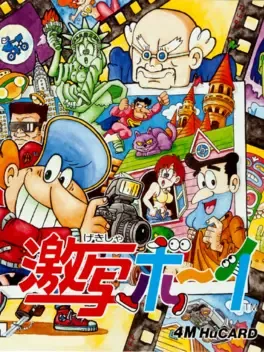
Gekisha Boy is a 2D side-scrolling game in which you play the part as a camera man who is out to snap some high paying photos to please their contractor. You control the movement of the shutter aim and you have slight control over the character as well (using the same style of control as such games as Cabal). You walk along a side-scrolling street and you have to snap unusual/tragic/funny or simply weird photos to rack up the points. It can be anything from crashing airplanes to Marilyn Monroe lookalikes and UFOs abducting cars. Every stage has a set score you need to reach to progress to the next one or you have to start it over again.
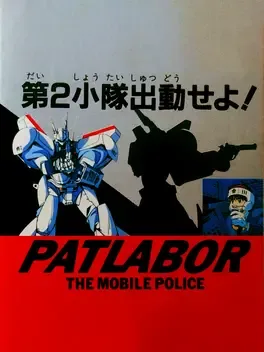
Kidou Keisatsu Patlabor or known as is Japan is an Action game. In the future, rapidly advancing technology gives birth to giant robots known as "Labors," so named for their usefulness in heavy industry. However, this also gives rise to "Labor crimes," resulting the the need for a new branch of law enforcement equiped with and dedicated to the policing of Labors. When Izumi Noa, a female police officer, becomes the newest recruit of Special Vechicals Devision 2, she and her top of the line "Patrol Labor" Alphonse are swept into a series of adventures featuring crazed construction workers, eco-terrorists, and sea monsters.
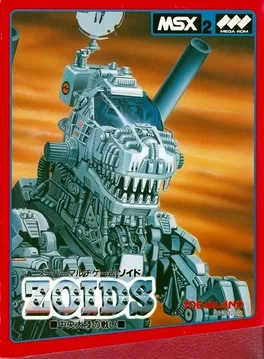
Based on the popular Tomy/Hasbro toy license, Zoids: Chuuou Tairiku no Tatakai is an RPG/Shooter hybrid developed for the Famicom by the notorious Micronics.
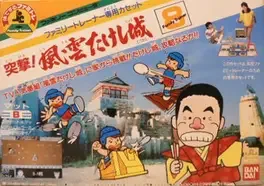
The eighth Family Trainer game produced by Bandai for the NES, Totsugeki! Fuuun Takeshi-jou is based on the obstacle course TV show Takeshi's Castle.
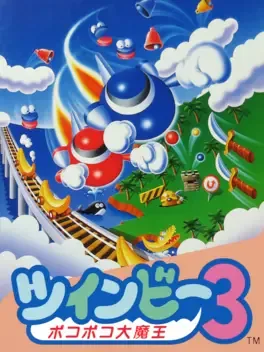
TwinBee 3: Poko Poko Daimaō is a vertical-scrolling shoot 'em up video game produced by Konami released for the Famicom. It is the third and last game in the TwinBee series for the Famicom and it ditches Stinger's horizontal levels making it more in line with the first title. The game is considerably easier than its predecessors due to an option mode that allows players to adjust the difficulty and number of ships, as well as the inclusion of the new "soul reviving system", which allows players to recover their power-ups after losing a ship. The game uses digitized PCM voice samples, particularly when the conga music in one stage chants "Poko Poko", and in the beginning of each stage, in which a voice proclaims the name of the stage. It was re-released on April 14, 2006 as part of the i-Revo downloadable game service.