
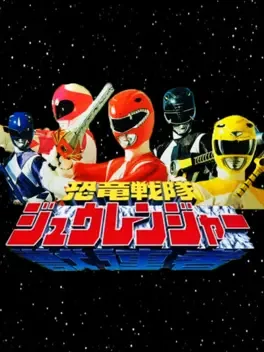
Kyouryuu Sentai Zyuranger

Buy
Part of franchise:
Super Sentai
(last 3 games)
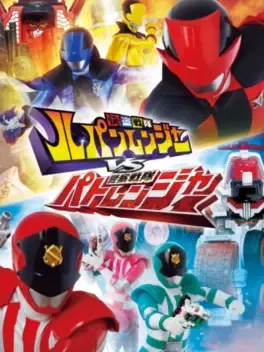
Kaitou Sentai Lupinranger VS Keisatsu Sentai Patoranger, which broadcasts on TV Asahi every Sunday, joins the Nari Kids Park series. Transform into Lupin Red and Patren No. 1 and have fun!
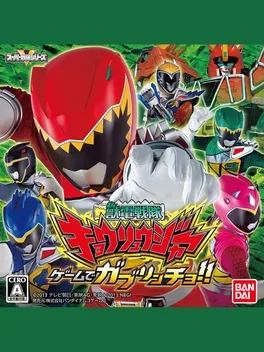
Zyuden Sentai Kyoryuger: Game de Gaburincho!! is a 3DS game based on the 2013-2014 incarnation of Super Sentai
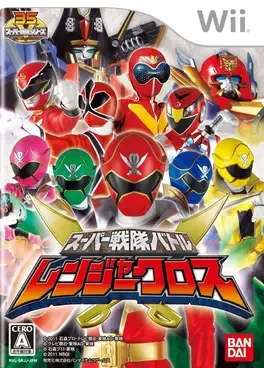
Super Sentai Battle: Ranger Cross is a video game developed by Paon and published by Bandai Namco Games Inc. in September of 2011, as part of the 35th anniversary celebration of Super Sentai. The game follows a musou-style formula in which you are pitted against hordes of enemies on a playing field and must defeat all enemies to advance, with battles in the mechas interspersed here and there. This game is technically a Gokaiger game, but as they are not the only ones you can play as, this is why the game is called Super Sentai Battle and not Kaizoku Sentai Gokaiger. The teams you can play as are: Kaizoku Sentai Gokaiger (2011) Samurai Sentai Shinkenger (2009) Tensou Sentai Goseiger (2010) Engine Sentai Go-Onger (2008) Himitsu Sentai Goranger (1975-1976) This would be the first time a non-Heisei era team would be playable in any Super Sentai game that was not a crossover with other franchises, as Goranger was the first season of Super Sentai. The other teams up to Go-Onger make appearances through the Gokai keys, but they are an extension of the Gokaiger team, and therefore are not truly playable.
Could be interesting
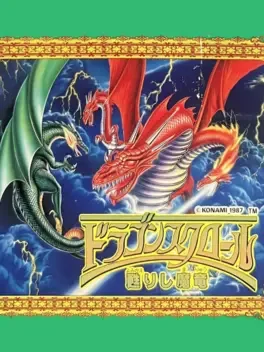
Dragon Scroll: Yomigaerishi Maryuu is an adventure game developed by Konami in 1987 for the Famicom. It is often compared to The Legend of Zelda in terms of game play, but it is considerably more difficult due to the lack of clues or information on how to proceed. The game is non-linear, and you must explore different territories in search of the eight stolen magical artifacts that maintain a sleep spell over a large and dangerous dragon. Enemies roam the overworld and dungeons, and must be defeated in order to earn experience points. Experience points are used to increase the player's level, which makes him stronger and gives him access to stronger weapons and magic. Most useful items are well hidden and, even when obtained, are difficult to determine their appropriate use. The game features a password system which allows you to continue play where you left off.
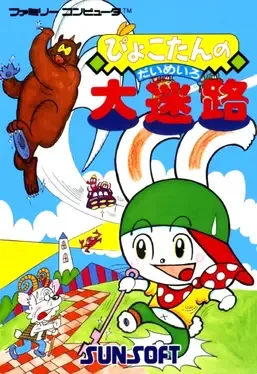
Pyokotan no Daimeiro is an Action game, developed by Japan System Supply and published by SunSoft, which was released in Japan in 1993.
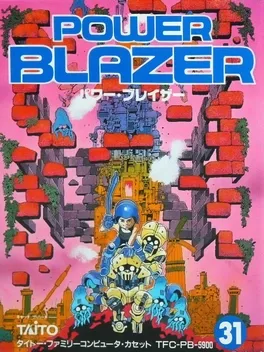
The player takes control of Steve Treiber, a highly trained soldier on a lone mission behind enemy lines. He is the only one capable of taking Brain Master offline and to save the world. Our young hero is armed with a powerful combat-boomerang called the 'Power Blazer'. The game was later westernized as Power Blade.
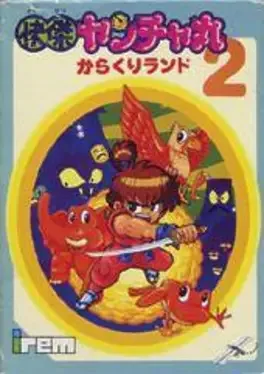
Kaiketsu Yanchamaru 2: Karakuri Land is an Action game, developed and published by Irem, which was released in Japan in 1991.
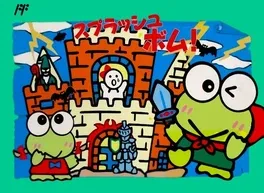
Keroppi to Keroriinu no Splash Bomb! is an Action game, developed by Geo Factory and published by Character Soft, which was released in Japan in 1993.
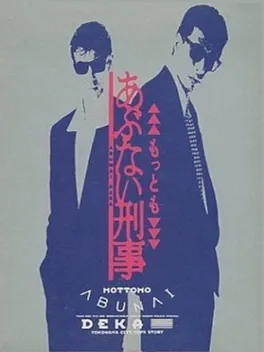
Mottomo Abunai Deka is an Action game, developed by Micronics and published by Toei Animation, which was released in Japan in 1990. It is based on a Japanese movie released in 1989 with the same name. This game and the movie are both related to the late 1980s detective TV show, Abunai Deka.
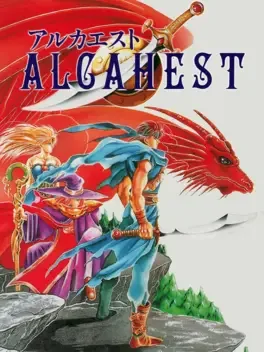
Alcahest is an action role-playing game with a top-down perspective that plays similar to The Legend of Zelda. It is divided into 8 stages that are progressed by finding items that aid the protagonist Alen on his quest, and end with a boss battle. After specific boss fights, the player will gain the abilities of one of the four elemental Guardians. Alen will also find five allies that will join him at predetermined points of some levels. They are the young wizard Garstein, the princess Elikshil, the knight Sirius, the android Magna and the shape-shifter dragon goddess Nevis. Though they cannot be controlled directly, allies will attack and use special moves when the corresponding button is pressed.
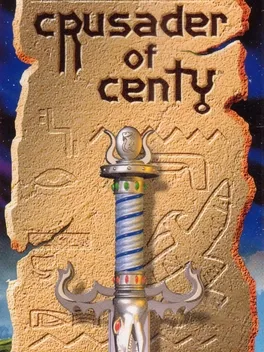
Millions of years ago, heinous creatures that lurked in the shadows and darkness that blanketed the planet inhabited the Earth. When light finally broke through, only a few beasts were able to survive by burrowing into deep caverns. Over time, they multiplied, evolved, and patiently waited for the right time to emerge and rule the Earth once again. You are Corona, and you've just celebrated your 14th birthday. By law of the king, you must now go seek out these creatures of the dark and destroy them. As you travel in search of your destiny, you'll make animal allies that will prove invaluable on your quest. Each level will offer mind-bending puzzles and challenges that will help you get one step closer to completing your mission.
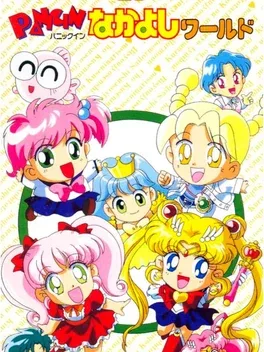
This title is about monsters that are attacking the World of Nakayoshi. The monsters are eating up the citizens. The more they eat, the hungrier they get. Four girls must stop the monsters and defeat Daima to save the World of Nakayoshi. The game is an overhead Adventures of Lolo-style puzzle game featuring characters from various Nakayoshi-printed manga. Sailor Moon and Chibi Moon are playable characters. There are also characters from Goldfish Warning!.
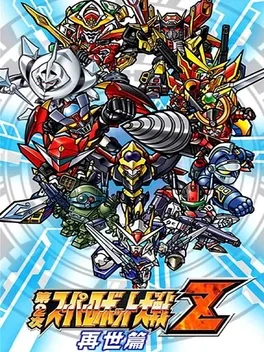
Dai-2-ji Super Robot Taisen Z: Saisei-hen, yet another game in Namco Bandai's Super Robot Wars series, is the immediate sequel to Super Robot Wars Z2: Hakai-hen. Despite its billing as a two-part game, Saise-hen is entirely independent of Hakai-hen. Players will receive a starting bonus in Saise-hen based on how many times they have completed Hakai-hen, along with an extra bonus for playing all of Hakai-hen's scenarios, but unlocked machines and pilots will not transfer. Every series from Hakai-hen returns, with their sequels/second seasons debuting if applicable. Macross 7 makes its Z-series debut, with Dynamite 7 appearing for the first time in any SRW. The only completely new series, Tetsujin 28, is the 1980s incarnation of a robot series that predates even Mazinger.