
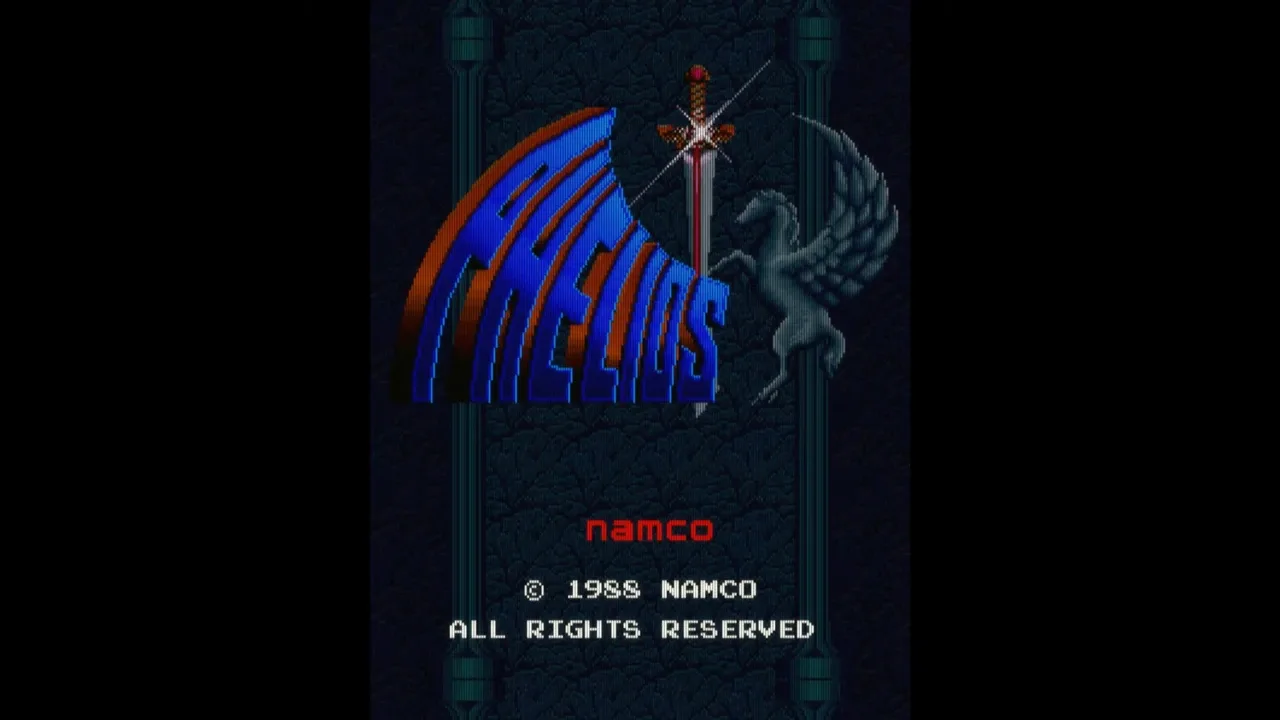
Phelios


Buy
Could be interesting
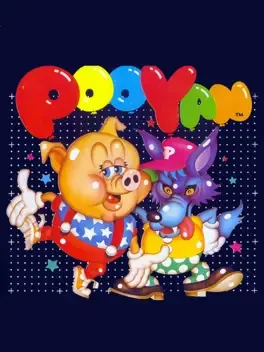
Pooyan is a classic arcade game manufactured by Stern Electronics under license from Konami in 1982. In it, the player controls "Mama", a pig whose babies have been kidnapped by a group of wolves.
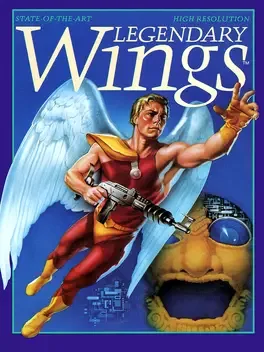
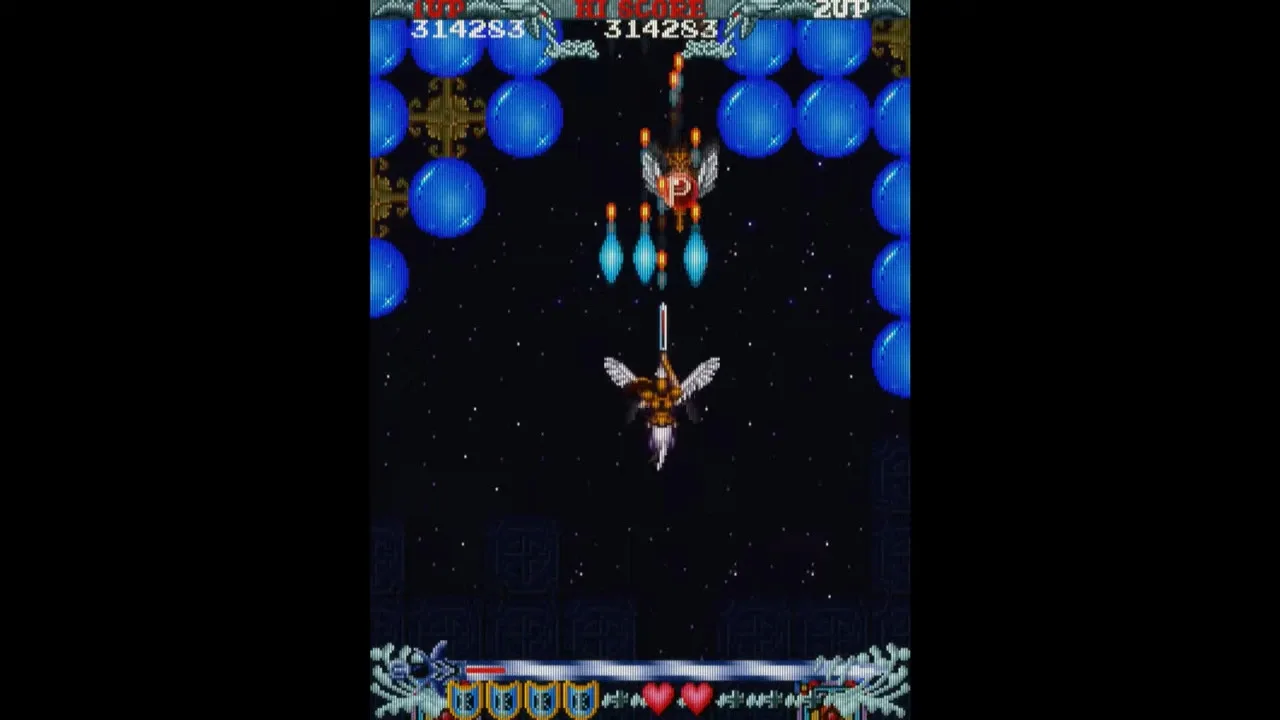
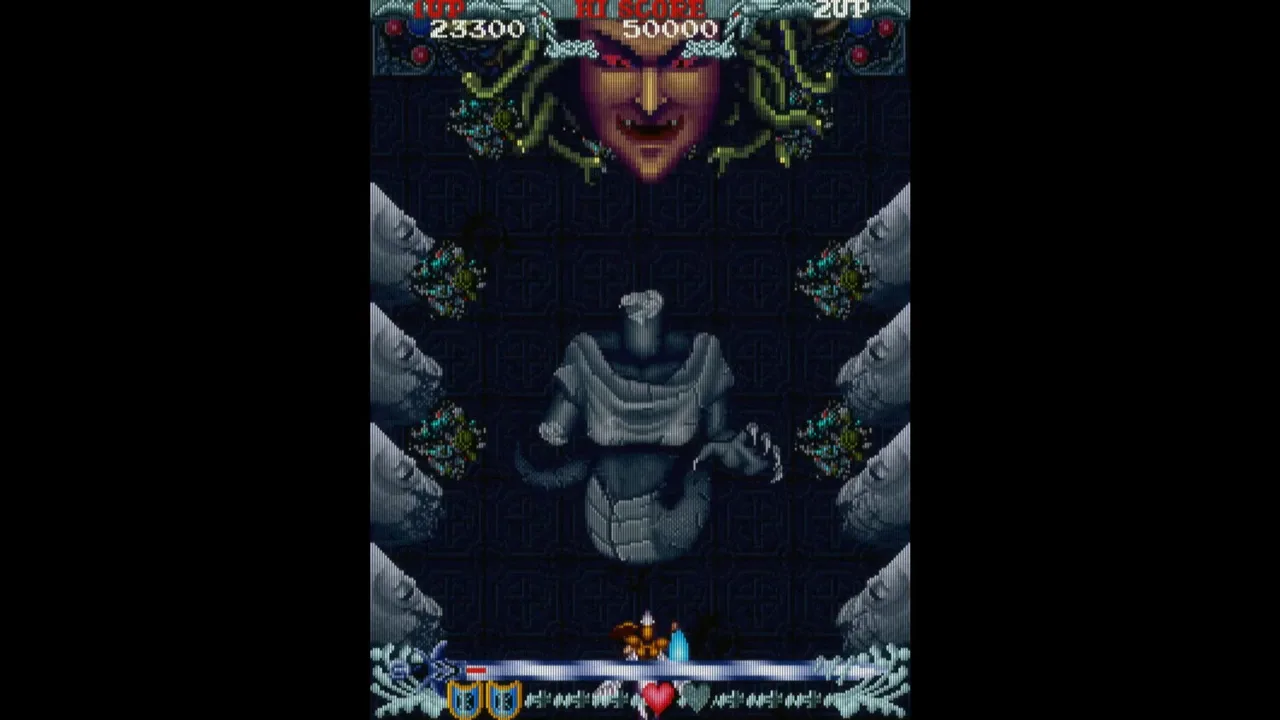
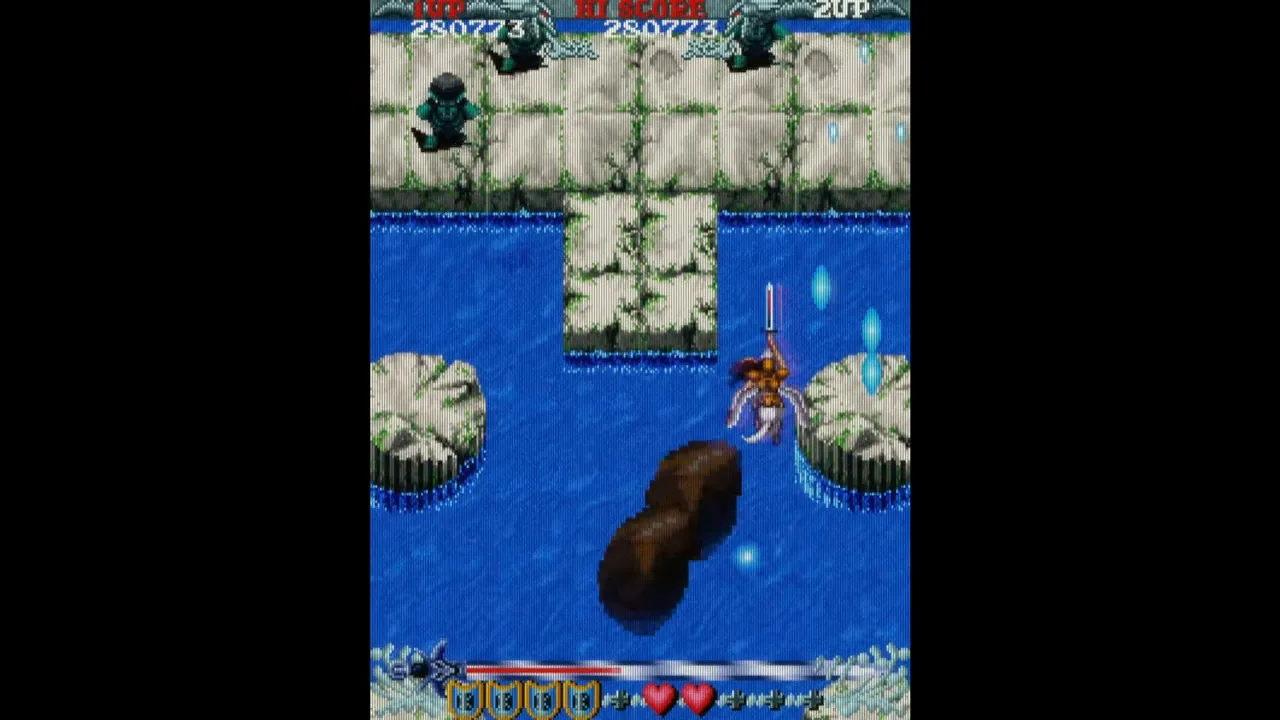
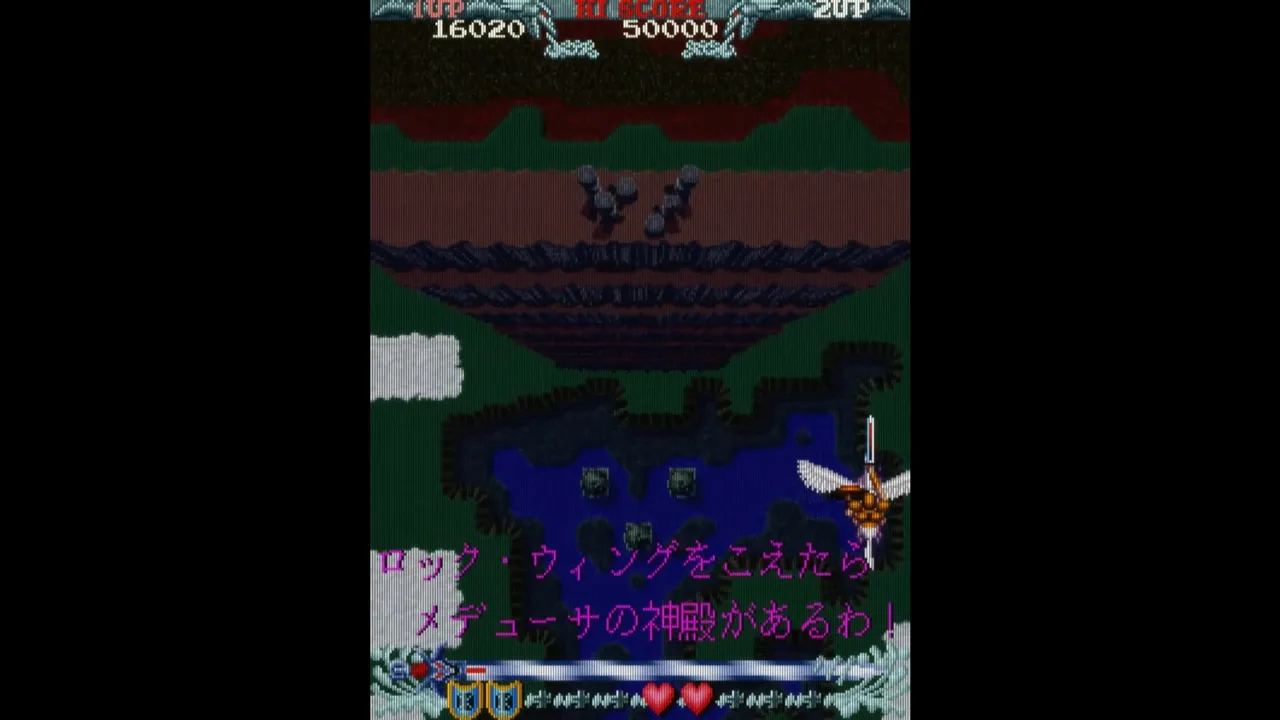
Legendary Wings is a fantasy-themed shoot-'em-up game released by Capcom as a coin-operated video game in 1986. The player takes control of a young soldier equipped with magical wings who must save the world from a malfunctioning supercomputer. Legendary Wings is set in a distant future where an alien supercomputer named "Dark", which has been helping human civilization achieve a new state of enlightenment since ancient times, has suddenly rebelled against mankind. Two young warriors are given the Wings of Love and Courage by the God of War Ares in order to destroy Dark and ensure mankind's survival. The coin-op version of Legendary Wings can be played by up to two players simultaneously, with a second player being allowed to join the game at any time or even continue after a game over. The game's controls consists of an eight-way joystick and two buttons which changes depending on the context. The game consists of five areas with two different playing styles: the first segment in each stage is a top-view vertical scrolling segment in which the player flies across the sky, shooting at airborne enemies with their gun while dropping bombs at ground enemies, in order to reach the palace at the end of segment. When the player defeats the guardian and gains entrance to the palace, the game switches to a side-scrolling perspective, in which the player moves towards their goal on foot (by walking, crouching, and climbing ladders, as well jumping) until reaching the boss at the end, in which the player character will begin to fly with their wings again. In addition to the regular levels there are two optional levels that are accessible from the vertical-scrolling segment: a trap level in which the player is forced to escape from if they're sucked by the giant mechanical face on each area; and a hidden bonus level where the player can obtain various treasure chests to increase their score.
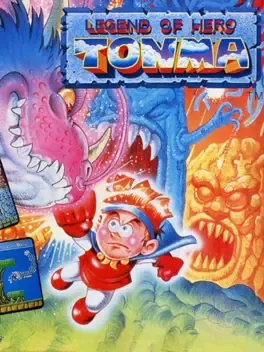
Legend of Hero Tonma is a side scrolling platform game released by Irem to arcades in 1989.
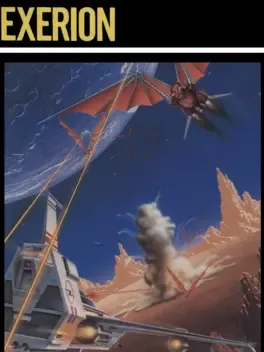
Exerion is a vertical shoot 'em up released by Jaleco in 1983 and licensed to Taito for distribution in the United States. Screenshot from arcade version Exerion is a shoot 'em up game featuring parallax effects and inertia simulation, something notable for 1983. The player travels around strange scenarios shooting aliens. The player has two types of guns: fast single shot (limited) or slow double shot (unlimited). In 1984, along with the MSX1 port of the original, a sequel was released titled Exerion II: Zorni for the MSX1, with similar gameplay to the original. There were plans for an NES release of this game. In 1987, the game was followed by the semi-sequel titled Exerizer, also known as Sky Fox.
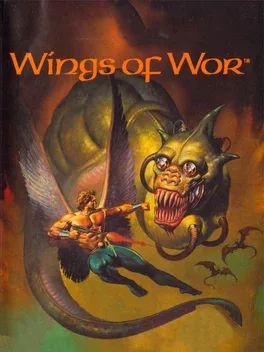
Gynoug, known in North America as Wings of Wor, is a 1991 scrolling shooter video game developed by Masaya and published by NCS Corporation for the Sega Genesis. The game was released in North America and Europe in 1991 and in Japan on January 25, 1991, and re-released on the Wii Virtual Console exclusively in Japan on May 20, 2008.
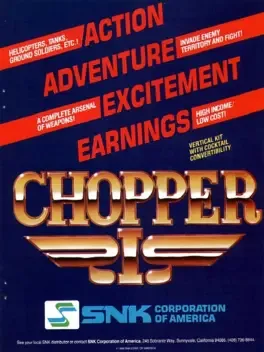
Chopper I is a 1988 arcade hall video game, developed by SNK. The objective of this top-down game is to infiltrate enemy territory and essentially destroy all objects. The game can be played with 1 or 2 players; both players, each occupying one helicopter, play simultaneously.
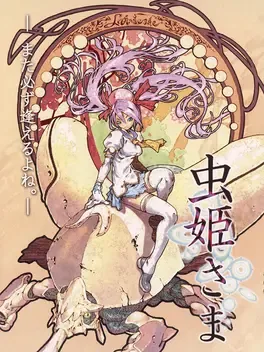
Mushihimesama is a manic shooter developed by Cave and released by Taito in 2004. It was ported to the PlayStation 2 in 2005 and iOS in 2011. An Xbox 360 port was released in May 2012 (with ver1.5 as first print DLC). A significantly changed "version 1.5" was released to arcades in 2011. The game has an insect theme as all of the enemies resemble various insects such as beetles and butterflies. The game is set in various forest environments. It received a sequel in 2006, known as Mushihimesama Futari, and a spin-off iOS game entitled Mushihimesama Bug Panic.
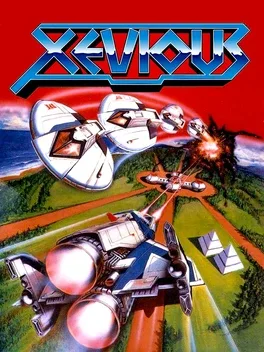
It's a nightmare, but it's true! Research shows that we are the actual aliens on Earth, and the ruthless Xevions are the original inhabitants. Now the Xevions want Earth back -- minus humans! Their invasion forces are fierce -- the land is crawling with deadly Domogram Rovers; the sky is black with Toroid Patrol Fleets and Zoshi Death Squads. Our puny weapons offer no defense. Earth's only hope is our powerful new Solvalou Fighter Plane. Its pilot will have a single mission: Penetrate the enemy ranks and destroy the Xevious Mother Ship. The mission is dangerous. We can't guarantee success. But at this point, it's do or die! One small problem. We still need a pilot. Any volunteers?
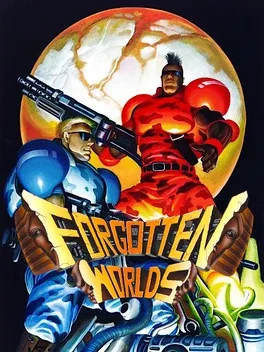
Forgotten Worlds can be played by up to two players simultaneously. The player controls a flying muscle-bound soldier armed with a rifle with unlimited ammo. The Player 1 character is equipped with a long-range automatic rifle, while Player 2 has a short-range wide shot. The controls in the original coin-op version consists of an eight-way joystick for moving the character in the air while flying and a unique rotatable button known as the "roll switch".Rotating the switch left or right allows the player to adjust their character's aim in one of sixteen directions, while pressing it causes the player character to shoot his gun. This allows for the player to move their character anywhere while keeping their aim in one direction. Pressing the switch rapidly will cause the character to perform a "megacrush" attack will destroy all on-screen enemies, but at the expense of a portion of their vitality gauge. The player character is accompanied by a satellite module orbiting near him that will provide backup firepower every time the player fires their gun. Like the main character, the satellite can also be rotated with the roll switch. Rotating the character while firing will only rotate the aim of the satellite, while rotating the character without firing will not only rotate the satellite's aim, it will also move its relative position around the player. The player can obtain blue-colored coins known as "zennies" from defeating enemies throughout the game. The zennies are used as currency to obtain new power-up items from shops located at certain points in each stage. When the player enters an item shop, they are given a choice of the items available and a limited time to make any purchase they wish. These items consists primarily of new weapons for the satellite module, but also includes a health kit to restore lost vitality, an armor that allows the player to sustain additional damage, and even tips on how to defeat the boss awaiting at the end of the current stage. Forgotten Worlds consists of five stages with a total of eight bosses. The player will lose if their vitality gauge runs out, but will be given a chance to continue.
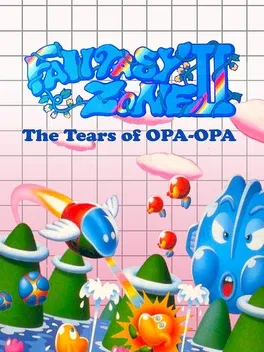
Fantasy Zone II: The Tears of Opa-Opa is the sequel to Fantasy Zone, in which you control Opa-Opa, a pretty colored ship with wings on its side. You must destroy the large creatures in each world before moving on to the next. Your task becomes difficult by other small creatures that happen to pass by. If you destroy a large creature, they will drop a dollar bill, which you can pick up and use at the shop to buy items and powerful weapons such as laser beams, x-way shots, and big wings. Another way to get money is to shoot certain kinds of enemies all in a row. More often than not, some large creatures will reveal a warp gate rather than a dollar bill. You can go through the warp gate to get to another part of the land, and destroy more large creatures. Only one of them will have a warp gate in the form of a 'stop' sign - that is your ticket to the round boss, but you must defeat all large creatures in order to pass through it. Also like in the original can you walk on the ground to avoid approaching enemies, and spend money in the shop to get new weapons (but they only last for a limited time).