


Buy
Could be interesting
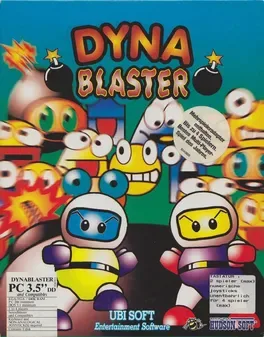
Dyna Blaster or Dynablaster is a name that has been given to the European releases of the game of the Bomberman. It's a strategic, maze-based video game franchise originally developed by Hudson Soft. Most games in the Bomberman franchise largely revolve around two modes of play; single player campaigns where the player must defeat enemies and reach an exit to progress through levels, and multiplayer modes where players must attempt to eliminate each other and be the last one standing. Gameplay involves strategically placing down bombs, which explode in multiple directions after a certain amount of time, in order to destroy obstacles and kill enemies and other players. The player can pick up various power-ups, giving them benefits such as larger explosions or the ability to place more bombs down at a time. The player is killed if they touch an enemy or get caught up in a bomb's explosion, including their own, requiring players to be cautious of their own bomb placement.
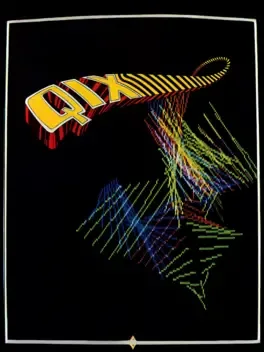
Draw boxes to claim as much screen as possible without getting in the path of the "Qix" and "Sparx". Draw slower for more points and hope that you have enough coins. Simple but very addicting!
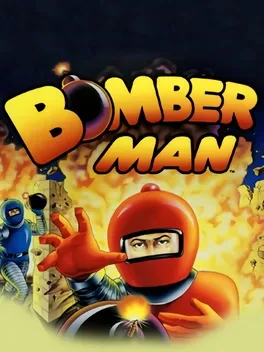
Bomberman is a 1990 action maze video game developed by Hudson Soft for the TurboGrafx-16. Belonging to the Bomberman franchise, it is a greatly expanded re-imagining of the first game in the series. In Europe, the game was released for the MS-DOS, Amiga and Atari ST, retitled as Dyna Blaster due to the European mainstream media associating the original title with terrorist bombings. A Commodore 64 version was advertised as well but never released.

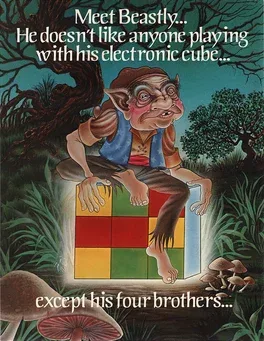
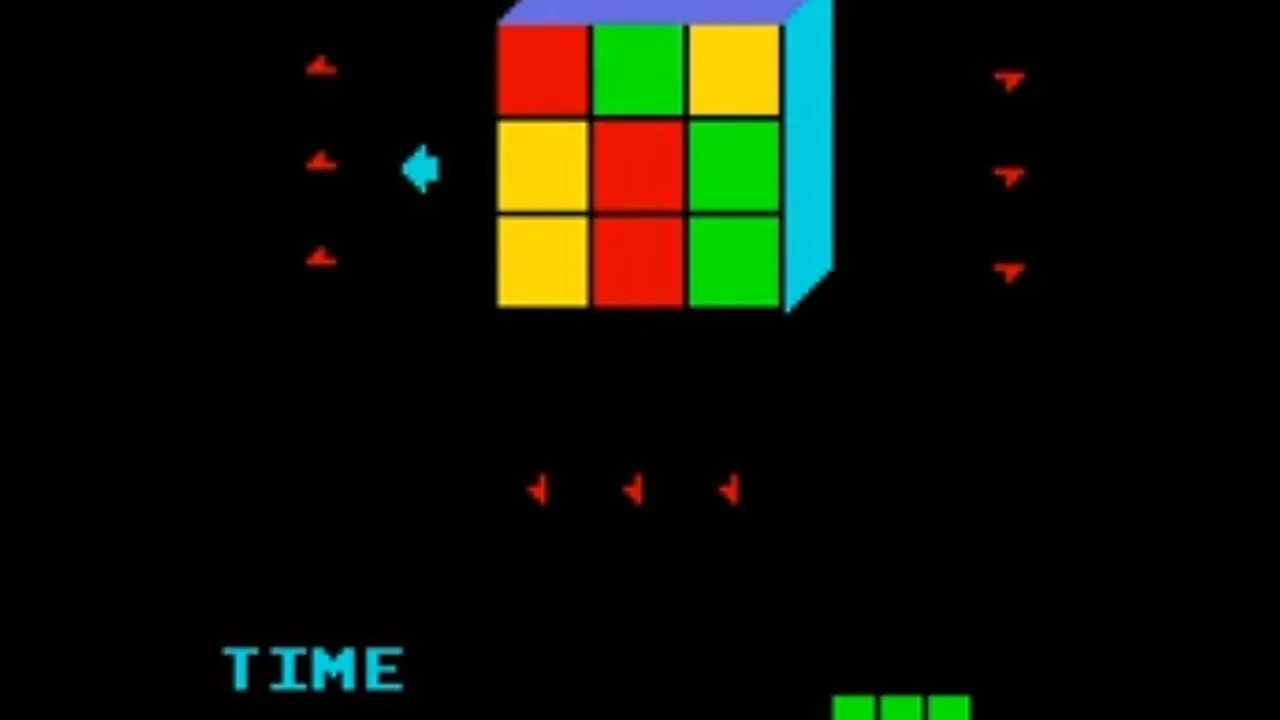
Remember that memory game with colors that used to drive you crazy?
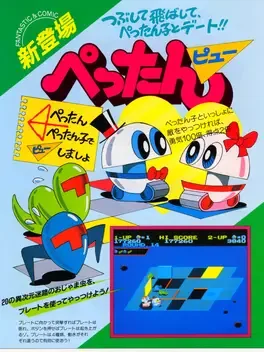
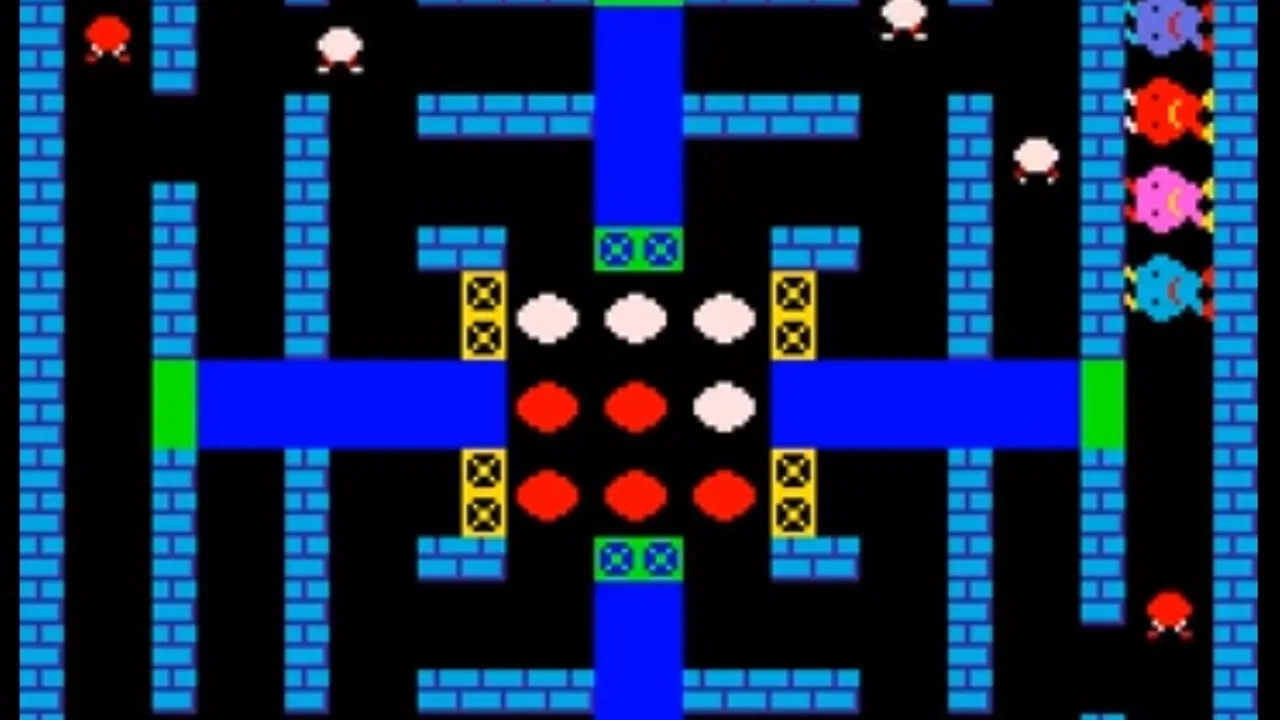
"Pettan Pyuu" is an action game released by SUNSOFT in 1984. Take control of the character, "Pettan" and make use of the plates to wipe out bugs and solve the interdimensional maze. You will need to master 4 different types of plates, all with their own characteristics.
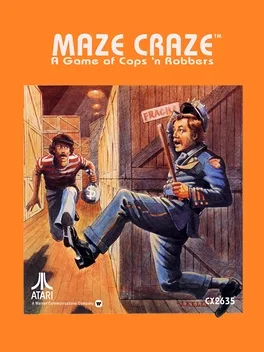
In Maze Craze, your goal is to be the first of two players to make it out of a maze! Each player controls a cop that starts on the left, and the first player to make it out the exit on the right wins. The game also includes of variety of options. The maze can be completely visible, completely invisible, or have just a few parts invisible. With invisible mazes you can optionally have the computer provide a sneak peak at the complete maze periodically. To make your task more challenging, one to five robbers may also be placed in the maze. If you are caught by one of the robbers, you will momentarily be stunned giving your opponent an advantage. You can also give your cop the ability to set up a blockade to confuse your opponent. This will look like a regular wall, however you can walk straight through it. The games speed can also be adjusted, from calculatingly slow to extremely fast.

Tropix 2! Quest for the Golden Banana, like its predecessor, is essentially a collection of mini-games, most of them implementations of well-known casual genre titles. The game is divided in islands, where the main monkey character and his animal friends live. Each island acts as a hub for three mini-games. On the main screen, the player has to buy plants, furniture, toys and other things to decorate the scenery and unlock a series of key items to move to the next island. These decorations are bought with gold coins, acquired after playing one of the mini-games: Cascade is a tile matching game, where the objective is to make matches of three or more of the same type by switching adjacent tiles in a grid filled with food. The food keeps falling after successful matches, to be promptly eaten at the bottom by some animal that acts as a level progress meter, crossing the screen towards a small flag. In the boss battles, the goal is to make matches as fast as possible, to throw food at the enemy before they clog all the cells in the grid; Coco Bowl is a bowling game with coconuts as the ball. The coco can be guided with the mouse while it is going through the lane. Some levels have special features, like ramps and other obstacles; Stone Stacker is a simple puzzle game, where the player must stack slabs on top of each other by matching their indentations at the top and bottom, creating a tall pillar at the left side of the screen. Special items, like a hammer and a wildcard stone, help to eliminate useless slabs and make matching easier; Ice Cream Parlour is a time management game, where a penguin must serve ice cream to a series of fellow penguin customers. Thought bubbles over the customers heads show pictures of the recipients and ingredients of their order, while stars below them show their satisfaction level. The player must click on several hotspots on the screen, guiding the penguin to pick up the correct recipient, give it to one of the lemur assistants ready to scoop or place one of the ingredients, and finally bring it back to the client before the patience meter runs out. An iguana acts as the trash can, swallowing badly served orders. The goal of each level is to profit a set amount of money within a time limit. A bonus game appears sometimes, where the player must move an ice cream cone at the bottom of the screen and pile up on it several balls scooped and thrown upwards by one of the lemurs; Pirates! is a shooting game. The player controls a cannon placed over a precarious raft in the middle of the sea, and the objective is to shoot any enemy on the screen before it reaches and destroys the raft. The raft can be repaired between levels on a separate underwater screen, where tetrominoes wood pieces have to be placed logically on its frame. Barrels carry new ammunition types, changing the power and range of the shots. A bonus game appears occasionally, where the cannon is used to feed dolphins; Fish Swap is a matching game, where the player has to swap fishes on a grid, creating large schools that escape the screen. A blowfish appears randomly on the grid, and acts as a power-up liberating several fishes at the same time; Water Words is a word creation game, similar to Bookworm and other titles. The objective is to make words by connecting adjacent letter tiles in a grid. Acceptable words have their score displayed over the submit button. A number of words are required to finish each level, displayed in a list at the right side of the screen; Puffer Popper is a marble popper game, where the player controls a crab moving sideways at the bottom of the screen, shooting bubbles at multicolored bubble strings trying to make matches of three or more of the same color to pop them. The lines twist around the screen, being pushed towards a sand castle by a blowfish. If several bubbles get inside the castle, the game is over.

The player guides Zippy, an X-shaped sprite, around a maze, viewed top-down, with solid walls, hazards and collectable rewards. The view of the maze scrolls randomly right, left, up or down. The object is for the player to survive for a period of time without making contact with either an edge of the playing area, represented as a brick walls, or hazards including water and spikes, all of which lose a life. If the player survives they receive a score bonus for completing the level and they proceed to the next level, which is a continuation of the maze, with less interval between scrolling steps and a shorter level duration. The first level lasts about two minutes, and by the seventh and final level this is down to about forty seconds. Points are awarded for collecting plums and clumps of grass, some of which are invisible. Completing a level of the game triggers a voice saying "Yippee!". On the ZX Spectrum release this was remarkable due to it overcoming the Spectrum's rudimentary sound capabilities. It was a very early use of digitized speech sound effects in home computer games.

The peaceful land of the Mopira have been invaded by the Razons. In this platform game you 'll play Mopiranger and you have to save the young Moplits, who have been kidnapped by the dastardly Razons. The levels are build in a maze-like pattern in which you have to find and rescue the young Moplits from the hostile Razons. Using the obstacles present in the game you can block the Razons, but also lock yourself in...
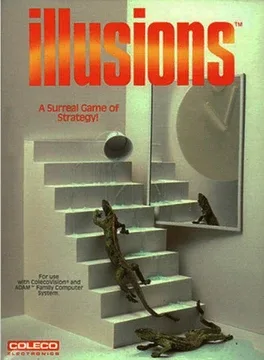
Illusions is a surreal ColecoVision video game in which the player maneuvers blobs around the screen, trying to get them to merge, or, alternatively, split apart. At times, lizards may chase the blobs around. The water bucket, when spilled, can cause the lizard to turn into a fish. If the fish remains there too long, however, it turns into a bird. The game was created by Nice Ideas, a division of Mattel that was located midway between Cannes and Nice.