
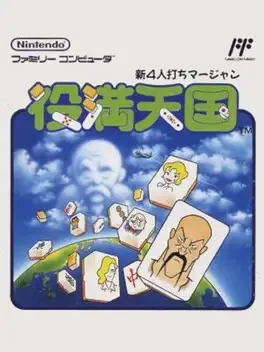
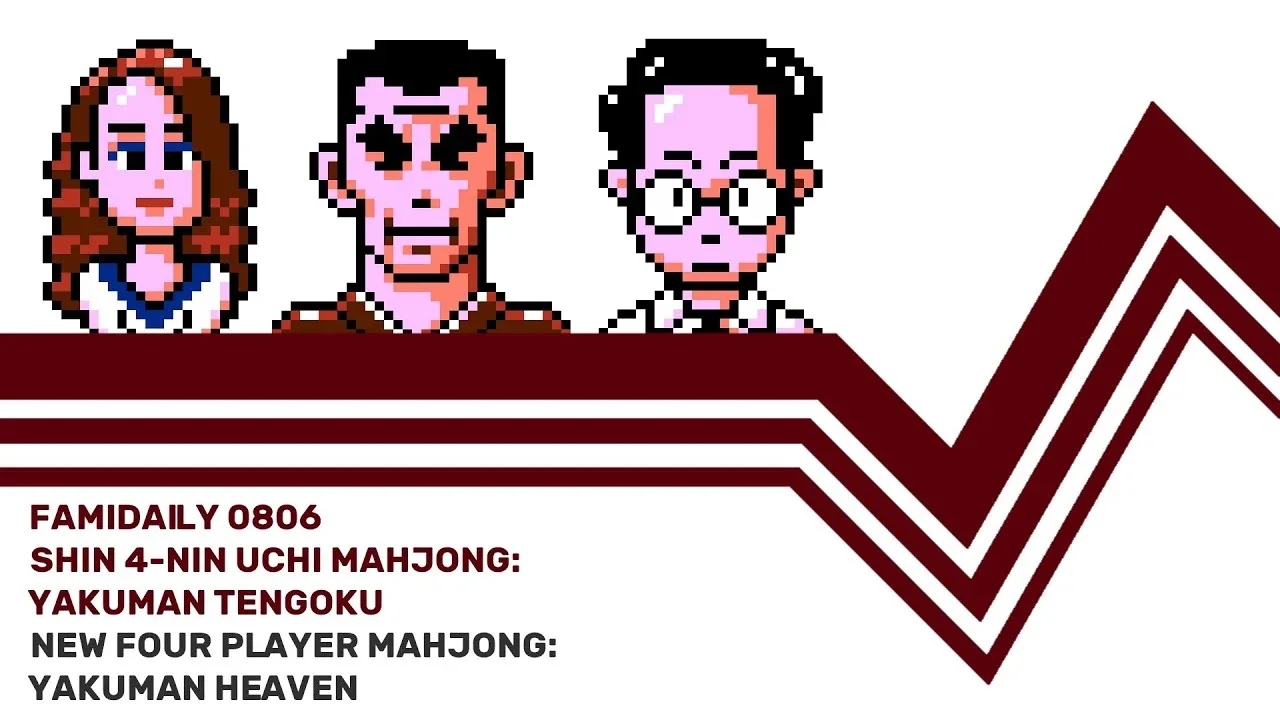
Shin 4-nin Uchi Mahjong: Yakuman Tengoku


Buy
Part of collection:
Yakuman
(last 3 games)
Yakuman Houou is a mahjong game that supports both Wii U and Nintendo 3DS, so you can play on the big screen of your TV at home or on the Nintendo 3DS on the go. This game only released in Japan.
This is a mahjong game where you play against characters of various ways using the rules of "Health Mahjong", which unifies the rules that differ depending on the generation and region, and makes it easy for anyone to enjoy. You can play against a character operated by a computer by yourself, or you can play against players from all over the country or acquaintances far away using the Nintendo Wi-Fi connection.
Could be interesting
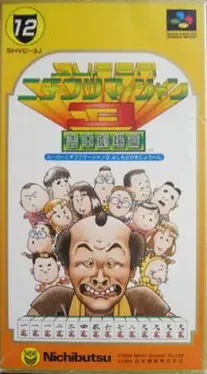
Super Nichibutsu Mahjong 3: Yoshimoto Gekijou-hen is a Miscellaneous game, published by Nichibutsu, which was released in Japan in 1994.
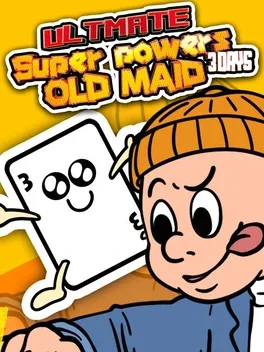
Produced in 3 days! The Ultimate Combination of Old maid and Mahjong! "Ultimate Super Powers Old Maid: 3Days" is a game based on the card game Babanuki. It is an irregular Old Maid where the player's actions are determined by the ability tiles that are replenished each turn, apart from the cards such as Numbers and Jokers.
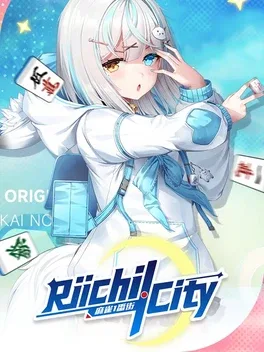
Riichi City is a free-to-play client for Riichi Mahjong, a Mahjong variation commonly played in Japan. It supports four and three player matches with a ranked modes and casual modes available. Additionally, there are ingame-resources to learn how to play Riichi Mahjong.
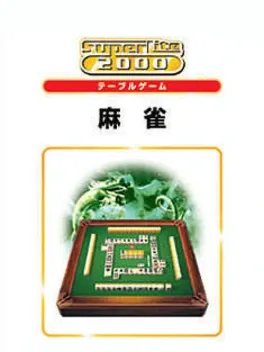
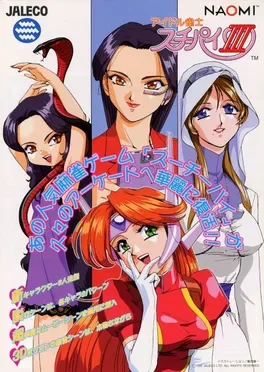
A mahjong game for arcades and PC
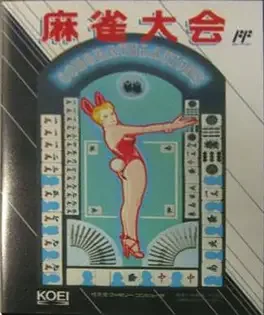
The first installment in Koei's mahjong series. Mahjong Taikai ("Mahjong Tournament") is a 1989 Famicom mahjong game from Koei and an unknown developer. It features multiple historical figures as possible CPU opponents, including Masamune Date and Napoleon Bonapart. As with any mahjong game, the goal is to complete a winning hand before any of the other players can, and the player earns an amount of points dependent on the "strength" of their winning hand. They might also lose points depending on who won and how. Koei would continue making Mahjong Taikai games for other platforms, including Super Mahjong Taikai for the Super Famicom in 1992.
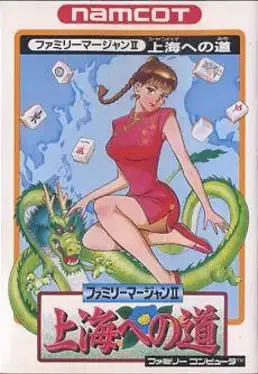
Family Mahjong II: Shanghai e no Michi is a Mahjong game released only in Japan for the Nintendo Famicom. Family Mahjong II: Shanghai e no Michi is a Mahjong game and the direct sequel to Family Mahjong. In addition to the standard Mahjong mode, there is a tournament mode with a slight RPG aspect to it, in that the player can enhance certain stats after winning games in order to increase their odds in future rounds of the tournament. The game is a one-on-one version of the game, less common in real-life Mahjong games but the standard for computer adaptations due to the reduced complexity of having only a single AI opponent. Nihon Bussan was responsible for Family Mahjong II's development and was at the time fairly well known for their Mahjong Arcade games.
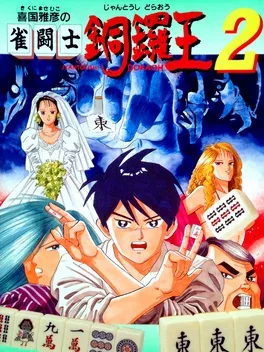
Kikuni Masahiko no Jantoushi Dora Ou 2 is a mahjong game with a parody supernatural superhero theme. Like its predecessor, it uses mahjong as a sort of component for its "battle" system. Kikuni Masahiko no Jantoushi Dora Ou 2 is a bit more "free", allowing the player to explore the world map. It also allows for four-person games, removing the two-person limitation of its forebear.
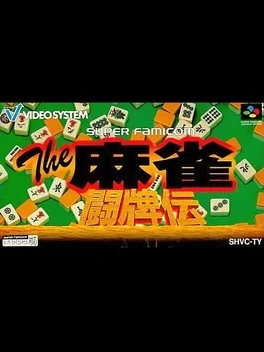
The Mahjong Touhai-den is a Miscellaneous game, developed by Khaos and published by Video System, which was released in Japan in 1993.
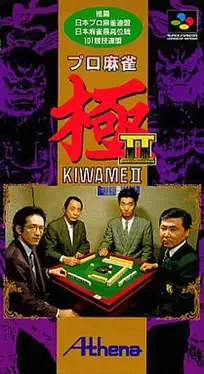
Pro Mahjong Kiwame II is a Miscellaneous game, published by Athena, which was released in Japan in 1994.