
Super Pool III




Parent game

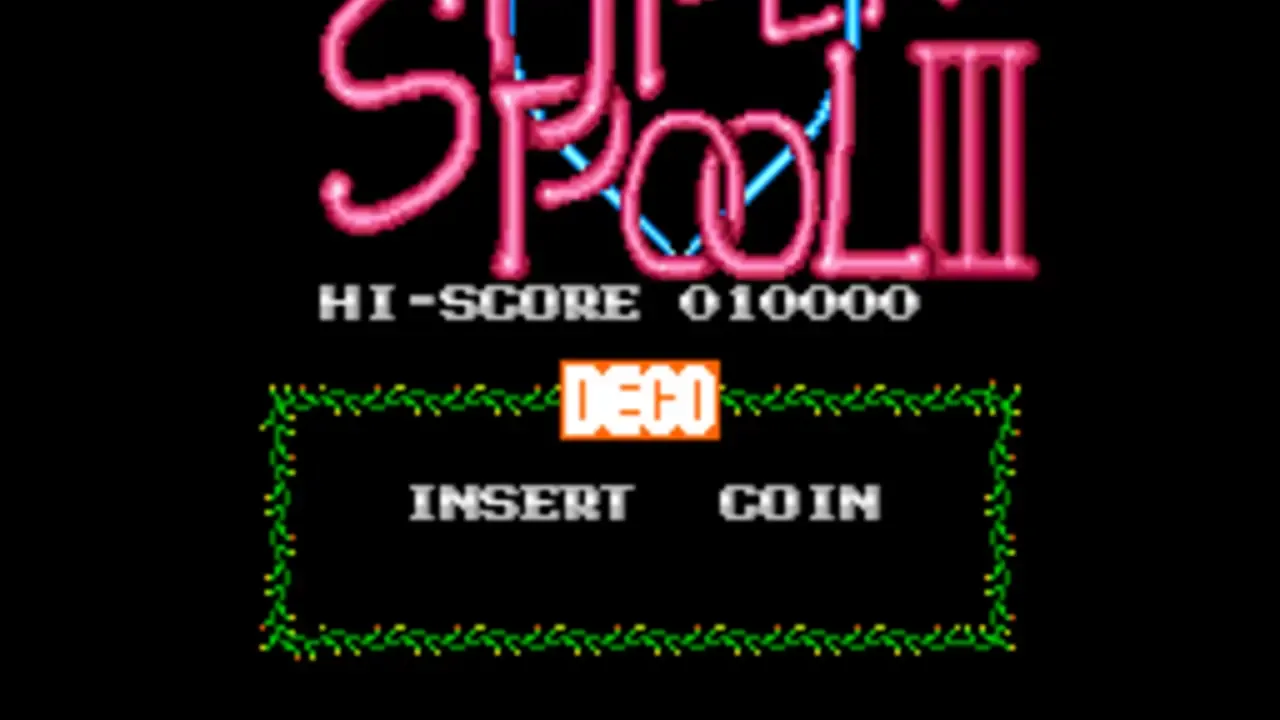
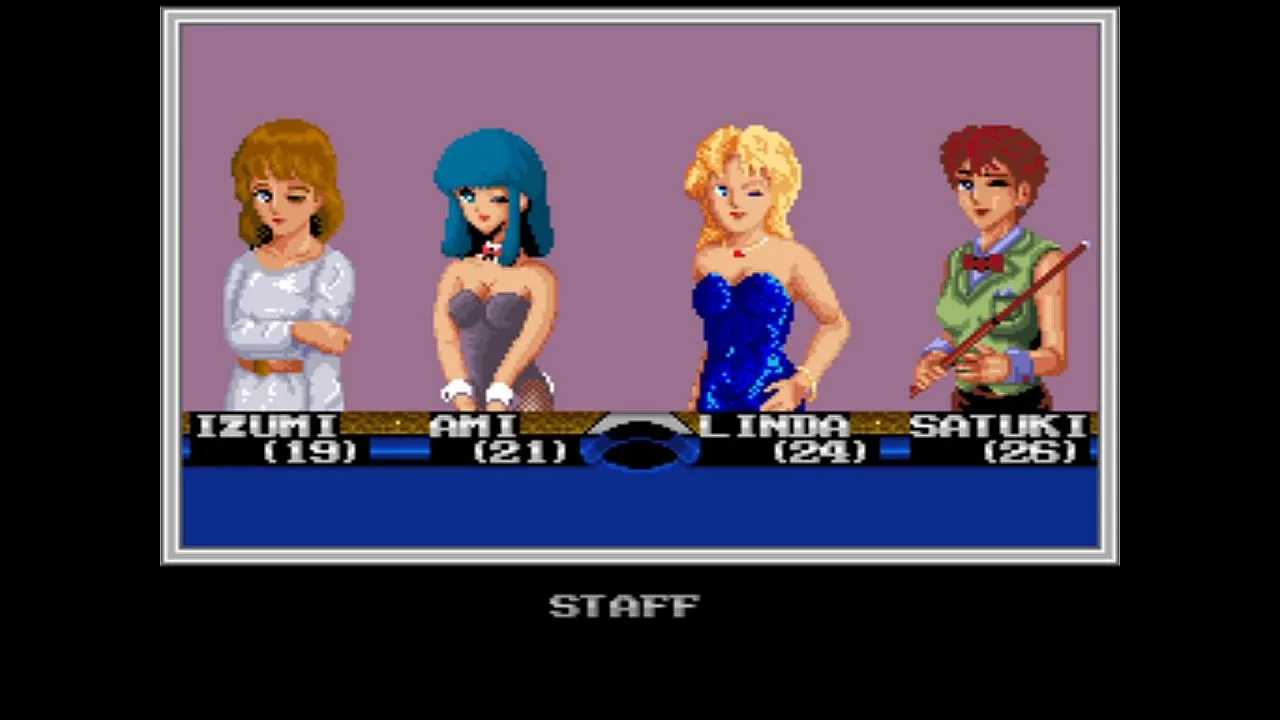
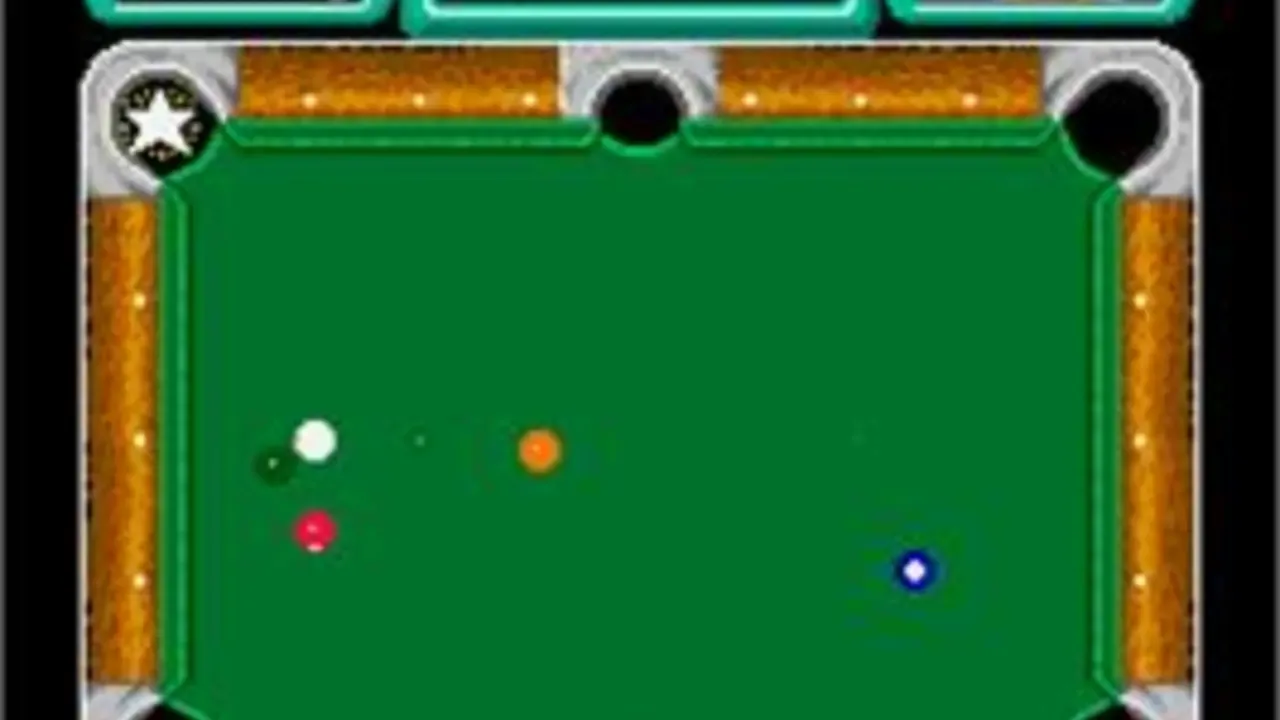
Pocket Gal is an arcade game released by Data East in 1987. The gameplay is similar to the NES version of Side Pocket, although the player has less lives, the two-player mode does not have lives (although a 20-second time limit between shots is added), and of course, the game contains nudity. There is an English version of the game called Pocket Gal 2, which was released in 1989. Also in 1989, a version of the game was released titled Super Pool III. This version of the game does not contain nudity, and it was released in North America by I.Vics. A sequel to Pocket Gal was released in 1993 called Pocket Gal Deluxe. The gameplay of Pocket Gal Deluxe is similar to the Sega Genesis version of Side Pocket. In Pocket Gal Deluxe, the art style is much more realistic than Pocket Gal. Each of the 4 stages is hosted by a corresponding girl, who's only function (not that I'm complaining) is to strip when the level is cleared. Additional points and shots can be gained by pocketing balls in order, in computer-predetermined pockets, clearing special bonus tricks between stages, etc.
Part of collection:
Side Pocket
(last 3 games)
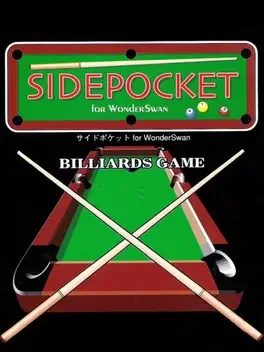
Side Pocket for WonderSwan is a Sports game, developed and published by Data East, which was released in Japan in 1999.

Side Pocket 3 is a Japan-exclusive pocket billiards video game for the PlayStation and Sega Saturn. Like its predecessor, Side Pocket 2, it features the in-game likeness of a real-life professional pool player. In this case, it's JPBA member, Kyoko Sone. Unlike the prior installments in the Side Pocket series, Side Pocket 3 renders the pool room environment with 3D polygons. In spite of this, the table can still be viewed in a traditional, top-down fashion. Play modes consist of: story mode, training mode, trick game mode, and versus mode. Game variants include: eight ball, nine ball, rotation, 14.1 continuous, bowlliards, cutthroat, three ball, poker, pocket game, mitsudama, and yotsudama.

Minnesota Fats: Pool Legend (released in Japan as Side Pocket 2) is a pocket billiards video game for the Sega Genesis and Sega Saturn, featuring famed billiards player Rudolf "Minnesota Fats" Wanderone. It was released as a sequel to Data East's earlier success, Side Pocket. The objective is to travel through different cities and defeat AI-controlled hustlers. The player can also take on another human player in order to prove his worthiness at the pool table. The player can participate in a story mode and play against a set of pros in six different pool halls in an attempt to face off against Minnesota Fats himself. There are seven different variations of pool to play: Eight-Ball, Nine-Ball, Rotation, 14-1 rack, Three ball, Cut Throat & One Pocket. There is also a Versus Mode to let players take on any opponent of their choice including a two-player option to take on a friend and a Tournament Mode. Players can also try out the Trick Mode that has the player try to compete 16 different trick shots. The Saturn version of the game largely plays the same as the Genesis version, but includes a training mode, a short documentary on Minnesota Fats, and a completely different plot in the story mode. In the Genesis version, the player takes the role of an unnamed rookie pool player seeking to challenge Minnesota Fats, and cutscenes are computer-animation. In the Saturn version, the player takes the role of Minnesota Fats himself, in his quest to challenge fictional pool hustlers from around the United States; live-action, full-motion videos (FMVs) are used for the cutscenes. In Japan, the title Side Pocket 2 is only used in the Saturn version, whereas the Genesis version retains the Minnesota Fats: Pool Legend title.
Could be interesting

Women's Professional Billiard Association's star sensation Jeanette Lee teams up with developer Celeris, Inc. to create the third installation of the Virtual Pool series by publisher Interplay. Featuring a new single player mode and online gaming capabilities to accommodate multiplayer action over a LAN or a modem, Virtual Pool 3 Featuring Jeanette Lee continues the tradition that made previous installments a commercial success. The game offers numerous game modes from which to choose, including a career mode that allows you to begin as a local player and move up through six stages on the proverbial success ladder. You can also play head-to-head against Jeanette Lee (aka "Black Widow"), adjust camera angles, set up shots, play in a tournament with 4, 8, 16 or 32 players and choose from 9-ball, 8-ball, straight pool and several other game configurations.
Minnesota Fats: Pool Legend (released in Japan as Side Pocket 2) is a pocket billiards video game for the Sega Genesis and Sega Saturn, featuring famed billiards player Rudolf "Minnesota Fats" Wanderone. It was released as a sequel to Data East's earlier success, Side Pocket. The objective is to travel through different cities and defeat AI-controlled hustlers. The player can also take on another human player in order to prove his worthiness at the pool table. The player can participate in a story mode and play against a set of pros in six different pool halls in an attempt to face off against Minnesota Fats himself. There are seven different variations of pool to play: Eight-Ball, Nine-Ball, Rotation, 14-1 rack, Three ball, Cut Throat & One Pocket. There is also a Versus Mode to let players take on any opponent of their choice including a two-player option to take on a friend and a Tournament Mode. Players can also try out the Trick Mode that has the player try to compete 16 different trick shots. The Saturn version of the game largely plays the same as the Genesis version, but includes a training mode, a short documentary on Minnesota Fats, and a completely different plot in the story mode. In the Genesis version, the player takes the role of an unnamed rookie pool player seeking to challenge Minnesota Fats, and cutscenes are computer-animation. In the Saturn version, the player takes the role of Minnesota Fats himself, in his quest to challenge fictional pool hustlers from around the United States; live-action, full-motion videos (FMVs) are used for the cutscenes. In Japan, the title Side Pocket 2 is only used in the Saturn version, whereas the Genesis version retains the Minnesota Fats: Pool Legend title.

Pool Nation is a pool game that features eleven game modes, including career options and multiplayer.
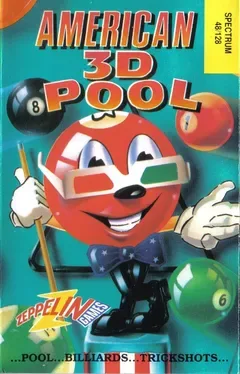

Being good at Pool is simply not enough in World of Pool. You have to be the best - and not just at Pool but also at the tactical game that is Billiards and the ultimate test of ball control, Snooker. The stakes in World of Pool could not be higher. Go to another player’s house and see what takes your fancy – a nice new cue, a jukebox, or even a vase. Challenge your opponent and if you win the item is yours for your very own crib. But be careful, because if you lose your own crib is going to be raided. As losing is not an option its time to play dirty – taunt your opponent to distract them, soften the cushions so the balls don’t bounce – do whatever it takes to win.

Cue Club is a sports simulation video game developed by British Games developer Bulldog Interactive and released for Microsoft Windows on 10 November 2000. It is a realistic interpretation of pool and snooker. The game was initially published by Midas Interactive and later by GSP (now known as Avanquest), but since 2012 it has been distributed exclusively by Bulldog through the official Cue Club website.

The Hustle: Detroit Streets is a billiards game for the Xbox, PSP, and Playstation 2.

This is the most authentic simulation of the sport ever created, with TV-style presentation and commentary, true-to-life physics and advanced artificial intelligence.
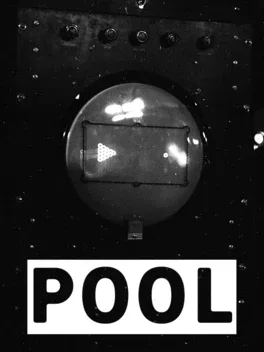
A game of pool (billiards) developed by William George Brown and Ted Lewis in 1954 on the MIDSAC computer, intended primarily to showcase the computing power of the MIDSAC. "The game displayed a 2-inch rendition of the pool cue for the players to line up their shots and ran a simulation of the colliding and ricocheting balls in real-time, implementing a full game of a cue ball and 15 frame balls for two players. Graphics were drawn in real-time on a monochrome 13" point plotting X-Y display, the screen being updated by the program 40 times a second (that is, in a normal in-game situations with 2 to 4 balls moving at once). However, for time constraints, the table and its pockets weren’t drawn by the computer graphics, but were rather drawn manually onto the display using a grease pencil." - Norbert Landsteiner for masswerk.at

Game of pool