
SuperLite 1500 Series: Fishing Club - Boat no Tsuri-hen


Buy
Part of collection:
SuperLite 1500
(last 3 games)
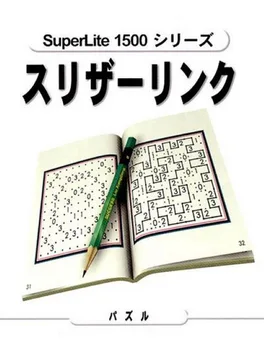
Slitherlink (also known as Fences, Takegaki, Loop the Loop, Loopy, Ouroboros, Suriza and Dotty Dilemma) is a logic puzzle developed by publisher Nikoli. Slitherlink is played on a rectangular lattice of dots. Some of the squares formed by the dots have numbers inside them. The objective is to connect horizontally and vertically adjacent dots so that the lines form a simple loop with no loose ends. In addition, the number inside a square represents how many of its four sides are segments in the loop. Other types of planar graphs can be used in lieu of the standard grid, with varying numbers of edges per vertex or vertices per polygon. These patterns include snowflake, Penrose, Laves and Altair tilings. These add complexity by varying the number of possible paths from an intersection, and/or the number of sides to each polygon; but similar rules apply to their solution. SuperLite 1500 Series - Slither Link is a puzzle game based on the Slitherlink logic puzzle featuring over 200 different stages.
A crossword is a word puzzle that normally takes the form of a square or rectangular grid of white and shaded squares. The goal is to fill the white squares with letters, forming words or phrases, by solving clues which lead to the answers. In languages that are written left-to-right, the answer words and phrases are placed in the grid from left to right and from top to bottom. The shaded squares are used to separate the words or phrases. Squares in which answers begin are usually numbered. The clues are then referred to by these numbers and a direction, for example, "4-Across" or "20-Down". At the end of the clue the total number of letters is sometimes given, depending on the style of puzzle and country of publication. Some crosswords will also indicate the number of words in a given answer, should there be more than one.
Popular collection of puzzle games will fill the picture will be completed based on the mass number of vertical and horizontal scratching puzzles first whenever visiting. The 200 questions included a wide range of offers from beginner to advanced, the size 10x10, 15x15, 20x20 sizes available 3. Configuration of the popular features button operation, and display position adjustment function, you can enjoy a comfortable play.
Could be interesting

Tatsumi Tachibana, An honor student and a superb athlete, is the team captain of Nekketsu High's Baseball team. An injury on his shoulder bars him from leading Nekketsu High to Japan's National High School Baseball Tournament. His girlfriend and team manager of Nekketsu High's Baseball team, Rika Asano, is heartbroken and unable to fulfill her duties as team manager. This motivates Sugata Sanjuro, who has a crush on her, to lead the Nekketsu team in the baseball tournament. Todou Kounosuke holds a conference and announces that Japan's National High School Baseball Tournament will commence, and Nekketsu High will be lead by Sugata. Will Nekketsu be able to defeat Reihou Academy and the other teams with Kunio nowhere to be found?

A Super Famicom baseball game from Human Entertainment. It took advantage of the system's Mode 7 to create an illusion of 3D.

Ultra Baseball Jitsumei-ban is a baseball simulator from Culture Brain and part of their Ultra Baseball series of games, which take a slightly more surreal route than other baseball franchises by giving players special abilities to use. The first two games in the series are better known in the US as Baseball Simulator 1.000 and Super Baseball Simulator 1.000. Jitsumeiban means "Real Player Version", due to the game being officially licensed by Nippon Professional Baseball, which allowed them to use actual team and player names. There would eventually be two more Ultra Baseball Jitsumeiban games for the Super Famicom, released in 1994 and 1995.

Pro Wrestling is back, and the greatest action sport has become larger than ever! With new modes, dozens of wrestlers in full polygon and the most robust edit function ever seen, pro wrestling has never felt more real!

A GeGeGe no Kitaro video game based on the 2007 anime adaptation.
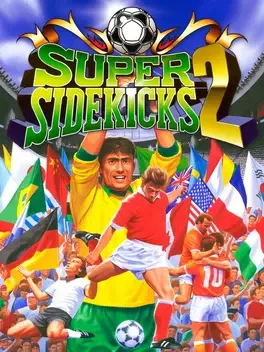
Super Sidekicks 2: The World Championship is a 1994 soccer arcade video game developed and published by SNK. It is the second installment in the Super Sidekicks series and the third soccer game released for Neo Geo MVS, preceding the original Super Sidekicks (1992). Featuring an arcade-style approach to soccer as its predecessor, the game allows players to choose any of the available game modes with AI-controlled opponents or other human players with the team of their choosing. Its gameplay uses a simplified three-button configuration.

Break Volley is an indoor volleyball game with cartoon graphics. The game features male and female teams and 12 national teams. The game supports up to four players at once.

Simple 1500 Series vol. 62: The Ski is a Ski game that use the same graphic engine that the Snowboarding. The game features 3 main characters (that the player can change their clothes) and 3 game modes: - Race Mode: Compete against yourself or 1 or 2 computer opponents and try to win the race. - Trick Mode: Compete against yourself or 1 or 2 computer opponents and do the best trick score. - Mix Mode: A mix between race & trick mode. You got to win the race and do as much tricks as you can.

The Yakyuu 2 is another baseball simulation game featuring players detailed data, and the player can design the team tactics, trade players, etc. The game features also a 2 players vs mode using a save of a team in the main game. The new features over the first Yakyuu game is that the graphic engine had been slightly improved and there are new stats and data.

Simple 1500 Series Vol.77: The Suiei is a swimming simulation game that features the classic 4 swimming styles (Freestyle swimming, Breaststroke, Backstroke. & Butterfly stroke), up to four players to compete at the same time, the gameplay controls is using the gamepad analog sticks.