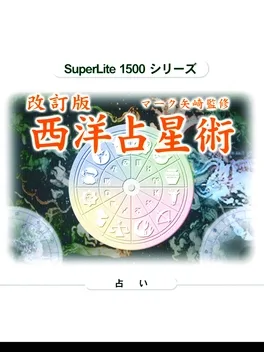
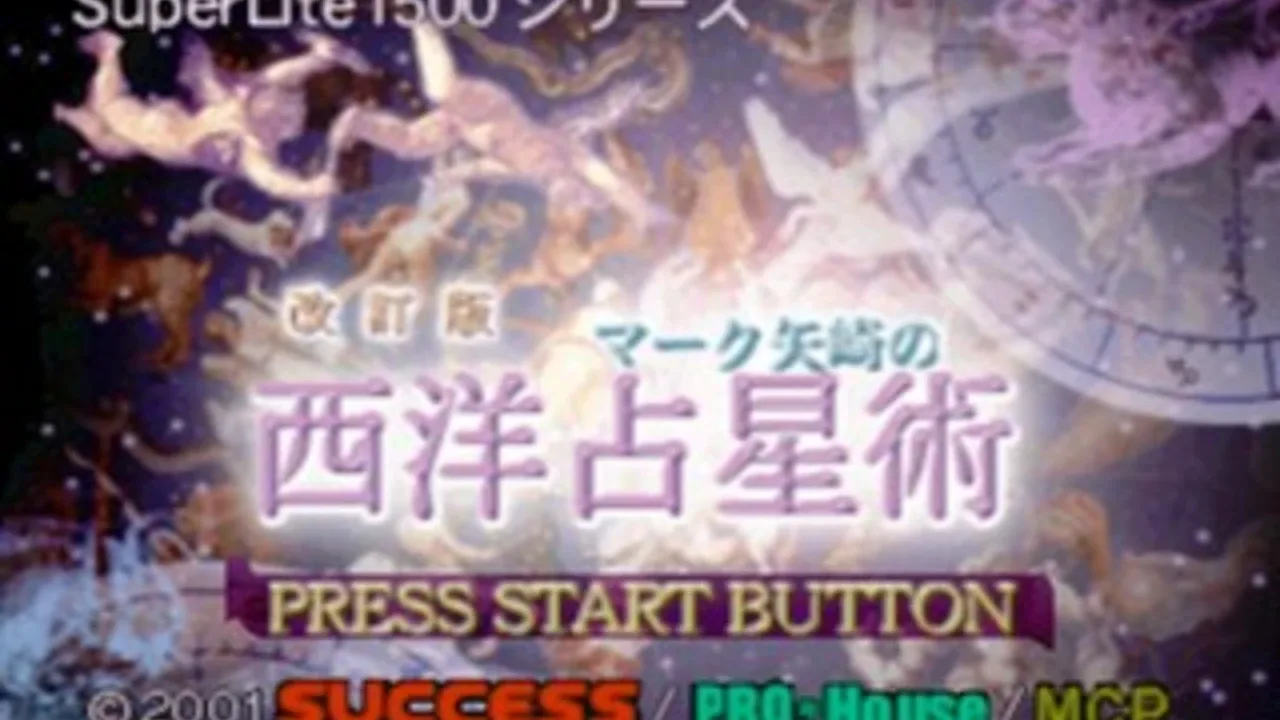
SuperLite 1500 Series: Kaiteiban Mark Yazaki no Seiyou Senseijutsu


Buy
Part of collection:
SuperLite 1500
(last 3 games)
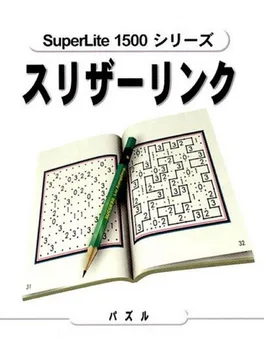
Slitherlink (also known as Fences, Takegaki, Loop the Loop, Loopy, Ouroboros, Suriza and Dotty Dilemma) is a logic puzzle developed by publisher Nikoli. Slitherlink is played on a rectangular lattice of dots. Some of the squares formed by the dots have numbers inside them. The objective is to connect horizontally and vertically adjacent dots so that the lines form a simple loop with no loose ends. In addition, the number inside a square represents how many of its four sides are segments in the loop. Other types of planar graphs can be used in lieu of the standard grid, with varying numbers of edges per vertex or vertices per polygon. These patterns include snowflake, Penrose, Laves and Altair tilings. These add complexity by varying the number of possible paths from an intersection, and/or the number of sides to each polygon; but similar rules apply to their solution. SuperLite 1500 Series - Slither Link is a puzzle game based on the Slitherlink logic puzzle featuring over 200 different stages.
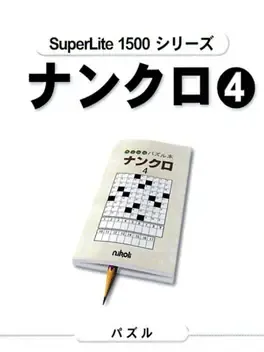
A crossword is a word puzzle that normally takes the form of a square or rectangular grid of white and shaded squares. The goal is to fill the white squares with letters, forming words or phrases, by solving clues which lead to the answers. In languages that are written left-to-right, the answer words and phrases are placed in the grid from left to right and from top to bottom. The shaded squares are used to separate the words or phrases. Squares in which answers begin are usually numbered. The clues are then referred to by these numbers and a direction, for example, "4-Across" or "20-Down". At the end of the clue the total number of letters is sometimes given, depending on the style of puzzle and country of publication. Some crosswords will also indicate the number of words in a given answer, should there be more than one.
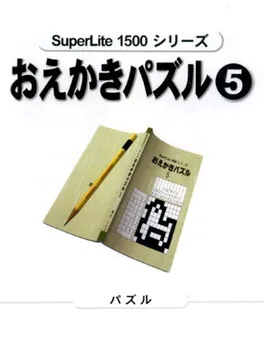
Popular collection of puzzle games will fill the picture will be completed based on the mass number of vertical and horizontal scratching puzzles first whenever visiting. The 200 questions included a wide range of offers from beginner to advanced, the size 10x10, 15x15, 20x20 sizes available 3. Configuration of the popular features button operation, and display position adjustment function, you can enjoy a comfortable play.
Could be interesting
Super Loopz is a revamped version of Loopz. Feature enhanced graphics and new musics, but the same gameplay: sort of Tetris encounter Pipe Dream. Tubes of random shapes drop on to a board, and by rotating and placing them you have to make shapes that join up in loops. Once you have placed a piece you can't remove it, except by using a special items which destroy every part of an incomplete loop it touches; every tenth loop takes you to a new level.
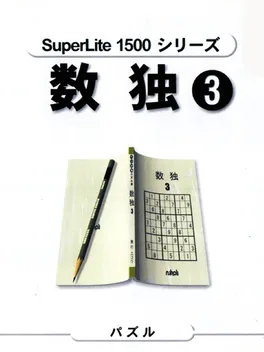
A third round of Sudoku from the guys 'n' gals at Success Corp.
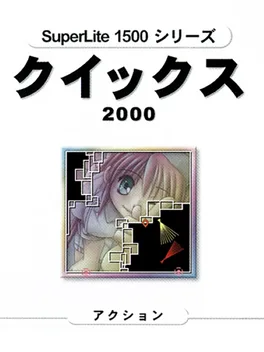
Qix 2000 offers both a perfectly-translated version of the original and the insanely fun arrangement version, which updates the graphics (giving the Qix itself a Tempest X3-style psychedelic flair) and adds a few power-ups to the mix. The speed-up power-up makes even slow draw fast, and fast draw faster, but the speed-down power-up negates that effect - and heaven help you if you hit the latter while already operating at normal speed.
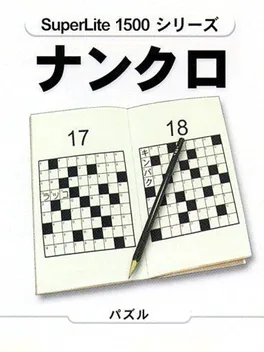
A crossword is a word puzzle that normally takes the form of a square or rectangular grid of white and shaded squares. The goal is to fill the white squares with letters, forming words or phrases, by solving clues which lead to the answers. In languages that are written left-to-right, the answer words and phrases are placed in the grid from left to right and from top to bottom. The shaded squares are used to separate the words or phrases. Squares in which answers begin are usually numbered. The clues are then referred to by these numbers and a direction, for example, "4-Across" or "20-Down". At the end of the clue the total number of letters is sometimes given, depending on the style of puzzle and country of publication. Some crosswords will also indicate the number of words in a given answer, should there be more than one.

A crossword is a word puzzle that normally takes the form of a square or rectangular grid of white and shaded squares. The goal is to fill the white squares with letters, forming words or phrases, by solving clues which lead to the answers. In languages that are written left-to-right, the answer words and phrases are placed in the grid from left to right and from top to bottom. The shaded squares are used to separate the words or phrases. Squares in which answers begin are usually numbered. The clues are then referred to by these numbers and a direction, for example, "4-Across" or "20-Down". At the end of the clue the total number of letters is sometimes given, depending on the style of puzzle and country of publication. Some crosswords will also indicate the number of words in a given answer, should there be more than one.
A crossword is a word puzzle that normally takes the form of a square or rectangular grid of white and shaded squares. The goal is to fill the white squares with letters, forming words or phrases, by solving clues which lead to the answers. In languages that are written left-to-right, the answer words and phrases are placed in the grid from left to right and from top to bottom. The shaded squares are used to separate the words or phrases. Squares in which answers begin are usually numbered. The clues are then referred to by these numbers and a direction, for example, "4-Across" or "20-Down". At the end of the clue the total number of letters is sometimes given, depending on the style of puzzle and country of publication. Some crosswords will also indicate the number of words in a given answer, should there be more than one.
A crossword is a word puzzle that normally takes the form of a square or rectangular grid of white and shaded squares. The goal is to fill the white squares with letters, forming words or phrases, by solving clues which lead to the answers. In languages that are written left-to-right, the answer words and phrases are placed in the grid from left to right and from top to bottom. The shaded squares are used to separate the words or phrases. Squares in which answers begin are usually numbered. The clues are then referred to by these numbers and a direction, for example, "4-Across" or "20-Down". At the end of the clue the total number of letters is sometimes given, depending on the style of puzzle and country of publication. Some crosswords will also indicate the number of words in a given answer, should there be more than one.
Slitherlink (also known as Fences, Takegaki, Loop the Loop, Loopy, Ouroboros, Suriza and Dotty Dilemma) is a logic puzzle developed by publisher Nikoli. Slitherlink is played on a rectangular lattice of dots. Some of the squares formed by the dots have numbers inside them. The objective is to connect horizontally and vertically adjacent dots so that the lines form a simple loop with no loose ends. In addition, the number inside a square represents how many of its four sides are segments in the loop. Other types of planar graphs can be used in lieu of the standard grid, with varying numbers of edges per vertex or vertices per polygon. These patterns include snowflake, Penrose, Laves and Altair tilings. These add complexity by varying the number of possible paths from an intersection, and/or the number of sides to each polygon; but similar rules apply to their solution. SuperLite 1500 Series - Slither Link is a puzzle game based on the Slitherlink logic puzzle featuring over 200 different stages.

Loppi Puzzle Magazine: Hirameku Soukangou is a Puzzle game, developed by Game Studio and published by Success, which was released in Japan in 2001.