
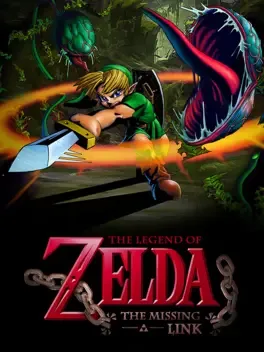
The Legend of Zelda: The Missing Link


Parent game
The Legend of Zelda: Ocarina of Time is the fifth main installment of The Legend of Zelda series and the first to be released for the Nintendo 64. It was one of the most highly anticipated games of its age, and is listed among the greatest video games ever created by numerous websites and magazines. The gameplay of Ocarina of Time was revolutionary for its time, it has arguably made more of an impact on later games in the series than any of its predecessors even though they had the same cores of exploration, dungeons, puzzles and item usage. Among the gameplay mechanics, one of the most noteworthy is the time-traveling system. The game begins with the player controlling the child Link, but later on an adult Link becomes a playable character as well and each of them has certain unique abilities. Ocarina of Time also introduces the use of music to solve puzzles: as new songs are learned, they can be used to solve puzzles, gain access to new areas and warp to different locations. Dungeon exploration is somewhat more puzzle-oriented than in earlier games but they are not too complex.
Could be interesting

Zelda Mobile was a fan-made game based on The Legend of Zelda series created by Gorthwogh.
Pokémon Infinite Fusion is a Pokémon RPG fangame based on the Pokémon fusion generator trend, featuring sprite art from a large community of artists. In this version of Pokémon, Silph Co. has created a DNA splicer that can work on any Pokemon, allowing their stats, visual appearance, and typing to be combined alongside their available abilities and moves. The game includes both the Kanto and Johto regions, and includes over 570 Pokémon, including the first 386 Pokémon from the first three generations alongside a suite of specifically chosen Pokémon from later generations. With hundreds of thousands of fusions available, even Professor Oak doesn't expect you to "catch 'em all"!

A Fan-Game MMORPG about pokemon world. Explore the world of pokemon, catch pokemon, trade them and fight against other players, Gyms Leaders and Leagues Participe to the different event's and meet new people.
The Legend of Zelda: Shénqí de Màozi is a backport of The Legend of Zelda: The Minish Cap on the Famicom. It was published and developed by Shenzhen Nanjing. This game has a title hack where the title screen is changed to The Phantom Hourglass.
Zelda Classic is an unofficial open-source Zelda fan game and game engine. It is, by itself, a recreation of the original The Legend of Zelda, but it allows the creation of expansions (called quests) which can be played with the game engine.
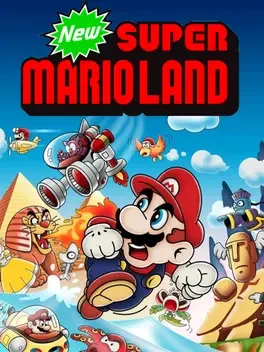
New Super Mario Land is a recreation of Super Mario Land (Game Boy) using New Super Mario Bros. (Nintendo DS) assets and released for the SNES, with pseudo-3D graphics and a new co-op multiplayer mode.
Long before this trainee of the dark arts would come to be called Bayonetta, she took a fateful journey into the forbidden Avalon Forest. Alongside her was Cheshire, her very first demon, possessing Cereza’s stuffed toy. Play as both Cereza and Cheshire and search through the treacherous forest to look for the power to save Cereza’s mother.
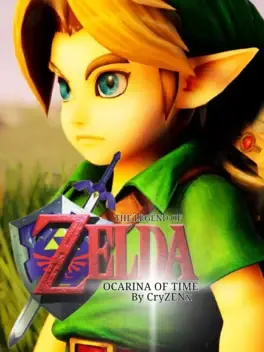
A fan recreation of The Legend of Zelda: Ocarina of Time with updated graphics, made using the Unreal Engine.
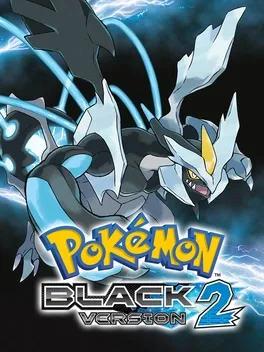
Pokémon Black Version 2 and Pokémon White Version 2 are the second and final paired versions of Generation V and are the sequels of Pokémon Black and White, respectively. Both games were revealed on Pokémon Smash! by Junichi Masuda, and subsequently the official Japanese and international Pokémon websites, on February 26, 2012. They were released in Japan on June 23, 2012, in North America on October 7, 2012, in Australia on October 11, 2012, in Europe on October 12, 2012 and in South Korea on November 8, 2012. The games feature two new forms of Kyurem that serve as the game mascots of the games: Black Kyurem for Black 2 and White Kyurem for White 2.
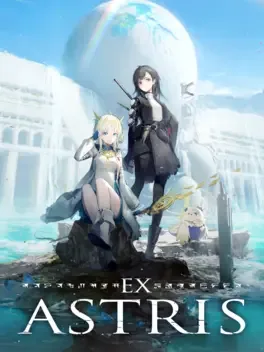
Ex Astris reveals an exploration of episodic narrative and 3D RPG gameplay.