

Buy
Could be interesting
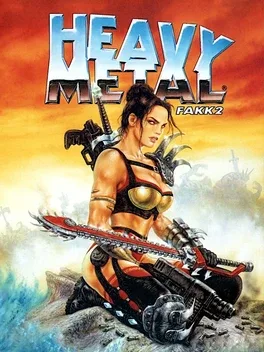
Heavy Metal: F.A.K.K. 2 is a third-person shooter video game made by Ritual Entertainment in 2000. A sequel to the Heavy Metal 2000 animated movie, the game stars Julie in her quest to save her home planet of Eden from GITH, an ancient entity seeking to conquer the universe. Using a variety of weapons, Julie must now fight off GITH's forces while at the same time uncovering a secret hidden deep within the planet.
Raft Wars is a popular flash game from the late 2000s. It is a strategic shooter game similar to the popular mobile game Angry Birds. As the end of support for flash happened at the end of 2020, the developer and his team ported the game to the most advanced web platform HTML5 and released it on late 2019.
Mighty Switch Force! is a puzzle platformer developed by WayForward Technologies for Nintendo 3DS. It is the third game in WayForward's Mighty series, following Mighty Flip Champs! and Mighty Milky Way. The game was released on the Nintendo eShop on December 22, 2011.An update to the game, including five new levels, was released on May 24, 2012. A high-definition version, Mighty Switch Force! Hyper Drive Edition, was released for the Wii U in 2012, featuring re-drawn graphics and other new features. A Steam version of the game was also released in June 2015. A sequel, Mighty Switch Force! 2, was released in June 2013
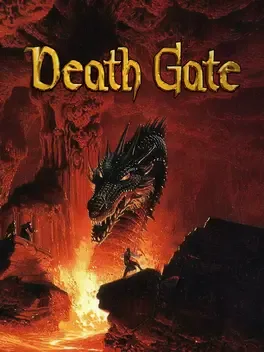
Death Gate is a classic adventure game from the much revered Legend Entertainment. The studio is known for developing games that include exceptionally well crafted puzzles and a wacky sense of humor which frequently breaks the fourth wall and plays to a wide assortment of offbeat puns. Moreover, the company has emerged with a winning streak of fantasy and sci-fi games based on popular literature adaptations. The most famous of these are Frederick Pohl's Gateway and Terry Brooks' Shannara. In 1994, Legend Entertainment has chosen to adapt not 1 book but the whole series of 7 books by Margaret Weis and Tracy Hickman known as The Death Gate Cycle. The original release of the game even includes a special gift for fans of the book series, namely an exclusive short story written by the same authors that tells some of the history of the mysterious Assassin's Guild from the series. In Death Gate, the player is cast in the role of a freshly freed Patryn—a young, brave wizard named Haplo. By his deeds in the Labyrinth, he has gained Xar's trust to be sent as a scout to the other 4 realms. The way between them leads through a mystical portal known as the Death Gate. For his journey, Haplo is handed not a single but several quests to complete. He must first explore the realms, learn about the new lands, and find the pieces of the World Seal that will allow the reformation of the world to its original whole. He must also retrieve as much of forgotten magical lore as he can, and find runes that will allow him to enter all the other realms. Finally, and most importantly, he must find out what has happened to the Sartan who seem to have vanished somewhere long ago, so that Xar will be able to bring them to the proper Patryn justice. The game, by taking inspiration from the first 4 books, creates a certain unique experience for the player that stands out among other fantasy adventures. There is an unusually layered structure based on the initial premise of the 5 separate realms, since the consequences of the sundering run much deeper than mere differences in landscapes. From realm to realm life conditions vary enormously, including geography, history, fauna, flora and astronomical bodies. For each realm, the population is divided into very specific societies, although many attributes of each race remain common. Several royal families, powerful guilds, and wealthy, independent merchants all have their own specific goals and ambitions that are not at all connected to the grand schemes of the Patryn and the Sartan, which they mostly are unaware of at this time after centuries of their absence. The distinctiveness of each culture's circumstances and the individual diversity of the larger and smaller schemers within the cast of characters give a special magic and wonder to the proceedings in the game, especially when the player visits a new realm for the first time and starts exploring it. The worlds possess a mysterious, intriguing flavor, but with a touch of whimsical surprises from nearly everywhere. Each encounter with Xar between travels reveals more information concerning the whole mechanics that connect these realms. Death Gate contains some exceptionally good voice acting. This is especially true for Henry Strozier who plays the role of Xar. He carries a low, charismatic, and authoritative voice that perfectly befits a character with a brave heart, long experience, deep wisdom, but a good share of arrogance. He shines for good measure too, since the player will spend more time conversing with his character than any other in the game. Haplo, who is only heard in conversations, voiced by David DeBoy, does not have a plain, uninteresting voice either. He sounds slightly arrogant and lordly like his master, but also rather youthful, yet manly enough to give an air of independency. The MIDI music in Death Gate is very well done. The compositions are perfect for an epic fantasy setting. The tunes are often light and comforting, but they can change dramatically to a more majestic tone when visiting the king's palace and to a darker motif when exploring the undergrounds of Abarrach, the vicious Labyrinth, or the deadly Assassin's Guild. Aside from Haplo and Xar, several other characters from the books also make an appearance in the game. Many of them, however, have been greatly simplified and reduced to only episodic roles with little development. Many major characters from the books are missing altogether, most notably Alfred, whose role is crucial in bringing out Haplo's characterization in the literary originals. On the other hand, some of the memorable archetypes from the books are used in new, interesting ways. For example, a boy named Bane has been recast into a different child with a different life and social standing, though both share a very similar personality. The character that stays most true to the canon is the whimsical, crazy wizard Zifnab, who appears in all his pun infested glory. In general, the plotlines are less violent and happier than those in the books, and the characters show less moral ambiguity. Death Gate plays like a traditional point-and-click adventure game, but like a role-playing game it is as much about being free to explore the fictional world as about following a foreordained storyline thread. There is quite a bit of narrative text, diaries, historical documents, and dialogs to sieve through. They are all well written and are rather fascinating, since everything is directly connected to the quests the player needs to complete or the puzzles the player needs to solve. There is a fine dose of humor in the game too, but nothing so unsubtle that may distract from taking the main conflicts of the story seriously. From this stance, Death Gate is actually quite a departure from the largely comical gallery of previous game titles from Legend Entertainment. The puzzles in Death Gate are a bit on the easy side, but the enjoyment they give is very well balanced by their ingenuity. The wealth of subplots, quests, plot twists, and deceptions add a lot of tension to the player's own proceedings. There is a certain logic and buttons based puzzle that is rather hard to beat. However, the player can ask for help from the game to solve it (or even skip over it). In general, the difficulty level of the game lies somewhere between easy and medium. The player can die in the game, but there is an option available to undo the player's last fatal action. Comparison with the books quickly reveals some of the obvious budgetary or time constraints the developer must have faced during Death Gate's development. Pryan, the realm of fire, is build of elements taken not only of this realm in its original form but also of Chelestra, the realm of water. Consequently, the latter realm has shrunken to a very limited scope in the game. The smallness of Chelestra comes in the game as a particular disappointing revelation, since it is the last of the elemental realms that the player visits. The interface used in Death Gate has evolved from the original Legend Entertainment's interactive fiction interface. There is an always available standard list of commands (such as Take, Look at, or Use) for the player to choose from, reminiscent of Lucasarts' SCUMM interface. In addition, extra action commands specific to an object appear when it is clicked. For example, when clicking on a door, apart from the standard list of verbs, there are added options to unlock, knock, or eavesdrop on the door. There are many actions which are not necessary to complete the game but which trigger funny responses specific to the situation. Altogether, the interface is a clever compromise between the sense of freedom achieved through a text parser and the simplicity of contemporary point-and-click style. Gameplay in Death Gate draws on a few gimmicks that are typical of role-playing games. For some parts of the game, the player is able to have a party of several characters. There is also a process of collecting magical spells, even though they have been tweaked for solving puzzles instead of combat. A spell is constructed by connecting runes in a combination. After that, it is traced in the air by Haplo with his hands to bring the spell into motion. The player will be able to learn many spells in the game, mostly from the mensch. This is an important diversion from the canon, as the mensch from the books possess a different kind of magic altogether. The high resolution graphics of the game will remind fans strongly of fantasy literature illustrated covers. The characters are beautifully detailed in high resolution, but rarely fully animated. However, their faces are always incredibly alive, especially in conversational close-ups. When exploring the game world, the player will notice many intricate but small animations in otherwise generally static sceneries. Major events occurring in the game are partially described in narrative text and partially presented as cut scenes. Sadly, the number of background illustrations in the game is a bit limited. All locations are shown from only a single point of view. Sometimes, the player is drawn to something interesting drawn at the edge of an illustration but is unable to look closely to find out more about it.
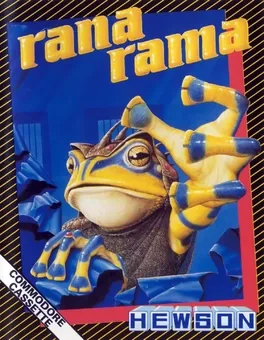
Mervyn the sorcerer's apprentice is trapped in an evil dungeon after escaping from an invasion of warlocks. Life wouldn't be so bad if he hadn't inadvertently changed himself into a frog, whilst concocting a potion to improve his looks. Help Mervyn seek out the evil warlocks and destroy their mis-shapen guardian hordes. Blast their looming weapon generators and defeat the warlocks themselves in ritual magic combat... and if you have enough strength after all that - who knows, you might succeed in turning him back into a human Mervyn - el Wimpo or Rambo? Only if he gets the right potion!! The aim of the game is to start on the top level of the dungeon and defeat each warlock that you encounter. Each warlock is guarded by groups of evil creatures - You earn extra points for destroying these creatures, but they do not affect the main course of the game. Some of the rooms in the dungeon contain tomb-like weapon generators which create vicious weapons such as spinning knives. Destruction of the weapons earns you nothing but you can shoot the generators for extra points. Some rooms also have mysterious symbols embedded in the floor. The symbols are called Floor Glyphs and are of four different types. One type is used to weave magic spells, another may be fired to destroy some or all your enemies in the room. The other two types are used to reveal a plan of the current level of the dungeon or to transport you to a new level. When you defeat a warlock you should strive to capture the magic runes which he releases because you may then use them to conjure spells to make yourself stronger in attack and less vulnerable in defence. When you have cleared the top level of the dungeon you will be strong enough to proceed downwards to tackle the more aggressive warlocks and their guardian creatures which lurk below.
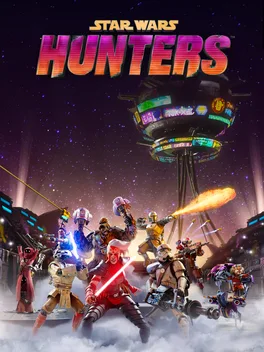
Star Wars: Hunters brings together all-new, unique Hunters from across the Star Wars galaxy each with larger-than-life personas, rich undiscovered pasts and ability sets that make them formidable combatants in The Arena. Gear up for battle choosing from a roster of new characters, including nefarious bounty hunters, heroes of the Rebellion, Imperial stormtroopers, and everything in between. Outclass opponents by mastering advanced abilities, skills and strategies while fighting it out in intense 4v4 third-person combat and dominating opponents on the road to fame in The Arena. Customize each Hunter by collecting and equipping them with fun and unique costumes, animations, and weapon appearances, making for an impressive competitor that stands out on the battlefield and is ready to challenge for glory. Dazzle The Arena’s crowd, competing across multiple PVP game modes; within Escort, defense and attack skills are crucial as the team need to work together to safely escort the payload before their enemies defeat them. In Control, two teams battle it out to defeat one another and take control of the central objective area until the time runs out. Each battlefield set in The Grand Arena on Vespaara evokes iconic Star Wars locales such as Tatooine, Hoth and Endor.
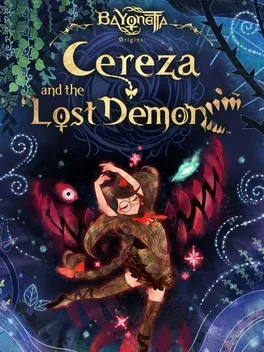
Long before this trainee of the dark arts would come to be called Bayonetta, she took a fateful journey into the forbidden Avalon Forest. Alongside her was Cheshire, her very first demon, possessing Cereza’s stuffed toy. Play as both Cereza and Cheshire and search through the treacherous forest to look for the power to save Cereza’s mother.
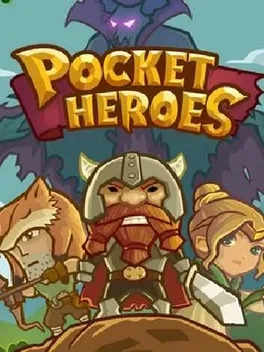
Command a party of elite heroes, fight monsters and demons in various dungeons. Use magic and different weapons. Take vengeance for king Arthur's death in this Android game. Defeat strong monsters like cyclops, carnivorous plant, giant sandworm and so on. Organize your hero parties in such a way so their classes and abilities complement each other. You have mages warriors, archers and priests. As you level up you can choose one of two paths of each hero class.
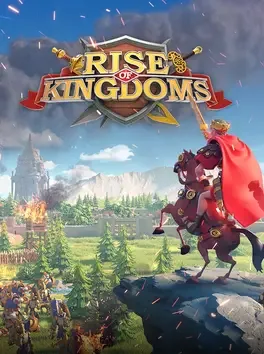
From the depths of obscurity to the peaks of legend, you will be the author of your civilization's history. Will you launch epic wars and conquer the entire world? Or rise up as a virtuous leader renowned for your sagacity? Will you set off to explore the unknown as a pioneer? Or dedicate yourself to helping your own people?
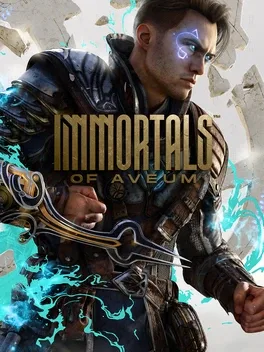
From the creative director of Dead Space and multiple Call of Duty campaigns comes Immortals of Aveum, a single-player first-person magic shooter set in an original fantasy universe engulfed in magic, rife with conflict, and on the verge of oblivion.