
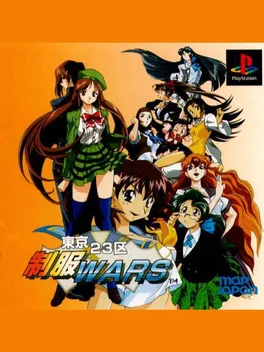
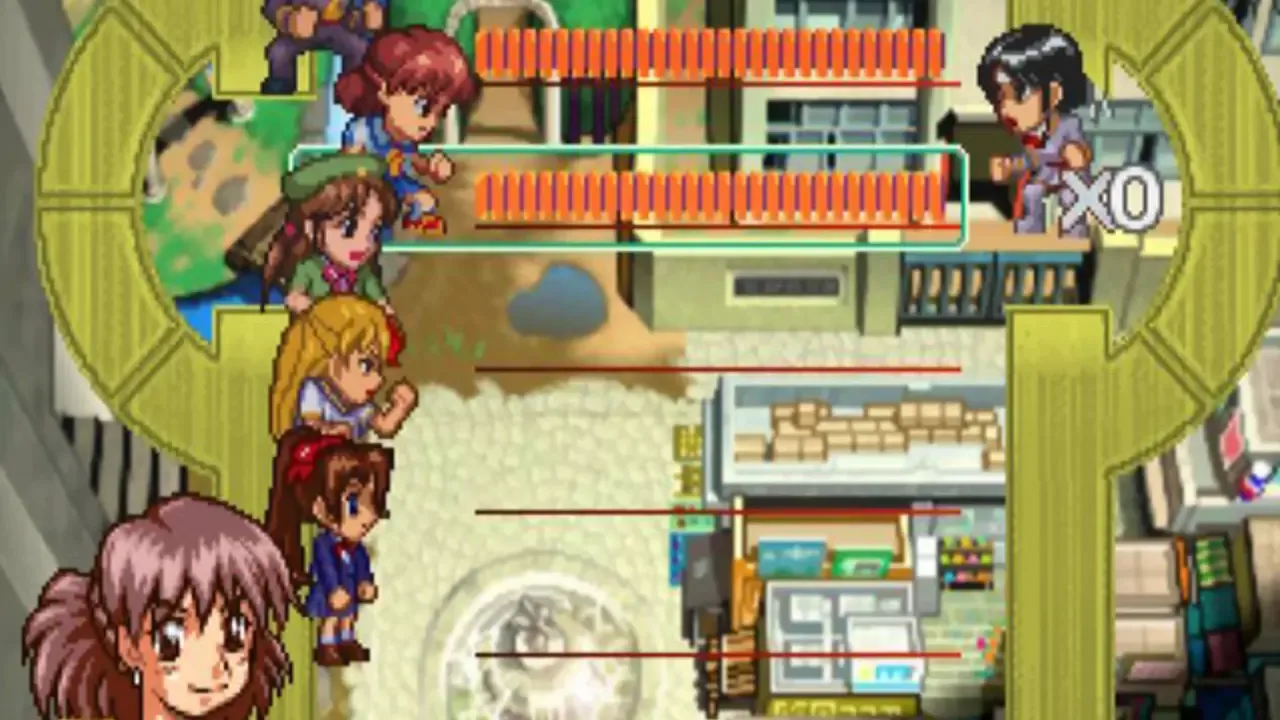
Tokyo 23-Ku Seifuku Wars




Buy
Could be interesting
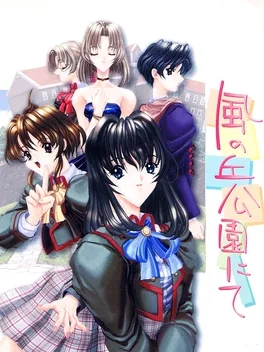
Kaze no Oka Kouen Nite is a first person adventure game in which the player takes the role of a young student that arrives at a town and begins the class in fall in a new high school when he will find 4 girls, that one of them can be the love of his live. The gameplay is about choosing at some times of the game between different answers that will lead that girl story in a way or another. The game let the player choose which girl story he wants to play (there are 4 possible ones, one for each main girl character) and the events and situations will be different in each girl story, but all the girls will appear in the other stories.
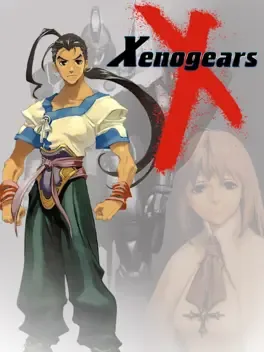
Xenogears Blends Authentic RPG Gameplay with Exquisite Hand-Drawn and Computer-Generated Animation in a Grand Science Fiction Tale. An intricate storyline involving many human and non-human characters will prove to captivate audiences of all ages. Players can rotate the amazingly detailed 3D gameplay maps 360 degrees, and have the ability to navigate around the environment by jumping and climbing. In battle, mega-robots can be controlled, adding great variety to play. A new real-time combat system eliminates restrictive menus, using button commands to provide fast-paced, intuitive action. Players can wield dramatic magical spells or engage in real-time polygonal robot vs. robot battles. Combined with dynamic camera angles and intense lighting effects, Xenogears is an experience that won't be forgotten.

Fūraiki is a visual novel blending photographic backgrounds with anime-style character overlays. The player character is a travel blogger and photographer, who travels to Japan's northernmost island of Hokkaido to document his journeys for his blog. On the boat to the island, he encounters a number of young girls also traveling there, whom you will have additional opportunities to meet during the main part of the game.
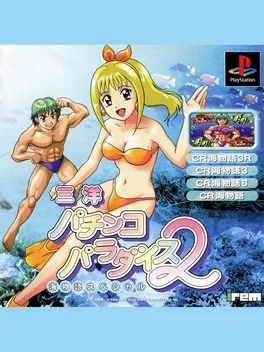
Pachinko Paradise 2 is the second title in Irem's long-running pachinko simulation series. It features reproductions of four pachinko machines made by Sanyo Bussan: CR Umi Monogatari 3R, CR Umi Monogatari 3, CR Umi Monogatari 6, and CR Umi Monogatari. There are two modes available: Tsūjō (Normal) mode allows the player to modify a wide range of settings for each machine, while Jissen (Battle) mode challenges the player to win as many balls as possible on the default settings with a limited starting pool and time limit. There is also a View mode where the various animations that play on the in-game display can be freely viewed. Unlike the previous title, there is no story mode.
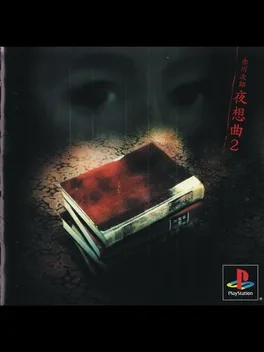
Akagawa Jirou - Yasoukyoku 2 is the sequel to Akagawa Jirou - Yasoukyoku, a first person perspective adventure game that was also released later for the Nintendo DS console. This adventure game is also adapted from Akagawa Jirou's classic mystery novel Yasoukyoku and this sequel contains three separate detective stories. The stage is set in a Library, a mansion hidden in a small town where a collection of books related to death are stored.
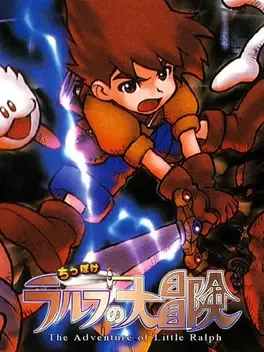
The Adventure of Little Ralph is a 2D platformer. In this game the player controls Ralph, who has been turned back into a child by the evil demons who have invaded his homeland. In order to stop them and return to his former self, he must get through each area filled with enemies, traps, and many hidden routes. Ralph is armed with swords and various magic powers and also has the assistance of a small furry companion. The game's levels are interconnected, unlike the "stages" of most other platform games.
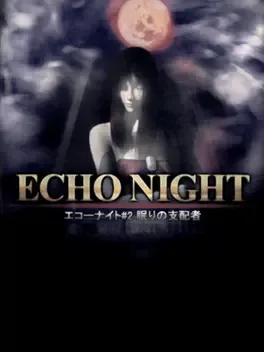
Echo Night 2: Nemuri no Shihaisha is a first person adventure. Like the first game, Echo Night 2 is played from a first-person perspective, but unlike most other first-person games there is no use of firearms in the game. When confronted by a ghost the player must turn on the lights in the room by means of a light switch. The player is often transported into the past via the passengers or certain objects. Once the player fulfills a task important to a spirit they will vanish and drop an "Astral Piece" which can be used to get a different ending scene.
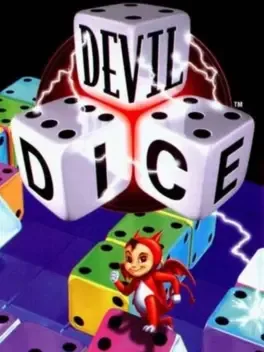
Devil Dice is a unique puzzle game, where the player controls a small devil that runs around a grid covered in large dice. The player can both stand atop dice, and stand on the ground (with the dice towering above). When standing on the dice, the player can move from die to die, or can roll a die in the direction he or she runs, revealing a different face as the die rotates. Creating a group of adjacent dice with identical pips—the size of which must be at least the number of pips—causes those dice to slowly sink into the field before disappearing. Chain reactions are possible by adding additional dice to a sinking set. Different types of dice are available in some modes, with different properties to make the game more challenging. It was originally created by developer Shift on the "homebrew" Yaroze platform, and later turned into a commercial game. Released in 1998, it is one of only a handful of games to make the leap from the Yaroze to commercial release. The game is a million-seller and a demo version was released as a PlayStation Classic game for the PlayStation 3 and PlayStation Portable on November 7, 2007.

R4: Ridge Racer Type 4 is the fourth game in the Ridge Racer series. It includes eight tracks (with reverse variants, for a total of 16 layouts) and 321 vehicles, all of which are fictional. This iteration was one of the first PlayStation titles to feature Gouraud shading on polygons, giving the game a visual depth that was previously missing. It was also the first Ridge Racer game on the system to feature two-player split-screen mode and offered two different driving models.
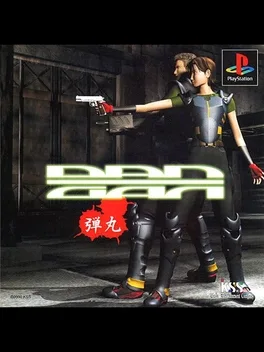
Dangan is a action multiscroll game that is set in a near future and puts the player in control of 2 counter-terrorist agents (Jack & Kate) that will have to defeat different enemies during 8 different operations. The game features a top down view and different weapons to choose and use.