
Yoshimoto Mahjong Club


Buy
Part of collection:
SuperLite 1500
(last 3 games)
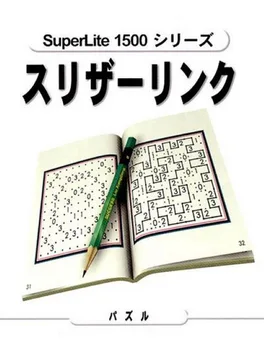
Slitherlink (also known as Fences, Takegaki, Loop the Loop, Loopy, Ouroboros, Suriza and Dotty Dilemma) is a logic puzzle developed by publisher Nikoli. Slitherlink is played on a rectangular lattice of dots. Some of the squares formed by the dots have numbers inside them. The objective is to connect horizontally and vertically adjacent dots so that the lines form a simple loop with no loose ends. In addition, the number inside a square represents how many of its four sides are segments in the loop. Other types of planar graphs can be used in lieu of the standard grid, with varying numbers of edges per vertex or vertices per polygon. These patterns include snowflake, Penrose, Laves and Altair tilings. These add complexity by varying the number of possible paths from an intersection, and/or the number of sides to each polygon; but similar rules apply to their solution. SuperLite 1500 Series - Slither Link is a puzzle game based on the Slitherlink logic puzzle featuring over 200 different stages.
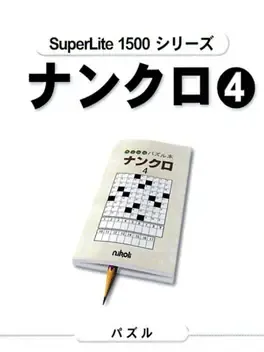
A crossword is a word puzzle that normally takes the form of a square or rectangular grid of white and shaded squares. The goal is to fill the white squares with letters, forming words or phrases, by solving clues which lead to the answers. In languages that are written left-to-right, the answer words and phrases are placed in the grid from left to right and from top to bottom. The shaded squares are used to separate the words or phrases. Squares in which answers begin are usually numbered. The clues are then referred to by these numbers and a direction, for example, "4-Across" or "20-Down". At the end of the clue the total number of letters is sometimes given, depending on the style of puzzle and country of publication. Some crosswords will also indicate the number of words in a given answer, should there be more than one.
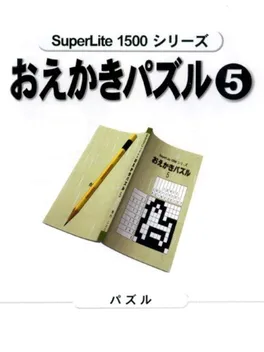
Popular collection of puzzle games will fill the picture will be completed based on the mass number of vertical and horizontal scratching puzzles first whenever visiting. The 200 questions included a wide range of offers from beginner to advanced, the size 10x10, 15x15, 20x20 sizes available 3. Configuration of the popular features button operation, and display position adjustment function, you can enjoy a comfortable play.
Could be interesting
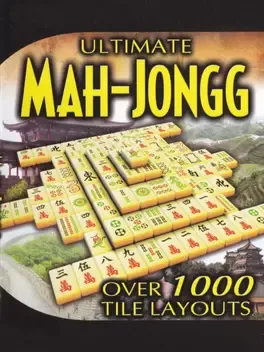
Ultimate Mah-Jongg which allows the player to play of the 1001 tile layouts, using any of seven tile images, in either 2D or 3D. This is the mode where the player has access to the editors that create new tile layouts and tile sets. This game mode plays in a window only.
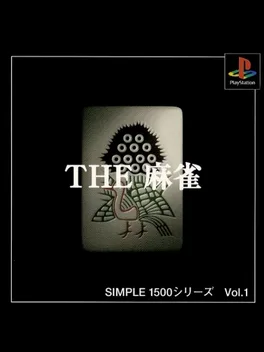
This is a video game version of the ancient game of Mahjong for the PlayStation. The player can go up against up to three computer opponents. It is a budget title released only in Japan, and was the first release in the Simple 1500 Series.

The fourth entry in Sega's MJ series of arcade games. Most notably, this installment adds a Sanma (3 Player) league, a training mode, and an improved 16:9 Live terminal. It received numerous minor updates, with features such as a customizable narrator and a visible tile wall when spectating being added, before eventually receiving a significant upgrade in 2010 called Sega Network Taisen Mahjong MJ4 Evolution.

The third entry in Sega's MJ series of Riichi Mahjong arcade games. This entry adds a Jansou Mode where you can bet your gold to potentially earn more, as well as general enhancements over MJ2.
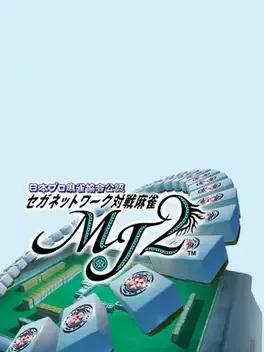
The sequel to Sega Yonin Uchi Mahjong MJ, and the second overall entry in Sega's MJ series of Riichi Mahjong arcade games. This game had a higher focus on online play than its predecessor, introducing the League Battle mode. In addition to the buttons, a touch screen was also added for ease of operation, something the original game lacked.

The first installment in Sega's MJ series of Riichi Mahjong arcade games. Although the game initially only supported local play with linked cabinets, it would later be updated in 2003 to support online play. Online service was discontinued on March 31, 2005.
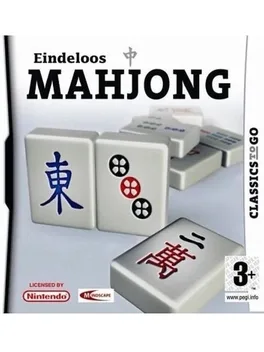

Hai no Majutsushi is an implementation of Mahjong tile game. The opponents in the game are characters from Konami's popular franchises: Simon Belmont from Castlevania series, Aphrodite and Poporon (Popolon) from Knightmare series, a snatcher from Snatcher, Dr. Venom from Gradius series, Goemon from Ganbare Goemon series, Penta the penguin from Antarctic Adventure series, and Moai from Gradius / Parodius series.
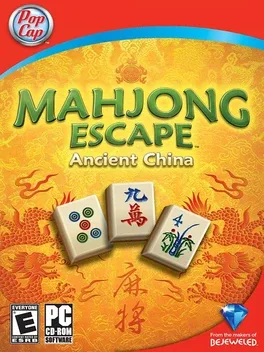
Take a mahjong adventure all the way to ancient China! Match magic gold tiles as you unlock ancient Chinese wisdom and collect lost treasures. It's a relaxing journey through time! Travel through 11 dynasties as you master over 175 unique levels. Enjoy stunning hand-painted backgrounds and earn special power-up tiles that help you along the way. Play through Dynasty Adventure or just relax with Classic Mahjong solitaire. Either way, you'll be mesmerized by the scenery: you've never seen mahjong like this. Escape to ancient China today!
