Popular games for platform Apple Pippin
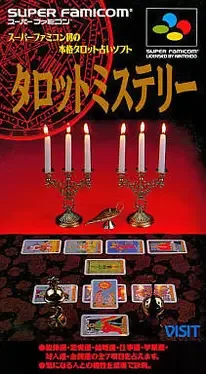
Tarot Mystery is a Miscellaneous game, developed by Ukiyotei and published by Visit, which was released in Japan in 1995.
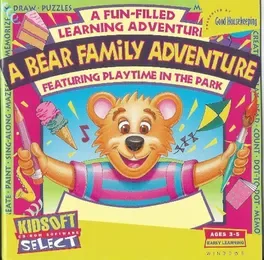
A Bear Family Adventure: featuring Playtime in the Park is a CD-ROM-based children's edutainment title that had been demoed on the Pippin Atmark console.
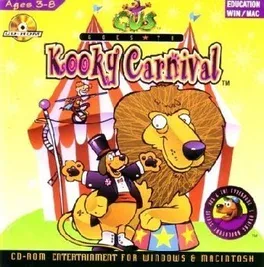
Gus Goes to the Kooky Carnival is an educational game for children between three and eight. The player can explore six locations and trigger animations by clicking on items on screen. Gus' three buddies are hiding in each screen and speak to the player when found. Each location except the Ferris wheel additionally has an activity: Trailer: There is a map of the United States to America to find. By clicking on a state, the player learns a fact about the state. Animal Lounge: A card game with similarities to Concentration / Memory variants. Each of the two players have matching cards except one which is only present once. Each player chooses one of the other players' cards in turns and has to match them to one of their own cards. If they match, the cards are removed from play. If It is the single card, the choosing players has to take it into their own deck. It is not possible to click on the wrong card while matching. The player who has the single card in their possession when all other cards are gone loses the match. Side Show: The player can choose various facial features and clothing to create a face. Midway: A shooting range where letters flow into and out of view. The player chooses a letter by clicking on it. Depending on the difficulty level, the goal is to either find a single letter, spell a given word or spell as many words as possible (the next viable word is presented by a icon) within a time limit.

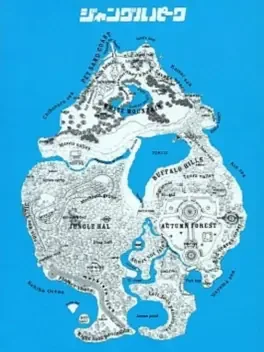
Jungle Park is a point and click adventure game that invites the player to explore the titular park. More a walking simulator than a traditional adventure game, it has few goals and instead lets the player discover the park and its surroundings at their own pace. Inspired by an amusement park bearing the same name, Jungle Park incorporates elements of a role-playing game with a picture gallery and animation.

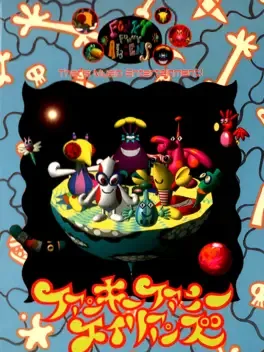
Funky Funny Aliens is an edutainment title developed by Emotion Digital Software, released for the Apple Pippin.

3-D modeling application that includes a library of models from the Japanese anime series Mobile Suit Gundam.
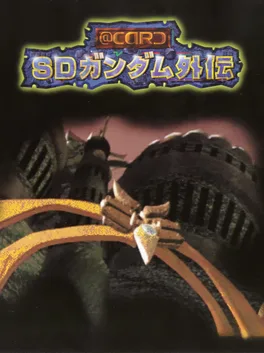
@Card SD Gundam Gaiden is a card strategy game for the Pippin Atmark console in which the user plays cards of characters from the Japanese anime spinoff SD Gundam.

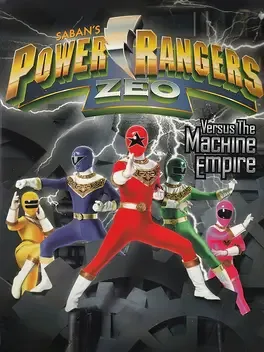
The Zeo Crystal has been shattered into shards, each representing a Zeo Ranger, who must venture into dangerous labyrinths to retrieve them. However, the villainous Machine Empire will do everything possible to stop the Rangers. Will the superheroes be able to defeat its minions?