
Popular games for platform Bally Astrocade
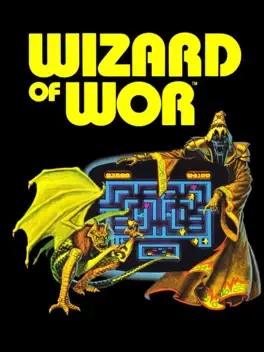
Wizard of Wor is an action-oriented game for one or two players. The game takes the form of several maze-like dungeons infested with monsters. The players' characters, called Worriors, have to kill all the monsters. Player one has yellow Worriors, on the right, and player two has blue Worriors, on the left. In a two-player game, the players are also able to shoot each other's Worriors, earning bonus points and causing the other player to lose a life. Team-oriented players can successfully advance through the game by standing back-to-back (such as in a corner) and firing at anything that comes at them.
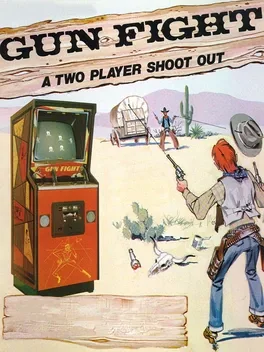
Old west theme shoot-out. Using simple graphics, two cowboys one on the left and one on the right move up down, left and right trying to get a clear shot avoiding cactus at the other.
A two player game of skill and strategy as you try to knock out your enemy's gun emplacement. New random terrain in each battle!
Cosmic Raiders is a side-scrolling shoot 'em up where the player's space ship can move both left and right and there is also a radar showing the locations of enemies. In every level four bombs are dropped along with a number of fighters to ensure the bombs reach the surface of the planet. The objective of the game is simply to clear all the enemies and get the highest score possible. For every two bombs destroyed an energy star that the player can collect will appear. By picking it up the player's ship is energized with an invincible energy shield. Once all enemies have been cleared from one level the game moves on to the next.
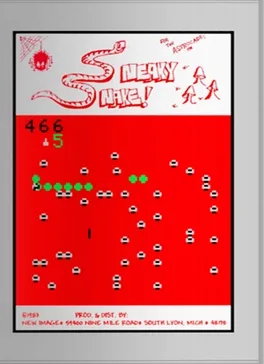
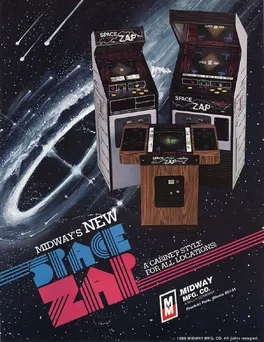
Prevent your firebase from taking damage by defending it from all angles. Well... four angles, anyway.
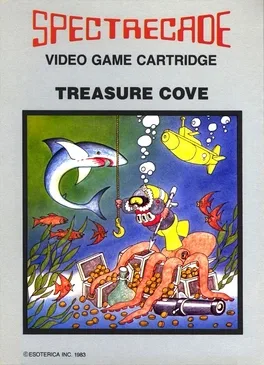
In Treasure Cove, the player collects valuable coins littered across the floor of the ocean while avoiding fish, turtles, an octopus, and other sea-faring obstacles.
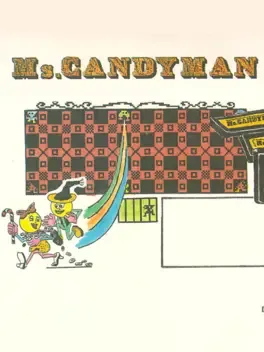
The rarest game for the Bally Astrocade. Despite its name and the protagonist's appearance, this 1983 release is quite a bit different from the Pac-Man series.
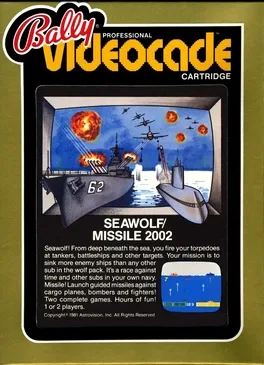
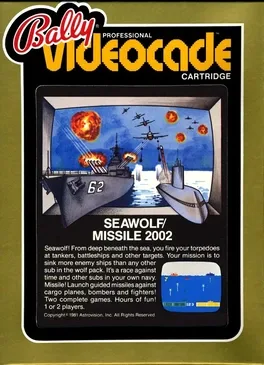
Seawolf! From deep beneath the sea, you fire your torpedoes at the tankers, battleships and other targets. Your mission is to sink more enemy ships than any other sub in the wolf pack. Its a race against time and other subs in your own navy. Missile! Launch guided missiles against cargo planes, bombers and fighters! Two complete games. Hours of fun! 1 or 2 players.
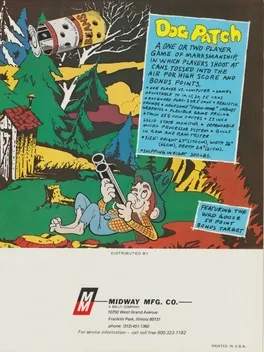
Dog Patch is a shooting game in which the player tries to repeatedly hit a can while it is airboorne.
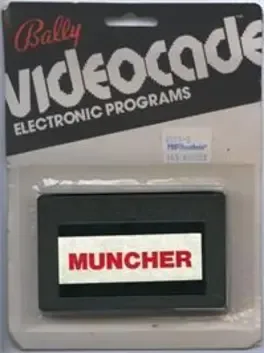
Virtually a Pac-Man clone, Muncher incorporates a little of everything from its seed of inspiration, from the layout of the original maze, to the power-pellets', to the ghostly enemies, all found in the original Pac-Man.
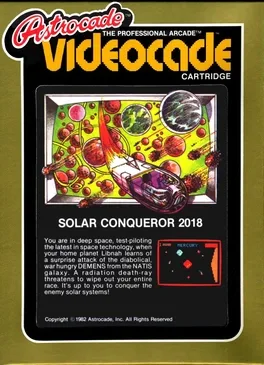
Top down space shooter
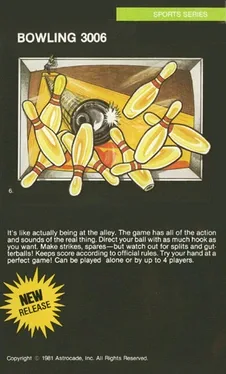
This bowling game was a first-party game by Astrovision developed in 1981-1982 which only made it to the prototype stage. After Astrovision/Astrocade's bankrupcy the game was released in limited quantities by New Image in late 1985.
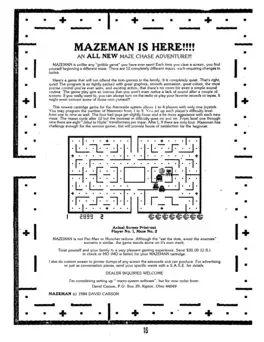
Mazeman is a Pac-Man clone with some variations. There are twelve different mazes and the ghosts switches from pursuit to random behavior more often than in Pac-Man. It was released on cartridge in very limited quantities in 1984 by Dave Carson Software.
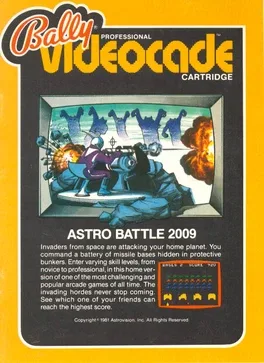
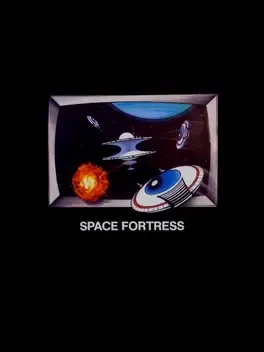
Space Fortress lets you control a mid-screen base while defending it from enemies emerging from each of the four edges of the screen.
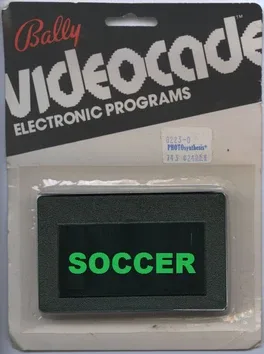
This soccer game for the Astrocade was developed in 1982 but did not see release at the time. In 1985 the unreleased prototype finally went into production and was released in limited quantities by Mike White Software.
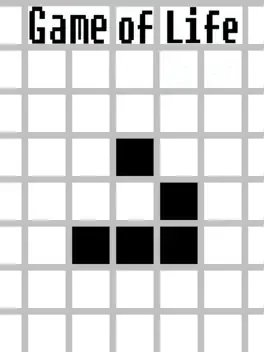
The Game of Life, also known simply as Life, is a cellular automaton devised by the British mathematician John Horton Conway in 1970. It is a zero-player game, meaning that its evolution is determined by its initial state, requiring no further input. One interacts with the Game of Life by creating an initial configuration and observing how it evolves.
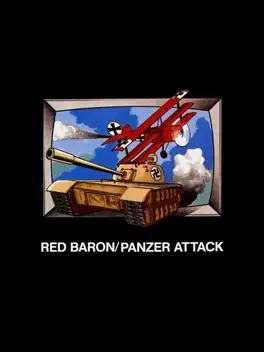
This cartridge consists of two war themed games: Red Baron and Panzer Attack. Both games are multiplayer only. Red Baron is played by two players while Panzer Attack can played by two to four players.
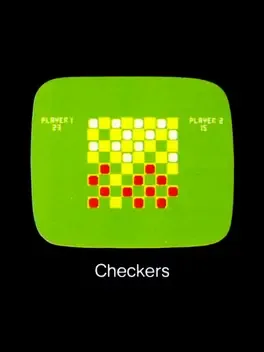
This cancelled first-party Astrocade game was released in very limited quantities by New Image in late 1985.