
Popular games for platform Commodore PET
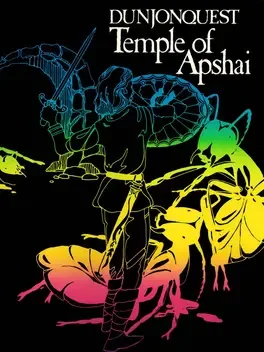
Dunjonquest: Temple of Apshai is a dungeon-crawl role-playing game set in a sprawling underground complex. Create an adventurer, equip them at the inn, and explore more than 200 rooms filled with monsters, traps, and treasure. It is considered one of the first graphical role-playing games for home computers. It was an enormous success for its era, selling 30,000 copies by 1982 and remaining a best-seller for at least four years.
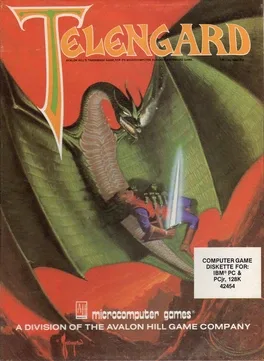
Telengard is an earlier example of a "dungeon crawler" role-playing game--albeit with a top-down view- with either real time movement (DOS version) or turn-based movement and turn based combat. Telengard is also played in real time, which means that monsters can attack even when the player's character is not moving. The player controls a single adventurer, selecting randomly-rolled sets of attributes: Strength, Intelligence, Wisdom, Constitution, Dexterity, and Charisma. The vast Telengard dungeon consists of 50 levels down and 200 by 200 rooms each level. Experience is awarded not only for defeating enemies, but also for finding treasure. When the player character gains a level, their attributes increase, and they gain the ability to cast higher-leveled spells. Treasure chests appear randomly in the dungeon. There are also specific features such as altars, thrones, fountains, etc. that the adventurer can discover which may have various effects on the character, whether being either positive or negative. Some creatures will befriend the player, sometimes providing the player with an item and/or healing them, provided the player's Charisma is high enough.
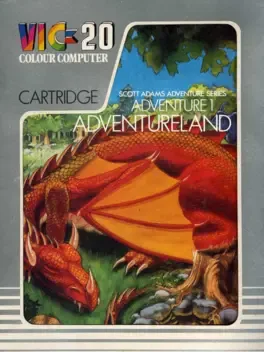
A text based Adventure Game for the TRS-80, later enhanced with visual scenes in various ports. Only allowed 2-Word input and was largely based on Colossal Cave Adventure.
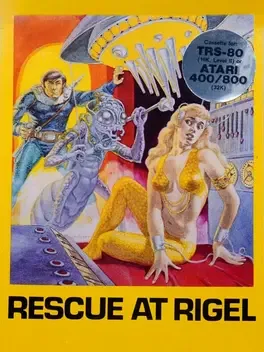
You are Sudden Smith and are on a mission to rescue ten prisoners who are kept by the evil alien race of the Tollah in a mine in an asteroid orbiting the planet Rigel. Whatever you do - you only of have 60 minutes to rescue all ten prisoners.
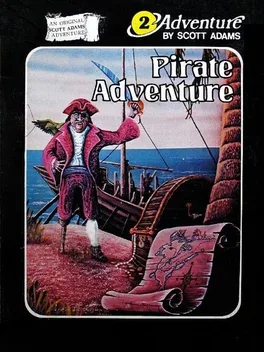
Your goal in this text adventure is to find a pirate treasure using two word commands.
Shuriken is somehow inspired by Pac-man and Pengo.
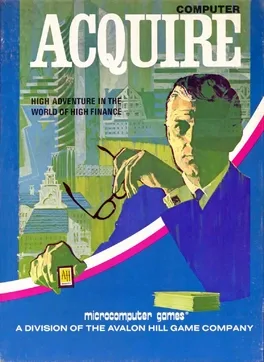
Computer Acquire is adapted from the board game Acquire by Avalon Hill. As in most games of high finance it is about making profits by buying low and selling high. Instead of the normal commodity or utility markets the simulation is based on hotel property stocks with mergers and hotel chaining. The goal is spotting the bargains early when the price is right along with adding more hotel chains to which you have controlling interest. Sprinkle in a little market luck along the way and win by becoming the wealthiest player.
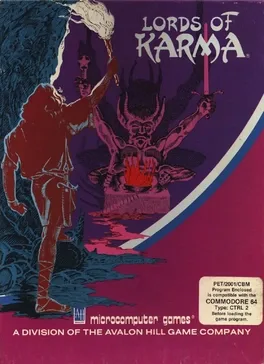
Without any clue as to why and how you find yourself in the middle of the central square of the mythical city of Golconda and try to find out how to fulfill your destiny.

The arcade game Space Panic was the first "platformer" game, and it inspired more popular games of the time such as Lode Runner and Donkey Kong. There were many different versions of Space Panic on the original 8-bit machines, including Apple Panic which won a number of game awards. This is an updated version for the Commodore PET.
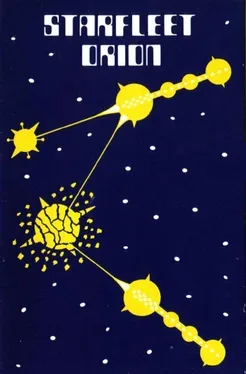
Turn-based space strategy wargame.

Clive Junior's latest invention went terribly wrong! It exploded and all kinds of parts are flying across the room! Your goal is clear and simple: Avoid the debris while running around and picking up parts to gain points!
After 40 years there is now a Lode Runner clone for Commodore PET.
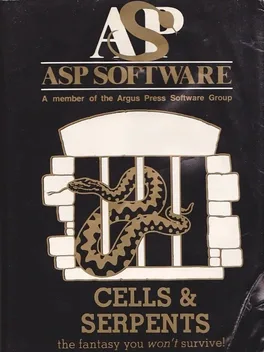
Cells & Serpents is a roleplaying game. The player explores a series of unending randomized dungeon rooms fighting monsters and looking for treasure. At any time the player can choose to move left, right, or forwards. These can take the player to stairs up, stairs down, a blank wall, corridors, rooms, or doors. The player can not move beyond level 1, but as they move lower they encounter harder enemies and acquire greater treasure. Blank walls damage the player, and corridors present more movement options. Doors allow movement into rooms, and the player can listen at the door for clues prior to entering. Treasure contains gold, but sometimes contains armor and scrolls which make the player more powerful. When encountering an enemy, the player can choose to zap it with their limited spells to weaken the monster before attacking. In combat the player receives a randomized amount of damage, and if hit points reach 0 it's game over. The player receives a final score based upon levels cleared and monsters defeated.
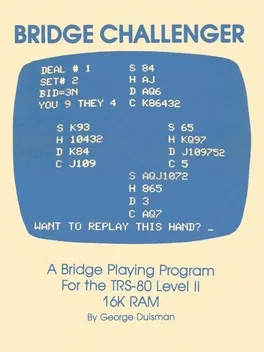
The game is cleared when all the stars are taken. The cracked floor disappears when you pass over it, so you can only pass through it once.
Crossword Puzzle allows the player to create his or her own crossword puzzles. All the player has to do is enter words for the puzzle and descriptions, once finished the computer will try to fit them all in a grid. The player can cycle through various viable options, but the computer might not always be able to put every word in the grid. Once done the editor will print the crossword to paper for someone else to solve.
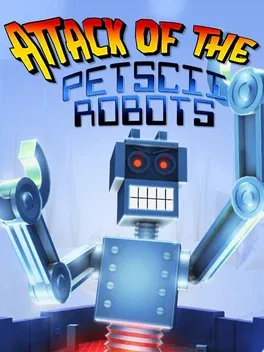
Sometime in the future, robots attempt to take over human settlements on various planets. Your goal is to infiltrate these settlements and destroy all of the robots. To do this, you’ll need to locate weapons and other tools...
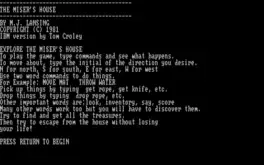
This game was first released as Miser for the Commodore PET in 1981. Considering the strict constraints of the early 8-bit machines - the original version only required 16K of memory to run - it was remarkable for its complexity.
Manbiki Shounen (Shoplifting Boy) was the first stealth game, developed by Hiroshi Suzuki and debuted in 1979.
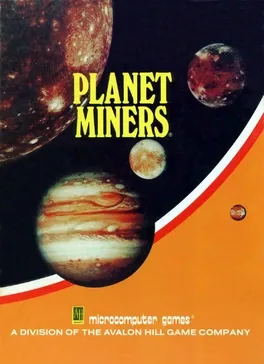
Up to 4 players compete for the best mining claims in the solar system. Politics and sabotage can be used to your advantage in order to set the course for your family for the next hundred years.
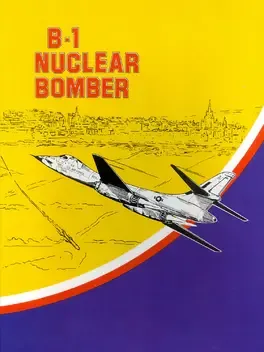
B-1 Nuclear Bomber is a Simulation game, developed by Microcomputer Games Inc. and published by Avalon Hill, which was released in 1983.
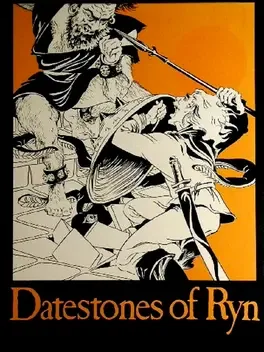
Given a time limit of 20 minutes you are sent into a cave to retrieve the stolen Datestones of Ryn.
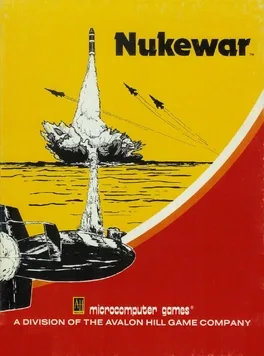
The time is the late 20th century. You and a neighboring country have developed a nuclear capability. Your neighbor's sole objective is to utterly annihilate you. As the tension mounts while you are conducting espionage, building bombers,missiles,submarines and anti ballistic missiles either you or your neighbor launch a pre-emptive first strike.The nuclear destruction continues until either all weapons are expended or a truce is negotiated. Victory is determined by population remaining and world political opinion which is usually against the side that started the war. If both sides lose enough people neither will win.