
Popular games for platform Plug & Play
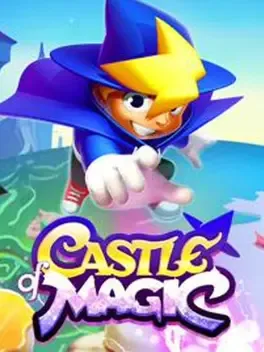
A side scrolling platformer from Gameloft, Castle of Magic is the quest to save the world from the evil Nefastax.
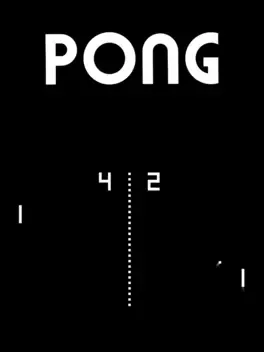
Pong is a table tennis-themed twitch arcade video game with simple two-dimensional graphics. It was the first sports arcade video game and one of the earliest arcade video games in history, helping to establish the video game industry along with the Magnavox Odyssey. Soon after its release, several companies began producing games that closely mimicked its gameplay.
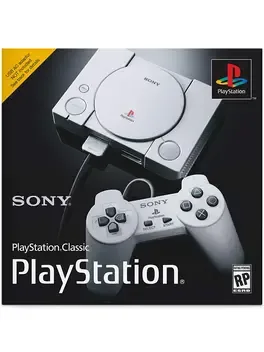
An official PS1 emulation system that came with 20 PS1 games in the form of a miniature PS1 system. Games output at 720p through HDMI, and the controllers use standard USB ports.
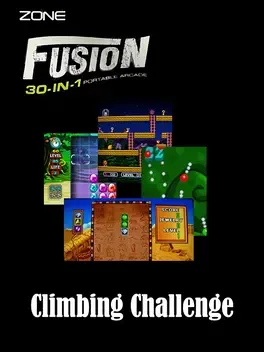
Clone of Donkey Kong Jr. starring what appears to be Funky Kong. Levels 3 and 4 from the original are swapped around.
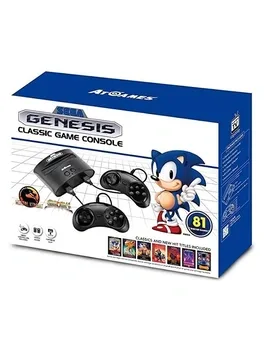
The Sega Genesis Classic Game Console is a budget-friendly, plug-and-play micro-console produced by AtGames under official license by Sega. While it was famously advertised as having 80 built-in games and featured a functional cartridge slot for original games, the package was heavily criticized by retro enthusiasts because its game library was padded with 40 generic, low-budget bonus minigames to inflate the count, and its emulation software suffered from notoriously poor audio and visual accuracy compared to the original hardware.
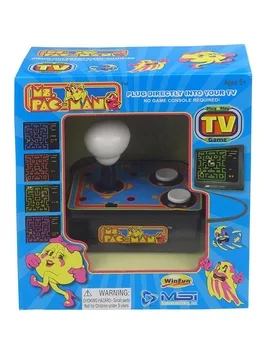
Only features the 1993 NES version of Ms. Pac-Man. Later revisions flip the control panel backwards for unknown reasons.

A plug n' play device that contains 10 mini-games and 10 coloring pages.
Picture Challenge is a puzzle game developed by JungleTac for various Plug & Play and Handheld consoles.
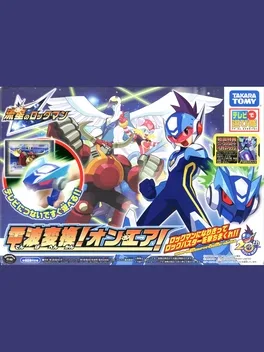
Ryuusei no Rockman: Denpa Henkan! On Air! is a Japan-only plug-and-play TV game released in 2007 by Takara Tomy. The game was developed by SSD Company Limited and uses their XaviX TV game technology. The game features a host of minigames and boss battles based on the first Mega Man Star Force game. As the player defeats FM-ian bosses, they obtain new Battle Cards to power up their attacks. A wireless Mega Buster-shaped controller is used to play the game via a combination of motion controls and a button.

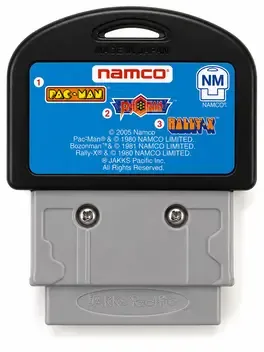
An expansion (GameKey) for Namco Jakks Pacific plug & play consoles. It works with consoles with the compatibility code "NM". Included games: - Pac-Man - Bosconian - Rally-X
Tectoy's DVD Dancemachine DVT-F800 is a DVD player, a karaoke machine and a dedicated console all built in one single machine. It comes with one gamepad identical to the original SEGA Master System controller and a dance pad. It has 4 buit-in games, two played with the dance pad and two with the gamepad; each game has five songs and three difficulty levels. The included games are: Let´s Dance: a dance game to be played by one or two players with the dance pad. Movin': a singing and dance game for up to 4 players. In doubles, one player sings and the other dances according to the patterns shown on screen. Rock Show: a game similar to Guitar Hero, but instead of using a guitar controller the player uses the gamepad to press the notes as they scroll down the screen. Beat Game: a game for up to four players. In doubles, one player sings and the other plays the selected instrument (guitar, drums or keyboards) using the gamepad.
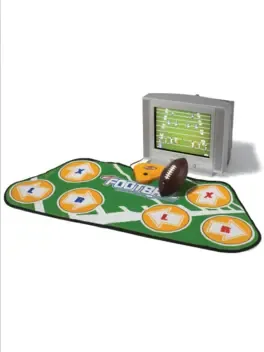
This interactive football video game system plugs directly into a television and translates players' running movements to control game play, allowing two players to compete against each other or play on the same team. Players stand on the control pad and step on left and right direction indicators to avoid tacklers and collect power-ups such as invincibility, earthquake, speed, and more. The football-shaped game paddle controls play selection, executes hand-offs for running plays, and allows you to throw passes. Requires four AA batteries. Ages 8 and up. 18 1/2" L x 14 1/2" W. (4 lbs.)
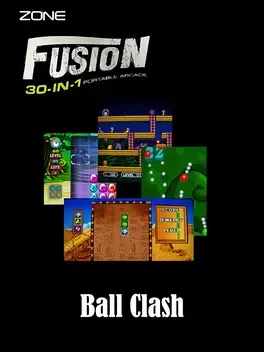
Ball Clash is an arcade game developed by JungleTac for various Plug & Play and Handheld consoles.
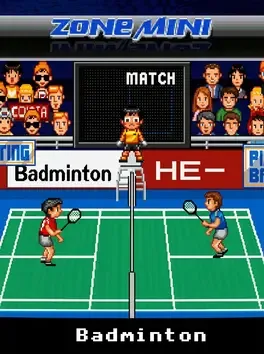
Badminton is a motion controller sports game included in various Plug & Play consoles.
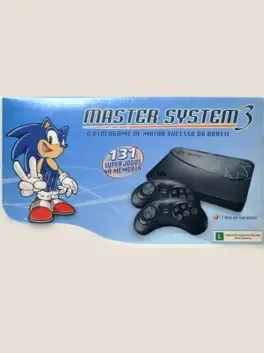
The Master System 3 is a console released by Tectoy exclusively in Brazil in 2008. It is a continuation of the long-running Sega Master System line seen in the country, succeeding the line of "Master System 3 Collection" consoles (which in turn followed the "Master System III Compact"). Like the last two models of its predecessor, this Master System 3 lacks a cartridge slot, relying solely on built-in games. It has a shorter name and also opts for a radically changed design over previous consoles, presumed to be unique to Tectoy products. Internally, it is likely the same as the Master System 3 Collection with 131 games, since they have the same menu saying "Master System 3 Collection 131 Super Jogos" and share the same list of games. The Master System 3 comes with 131 built-in games (or so it claims), the same number as the last Master System 3 Collection console to be released. It also comes with two Sega Mega Drive-style six button control pads which plug into two DE-9 ports, although most of the buttons on the pads are redundant as the console has no built-in Mega Drive games. In order to count 131 games, Pense Bem counts as 10 and 20 em 1 counts as 20 games.
Auto Racing is a racing game developed by JungleTac for various Plug & Play and Handheld consoles.
A dedicated console with 25 "original" games. Most of the games were usually found in other Famiclones.
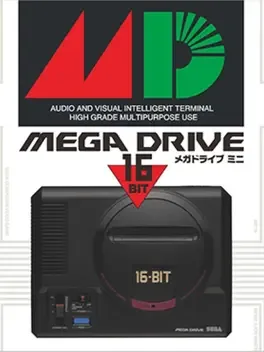
The Japanese version of Mega Drive Mini has a different line-up of games from the Western version.
The total of games considers the following bundles: 20 em 1 as 20 games, Pense Bem as 10 games and Astro Warrior/Pit Pot as 2 games.
The total of games considers the following bundles: 20 em 1 as 20 games and Pense Bem as 10 games.
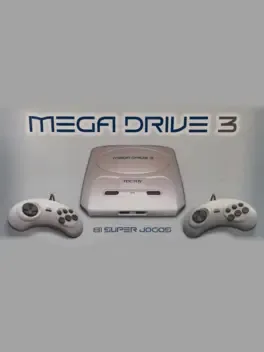
Mega Drive 3 (2007) is a "console on a chip" Sega Mega Drive distributed exclusively in Brazil by Tec Toy. It was marketed with 81 games, without a cartridge slot.
The Atari Flashback 4 was released by AtGames on November 13, 2012. The console looks similar to its predecessor, but includes wireless joystick controllers. Like its predecessor, the Flashback 4 uses emulation. The console increased its library to 75 games, 15 more than the Flashback 3. AtGames also released several alternate versions, including the Atari Flashback 4: 40th Anniversary Deluxe Edition. This included a set of replica Atari 2600 paddles, five collectible posters, and a copy of the original Atari joystick patent signed by Nolan Bushnell. AtGames also developed the Atari Flashback 64, a Walmart exclusive version with wired controllers and only 64 games, including Space Invaders. Some versions of the Flashback 4 include a 76th "bonus" game, Millipede.