
Popular games for platform PC Engine SuperGrafx
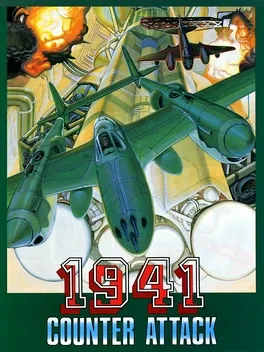
The year: 1941. The place: 20,000 feet in the air over the North Atlantic. Lightning flashes across the skies of war-torn Europe. Your mission: beat back the imperial forces before they can use their new weapon! In 1941: Counter Attack, the goal is to shoot down enemy airplanes and collect weapon power-ups. It is the prequel to 1942, and the third game in the 19XX series.
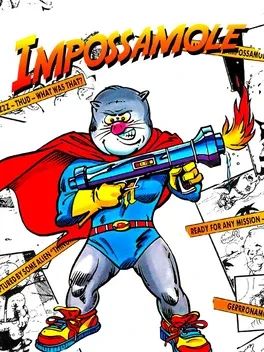
For Monty Mole, a day at the beach turns into the adventure of his life when he's beamed aboard an alien spacecraft. He's transformed into Impossamole, with super powers to save their planet from the evil Vlarg! Now you're up to your cape in Vlarg's monster bosses with crack-up creatures ready to nail your tail! Power up your laser to blast the Dragon Boss. Bomb the Abominable Snowman. Then trash the Venus Moletrap before he has you for lunch. Swim, fly and blast through five wacky action-packed worlds. The fiendish Vlarg awaits your final desperate battle!
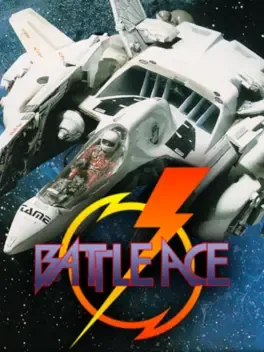
Taking a fair amount of inspiration from Sega's After Burner II, Battle Ace is a sci-fi based cockpit shooter. Gameplay is purely arcade style, with a standard machine gun and lock-on missiles to take down the enemy aggressors. There's little more to it than that.
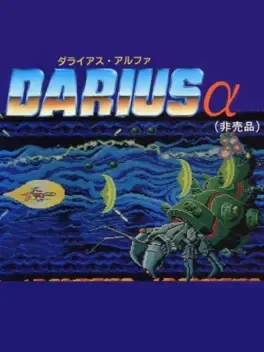
Darius Alpha is a promotional version of Darius Plus released in 1990 for the PC Engine. It was a mail-order exclusive, obtainable by sending in a pair of coupons found in the manuals of Super Darius and Darius Plus. There were only 800 copies of the card produced, making it one of the rarest, and the absolute most expensive, PC Engine HuCard ever made. This version is only a Boss Rush, where the player faces against all Plus bosses one after another. Like Plus, Alpha features SuperGrafx support, which greatly reduces sprite flickering. Pressing Select on the title screen starts the game with a 4-minute time limit.
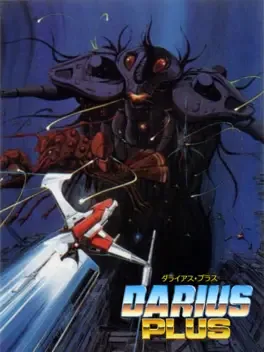
NOTE: "Darius Plus" is the TurboGrafx-16 PC-Engine port of the original Darius produced by Bits Laboratory and NEC Avenue. This is a different port than the title "Darius+", which was published by The Edge and developed by Softek for the Amiga, Atart ST, and ZX Spectrum. Amidst the clutter of arcade shooters in the late 1980s, companies needed to make their games stand out in some way. Simply flying a ship into outer space simply wasn't going to cut it anymore. Taito had an idea. Yes, there was still a spaceship. And yeah, that "outer space" part was still there too. But instead of the usual aliens, you fought fish. Yes, fish. Not even regular, aquatic fish, but robotic fish with lasers equipped to their fins, giant metal teeth and missiles firing from their gills. And not just fish either. There are squid, snails, and other undersea variations out for your blood as well. The requisite plot is about the people of the planet Darius, who are being terrorized by said intergalatic fish. Only the heroic pilots Proco Jr and Tiat Young can save the day. The constant star of the Darius series is the Silver Hawk. Much like Gradius, it has a primary, forward firing weapon, along with bombs that can be used to attack vertically, and the usual shield. The arcade game Darius games also used a unique system that attached three monitors together to create one massive horizontal playing field (also used in Taito's Ninja Warriors.) Naturally, this couldn't quite be replicated on the console system, so that nifty little gimmick is lost, but emulators can still replicate the dimensions of the screen, even if you end up looking at a tiny picture. Looking to further set itself apart from the crowd, every Darius game has multiple levels, with several branching paths throughout the game. It adds tremendously to the replay value, especially since there are usual multiple endings, depending on which final zone you end up at. Darius is a two-dimensional horizontally scrolling shoot 'em up set in a fictional future. Uniquely among shoot 'em ups, the game's screen was three times wider than conventional size, and the arcade cabinet used an arrangement of three screens to accommodate it. The player controls an ornate fighter spacecraft, named the Silver Hawk, and must navigate through scrolling terrain while battling a variety of fighter craft, ground vehicles, turrets, and other obstacles throughout the game's stages (referred to as zones in the game). The ship's arsenal consists of forward-firing missiles, aerial bombs and a protective force field, all of which can be upgraded by power-ups (in the form of large, colored orbs) that are dropped by specially-colored enemies throughout the game's zones. When the player reaches the end of a zone, a boss appears, which must be defeated to proceed. Once the boss of a zone is destroyed, the player is given a choice of which zone to play next via a branching path. While there are 28 zones in total, only seven can be played in a single run. When various ports of it were made for different consoles, Taito (and others) were forced to shrink the playfield to fit on one screen. The PC Engine saw three releases: - Darius Alpha (1990): A very rare beta release. This is one of the rarest Hu-Cards ever published. You could only get a copy of this hardcore shoot-em-up by buying Darius Plus and Super Darius and then mailing coupons to the publisher. 800 copies were made available, and names were drawn from those who mailed their info in. Some copies of the game were also given away as prizes by PC Engine Gekken and Marakatsu magazines. - Darius Plus (1990): The full game itself, again a PC Engine HuCard. The bosses that were removed in Alpha do not return here. Both Alpha and Plus were actually written for the PC Engine SuperGrafx and playing them on that console results in slightly improved graphics (less flicker and slowdown). - Super Darius (1990): A conversion of Darius for the PC Engine's Super CD-ROM, very close to the original arcade version other than being single-screen. Features new bosses, as well as a "boss rush" mode.
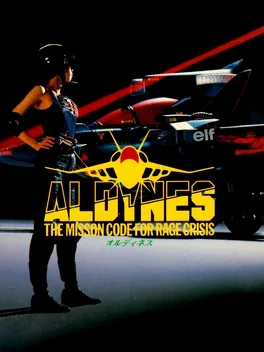
Aldynes: The Mission Code for Rage Crisis, is a horizontal scrolling shoot 'em up game developed by Produce and released in July 22, 1991 for the SuperGrafx only for Japan. The game has a unique option-based combat and features levels with large scaling effects or parallax scrolling effects. Nearing the year 2020, the societies of mankind fall into global depression just as an alien invasion suddenly comes down on Earth; coming from a large mechanical planetoid, the aliens attack the Earth without reason or communication. With all defenses annihilated, the United Nations corresponds with NASA to make a powerful space fighter known as The Ortega under project name Aldynes. During that time, a particular space fighter pilot - known only by his call sign Fox-A - was killed in action; his bereaved girlfriend Hiroko soon discovered Project Aldynes and its near complete fighter. As the invaders attack the air force housing Project Aldynes, she hijacks one of the ships and throws herself into battle in hopes of getting her revenge.
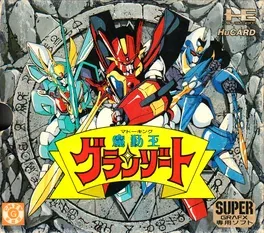
In 2050, after a great earthquake, the Moon got an atmosphere and conditions for normal human life. 50 years later, the Moon is inhabited by humans and a great tourist attraction. A boy called Daichi arrives on the Moon and hears the strange stories about people with rabbit ears. Soon he meets V-Mei, an old witch and her granddaughter Guri Guri, the members of the Long-Ears race which is in war with the evil Jadou Clan who wants to conquer the world. Sensing a power in the boy, V-Mei gives the magic gun to Daichi and reveals to him that he is the chosen Madou Warrior who will save the Long-Ears race and their land Rabiluna from the evil Jadou Clan. With the magic gun, Daichi can summon Granzort – the Madou King of Earth – a giant robot to fight against the monsters of the Jadou Clan. Soon, Daichi, V-Mei and Guri Guri meet two other boys – Gus and Rabi. Gus receives a magic bow that summons Winzart – the Madou King of Wind, while Rabi receives a magic top that summons Aquabeat – the Madou King of Water. Together, Daichi, Gus, Rabi, V-Mei and Guri Guri travel to the world of Rabiluna in order to free it from the Jadou Clan.

Angelus 2: Holy Night is the cancelled sequel to Enix’s Angelus: Akuma no Fukuin.
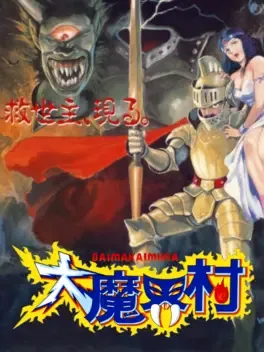
The PC-Engine SuperGrafx port of Ghouls 'n Ghosts. Players progress from left to right (from bottom to top in level 3), and have to hack down the aforementioned monsters with a sword. The journey includes ledges, ladders, lava pits and slippery slopes. Different weapons can be collected, by finding suits of armor inside chests. Each of the five stages has its own setting and a final boss.
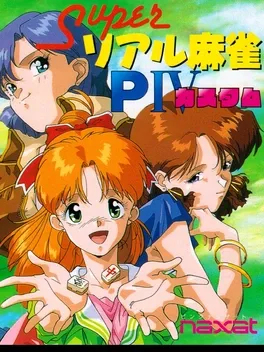
Super Real Mahjong PIV Custom was released on December 17, 1993 by Naxat Soft. Originating in the arcades, this installment of the Super Real Mahjong series puts the player in the role of a mahjong club member who competes against three female opponents. Rounds won by the player lead to undressing animations; however, while the computer version has explicit nudity, console versions are censored. All the versions have the same opponents, cutscenes, and gameplay rules. The computer version adds a versus mode in which girls can compete against each other, while the Super Famicom (SNES) version has a so-called "puzzle mode", which reveals parts of a puzzle as the player wins mahjong rounds.