
Popular games for collection Ninja-Kid
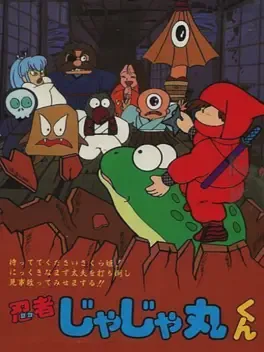
The game stars the brother of Ninja-kun (from Ninja-Kid). Princess Sakura has been kidnapped by Damazu-Dayuu, and because Ninja-Kun is away on a journey, the task falls to young JaJaMaru-kun. In the game, the player starts with three lives and can only run, jump and throw shurikens. The game is divided into stages, each with four floors and eight enemies. Sakura-Hime and Damazu are placed, unreachable, at the top of the screen. Enemies use various projectiles, one of which will cause the player to lose a life. If JaJaMaru-kun lands on top of an enemy, it will simply be temporarily stunned and vice versa. Once an enemy is defeated and offscreen, a spirit will appear and ascend to the top of the screen. It can be collected before it has disappeared to receive points, which vary depending on the enemy. Sakura will sometimes drop petals that the player can collect, and Damazu will sometimes run around, dropping bombs. To advance to the next stage, the player must defeat all eight enemies by using shurikens. Some bricks yield items. They include: A cart that temporarily makes JaJaMaru-kun invincible and faster. Projectiles and enemies will also be destroyed if touched. A bottled substance that makes JaJaMaru temporarily invincible and able to walk through enemies. A red ball that increases speed. Bombs (which must be avoided). Coins that yield various amounts of points. An extra life. If all three types of power-ups are collected, Gamapa-kun, a giant frog, will be summoned, which is completely invincible and able to eat all enemies. If three of Sakura's petals are collected, the player will go to a bonus stage in which JaJaMaru-kun is on the bottom and Damazu at the top. Damazu drops bombs, and the player throws shurikens upward. If the player manages to hit Damazu, bonus points are awarded. If the JaJaMaru-kun is hit by a bomb, he goes on to the next stage. Initially the game was released exclusively in Japan, but it came to the rest of the world for the first time in 2007 as part of the Wii virtual console, as well as for Nintendo Switch Online in 2021.
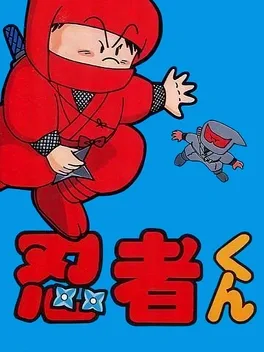
An action platformer for the Arcades. It is the first of the Ninja-kun series.
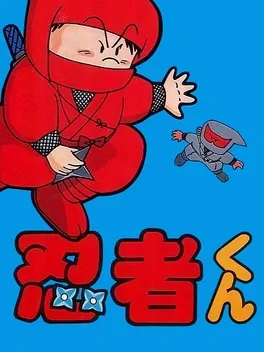
An action platformer, the first game of the Ninja-kun series.
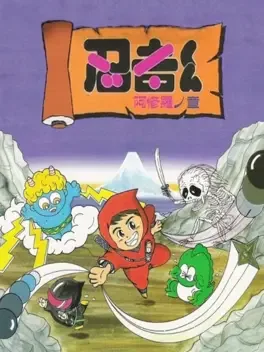
Famicom port of Ninja Kid II.
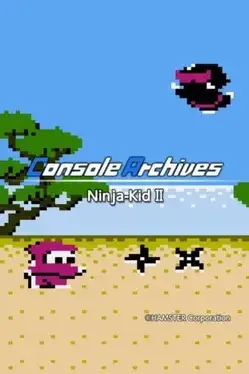
Ninja-Kid II was released by UPL in 1988 for an 8-bit home console.¸ In this action game, you embark on an adventure across diverse fields—including mountains, oceans, and caves—to defeat your greatest and most powerful foe, Ashura. Despite its cute art style, the game offers hardcore ninja action, featuring wall-kicking and intense battles using a wide variety of weapons. The Console Archives series is developed with the concept of faithfully reproducing masterpieces released on various home game consoles, allowing players to easily enjoy them on the latest hardware. The series is packed with convenient features, including customizable button layouts and screen settings, as well as the ability to save and load at any point. Whether you played them back in the day or are experiencing them for the first time, please enjoy the masterpieces that shaped the history of console gaming! (The options menu and manual are available in Japanese, English, French, German, Italian, and Spanish.)
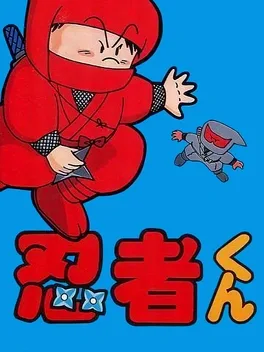
An action platformer, the first game of the Ninja-kun series.
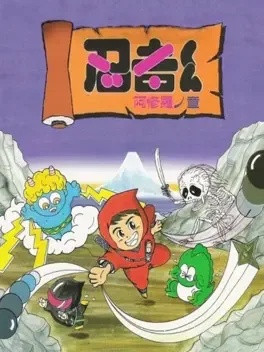
The game tells another story in Ninja-kun series. This time it’s a platform game with some twists. There are two tasks alternating through levels: you are required either to kill every enemy in the level (as in the previous games) or simply to reach the exit. Running into enemies usually won’t kill you, however if you are hit by a single projectile, you’ll have to start from a checkpoint. Enemies vary from plain ninjas to giant skeletons or killer fish. Each level has a time limit, and when this limit is close to an end a fire wheel of death will appear on the screen, chasing Ninja-kun. Ninja-kun has some techniques for successful progression though the levels: many enemies can be temporarily stunned by jumping on them or hitting them from below; and ninja can obtain some power-ups including boomerang, bombs, a devastating fire attack or invincibility. Ninja-kun is capable of wall climbing and wall jumping, the latter requiring some practice from the player. The levels (called “scenes” in-game) are scattered through mountains, caves, beaches and underwater locations. You can choose which set of levels you’ll start in by playing a mini-game at the beginning.