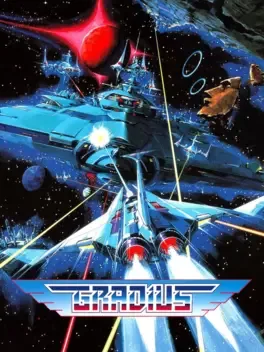
Popular games for franchise Gradius
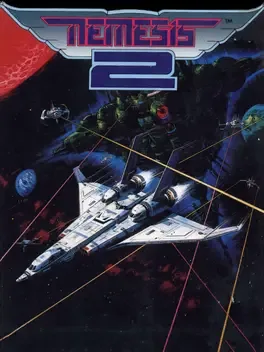
The Director General of Space Science Agency Dr. Venom was exiled to Planet Sard for a failed coup d'état. In the year 6665, he escapes and invades Planet Nemesis and the seven planets it controls with the help of Bacterion. The Nemesis High Council sends James Burton, ex-pilot of the Vic Viper, to pilot Metalion and attack Dr. Venom and the Bacterion invaders.
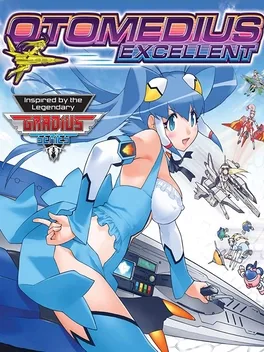
The lovely rocket-riding ladies of Otomedius Gorgeous arrive in the US for the first time in Otomedius Excellent, the highly anticipated sequel to the Japan-exclusive arcade hit. Otomedius Excellent is an Xbox 360 exclusive and features nearly ten playable characters, heart-pounding classic Gradius-style shoot-em-up gameplay, a dazzling array of stunning visuals, thrilling multiplayer action locally or via a connection to Xbox LIVE, an improved upgrade system, downloadable content and of course the Otomedius Excellent game disc. With all this and more it is sure to be the must-own arcade style shooter for Xbox 360 players in 2011 and beyond.
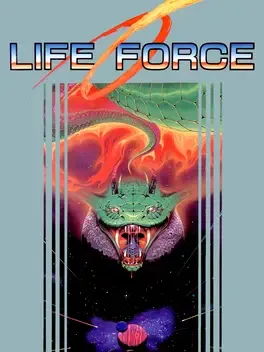
Life Force is an action-packed shooter where there are six levels which alternate between side and vertical scrolling, each of them ending with a powerful guardian. Throughout the game, destroying certain enemies will release power ups which can be used to equip your ship with more powerful weapons, extra speed, and shields. Gameplay is for one player or two players simultaneously.
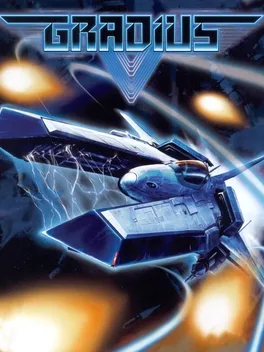
Gradius V is the fifth entry in Konami’s Gradius series, originally released for PlayStation 2. It introduces new mechanics while retaining core side-scrolling shooter gameplay. One notable addition is the ability to control the firing direction of "Options" (the yellow support pods) using the analog stick. While adjusting direction, the player’s ship remains stationary, adding tactical risk and challenge. The rest follows standard Gradius mechanics: avoid collisions and enemy fire while collecting power-up capsules to upgrade weapons. Gradius V was later released on PlayStation 3 as a PS2 Classic but has since been delisted and is no longer available for purchase.
8 Konami arcade classics of the 80s, from Nemesis to TwinBee. Including bonus eBook packed with new information never before revealed to the public.
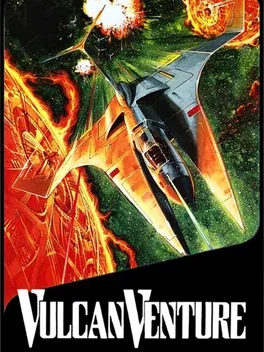
Vulcan Venture (also known as Gradius II: Gofer no Yabo) is a side-scrolling shoot ’em up developed by Konami and released in arcades in 1988. Players control the Vic Viper spacecraft as it battles the Bacterion Empire, now led by Gofer. The game builds on the original Gradius by retaining the power-up bar system while introducing selectable weapon configurations and expanded abilities such as different missiles, double, and laser options. It also incorporates elements from Salamander (Life Force) and introduces a stage focused entirely on consecutive boss encounters.
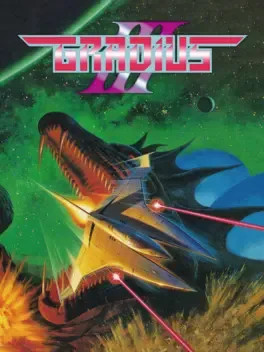
In the darkest reaches of infinite space, pure evil lies in wait ... The Dark Forces led by the god of destruction, Bacterian, prepare to launch a massive onslaught against the planet Gradius. Possessing unstoppable power, the Dark Forces threaten to plunge the Universe into total war and complete annihilation. Their invasion force smashes the Gradius defenses, and the surrounding planets soon fall like dominoes. Now Bacterian's evil grasp reaches for the heart of the resistance...planet Gradius itself... To counter the oncoming threat the United Gradius World Forces gather all their fighter craft. Half of them form a defensive net - the other half a strike team. But they are badly outnumbered and The Dark Forces easily tear through their thin frontline. No fighters survive the slaughter.... In a last gasp move, the United Gradius World Forces send out two fighters, previously considered too dangerous for combat missions: The InterDimensional VIC VIPER fighters. The Fighters take off for the heart of darkness to join the fray that will decide the fate of the Universe...
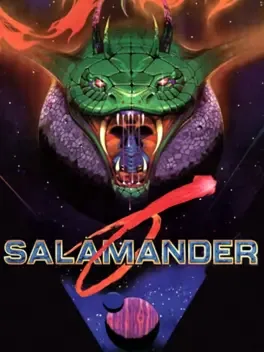
Salamander is a scrolling shooter arcade game released by Konami as a spin-off to Gradius. It introduced a simplified power-up system, two-player cooperative gameplay and both horizontally and vertically scrolling stages. Some of these would later become the norm for future Gradius games.
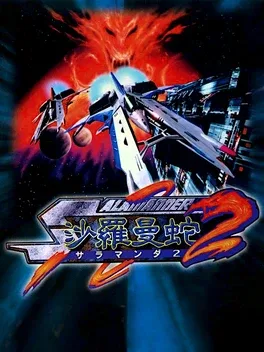
Like the original Salamander, and as opposed to the Life Force releases, Salamander 2 abandons the selection-bar based power-up system, in favor for a simplified system that focuses on powering weapons up based on specific icons. For example, the player cannot increase his ship speed until a speed icon is picked up; additional speed icons further increase the ship velocity. Several weapons, when additionally upgraded, turn into a 'super' weapon for approximately ten seconds. If the player has the ripple laser, and then gets another icon for it, the player will receive the high-powered Buster ripple for a short period of time. Options have been slightly changed with the arrival of 'option seeds', which are small options that orbit the ship firing only the basic initial shot. Two option seeds can combine into one full option. Moreover, options can also be sacrificed to utilize a short-term homing beam weapon. Several enemy bosses typical to Gradius games return, including the Brain Golem (the first level boss) and the Tetran (the second level boss). There are a total of six levels. Since the game is similar to its prequel, Salamander 2 does not use the Revival Start feature from Gradius (which pushes the player back to a pre-determined checkpoint if a life is lost), many people consider this title to be easier than other titles in the Gradius series due to this. Once the game has been completed, it starts its second-loop at a much higher difficulty. The music is also changed to remixed versions of Salamander's music in some stages. The first player's ship is called Vic Viper while the second player's ship is Super Cobra.
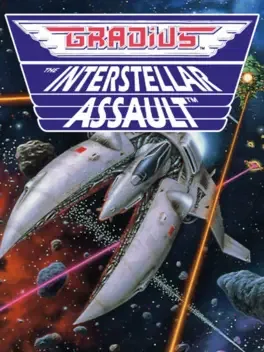
Gradius: The Interstellar Assault retains the traditional horizontal scrolling gameplay from the Gradius series. Once again the player takes control of the Vic Viper and flies through five different stages destroying Bacterion's army. The game retains the traditional power-up bar from the original Gradius. The player can speed-up multiple times, use missiles, shoot double firepower or lasers, use several options at a time and use the classic shield (although it is referred to as a forcefield). However, before each game is started or continued, the player is given a "Weapon Select" screen. Here the player can choose between one of three settings for the missiles, double firepower, and lasers.
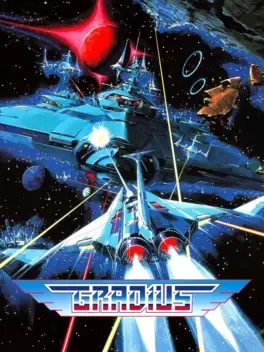
One of the defining characteristics of the Gradius series is the use of a "power meter." The power meter is powered by a power-up item, whose purpose, when collected, is to move a highlight to the next power-up on the power meter. When a power-up that the player wants becomes highlighted, he or she may activate it, also causing the highlight to reset.
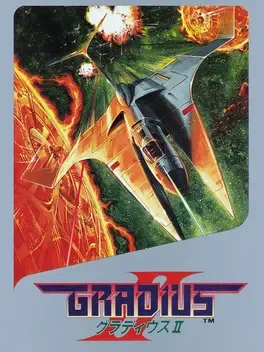
The Famicom port of Gradius II.
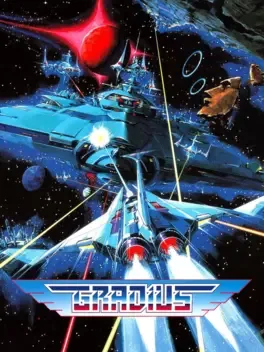
The NES port of Gradius.
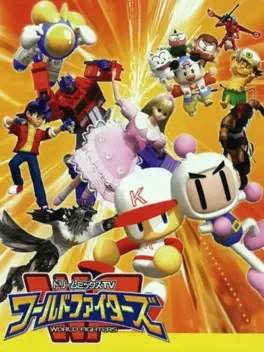
A fledgling television program has been suffering from poor audience approval, and the station that carries the show has informed its producers that they will have to rectify the situation or face inevitable cancellation. An unorthodox plan is implemented: broadcast a contest pitting various superstars from differing realities in physical combat in order to increase ratings.
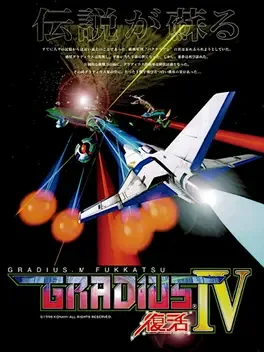
Gradius IV is the fourth arcade installment in a series of scrolling shooter video games developed by Konami Computer Entertainment Tokyo. It was preceded by Gradius III, released in 1989, although spinoffs had been released prior to it such as Gradius Gaiden. This title brings a considerable graphical upgrade, particularly with the use of colored lighting. In addition, there have been several additions and removals to the vaulted weapons system; specifically, the edit mode has been removed and an online ranking system was added.
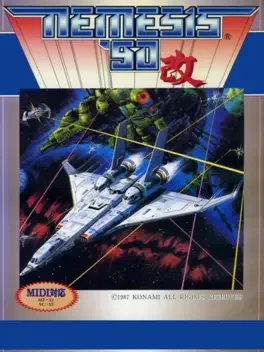
Nemesis '90 Kai is an enhanced remake of Nemesis 2. The main difference lies in presentation, with higher-quality music and significantly more detailed graphics. The gameplay is mostly unchanged, with the exception of the possibility to equip four options on the player-controlled ship (as opposed to only two in the original version) and a few tweaks to secondary weapons and power-ups. Two new stages and four boss enemies have been added to this version.
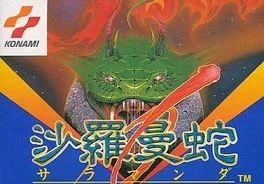
Salamander was ported to the Family Computer in Japan in 1987. Instead of being a direct port of Salamander, elements were taken from the original Salamander and the Japanese Life Force re-release, and some elements, such as levels and bosses, were removed to make way for new content. Most of the background graphics and enemy sprites from Salamander are used in favor of those used in Life Force, though the Gradius-style power bar is used in place of the original instant pick-up system. The same year, North America received a port as well for the Nintendo Entertainment System. The NES version is practically identical to its Famicom equivalent, other than not having the multiple endings, having two option power ups instead of three, and being titled Life Force.
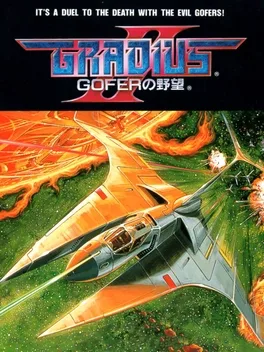
The Sharp X68000 port of Gradius II.
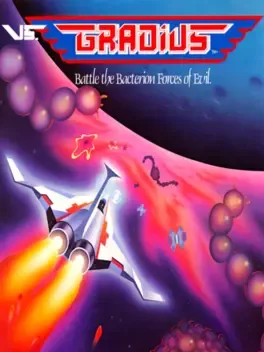
Nintendo Vs. System port of Gradius, based on the NES version.
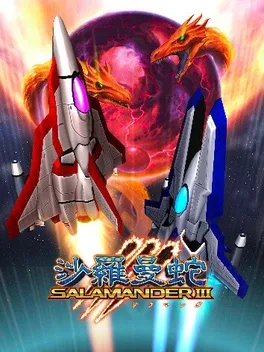
Salamander III is the newest addition to the Gradius series, a legendary pioneer in the side-scrolling shooter genre, and comes with the original arcade versions of the previous games.
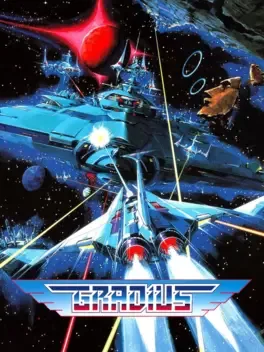
The PC-Engine port of Gradius.
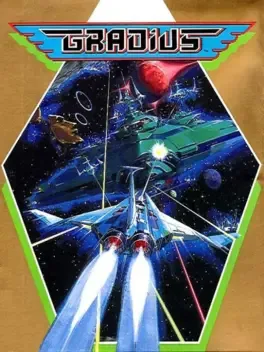
Commodore 64 port of Gradius.
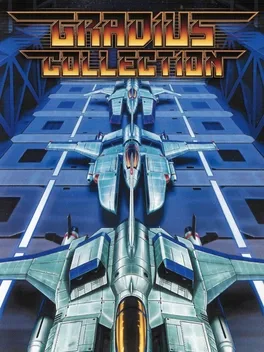
Gradius Collection is a compilation of five beloved games in the Gradius series available for the first time on the PSP system. Spanning more than 20 years, the five games--Gradius, Gradius II, Gradius III, Gradius IV, and the long-awaited Gradius Gaiden--deliver hours of classic 2-D shooting action on the go.