
Battle Beaster


Buy
Could be interesting
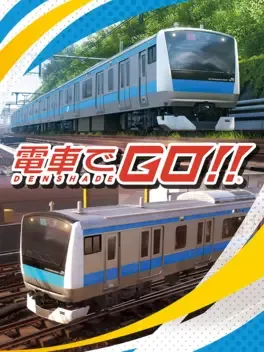
Densha de Go!! (loosely translated to "Go by Train!!") is an electric train simulation game developed by Taito and released by Square Enix for arcades (using PC-based Taito Type X4 hardware) in Japan on November 7, 2017. The first mainline arcade release of the Densha de Go! series in 14 years (after Densha de Go! Ryojou-hen), Densha de Go!! features a deluxe multi-monitor cockpit housing (with four screens, three large ones to form a panoramic view and one touchscreen to display ) resembling E231-500 series trains, and modern high-definition graphics built on Unreal Engine 4. While the game only included parts of the Yamanote Line and the Chuo-Sobu Line from the start, it received additional routes (with new vehicles) in regular bi-yearly updates (including parts of the Osaka Loop Line, the Hanshin Main Line, the Chuo West Line, and the Meitetsu Nagoya Main Line, as well as an extension of the Yamanote Line). In 2019, the game received an alternate "compact" cabinet resembling those used in the original arcade game. It also received two bonus "Fukkoku-ban" game modes, providing a faithful recreation of two of the original arcade games: one for Densha de Go! (on June 26, 2019) and one for Densha de Go! 2: Kousoku-hen 3000-bandai (on September 25, 2019). The game also received a child-friendly spin-off known as Densha de Go!! Kids, which uses a more simplistic cabinet. It later received a revamped console version for the PlayStation 4 and Nintendo Switch in 2020-2021 as Densha de Go!! Hashirou Yamanote-sen. This version is notable for having the full Yamanote Line, as well as routes parallel with it. On March 10th, 2021, the Keihein Tohoku Line was added.

Dream Girl Premier is a Simulation game developed and published by Alchemist for the Nintendo 3DS. It was released exclusively in Japan on November 19, 2015. Become a model production rookie model and aim to become the supermodel of your dreams while working for magazines and TV. In addition to various coordination items, hairstyles, and makeup, there are many things that girls aspire to, such as romance with boyfriends and interaction with fellow models. A fulfilling girl’s life awaits you.

Tarepanda is a cute panda character owned by the company San-X. The term "tare" means "lazy" or "droopy" in Japanese. Tarepanda is licensed by San-X, the company that introduced Tarepanda stickers in 1995. It was designed by Hikaru Suemasa and was inspired by the Hikaru Suemasa being tired. Tarepanda is a character that moves by rolling over, with a record speed of 2.75 m/h.Tarepanda's favorite food is mochi, especially suama. In February 1998, San-X launched Tarepanda erasers and letter pads, which proved enormous hits. San-X believed these products were successful because they were released shortly after the Asian financial crisis of autumn 1997, a time when many people in Japan were facing layoffs and, consequently, were sympathetic toward a "worn-out" panda character. By 1999, sales of Tarepanda goods had reached 30 billion yen. Character Databank, a Japanese character popularity monitoring firm, has claimed Tarepanda was a huge hit in Japan. Taregoro Tarepanda no Iru Nichijou is a simulation game released in 2000 for the Playstation 1 console by Bandai based on the Tarepanda character. In the game the player is the owner of a panda pet he can take to different places of his house and the town and let him enjoy playing with different things and toys that the player can buy him in the town's shop. In those places he can take pictures of the panda or the scenery.
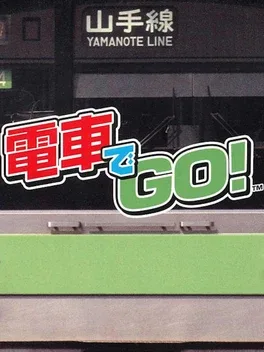
Densha de GO! is a 1997 train simulator arcade game developed and published by Taito in Japan. Players are tasked with driving a train, adhering to the schedule and obeying signals and speed restrictions. It features real-world train lines from Japan, including the Yamanote Line and Keihin-Tohoku Line. The game was ported to the PC, Sega Saturn, and PlayStation. The concept for Densha de Go! was inspired by designer Akira Saito's personal fascination with Japanese train lines and railroads. He wanted to create a game that allowed players to familiarize themselves with driving a train. The controls were his primary focus as he wanted them to be accurate and responsive, and to mimic the controls of a real train—his father worked for the Kyoto City Transportation Bureau Facilities Division, which made this easier to accomplish. Saito included real-world railroads and trains to appeal towards other railroad enthusiasts, thinking that it could also attract more "ordinary" players for its realistic, familiar theme. As arcades at the time were dominated primarily by racing and fighting games, he believed its unique concept could make it stand out. Densha de Go! is among Taito's most successful games, preceded only by Space Invaders. The PlayStation version sold over one million copies. The game was well-received by critics for its controls, attention to detail, and unique concept. Some felt that its home releases lacked enough content and had poor visuals. It was followed by a long series of sequels, spin-offs, and reimaginings, beginning with Densha de Go! 2 in 1999.

A Japan-exclusive arcade game featuring comedic truck driving. The Dekotora or Decotora, an abbreviation for "decoration truck", is a type of extravagantly decorated truck in Japan. Commonly displaying neon or ultraviolet lights, extravagant paints and stainless or golden exterior parts, on both on the exterior and the interior. Dekotora may be created by workers out of their work trucks for fun, or they may be designed by hobbyists for special events. They are sometimes also referred to as Art Trucks. Truck Kyousoukyoku - Ai to Kanashimi no Rodeo: Taking inspiration from the hugely popular decotora truck games. As a truck maneuvering maniac, your goal is to race against competing truckers any which way but loose. Drive on sidewalks, search for shortcuts, discover secret roads and plunge headlong into traffic with no reservation. You are, after all, a maniac. Upon winning races, the player gets a can of aerosol to paint designs and emblems on the body of the truck. The sides, top, back, and head of the vehicle are open canvases for you to drop paint and swirl a menacing symbol or a nature panorama. Preset designs may be chosen or you can create your own doodles which help you help your truck emote. The action is hot and the paint jobs add to the ambience.

Jet Impulse, known outside of Japan as the working title DS Air but never released there, is a Nintendo DS amateur flight simulation game.
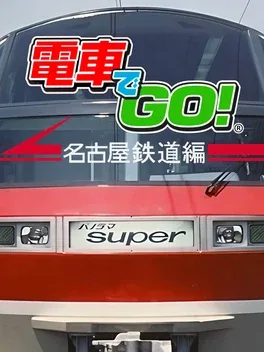
A release not seen in arcades, this Densha de Go! entry focuses on Meitetsu's railroad lines in Nagoya, including the series' only monorail. You play as a train engineer which serve the Meitetsu Nagoya line in Japan. There are many kinds of trains that you can drive, from express trains to monorails. Some trains are locked until you finish a mission, for example you can only drive monorails until you've finished the commuter and express train missions. All of the game parts, except the menu and station names, are in Japanese. In addition or the Meitetsu Nagoya Line, coverage includes Meitetsu Inuyama Line, Meitetsu Minomachi Line and Meitetsu Monkey Park Monorail Line. This was the first version to feature a monorail, and also featured a Meitetsu hybrid light rail route which ran both on regular train lines and as a sort of urban tram on special lanes in city streets. Part of the gameplay of this required the user to stop for regular traffic signals and avoid car traffic. This was the Densha de Go player's first opportunity to drive a vehicle much lighter (and thus shorter stopping distance) than standard trains. In this version, the driver must sound the horn before beginning to accelerate out of a station. This is unique to this title. The gameplay, physics, and strictness of this version were all somewhat relaxed compared to previous versions. The game was published by Taito for the Sony PlayStation in Japan on January 27, 2000. It was later ported to the PC by Unbalance on December 1, 2000. The PS1 version later received a re-release as part of D3Publisher's Simple 1500 series of budget games, as Simple 1500 Series Vol. 102: The Densha Untenshi - Densha de Go! Nagoya Tetsudou-hen, on August 29, 2002.
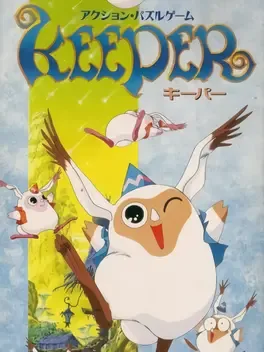
Keeper is an action/puzzle game developed by Fupac and published by Bullet-Proof Software, and released only in Japan for the Super Famicom.

Simple 1500 Series Vol. 24 - The Gun Shooting is a gun game set in the African continent in a near future in which the player (or players since the game features a 2 players cooperative mode) are 2 members of an organization with the mission of saving the continent from an alien army. The game is divided in different stages that are plains, rivers, mountains, etc. And at the end of each level there is a leevl boss that the player has to defeat to advance to the next one.

Reversi (also marketed by Pressman under the trade name Othello) is a board game involving abstract strategy and played by two players on a board with 8 rows and 8 columns and a set of distinct pieces for each side. Pieces typically are disks with a light and a dark face, each side belonging to one player. The player's goal is to have a majority of their colored pieces showing at the end of the game, turning over as many of their opponent's pieces as possible.