
Famicom Mukashibanashi: Yuuyuuki - Zenpen


Buy
Parent game
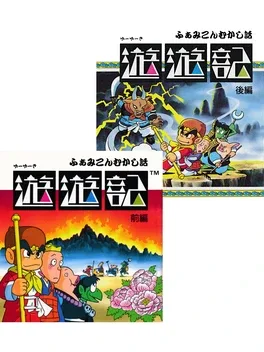
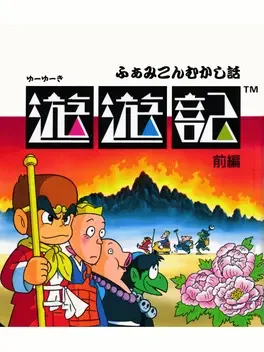
Famicom Mukashibanashi: Yuuyuuki is a 2-part Famicom Disk System game. Yuuyuki is an adventure game played by choosing from several text commands shown on screen. It resembles its predecessor, Shin Onigashima, in its implementation of the "Change Character" command, usage of traditional Japanese fairytales, and general screen layout and appearance. The story-line is a parody of the Chinese novel Journey to the West, where two main characters, Goku and Chao, embark upon separate journeys to find one another. In Yuuyuki, the "Change Character" command can switch between a maximum of five different characters. However, there are very few points in the game where it can actually be used to such extent. Its main use is to switch between Goku and the others accompanying him. Like Shin Onigashima, the character in use can greatly affect the descriptive text shown on screen, and the significant increase in number of characters allowed for more variety in each scene. It is possible to enjoy the game by viewing the reactions towards choosing completely unrelated characters or commands in certain situations. While Shin Onigashima demanded rather complex puzzle-solving abilities, Yuuyuki mainly focuses on having the player carefully read and understand the story-line. Puzzles are solved easily in this game, and very few choices actually lead to a "game over" screen. Easy trivia questions and simple action gameplay emerge at certain points, and players may find themselves searching for the obvious answer on screen more often than thinking hard to solve the puzzle at hand. Main changes in gameplay from Shin Onigashima include the implementation of the "Ittaisan" command, which saves progress at any point during the game, and faster animation of game text. The shortening in load time after choosing commands, and an overall decrease in difficulty allowed Yuuyuki to run at a much quicker tempo than its predecessor.
Part of collection:
Famicom Mukashibanashi
(last 3 games)
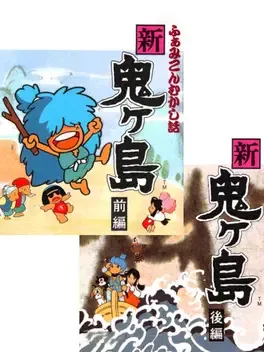
Famicom Mukashi Banashi: Shin Onigashima - Zengohen (Famicom Fairytales: New Island of Ogres - Part 1+2) is a game that ports both Part 1 (Zenpen) and Part 2 (Kouhen) games from the original Famicom Disk System releases to be played as a complete game. This version was first released on the Wii Virtual Console, but the first time that both parts were ported together was in the Famicom Mini Series for the Game Boy Advance.
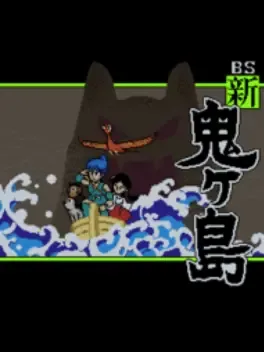
The fourth and final episode of BS Shin Onigashima. BS Shin Onigashima is a Downloadable 4-part Soundlink game for the Satellaview that was broadcast in at least 2 distinct runs between September 29, 1996 and January 31, 1996. The game was popular and won its December 1997 rebroadcast through the votes of players in the Third Player's Choice competition. The game came in second (in terms of votes) to BS SimCity: Machi Tsukuri Taikai and so it was broadcast second as a 4-day broadcast. BS Shin Onigashima was a remake sequel to the earlier Shin Onigashima, a game that was released for the Famicom Disk System in September of 1987. The major difference between the two games relate to the SoundLink elements that were introduced for the Satellaview broadcasts. BS Shin Onigashima was later re-made in December 1997 as the commercial release, Heisei Shin Onigashima, for the Nintendo Power system. This was later followed-up by the May 1998 Super Famicom cartridge release of the same name.
The third episode of BS Shin Onigashima. BS Shin Onigashima is a Downloadable 4-part Soundlink game for the Satellaview that was broadcast in at least 2 distinct runs between September 29, 1996 and January 31, 1996. The game was popular and won its December 1997 rebroadcast through the votes of players in the Third Player's Choice competition. The game came in second (in terms of votes) to BS SimCity: Machi Tsukuri Taikai and so it was broadcast second as a 4-day broadcast. BS Shin Onigashima was a remake sequel to the earlier Shin Onigashima, a game that was released for the Famicom Disk System in September of 1987. The major difference between the two games relate to the SoundLink elements that were introduced for the Satellaview broadcasts. BS Shin Onigashima was later re-made in December 1997 as the commercial release, Heisei Shin Onigashima, for the Nintendo Power system. This was later followed-up by the May 1998 Super Famicom cartridge release of the same name.
Could be interesting
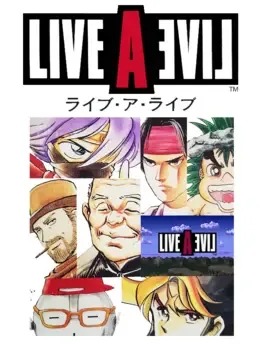
Live A Live's story is split across seven seemingly unrelated chapters that can be played in any order, based on popular genres such as Western, science fiction, and mecha. Each chapter has its own plot, setting, and characters. Although the basic gameplay is the same throughout the game, each chapter adds a new factor to the basic formula, such as the stealth elements in the ninja chapter. After the first seven chapters are completed, two final chapters take place to establish the connection between the seven previous and resolve the story.

Gozonji: Yaji Kita Chin Douchuu is an Adventure game, developed by Hyperware and published by HAL Labs, which was released in Japan in 1989.

Loosely based on the 1983 children's novel of the same name by Terry Jones.

It is said that there is a mysterious labyrinth harboring great secrets that might fulfill the wishes of those who discover them. Two countries respectively ruled by Queen Xina and King Bodd have been competing over the right to explore the labyrinth. However, strange events started happening one after the other: the guardian of the labyrinth died, his daughter disappeared, and King Bodd apparently fell under some sort of a curse. A goblin reporter named Blount get caught in the midst of these events as he attempts to interview the queen and the king. As if that weren't enough, Blount also gets bitten by a werewolf and falls in love, and must find a way to deal with both predicaments. Goblins Quest is the third entry in the Gobliiins series. Like its predecessors, it is a puzzle adventure game with the emphasis on solving complex tasks confined to smaller areas rather than on exploration. Most levels occupy more than one screen and allow limited navigation between different areas. As the reduction of the title to a single "i" implies, this installment only features one controllable goblin. However, at various points of the game Blount will require assistance from other player-controlled characters such as Chump the parrot, Ooya the magician, and Fulbert the snake. In addition, Blount's own spontaneous transformation into a werewolf may affect the solution of some puzzles. The hero will also undergo a few other mutations and drastically change his size during the course of the game.
Callahan's Crosstime Saloon is a puzzle-solving adventure game based on Spider Robinson's series of stories about the unusual patrons of Callahan's bar. The characters in the game are taken from the first book of the series, though their stories are original. The game's world is composed of still screens viewed from first-person perspective. The interaction is point-and-click, with context menus appearing when the player attempts to interact with an object on screen.

Updated every Friday with new stories, items, quests, monsters and more! Join thousands online and defend the world from Drakath and his 13 Chaos Lords. Team with your friends and take on challenging bosses to get rare rewards! With a storyline that updates weekly, our very first MMO always has something new for you to do, epic loot to collect, and other heroes to battle with... or against!
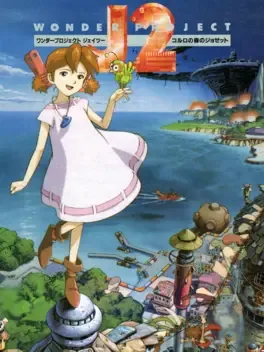
Wonder Project J2 takes place 15 years after the events of the first Wonder Project J game and focuses on a gijin (robot) girl named Josette. The game begins with Josette leaving her home on Corlo Island and traveling to Blueland, where she must learn to behave like a human and ultimately stop an empire from destroying the world.

After stowing away on Cortes's ship bound for the New World, Miguel and Tulio find themselves in a strange land with no food. However, they do find part of a map that might lead them to El Dorado, the lost city of gold. You take the role of either Miguel or Tulio as they search 20 levels of action that span swamps, rainforests, Spanish galleons, and even El Dorado for treasure and the other pieces of the map. Along the way, the heroes will have to fight bulls, native warriors, Spanish soldiers, wild boars, and rhinos, and they'll also have to brave the Circle of Fire. Luckily, the heroes are equipped with swords to dispatch any problems they might run into. If you play the game well, you just might get to ride Altivo, the horse. Help Miguel and Tulio find GOLD AND GLORY: The Road to El Dorado.

Freshly-Picked Tingle's Rosy Rupeeland is an adventure video game developed by Vanpool and published by Nintendo for the Nintendo DS handheld game console. It was first released in Japan, and was released in Europe on September 14, 2007, a year after its Japanese release. Freshly-Picked Tingle's Rosy Rupeeland stars Tingle, a character who has appeared in several games in The Legend of Zelda series starting from The Legend of Zelda: Majora's Mask for the Nintendo 64. It was commercially successful in Japan, selling 234,862 units by the end of 2007.
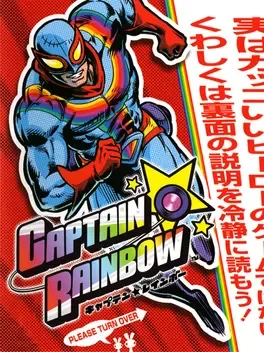
Nick comes from Mameruca, "The Land of the Free". His alter-ego Captain Rainbow is a yo-yo-wielding superhero who stars in his own TV show. However, the show isn't popular anymore, because another superhero attracts the interest of the audience. In order to restore his lost popularity, Nick decides to venture to Mimin Island, an island where wishes are said to come true. In a dark night, Nick ventures to the island by raft. During his journey, he notices a bunny-like creature desperately paddling in the water. In order to save this being, Nick transforms into Captain Rainbow and jumps into the water. However, his try fails and he sinks. The superhero loses his belt, which is needed for the transformation, and so Captain Rainbow turns back to the ordinary Nick. When Nick regains consciousness, he has been washed up at the beach of Mimin Island. After a short moment of confusion, Nick spots that his belt is missing. Then he sees the belt being carried away by bunny-like creatures who have obtained it. Since this special item is essential for him, Nick starts exploring the island. It doesn't take much time to get the belt back. On Mimin Island, Nick meets various Nintendo characters who also came there because of their own dreams and wishes. During their conversations, he learns that no one's wish has actually been granted so far. Only with the help of a chosen hero, Nick, or rather Captain Rainbow in this case, the wishes can be granted. Nick decides to help the islanders. The hero gets support from bunny-like beings called Mimin, the dominant species of Mimin Island. This game was only released in Japan