
Famicom Wars


Buy
Part of collection:
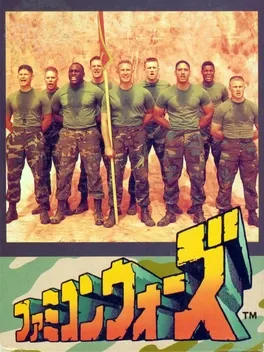
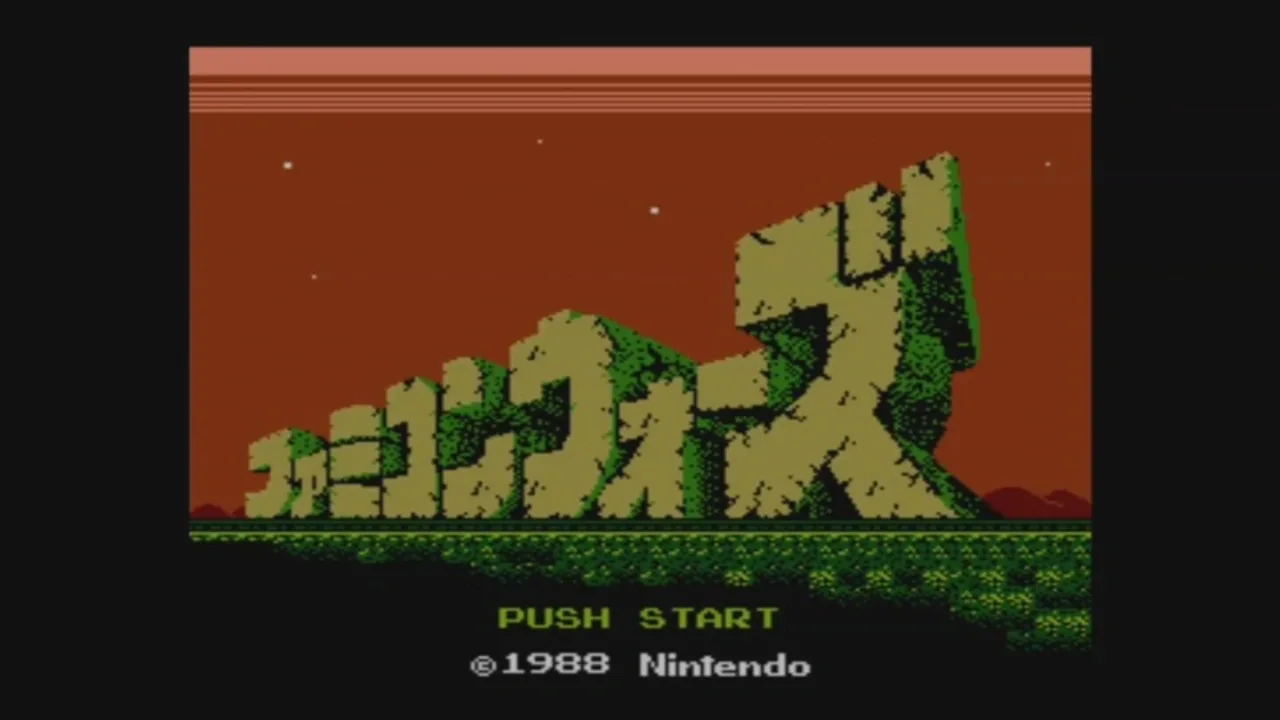
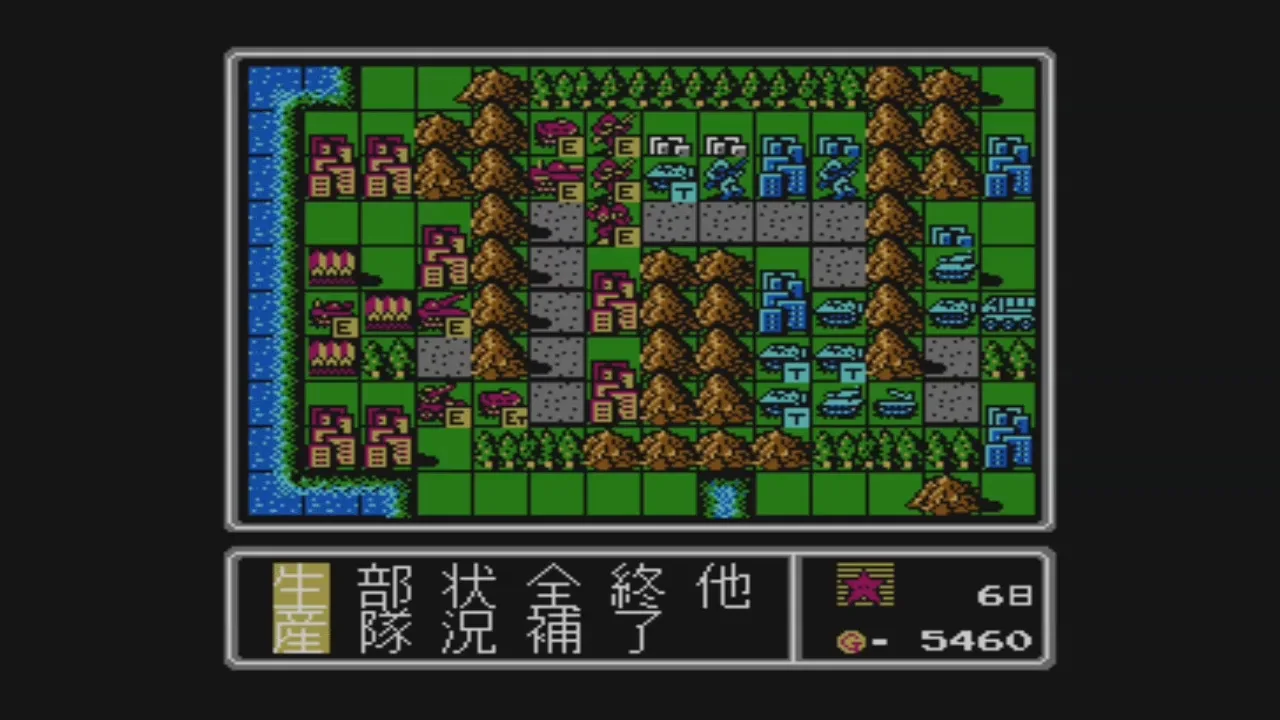
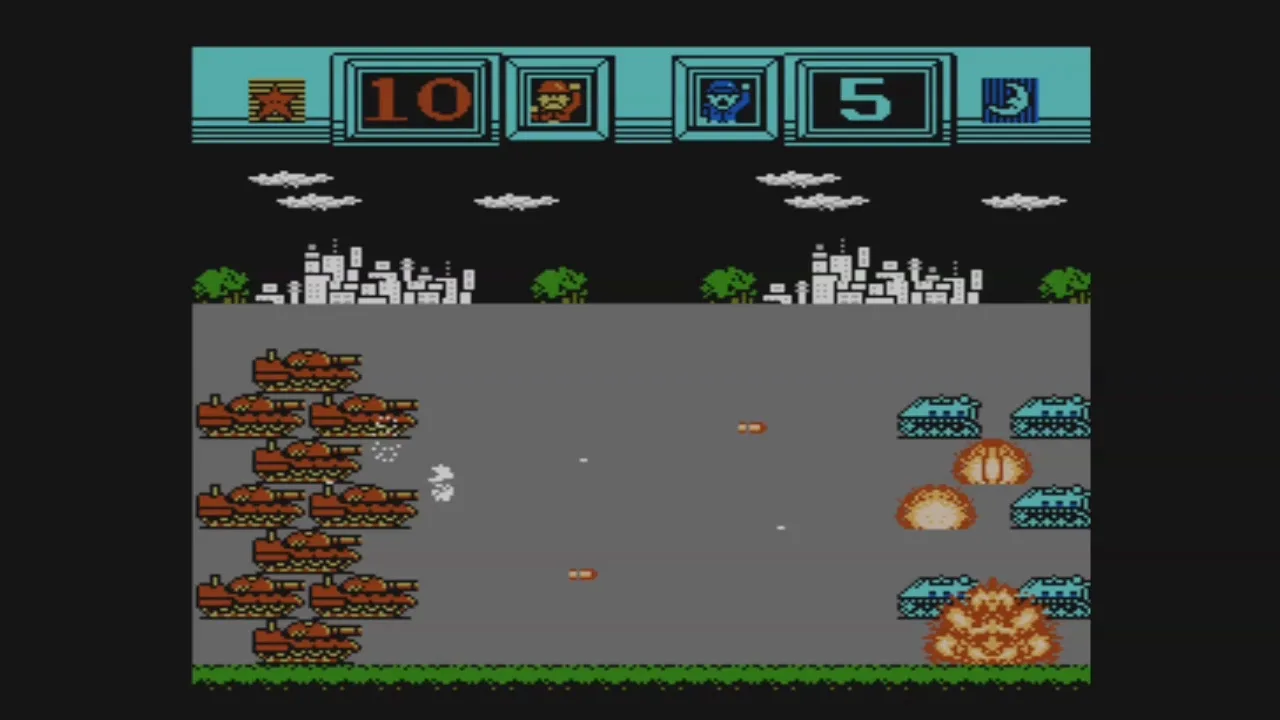
Famicom Wars
(last 3 games)
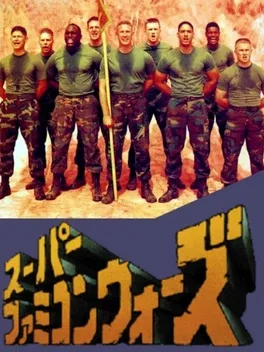
Super Famicom Wars is a war simulator produced by Nintendo for the Super Famicom. It was released via the Nintendo Power game service. It is the follow-up to the original Famicom Wars and a precursor to the Advance Wars series. Super Famicom Wars features all 15 stages from the original 2-Players mode from Famicom Wars, where the player can choose between the Red Star or Blue Moon armies, as well as a New 2-Players mode featuring 15 new stages where the player controls one of the two new armies (Green Earth or Yellow Comet). There's also a 4-Players Mode featuring 10 stages where all four armies fight each other as well as four new final stages for each side upon completing the first 15 stages in either 2-Player Mode, for a total of 42 stages. As in the original game, one can choose which army will be controlled by a player and which one will be controlled by the computer. A new feature in Super Famicom Wars allows the player to select the General for each army. There are seven Generals, each with his or her own unique ability. There are also eight new units and new facilities such as labs and rail stations.
Super Famicom Wars BS Ban is a view-limited Downloadable game for the Satellaview that was broadcast in April, 1998.
First episode of Super Famicom Wars BS Ban.
Part of franchise:
Wars
(last 3 games)

Command an army in strategic, turn-based combat as a tactical adviser for the Orange Star Army. Your expertise is needed as you move land, air, and naval units across the battlefield. Take down enemy squads and capture towns and bases to secure victory and keep the peace. Keep an eye on the game-changing terrain and weather as you lead a variety of units across multiple maps. This remake features two campaigns that cover the events of Advance Wars and Advance Wars 2: Black Hole Rising!
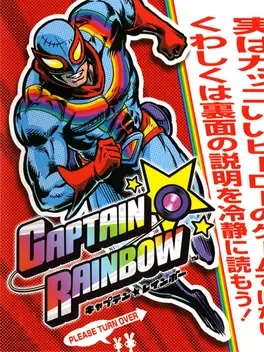
Nick comes from Mameruca, "The Land of the Free". His alter-ego Captain Rainbow is a yo-yo-wielding superhero who stars in his own TV show. However, the show isn't popular anymore, because another superhero attracts the interest of the audience. In order to restore his lost popularity, Nick decides to venture to Mimin Island, an island where wishes are said to come true. In a dark night, Nick ventures to the island by raft. During his journey, he notices a bunny-like creature desperately paddling in the water. In order to save this being, Nick transforms into Captain Rainbow and jumps into the water. However, his try fails and he sinks. The superhero loses his belt, which is needed for the transformation, and so Captain Rainbow turns back to the ordinary Nick. When Nick regains consciousness, he has been washed up at the beach of Mimin Island. After a short moment of confusion, Nick spots that his belt is missing. Then he sees the belt being carried away by bunny-like creatures who have obtained it. Since this special item is essential for him, Nick starts exploring the island. It doesn't take much time to get the belt back. On Mimin Island, Nick meets various Nintendo characters who also came there because of their own dreams and wishes. During their conversations, he learns that no one's wish has actually been granted so far. Only with the help of a chosen hero, Nick, or rather Captain Rainbow in this case, the wishes can be granted. Nick decides to help the islanders. The hero gets support from bunny-like beings called Mimin, the dominant species of Mimin Island. This game was only released in Japan
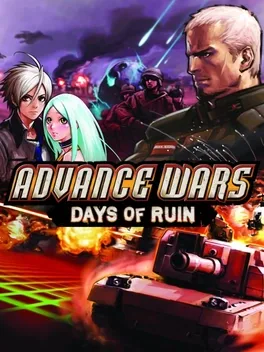
Days of Ruin takes place in an entirely new world where a large-scale meteor shower triggered massive global destruction that eradicated 90 percent of the population. After the catastrophe, the survivors have formed together into militaristic bands that are warring over the last remaining scraps of civilization. You'll take control of Will, a young military cadet (whose hair is admittedly just a little spiky) who quickly becomes embroiled in the conflict at the outset of the game.
Could be interesting
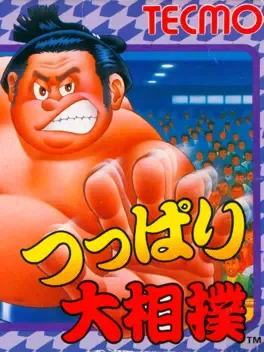
Tsuppari Oozumou is a sumo wrestling game. The goal is to wrestle the opponent out of the ring. The opponents get harder as the game progresses. Different moves can be performed depending on button and directional combinations.
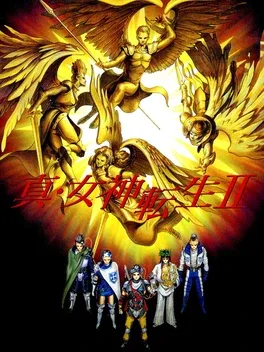
Fifty years have passed since the hero of Shin Megami Tensei followed the neutral path, defeated the leaders of Law and Chaos, and founded a state where followers of both ideologies could live freely. But his reign of freedom doesn't last long. The Messian faith gains power, expanding the Cathedral into a new enclosed environment named Tokyo Millennium. The Gaians rise up, but their rebellion is repressed by the Messians' elite warrior class, the Temple Knights. People flock into the encapsulated city, submitting themselves to the strict hierarchy imposed by the Messian Center, where only the privileged living in the Center district are safe from demonic assaults. A few years later, a retired arena fighter Okamoto rescues a man named Hawk, who was fighting for his life against a demon. He trains him to fight in the arena of the Valhalla district, hoping that he would win the tournament, which will grant them both citizenship in the Center district. When Hawk succeeds, he is brought before a Messian bishop, and learns the shocking truth about his own origins and the role he is supposed to play in the grand scheme of events. A new battle for a better future begins. Shin Megami Tensei II retains all the gameplay features of the previous game. The player is able to summon demons, fuse them to create more powerful ones, make them participate in battles, talk to random enemies and receive information from them, etc. The combat is turn-based, and the player explores the complex, maze-like dungeons from a first-person perspective view. Like in the first game, the Law, Chaos, and Neutral alignments play an important role: during the course of the game, the player will have to make choices that influence the alignment of the protagonist, steering the storyline into different directions. New features include a "magic succession" system, which allows demons to carry over their original magic spells when they are fused into new ones, a few additional spells and abilities, and the possibility to play at the casino and win unique items.
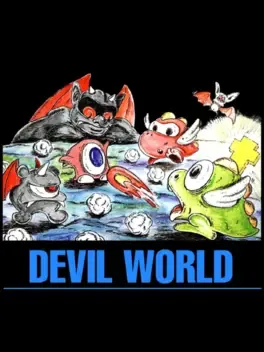
Devil World is a maze video game developed and published by Nintendo for the Nintendo Entertainment System. It was released in Japan on October 5, 1984 and in Europe on July 15, 1987. The game was also released on the Wii's Virtual Console in Japan on January 22, 2008 and in Europe and Australia on October 31, 2008. The game has similar gameplay to that of Pac-Man. It is the only game designed by Shigeru Miyamoto that has not been released in North America, despite the fact that the game is simple and in English. This was due to Nintendo of America's strict policies on the use of religious icons in games, which were at their strictest level at the time of the game's original release, but there would eventually be a North American release for the first time in October 2023 as part of the Nintendo Switch Online lineup.
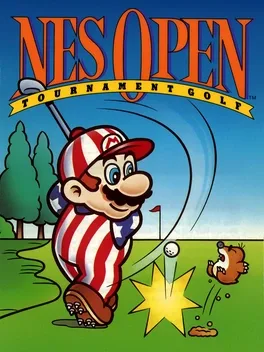
NES Open Tournament Golf is an NES game featuring Mario characters. As the name of the game implies, it is a golf game and was one of the first golfing games in the Mario series. You can play a round of golf on one of three different courses. One or two players can play in the U.S., Japan, or the U.K. and choose a stroke or match play game. Gameplay is from two point of views, starting with an overhead view allowing you to set up the shot and choose a club, then switching to a 3-D point of view. Hitting the ball uses the common power meter where tapping the button starts the meter, tap the button a second time to select the amount of power in the shot, then tap the button a third time to select the amount of slice or hook.
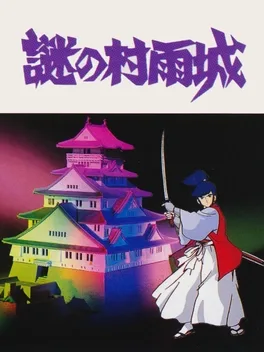
Restore peace to a land that has been overridden by evil! One stormy night in feudal Japan, a mysterious force begins to take control over Murasame Castle and its lands. Each lord in four neighboring castles has taken possession of a dark sphere of power, allowing them to summon ninja armies and monsters that wreak havoc in the villages. Takamaru, a brave and young samurai apprentice, has been sent to investigate. He must infiltrate all four castles and defeat the lords before making his way to Murasame Castle. Use sword and shuriken attacks against the swarms of enemies, and unlock the secret behind the source of evil. The game was at first released exclusively for the Famicom in Japan, but it would come to the rest of the world for the first time in 2013 as part of the 3DS virtual console, as well as for Nintendo Switch Online in 2023.
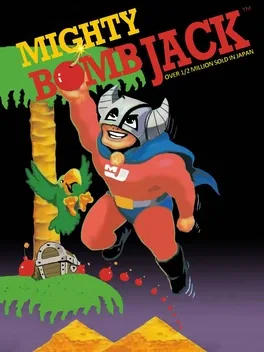
A platform game where the main character travels throughout various levels collecting bombs. The hero of the game, Jack, must make his way through 16 levels of a pyramid in order to defeat the demon Belzebut and rescue the royal Pamera family.Each level is split into two parts an action zone and a Royal Palace room. The mechanics and level designs of the Royal Palace rooms are directly lifted from the games prequel, Bomb Jack. Action zones can be split up into several portions, and contain power-ups usually hidden in treasure chests such as money bags, Mighty Coins and Mighty Drinks. Mighty Coins allow Jack to change colors blue allows Jack to open orange treasure chests, orange allows him to open any treasure chest by simply touching it from the side, and green transforms all enemies on the screen into coins for 5 seconds. Mighty Drinks add 10 seconds to the games timer. Secret passages can also be found in the action zones, activated by finding a Sphinx in a visible or hidden treasure chest.To prevent the player from becoming too greedy, the game automatically sends the player to a Torture Room if they obtain more than 9 Mighty Coins or 99 seconds on the games timer. The only way to escape a Torture Room without losing a life is to complete a number of jumps, which are counted down on the screen. Once the player exits the torture room, Jack automatically loses all Mighty Coins, the timer is reset to 60 seconds, and the game recommences from the beginning of the current level.A Royal Palace room NES version.A Vs. Series version of the game was released in 1986 for the Japanese market not to be confused with the original dedicated arcade version. Differences between the original and vs. series versions include adding a two-player mode, changing the locations of some secret passages and removing a warp trick in the Royal Palace rooms. In the NES version, Jack could warp forward to the next Royal Palace room if he touched the first lit bomb in the current room after the other 23 bombs were collected however, if Jack died in the warping process, he would be sent back to the beginning of the level from which the trick commenced.Mighty Bomb Jack also had a guest appearance on Tecmo Super Bowl, during the halftime show in the Super Bowl
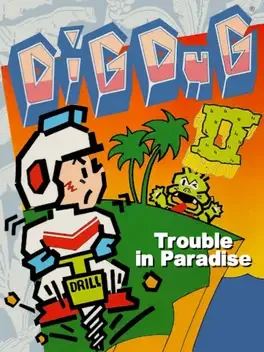
DIG DUG has decided to chill out from the pressures of the real world by taking a long overdue vacation on a beautiful Caribbean island. "At last," he thinks to himself, "sun, sand, surf, and no more hassles from those miserable pests Pooka and Fygar!" Lying in a hammock between the graceful palm trees, he drifts off into a blissful dream of beautiful bikini clad native girls catering to his every wish. But just when he thinks he's got it made in the shade, along come his troublesome enemies to turn his peaceful paradise into a tropical nightmare. Help DIG DUG rid the island of these irritating intruders and bring tranquility back to his vacation by the sea!
The original Japanese version of EarthBound Beginnings, released only in Japan for the Famicom, had some gameplay, story and level layout differences from the later Western port. This original version was never released outside of Japan.
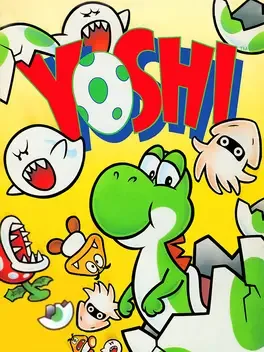
Yoshi is a puzzle game featuring the titular character. In this game, the player must stack two of the same Mario enemy on top of one another to clear them. The concept of the game was inspired by Tetris.
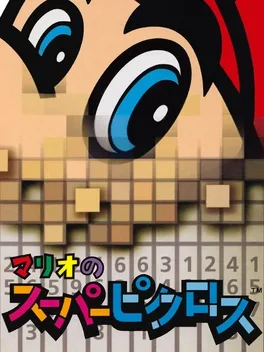
Mario's Super Picross is the first sequel to the Game Boy game, Mario's Picross, and can be played on the Super Famicom. After the commercial failure of Mario's Picross in the West, this sequel was released only in Japan. The game plays much the same way as the first, except Wario appears in it and presents his own set of special rules, which also return in the sequel. Other features includes game-saves, hints and tutorials.