
Fighting Fantasy: The Warlock of Firetop Mountain


Buy
Part of collection:
Fighting Fantasy
(last 3 games)
Create your own adventures in a dangerous land of monsters, treasures and traps. From renowned authors Steve Jackson and Ian Livingstone (co-founders of Games Workshop) and Nomad Games, Fighting Fantasy Legends is a role-playing card game set in the world of Fighting Fantasy.
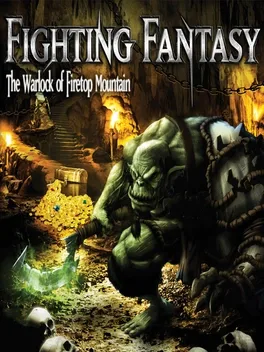
The Warlock of Firetop Mountain is a tabletop adventure come to life! This fantasy solo RPG combines unique, simultaneous turn-based combat with a journey that changes based on each figurine you take into Firetop Mountain! Which hero will you take into Zagor's lair THIS time?
You are the hero in Forest of Doom! Explore the sinister Darkwood Forest in the digital Fighting Fantasy Standalone version of Ian Livingstoneis classic RPG gamebook!
Could be interesting

Suikoden is a Japanese-style role-playing game with several unusual additions. There are three kinds of combat in the game, the most common one being the traditional turn-based party combat (players can have up to six people in their active party). Magic runes can be equipped on the player's characters which allow limited usage of offensive and healing spells. There are also a few army battles, where the player must control whole units of fighters, archers, magicians, etc., and one-on-one fights (duels).
Beyond Zork: The Coconut of Quendor is an interactive fiction computer game written by Brian Moriarty and released by Infocom in 1987. It was one of the last games in Infocom's Zork series It signified a notable departure from the standard format of Infocom's earlier games which relied purely on text and puzzle-solving: among other features, Beyond Zork incorporated an on-screen map, the use of character statistics and levels, and RPG combat elements. The game, Infocom's twenty-ninth, was available on the Amiga (512kb), Apple (128kb), Atari ST, Commodore 128, and IBM (192kb), and the Macintosh (512kb) computers The player explores the Southlands of Quendor somewhat aimlessly at first. Soon, however, a task is bestowed by the Implementors, a group of godlike creatures jokingly based on Infocom's game designers. The Coconut of Quendor, an incredibly powerful artifact that embodies the whole of Magic, has fallen into the claws of an unspeakably foul beast: an Ur-grue. Rumoured to be the spirits of fallen Implementors, Ur-Grues can surround themselves in a sphere of darkness that only sunlight can pierce. The player must recover the Coconut from this monster's grasp or face the unthinkable consequences.
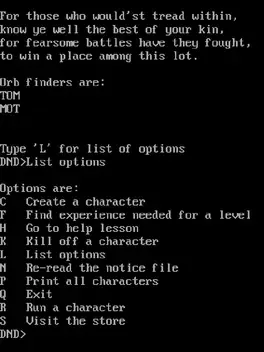
DND is the seminal mainframe classic, which started computer role-playing games. The name of the game clearly comes from the Dungeons and Dragons (D&D) pen and paper role playing systems, and it uses D&D rules. Further inspired by Pedit5, the game itself is a classic dungeon crawl. It could be counted as a "rogue-like" but doesn't have random dungeons.
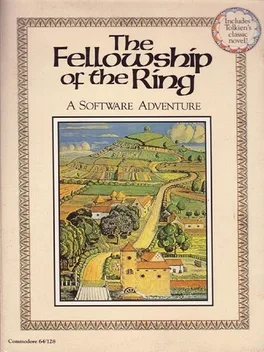
The Fellowship of the Ring is an interactive fiction (with graphics) game based on the first volume of J.R.R. Tolkien's novel The Lord of the Rings, describing the efforts of the Hobbits Frodo, Pippin, and Sam and their quest to bring the ring to Mount Doom. The game is divided into two parts (represented by two separate executable files: DOS version). The first part starts with Frodo at his home in the Shire, where eventually you will team up with the other Hobbits Pippin and Sam, as well as Aragorn and Gandalf. From meeting with Tom Bombadil, the Green Knight, the Balrog and ends with the Nazgul River incident. The second part of the game starts with forming of the fellowship, thus adding new team members: Boromir, Legolas, etc., until the end of the novel.
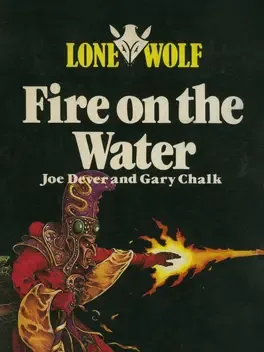
You are Lone Wolf in this adaptation of Joe Dever's second gamebook, "Fire on the Water".
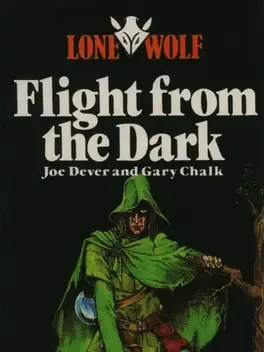
Gameplay is very close to the original gamebook with branching decisions entered by keyboard, except for combat which is handled in a real-time 2D combat interface.
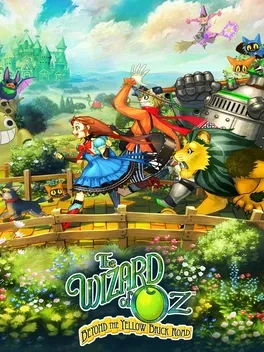
The Wizard of Oz: Beyond the Yellow Brick Road, known in Japan as RIZ-ZOAWD, is a role-playing video game developed by Media.Vision for the Nintendo DS. The game is an adaptation of L. Frank Baum's 1900 novel The Wonderful Wizard of Oz, using its characters, locations and plot. The game was originally published in Japan by D3 Publisher on December 25, 2008. Xseed Games published the game in North America on September 29, 2009.
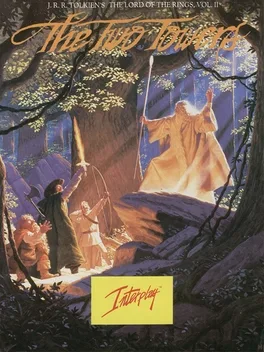
The gameplay is similar to that of the first game. The game is an RPG wherein the player controls multiple characters from the book. It uses a top-down perspective. The game takes place slightly before its predecessor ends: at the dark forest of Fangorn. The story splits into several journeys of different characters similar to the book, the game also switches between different controllable parties. The ultimate goal is to reach the Two Towers and destroy the One Ring.
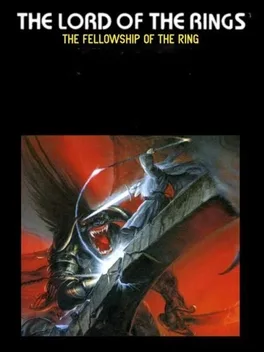
A condensed text adventure based on the popular book.
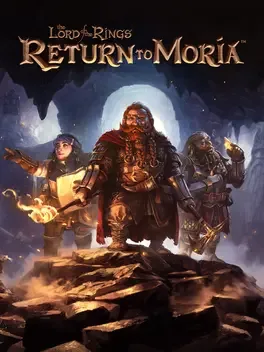
The only survival crafting game set in the Fourth Age of Middle-earth, the iconic fantasy world created by J.R.R. Tolkien.