
Gunparade March



Buy
Part of collection:
Gunparade
(last 3 games)
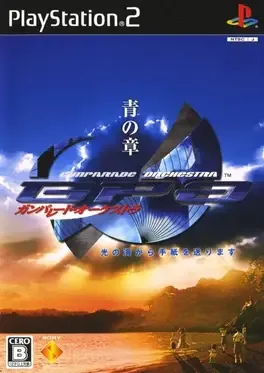
Gunparade Orchestra: Blue Chapter ~Send a letter from the Sea of Light~ ( ガンパレード・オーケストラ 青の章 〜光の海から手紙を送ります〜) is a Japanese game co-developed by io-spiral, Dice Corporation and Alfa System. It was the final game of the Gunparade Orchestra game trilogy to be released for Playstation 2 on July 20, 2006.
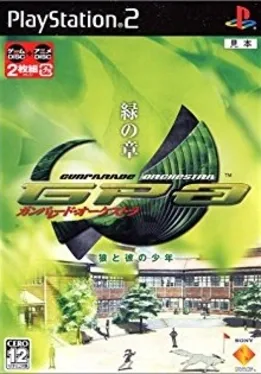
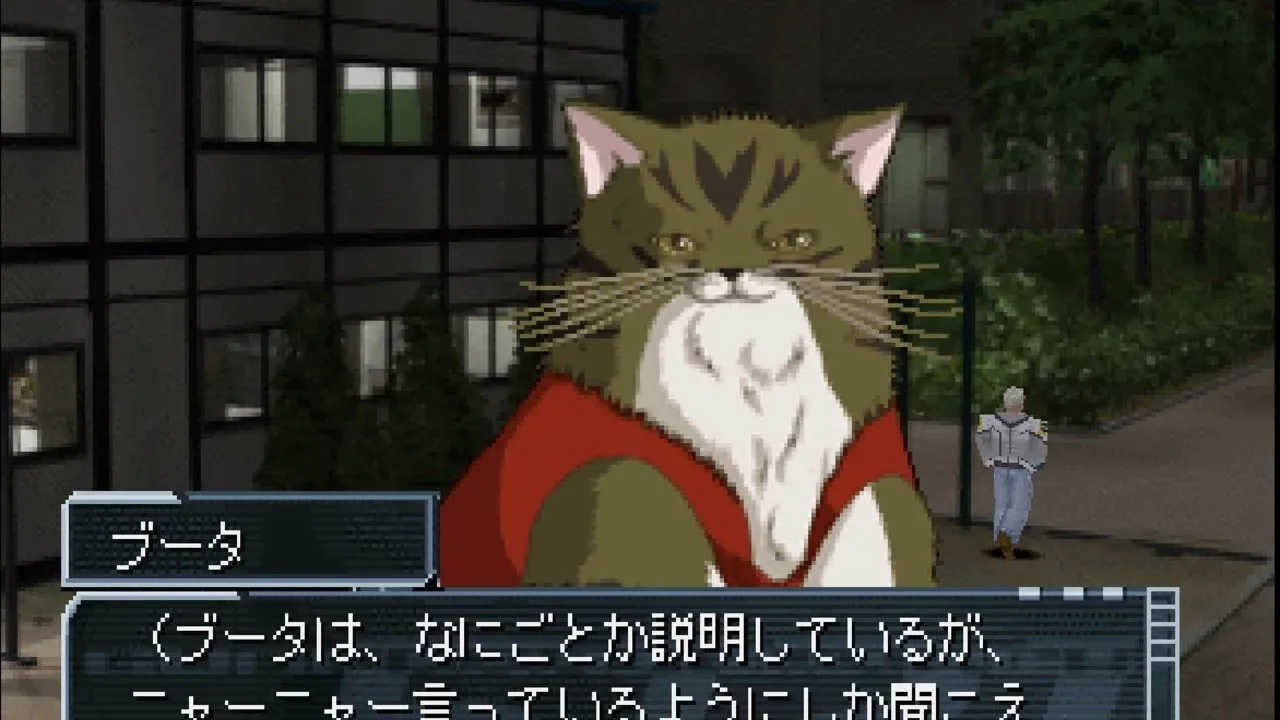
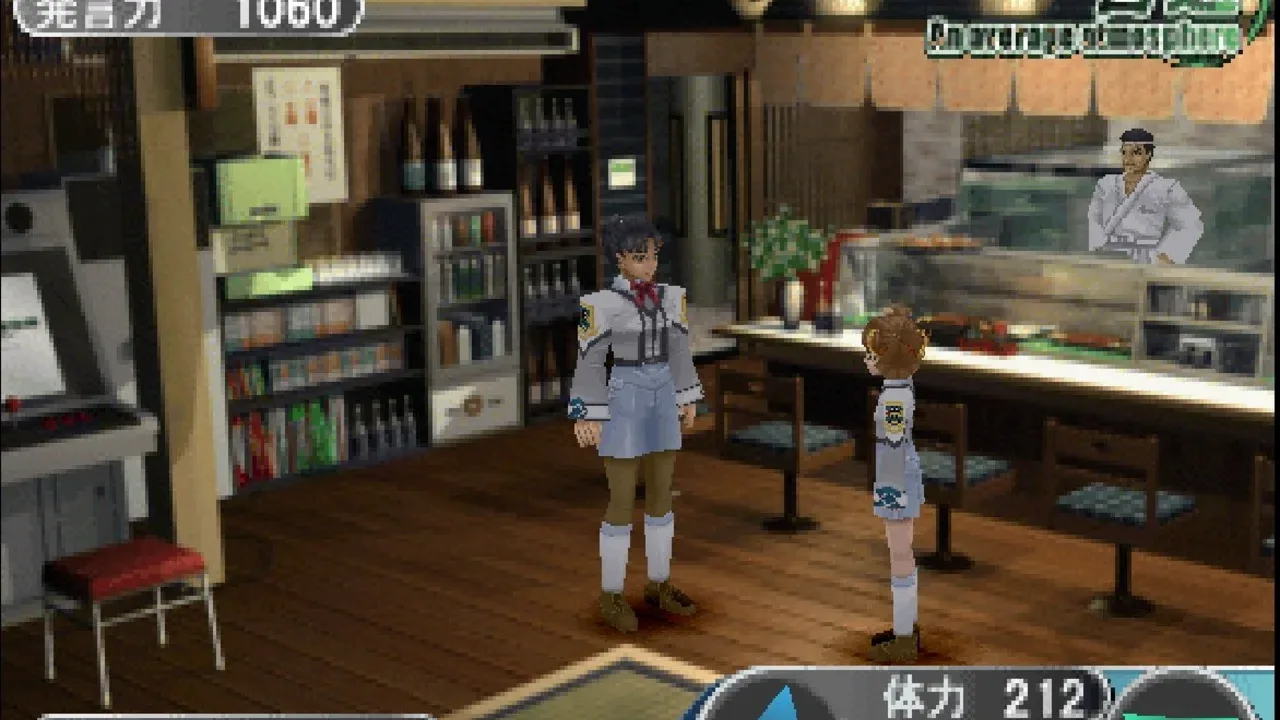
Gunparade Orchestra: Green Chapter ~Samurai and his Boy~ (ガンパレード・オーケストラ 緑の章 〜狼と彼の少年〜) is a Japanese game co-developed by io-spiral, Dice Corporation and Alfa System. It was the second fo the Gunparade Orchestra game trilogy to be released for Playstation 2 on March 30, 2006. The game continues the story from the White Chapter. The player character appearing in the white chapter can be transferred. However, the transfer character can only be used as a player character and can not be transferred as an NPC. Also, in the blue chapter, it has been improved so that it can be transferred as an NPC.
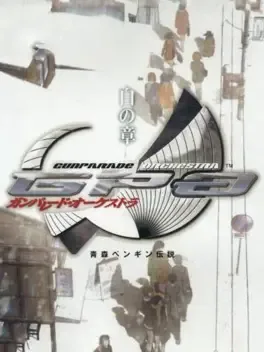
Gunparade Orchestra White Chapter ~Aomori Penguin Legend~ (ガンパレード・オーケストラ 白の章 〜青森ペンギン伝説〜) is a Japanese game co-developed by io-spiral, Dice Corporation and Alfa System. It was the first of the Gunparade Orchestra game trilogy released for PlayStation 2 on n January 12, 2006.
Part of franchise:
Gunparade March
(last 3 games)

Gunpey is a new kind of musical puzzle game where you flip lines and flip the music. In this one-of-a-kind puzzle experience, your objective is to flip the lines, located in squares, to connect them over five columns. Connecting lines from left to right remove the connected row. If an incomplete line reaches the top of the screen, the game is over. Gunpey will test your reflexes, stretch your mind and dazzle your senses. With 40 varied backgrounds and stylized music, and two-player multiplayer over wireless ad-hoc connectivity, this puzzle title is the game to pick up.
Gunparade Orchestra: Blue Chapter ~Send a letter from the Sea of Light~ ( ガンパレード・オーケストラ 青の章 〜光の海から手紙を送ります〜) is a Japanese game co-developed by io-spiral, Dice Corporation and Alfa System. It was the final game of the Gunparade Orchestra game trilogy to be released for Playstation 2 on July 20, 2006.
Gunparade Orchestra: Green Chapter ~Samurai and his Boy~ (ガンパレード・オーケストラ 緑の章 〜狼と彼の少年〜) is a Japanese game co-developed by io-spiral, Dice Corporation and Alfa System. It was the second fo the Gunparade Orchestra game trilogy to be released for Playstation 2 on March 30, 2006. The game continues the story from the White Chapter. The player character appearing in the white chapter can be transferred. However, the transfer character can only be used as a player character and can not be transferred as an NPC. Also, in the blue chapter, it has been improved so that it can be transferred as an NPC.
Could be interesting
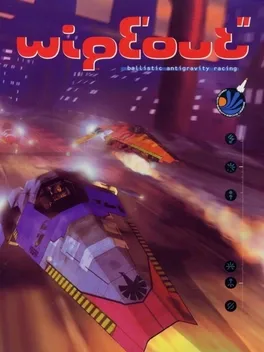
Wipeout is a racing game that is set in 2052, where players compete in the F3600 anti-gravity racing league. The game allows the player to pilot one of a selection of craft in races on several different tracks. There are four racing teams to choose from, and two ships for each team. Each ship has its distinct characteristics of acceleration, top speed, mass, and turning radius. By piloting their craft over power-up pads found on the tracks, the player can pick up various weapons and power-ups such as shields, turbo boosts, mines, shock waves, rockets, or missiles. The power-ups allow the player to either protect their craft or disrupt the competitors' craft.
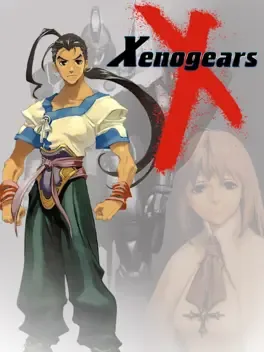
Xenogears Blends Authentic RPG Gameplay with Exquisite Hand-Drawn and Computer-Generated Animation in a Grand Science Fiction Tale. An intricate storyline involving many human and non-human characters will prove to captivate audiences of all ages. Players can rotate the amazingly detailed 3D gameplay maps 360 degrees, and have the ability to navigate around the environment by jumping and climbing. In battle, mega-robots can be controlled, adding great variety to play. A new real-time combat system eliminates restrictive menus, using button commands to provide fast-paced, intuitive action. Players can wield dramatic magical spells or engage in real-time polygonal robot vs. robot battles. Combined with dynamic camera angles and intense lighting effects, Xenogears is an experience that won't be forgotten.
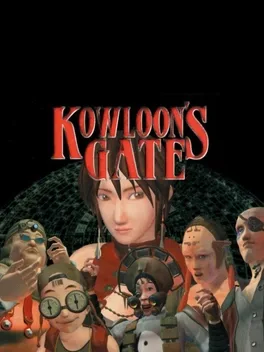
Kowloon's Gate is a 1997 Japanese adventure video game developed by Zeque. Set in the Kowloon Walled City in Hong Kong, it is considered a cult hit. Kowloon's Gate is a first person adventure game that puts the player in a futuristic fantasy world in which he will take the role of a young woman (a master feng shui) that will have to encounter different people, fight evil enmies, and solve some strange situations and puzzle to advance in the adventure and try to make that the world won't dissappear. Kowloon's Gate uses motion JPEG technology to render the strange CG enviroments you'll explore. Interact with unique characters, traverse the real-time 3D scenes freely, and solve imaginative puzzles in this Adventure game.

Suikoden is a Japanese-style role-playing game with several unusual additions. There are three kinds of combat in the game, the most common one being the traditional turn-based party combat (players can have up to six people in their active party). Magic runes can be equipped on the player's characters which allow limited usage of offensive and healing spells. There are also a few army battles, where the player must control whole units of fighters, archers, magicians, etc., and one-on-one fights (duels).
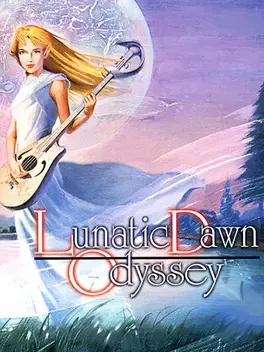
Lunatic Dawn Odyssey is a RPG in which the player controls a group of adventures that begina quest, they will go through different towns and other places. In their journeys they will face different kind of enemies and could talk to different characters and they can change their equipment in the shops. The game uses a first person perspective in the adventure part and a third person perspective in the battle part. The battle part is the classic turn based rpg style. The game features a high degree of freedom since the character can get married and have children and each time that the game is played the circunstances can changed so there are a lot of different endings.
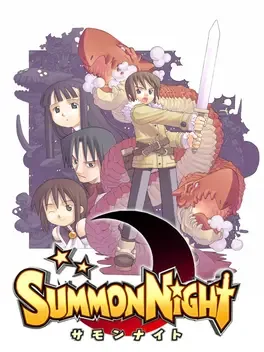
Summon Night is a Japanese tactical RPG and the first entry in the Summon Night series. This game follows the story of a Japanese high schooler, who is suddenly summoned into the world of Lyndbaum. The main character gets involved in a series of conflicts between gangs, classes, factions and worlds. He/she has to use the power of summons to solve those problems while trying to return to his or her own homeworld.
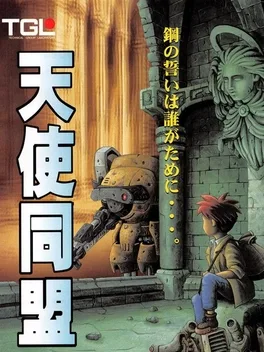
Tenshi Doumei combines battlefield tactics and mech upgrades for an entertaining title. At face value, Tenshi is a tactical strategy RPG where you move units and attack or defend against cadres of adversaries. Attacks consist of long range artillery attacks and close-range bouts where you invariably punch an enemy mech. The drawback of a punch is that the opponent will counter-attack within the close range. A long range fire attack will not prompt any return fire. Close range attacks are preferable in the first few levels because they inflict more damage.
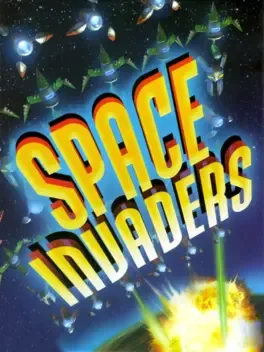
Space Invaders is a game in which the player controls a laser cannon by moving it horizontally across the bottom of the screen and firing at descending aliens. The aim is to defeat five rows of eleven aliens—some versions feature different numbers—that move horizontally back and forth across the screen as they advance towards the bottom of the screen. The player defeats an alien, and earns points, by shooting it with the laser cannon. As more aliens are defeated, the aliens' movement and the game's music both speed up.
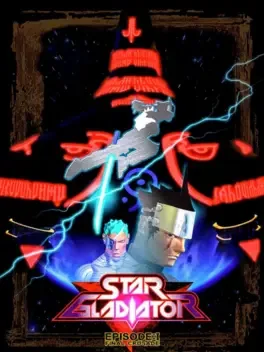
Star Gladiator Episode I: Final Crusade is a 1996 weapon-based 3D fighting game released by Capcom for the PlayStation-based ZN-1 arcade hardware. It was Capcom 's first polygonal fighting game, preceding the original Street Fighter EX (which Capcom had co-produced with Arika) by a few months A PlayStation port was released in October 1996. It was followed by a single sequel, Plasma Sword, in 1998.
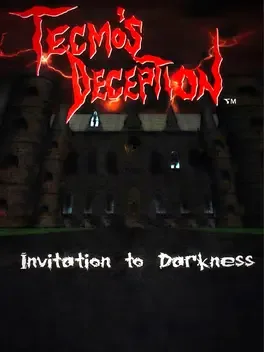
Should you enter Tecmo's Deception you should be warned! You must decide who lives and who dies. As in life, Tecmo's Deception will hold you responsible for your actions. Everything you do, everywhere you go, everyone you meet has a reason. Are you seeking revenge, resurrection, or redemption? It's your decision.