
Hanjuku Hero


Buy
Part of collection:
Hanjuku Hero
(last 3 games)
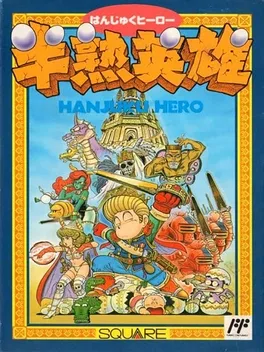
For the 20th Anniversary of the franchise, Square Enix released a remake of the original Hanjuku Hero for mobile devices.
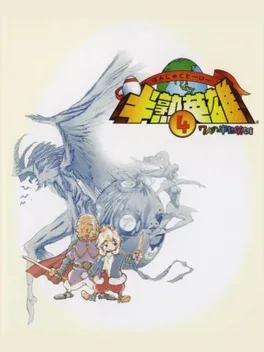
The 4th installment of the Hanjuku Hero series.
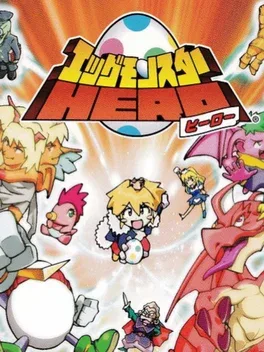
a role playing game spin-off of the Hanjuku Hero. Between Egg Monster invasions, Lord Almamoon has begun slacking off. In order to counteract this, his minister Sebastian sends him to an island to train, which kicks off the story. Egg Monster Hero was released on the Nintendo DS in Japan on March 24, 2005, and was the first game Square Enix published for that console. Players primarily interact using the stylus to drag Egg Monsters towards the enemy and perform special attacks. A mobile phone version of the game became available in Japan on June 6. The game was intended for a North American release but ultimately canceled due to poor reception by focus groups. It was the 141st best-selling game of 2005 in Japan, selling 92,096 copies.
Could be interesting
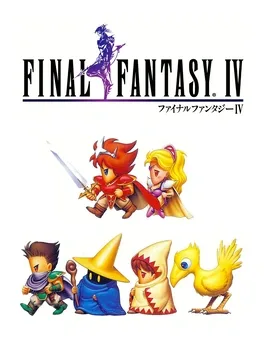
FINAL FANTASY IV is the fourth main installment in the FINAL FANTASY series, developed and published by Squaresoft. It was released in July 1991 for the Super Nintendo Entertainment System in Japan, and released as FINAL FANTASY II in North America in October 1991 with alterations made due to Nintendo of America's guidelines at the time.
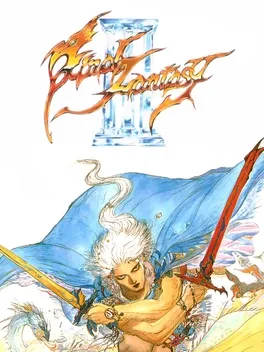
Final Fantasy III is the third FF game for the Famicom. The turn-based battle engine has been improved: if the enemy is defeated, the next character will automatically switch to another enemy, and not hit the air, like in the previous two games. The game itself is, like the previous games, a top-down RPG where your characters travel in the overworld, sometimes entering cities and dungeons to buy equipment, rest and fight random encounters and bosses with turn-based combat. Final Fantasy III also introduces various series staples, such as the Job system and the Moogle species.
The 4th installment of the Hanjuku Hero series.
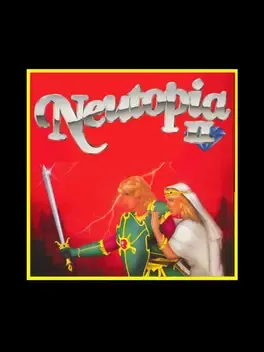
Jazeta brought peace back to the land. But as long as evil and fear live in the human heart, the dreaded Dirth, Emperor of Darkness, will be plotting his return. The Emperor is stirring under the peaceful surface of Neutopia, bringing suffering to its people. Who will save them? Jazeta, the hero, is lost in a labyrinth in a foreign land. Can his son withstand the powers of the Emperor of Darkness to rescue the good people of Neutopia from fear and despair?
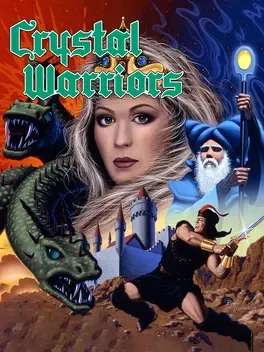
The continent of Tyramus has lived in peace for almost a century, thanks to the four elemental crystals of the kingdom of Arliel. However, peace is threatened by the invading armies of the Jyn Empire, led by Emperor Grym, who wants to use the four crystals to rule over Tyramus. Fortunately, Princess Iris can escape with one of the crystals and now the player has to protect her and the crystal and somehow find a way to drive back the hordes of Jyn. Gameplay in Crystal Warriors is quite similar to Shining Force. The player fights in turn-based battles controlling different characters like fighters, healers, rangers and mages, all with different strengths and skills. Whenever two units engage in battle, they enter a duel mode lasting for up to two turns. In this mode the player can choose between four commands: "battle" (attack), "retreat", "spell" and "monster". While the first three commands are quite self-explanatory, the "monster" command is interesting. Whenever a non-human enemy is defeated, it can be tamed and be used in battles. While most monsters do not have many HP they can serve as good attackers for physically weak characters or take some hits in order to protect his master. In-between battles the player can visit towns to rest, buy weapons and spells or recruit new party members.
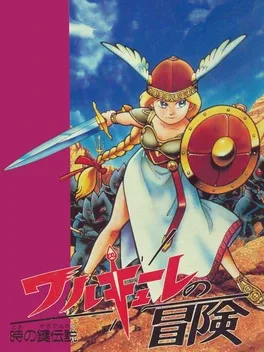
Once upon a time, in the world of Marvel Land, people and nature lived together in a peaceful and harmonic coexistence. All the animals were docile. Humans, Sandras, Quarkmen, Tattas, and other races mingled with one another and worked to make Marvel Land into an increasingly beautiful place to live. A large clock tower resembling a stone grandfather clock stood watch over the countryside of Marvel Land. Long ago, an ancient evil had been sealed within the clock tower. The people needn't fret, however. For those days had long since passed, or so they had thought. The key of time that rested in the center of the face of the clock tower had long since been used to seal away the ancient evil that lies within. Until one day, the clock tower mysteriously stopped working. In an effort to rewind the clock, a villager takes it upon himself to do just that. Fumbling with the key, the villager drops the key of time, foolishly. In a frantic manner, the villager picks up the key and tries to reset it back into place before a catastrophe befalls Marvel Land. But then, it was too late for the villager to accomplish the task. The ancient evil of legend. Zouna, the Dark Wizard who manipulates time itself was unleashed upon the world once more. And to prevent anyone else from sealing him away once again, Zouna takes the key of time for himself. Finally freed after many years, Zouna wastes no time in wreaking havoc and chaos over Marvel Land. Zouna unleashes his manifested darkness over the land, and lays waste to the countryside. Feeling confident in his reign, Zouna constructs his castle in which to preside over Marvel Land from. The peaceful inhabitants of Marvel Land cried out in terror as Zouna's manifested darkness came after them one by one. Zouna's darkness corrupted the hearts of anyone it came across, and possessed them against their wills. Once thriving towns and villages fell into ruination. Family members were parted from their loved ones. Only a few scattered towns remained standing; forming a last bastion in resistance to Zouna's dark invasion. A futile effort. Even Krino Sandra (known as Whirlo in Europe) would come to meet his heroic demise, subdued by Zouna's power. Marvel Land is in dire need of a savior. The desperate call has been answered by the heavens. Valkyrie, a fledgling shield maiden descends to Marvel Land from heaven. Her first adventure, she wields a simple shield and a mace of light. Vowing to save Marvel Land from the darkness that has consumed it. Then her adventure begins.
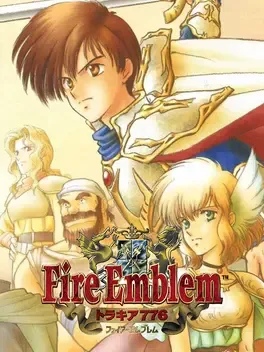
Fire Emblem: Thracia 776 is a Japanese tactical role-playing game developed by Intelligent Systems and published by Nintendo, and the fifth installment in the Fire Emblem series. It is also the third and final Fire Emblem series title to be released on the Super Famicom. Fire Emblem: Thracia 776 takes place between Chapters 5 and 6 of the previous game, Fire Emblem: Seisen no Keifu. Several characters from Fire Emblem: Seisen no Keifu appear, such as Leaf, Fin, and Nanna. It takes place in the Thracian peninsula in southeastern Jugdral.
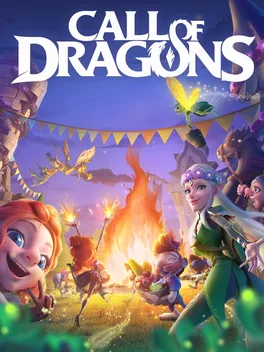
Call of Dragons is an MMO fantasy conquest game from the creators of Rise of Kingdoms, offering an incredible strategic combat experience.
a role playing game spin-off of the Hanjuku Hero. Between Egg Monster invasions, Lord Almamoon has begun slacking off. In order to counteract this, his minister Sebastian sends him to an island to train, which kicks off the story. Egg Monster Hero was released on the Nintendo DS in Japan on March 24, 2005, and was the first game Square Enix published for that console. Players primarily interact using the stylus to drag Egg Monsters towards the enemy and perform special attacks. A mobile phone version of the game became available in Japan on June 6. The game was intended for a North American release but ultimately canceled due to poor reception by focus groups. It was the 141st best-selling game of 2005 in Japan, selling 92,096 copies.
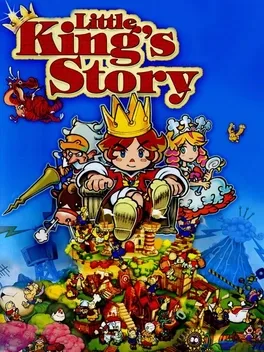
"Initially released for Wii to rave reviews, this cult classic real-time strategy game juxtaposes cutesy fairytale visuals with some decidedly adult cynicism for a zany, irreverent adventure to build, enhance, and maintain a mystical, magical kingdom. Making its way to PC for the first time, this edition of the game remains faithful to the Wii original, but brings all its charming, sassy fun to a new audience. Can you keep Alpoko safe from the Onii and help our little hero become king of the whole world?"