
Hyokkori Hyoutan-jima: Hyoutan-jima no Daikoukai


Buy
Part of franchise:
Hyokkori Hyoutan-jima

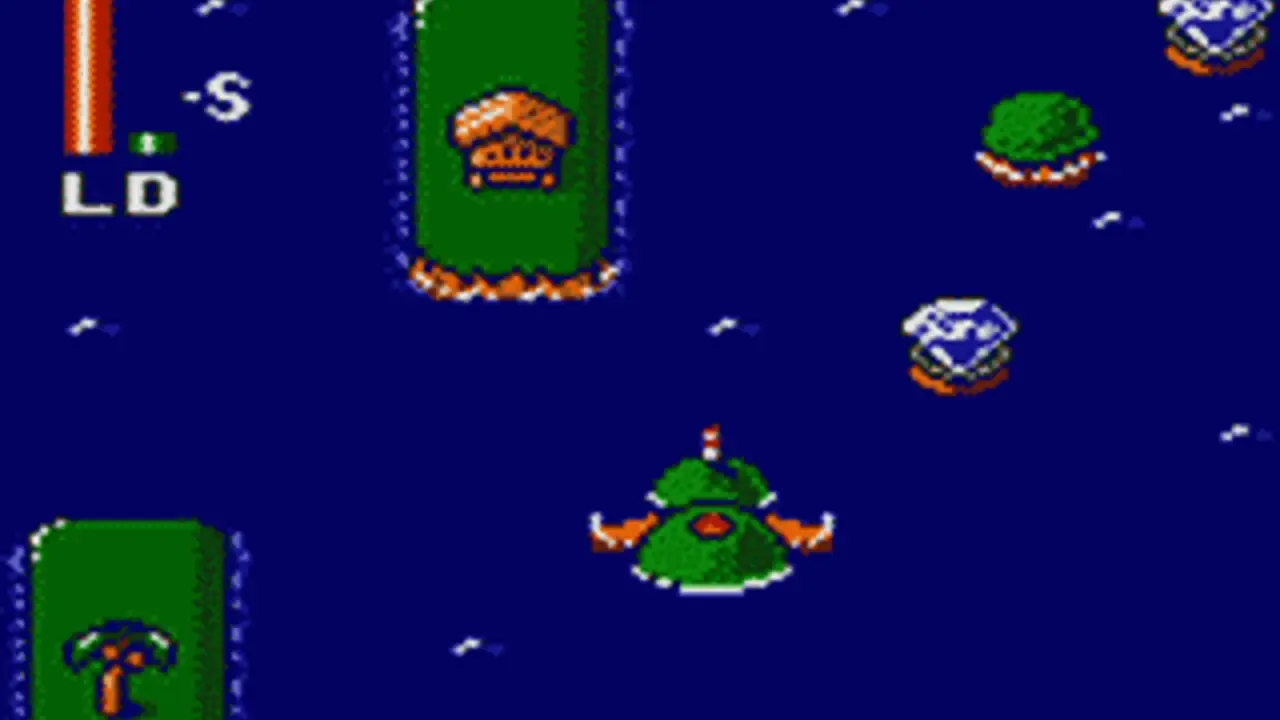
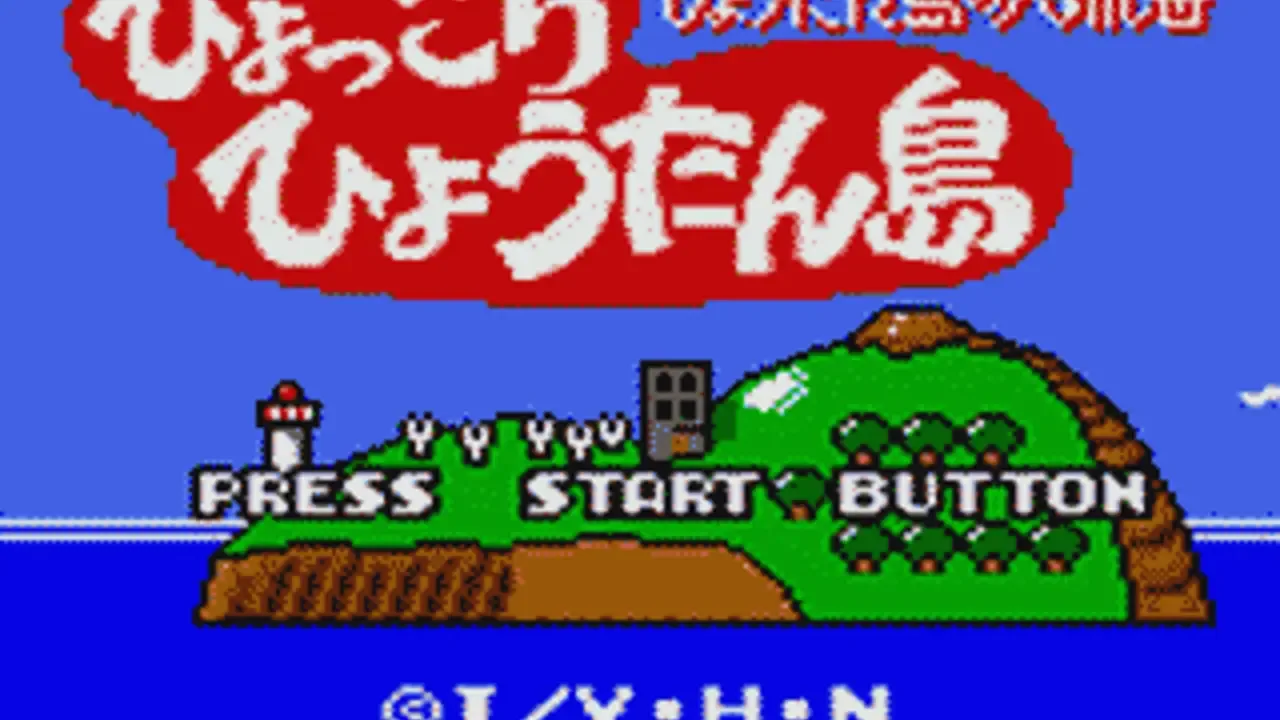
Minna no Soft Series: Hyokkori Hyoutan-jima is an Action game, published by MTO, which was released in Japan in 2003.
Could be interesting
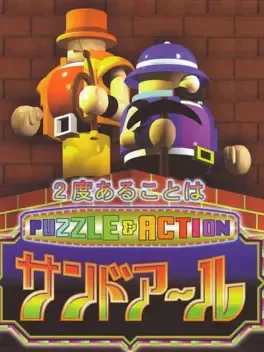
The third game in Sega's Puzzle & Action series.

Puzzle & Action: Ichidant-R (also known as just Ichidant-R (イチダントアール?) is a puzzle video game developed and released by Sega in 1994 for the Sega System C. It is the sequel to Puzzle & Action: Tant-R and is the second of the three games in the series. Gameplay is similar to Tant-R, in that the player must complete a series of mini-games, although its crime theme is replaced with a mediaeval theme. The game was ported to the Sega Game Gear in 1994, Mega Drive in 1995, and released with Sega Ages compilations for the Sega Saturn and the PlayStation 2 (Rouka ni Ichidant-R and 2500 Vol.6 respectively). The game was released for the Wii Virtual Console in 2007. The game was re-released worldwide as part of the Sega Ages line. The third and final game in the series, Puzzle & Action: Treasure Hunt, was released in 1997.

Super Tank is one of two original games manufactured by German company Video Games GmbH. Released in 1981, it was licensed to SNK for the Japanese market and Computran for the US Market. In Super Tank, up to two players simultaneously control highly mobile armored tanks on a mission to destroy the SUPER TANK. An introductory collection round challenges the players to clear a field of mines and destroy as many red enemy tanks as possible. Special glowing diamonds are scattered throughout, providing temporary super armor protection and making the players’ task easier. After clearing the field of mines, the players are ready for their confrontation with the SUPER TANK! The SUPER TANK is this game’s most dangerous adversary. It is a highly-maneuverable vehicle with a single weakness at the tip of its nozzle. A direct hit on the nozzle will destroy the SUPER TANK, bringing the players to another more intricate collection round where the challenges are greater and so are the rewards. Oddly enough, the German and Japanese versions of the game’s flyer depict a flower-laden, treaded vehicle with the head and body of a Roman gentleman, much like a centaur. This vehicle is shown shooting water at other similar vehicles out of his elongated nose. It is thought that restrictions against war games and cultural standards were responsible for these gentle depictions of the military-themed action in the game.

The evil god Ashura has unleashed hordes of monsters and demons onto Earth, hoping to take control of the planet as well as the hearts of men. The powerful god Hyprion has recruited four of Earth's most powerful warriors and assembled them into a team to fight the encroaching darkness. The player assumes control of this group of warriors in order to defeat the armies and their god, Ashura.

Doraemon Waku-waku Pocket Paradise is an action game for the Sega Game Gear. It is based upon the 1979 Doraemon anime series.

The player may explore the game world in a non-linear fashion. At any time, there are three levels available and the player may tackle them in any order. Each solved level leads to additional two. On each level, the player must find the missing map piece, proceed to the exit, and defeat the level boss. Chester can dash and kill enemies by jumping on their heads. He dies from one hit, unless he has a pack of the cheetahs snack at his disposal. In this case, he'll recover full health.

In Black Fire, the player takes control of the most sophisticated helicopter on the planet taking on a very dangerous enemy. The player's helicopter is state of the art, but the enemy they are fighting has acquired alien technology and is using it to try and conquer the world and it is up to the player to use all the flying skill they have and try to stop them. Black Fire is rendered in 3-D and has a 360 degree field to maneuver. The chopper is outfitted with missiles and machine guns and flies through 15 levels, destroying enemy targets and providing support to allied units with the story told through CGI cutscenes.

Greendog is one unlucky surfer. He lost his board and got stuck with a cursed necklace. Greendog has to fight his way past a lot of crazed creatures and monsters to find the Aztec treasure or he'll never get rid of the curse!

Pacar is an SG-1000 game initially released in 1983. It is essentially a mix between two Namco games; Pac-Man and Rally X. It is the sequel to Head-On, which was released a year before Puck-Man. However, Pacar is more-so a clone of Puck-Man than a true Head-On sequel. The player controls "Pacar", a "mischievous" green car through a maze of roads. The objective of the game is to "delete" all of the small red "dots" scattered around the playfield, building up points for a high score. The joystick allows Pacar to move in the proposed direction, assuming it is possible to do so. Like Pac-Man, Pacar does not stop moving unless it hits a wall, however unlike Pac-Man, it is not possible to rotate 180 degrees on the spot - moving in the opposite direction causes Pacar to reverse, and reversing is significantly slower than driving normally. Ideally the player should plan his or her route to avoid reversing altogether. 1 or 2 allows Pacar to move faster across the board. Driving off the edge of the screen makes Pacar appear at the other side, again similar to Pac-Man. The game has Pacar avoid two types of enemy, also depicted as cars. Blue cars spawn from the garage at the centre of the screen and wander around the play area, only following Pacar if it is close by. Red cars spawn randomly on the road behind Pacar, and are much more aggressive with their tactics. Red cars also differ in that if Pacar speeds up, they will also increase their speed. If either car crashes into Pacar under normal conditions, the player loses a life. Under certain conditions the game's equivalent of Pac Man's power pellets appear after deleting smaller dots. These give Pacar "temporary invincibility" turning it purple in the process, and act as the only form of attack against oppoents. While purple, the player is free to crash into as many cars as he or she likes, and is granted extra points in the process (starting at 200 and doubling for each successive hit, i.e. 200, 400, 800, 1600, 3200 etc.). It will also slow down red cars. Though there are typically fewer enemies on-screen in Pacar than Pac-Man, the fact that blue cars spawn from the garage instantly after being deleted means it is possible to achieve much higher point combos. There are only two maps in Pacar, which cycle endlessly until the player dies. The game claims it is "three dimensional" as some roads in map 1 act as bridges over other roads. Once both maps are completed the player proceeds to the next "round", in which more blue cars are added to the playfield (with the exception of round 4, in which the three "normal" blue cars are replaced with one faster blue car. Round 5 will then add a second faster car and so on). Extra lives are awarded every 10,000 points.

Hustle Chumy is an SG-1000 and MSX game developed by Compile and released in 1984. In Hustle Chumy players control a mouse named Chumy who needs to collect apples (and other food) in a sewer, avoiding other critters as he goes. As Chumy eats more food, his speed decreases, but his fireballs are given a longer range. Levels have varying layouts. There are several types of enemies in the game, most of which can be defeated with fireballs. Bats: Bats fly over Chumy. Mecha-Dinos: Mecha-Dinos are indestructible, although Chumy can slow them down with fireballs. Gators: Gators usually sleep in one spot, but sometimes move slowly around. Cats: Cats can jump like Chumy. Ninjas: Ninjas need to be hit with three fireballs to be defeated.