
Illbleed


Buy
Could be interesting

Tom Hansen is just another guy in the U.S. Coast Guard when his crew receives a mysterious order to undertake a hazardous rescue mission in the teeth of a winter storm. As the waves surge higher, Tom and his crewmates find the vessel, an abandoned Russian whaling ship. They board it, but discover that the ship has only been abandoned by human life. Something else is on board, something deadly, and soon Hansen is the only one left who can stop it. Joining forces with the only other survivor, Hansen must battle the inhuman menace and seek out its very heart for a confrontation that could have consequences for all of humanity.

Kuon is a horror game set in Heian period (12th century) in Japan. You control three protagonists in the game. The story revolves around a man named Doman, an exorcist who was summoned by one of the noblemen to investigate a cursed manor. His daughter Utsuki is out to search for him when he doesn't return, and her sister is charmed by demons inhabiting a mysterious castle, turning into a demon herself. A young girl named Sakuya, Doman's disciple, also ventures into the depths of the demonic world, to prove herself worthy of her master. Once the player completes Utsuki's and Sakuya's scenarios, they unlocks the third scenario where they experiences the story from the point of view of Doman himself. The game is a mixture of third-person action and puzzle-solving. As in all survival horror games, your means of defense are limited and scarce. Unlike most games of the kind, physical attacks with weapons are not your only way to defend yourself against hordes of undead creatures. You can also learn and cast spells in the game, and even summon creatures (wolves, spiders, etc.) to fight at your side.

Fear Effect is an action adventure waiting to unfold! Wee Ming Lam disappears a few days before her 18th birthday under mysterious circumstances. Three ruthless mercenaries conspire to track her down and ransom her off to her father, Mr. Lam, a powerful Triad leader in Hong Kong. An extortion mission to retrieve Wee Ming Lam becomes a lesson in survival against the most unimaginable of enemies.

Awakening shipwrecked just after a meteor collides with a remote biotech research island, you begin to discover an uncontrollable madness unleashed in the meteor's wake. As one secret uncovers another, you piece together a horrifying revelation that could lead to the end of life on Earth.

Primal tells the story of Jennifer Tate, a 21-year-old woman searching for her boyfriend through a series of demonic realms. As the story develops, more is revealed about Jen's past and her relationship with her boyfriend, as well as the nature of the demon worlds. In Primal, the player can control either Jen or Scree as they navigate the realms of Oblivion. As the game progresses, newer demonic forms are obtained, which prove invaluable in solving various puzzles and combat. Control can be switched between Jen and Scree at any time in game. When in control of one, the other will be operated by AI, performing various functions depending on the situation. During play, the characters can interact with one another, performing actions such as asking questions, or siphoning energy. When in control of Jen, the player may transform into one of four demonic forms for various purposes, depending on the situation (provided the forms are unlocked). When in a demon form, Jen experiences a boost in attack, defense, speed, attack range and access to abilities unavailable in a human form. The tattoo on Jen's back also glows when in a demon form, corresponding to various forms. Defeating enemies involves weakening enemies to the point where their hit points reach zero, at which time a finishing move must be performed to kill the enemy. While the moves differ in style and time taken, the final effect remains the same. Enemies can be finished off before the health bar reaches zero, and doing so leaves more residual energy. While Jen can remain in a demonic form indefinitely, taking damage will reduce health. However, hit points here are represented by demonic energy. When an enemy is killed, the remaining energy can be drained through use of Scree, who can store the energy for when it is needed. Jen can then call on the energy, siphoning it off to replenish her own. Scree can store a vast amount of energy, but also has limits as to how much. When in control of Scree, the player is invulnerable; Scree, being a gargoyle, cannot suffer damage, making him an effective scout. Scree is capable of climbing on stone walls, a necessary ability when traversing the realms. Scree can also store drained energy from dead enemies, which can be used to replenish Jen's demonic health, though he must remain immobile when doing so. Scree is revealed to be the long-lost Abdizur, who disappeared following an encounter with the lord of Chaos. In Solus, for a temporary amount of time, the player possesses a life-size statue of Abdizur via Scree, to combat Belhazur when Jen's powers are not fit to do so. The player may also possess other statues in an area under given circumstances. The player may also happen across various energy crystals, which can be stored and used if Scree's energy reserves are not enough and the player is at low health. These crystals are kept throughout the game, the only exclusion being when revisiting previous scenes, at which point they are reduced to a default amount. This means that the crystals function as extra lives, to a degree. If Jen is in human form, her health replenishes automatically if she is not in battle (human form only; demon energy must be replenished by either drawing on Scree's reserve energy or, failing that, by using a crystal). While in human form, Jen's health represents her presence in the demon world. If she loses all her health while in human form, she is returned to the human world, where she is in a near-death state. When this happens, the player must direct Scree to the nearest rift gate within a time limit (not seen on screen, though the voice of Arella warns the player that time is running out). If Scree does not reach a rift gate in time, Jen dies, and the game is over. Throughout the game, constant saving can prove onerous, particularly if the player wishes to backtrack and revisit certain areas. Provided a save game is present, the player may do so, and can revisit nearly all of the locations, once they have been unlocked via an in-game cutscene.
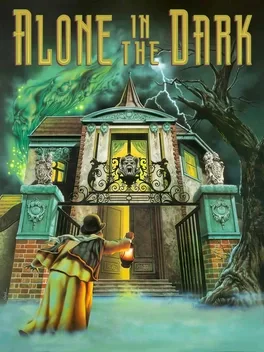
Alone in the Dark is one of the first survival horror games and the first to utilize 3D models superimposed on pre-rendered backgrounds, which would become a key inspiration for upcoming horror games at the time, like the Resident Evil franchise. The player can use various weapons, such as pistol, rifle, swords and knives, though it is possible to kill most enemies with melee attacks. Some opponents can be beaten by solving a particular puzzle, while a significant number of opponents cannot be killed at all or only with certain weapons.
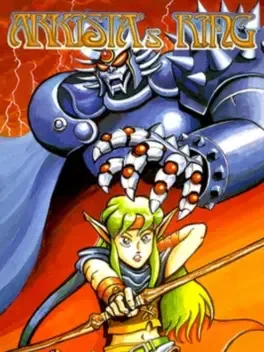
Arkista's Ring is a game developed by American Sammy for the Nintendo Entertainment System in 1990. It utilizes the familiar top-down perspective featured in many action-adventure games, such as The Legend of Zelda, Final Fantasy, and Shining Force. What sets it apart is the linear style of the game, as well as the limitation of one primary character. Interestingly, Arkista's Ring is an example of an early game with a female protagonist-an elf named Christine. The game is now considered to be a particularly rare NES title.

Zombi is an icon-driven action-adventure video game and Ubisoft's first publication. It is a first-person action adventure with four protagonists exploring a zombie-filled shopping mall. If a character's health is depleted, he turns into a zombie, which then roams the room they died in. Zombies can be killed either by numerous body shots, or a single shot to the head. Characters are named after the creators of the game.
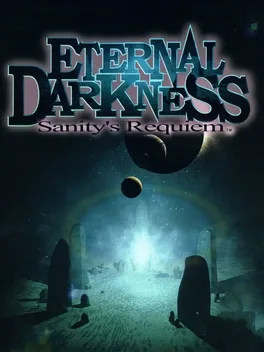
Eternal Darkness: Sanity's Requiem is a psychological horror action adventure, released in 2002 by Nintendo for the Gamecube. It tells the stories of twelve characters that span across the world and two millennia who have to deal with ancient forces of evil which have been trying to manifest themselves in our world. Chapters take place in Ancient Rome, Persia, the Middle East, and modern-day Rhode Island. Throughout the game, the protagonists will have access to several weapons appropriate for their era, from bastard sword & gladius to flintlock pistol and shotgun. The game features an involved Magic system, which allows different spells to be created through the combination of runes. These spells can attack enemies, dispel illusions, and heal both the body and items. Eternal Darkness: Sanity's Requiem also has a unique feature called Sanity. If an enemy sees a character, their Sanity meter drops. When Sanity gets low, hallucinations begin to plague the character. Walls bleed, voices whisper from nowhere, the camera gets disoriented. Sanity can be restored by dealing a finishing move on a dying enemy, or with spells or some items.
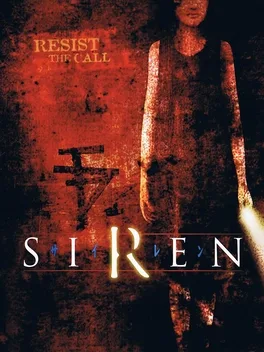
The story revolves around an interconnected cast of characters that possess a power which enables them to see and hear what a nearby character sees. The game was followed by a PlayStation 2 sequel, a reimagining for the PlayStation 3 and a film adaption. Siren is divided into stages, each taking place in one of ten areas in the village of Hanuda, and organized chronologically in a table called the "Link Navigator". In order to complete a stage, the player must accomplish a primary objective that usually involves reaching an exit point, subduing undead enemies called "Shibito", or finding an item. Objectives in different stages are interconnected via a butterfly effect, and a character's actions in one stage can trigger a secondary objective in another stage. There are miscellaneous items scattered throughout each stage that give the player further insight into the plot's background. Once obtained, these items are archived in a catalog and can be viewed at any time during the game's duration. The game's player characters possess a psychic power named "sightjack," which enables them to see and hear what a nearby Shibito or human sees and hears, and thus pinpoint its position, as well as gain knowledge of their activities and of the position of obtainable items. The clarity of each target depends on the distance from the player character. Once a point of view is located, it can be assigned to one of certain buttons of the controller to easily switch between multiple points of view. However, the player character is unable to move during use of the ability and is thus vulnerable to attack. The game encourages the player to avoid Shibito rather than fight them. Characters can walk silently, avoid the use of a flashlight, and crouch behind objects to elude detection. Certain mission objectives require the player character to use items and/or the environment to distract Shibito from their activity, in order for them to achieve a goal. Others require the player to escort a non-player character. Player characters can also shout at any time in order to get the attention of nearby Shibito. Within most stages, the player character can hide in certain places such as cupboards and lock doors to prevent Shibito from entering. When a Shibito hears a sound made by the player character, it will search in the direction from which they heard the sound. If a character is seen by a Shibito, the latter will pursue the character to kill them either with a melee or ranged weapon or by strangulation. The Shibito will also shout to alert other nearby Shibito. Once the character has remained out of the Shibito's sight for a period of time, the Shibito will give up and resume its usual habits. Weapons are available for the player throughout the game, ranging from melee weapons to firearms. While Shibito can be knocked out in combat, they cannot be killed and will reanimate after a short period of time. If a character is injured, they can recover after some time has passed. Characters will lose stamina during combat and while running.