
Kuon



Buy
Could be interesting

Days Gone is an open-world action-adventure game developed by Bend Studio and published by Sony Interactive Entertainment. Released in April 2019 for PlayStation 4 and later for PC in May 2021, the game is set in a post-apocalyptic world where players control Deacon St. John, a drifter and bounty hunter navigating a landscape overrun by "Freakers," zombie-like creatures created by a global pandemic. The gameplay focuses on exploration, combat, and survival elements, with players able to use various weapons, craft supplies, and upgrade Deacon’s motorcycle, essential for travelling across the vast and hostile environment. Days Gone combines narrative-driven missions with an open world filled with dynamic events, enemy camps, and environmental challenges.

Bye Sweet Carole is a horrific thriller game inspired by the greatest animation movies and created by Chris Darril. (Remothered series) Be ready to jump into the world of Corolla and meet the rabbits that has infested it.
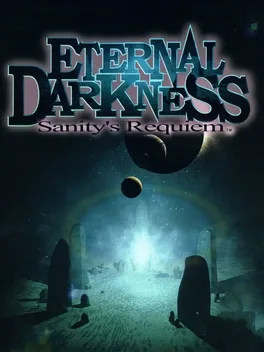
Eternal Darkness: Sanity's Requiem is a psychological horror action adventure, released in 2002 by Nintendo for the Gamecube. It tells the stories of twelve characters that span across the world and two millennia who have to deal with ancient forces of evil which have been trying to manifest themselves in our world. Chapters take place in Ancient Rome, Persia, the Middle East, and modern-day Rhode Island. Throughout the game, the protagonists will have access to several weapons appropriate for their era, from bastard sword & gladius to flintlock pistol and shotgun. The game features an involved Magic system, which allows different spells to be created through the combination of runes. These spells can attack enemies, dispel illusions, and heal both the body and items. Eternal Darkness: Sanity's Requiem also has a unique feature called Sanity. If an enemy sees a character, their Sanity meter drops. When Sanity gets low, hallucinations begin to plague the character. Walls bleed, voices whisper from nowhere, the camera gets disoriented. Sanity can be restored by dealing a finishing move on a dying enemy, or with spells or some items.

Martian Gothic : Unification is one of the numerous titles which came out at the end of the PlayStation lifespan. At first glance, it looks like a typical Resident Evil rip-off with a futuristic paint, a disturbing cover and bad voice-acting. Of course, the game ended up selling very poorly. But it's so much more than that. Incidentally, it is also Creative Reality's last game. Sharing the same team and the same writer than Dreamweb, it comes as no surprise that the game heavily relies on writing and puzzles. This reliance (and a few more things) makes Martian Gothic: Unification a title to look back at.
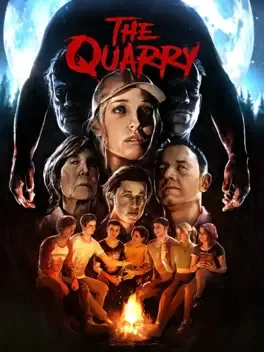
It's late summer in the remote forests of upstate New York, and the teen counselors of Hackett's Quarry have the camp to themselves for one final night. That means no kids, no adults, and no rules. In this thrilling cinematic tale, you control the fates of all nine camp counselors as their party plans unravel into an unpredictable night of horror. With life-or-death decisions around every turn, the choices you make will determine how the story unfolds.
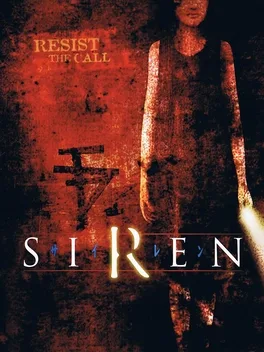
The story revolves around an interconnected cast of characters that possess a power which enables them to see and hear what a nearby character sees. The game was followed by a PlayStation 2 sequel, a reimagining for the PlayStation 3 and a film adaption. Siren is divided into stages, each taking place in one of ten areas in the village of Hanuda, and organized chronologically in a table called the "Link Navigator". In order to complete a stage, the player must accomplish a primary objective that usually involves reaching an exit point, subduing undead enemies called "Shibito", or finding an item. Objectives in different stages are interconnected via a butterfly effect, and a character's actions in one stage can trigger a secondary objective in another stage. There are miscellaneous items scattered throughout each stage that give the player further insight into the plot's background. Once obtained, these items are archived in a catalog and can be viewed at any time during the game's duration. The game's player characters possess a psychic power named "sightjack," which enables them to see and hear what a nearby Shibito or human sees and hears, and thus pinpoint its position, as well as gain knowledge of their activities and of the position of obtainable items. The clarity of each target depends on the distance from the player character. Once a point of view is located, it can be assigned to one of certain buttons of the controller to easily switch between multiple points of view. However, the player character is unable to move during use of the ability and is thus vulnerable to attack. The game encourages the player to avoid Shibito rather than fight them. Characters can walk silently, avoid the use of a flashlight, and crouch behind objects to elude detection. Certain mission objectives require the player character to use items and/or the environment to distract Shibito from their activity, in order for them to achieve a goal. Others require the player to escort a non-player character. Player characters can also shout at any time in order to get the attention of nearby Shibito. Within most stages, the player character can hide in certain places such as cupboards and lock doors to prevent Shibito from entering. When a Shibito hears a sound made by the player character, it will search in the direction from which they heard the sound. If a character is seen by a Shibito, the latter will pursue the character to kill them either with a melee or ranged weapon or by strangulation. The Shibito will also shout to alert other nearby Shibito. Once the character has remained out of the Shibito's sight for a period of time, the Shibito will give up and resume its usual habits. Weapons are available for the player throughout the game, ranging from melee weapons to firearms. While Shibito can be knocked out in combat, they cannot be killed and will reanimate after a short period of time. If a character is injured, they can recover after some time has passed. Characters will lose stamina during combat and while running.
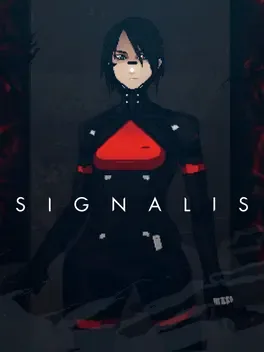
Signalis is a classic survival horror experience with a unique aesthetic, full of melancholic mystery. Investigate a dark secret, solve puzzles, fight off nightmarish creatures and navigate dystopian, surreal retrotech worlds as Elster, a technician Replika searching for her lost dreams.
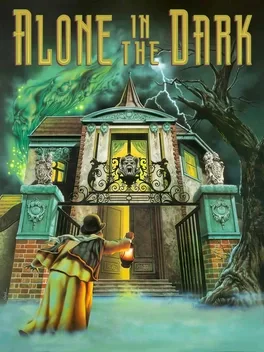
Alone in the Dark is one of the first survival horror games and the first to utilize 3D models superimposed on pre-rendered backgrounds, which would become a key inspiration for upcoming horror games at the time, like the Resident Evil franchise. The player can use various weapons, such as pistol, rifle, swords and knives, though it is possible to kill most enemies with melee attacks. Some opponents can be beaten by solving a particular puzzle, while a significant number of opponents cannot be killed at all or only with certain weapons.

Two years ago, a group of young teenagers found themselves trapped inside their school. They suffered through the longest night of their lives, chased by abominable creatures created by their principal. Some of them survived that terrible night, while others perished. Now, the survivors have picked up the pieces of their lives and gone to college. But all is not right at Fallcreek University: strange flowers suddenly appear everywhere on the campus, flowers that contain a dangerous substance that induces strange but vivid dreams. A handful of students learn that the flowers are far more dangerous than they seem. When the seeds finally sprout, nightmare suddenly turns into horrifying reality...

I Am Alive casts the player as a lone survivor in a believable, dark and insecure post-apocalyptic world. One year after the Event, a worldwide cataclysmic event that wiped most of the human race, a man struggles for survival in a desolate city as he tries to reunite with his long-lost wife and daughter.