
L5RC
Buy
Could be interesting
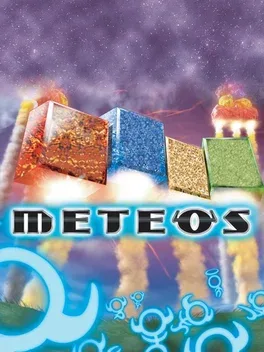
An evil planet named Meteo is sending storms of world-ending meteors across the galaxy, and only your puzzle skills can stop them. As blocks drop down on the lower screen, you must use the DS's stylus to match up blocks of the same color. Once you have enough blocks connected, they'll shoot back into the sky to form planets on the upper screen.
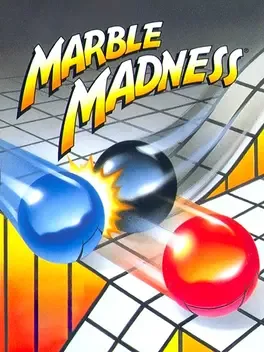
Marble Madness is an isometric platform game in which the player manipulates an onscreen marble from a third-person perspective. The player controls the marble's movements with a trackball, though most home versions use game controllers with directional pads. The aim of the game is for the player to complete six maze-like, isometric race courses before a set amount of time expires. When a player completes a race, the remaining time is added to the next race's allotted time. The game also allows two players to compete against each other. Courses are populated with various objects and enemies designed to obstruct the player. As the game progresses, the courses become increasingly difficult and introduce more enemies and obstacles. Each course has a distinct visual theme. For example, the first race, titled "Practice", is a simple course that is much shorter than the others, while the fifth race, named "Silly", features polka-dot patterns and is oriented in a direction opposite from the other courses

Microsoft Minesweeper (formerly just Minesweeper, and also known as Flower Field) is a minesweeper-type video game created by Curt Johnson, originally for IBM's OS/2, that was ported to Microsoft Windows by Robert Donner, both Microsoft employees at the time.
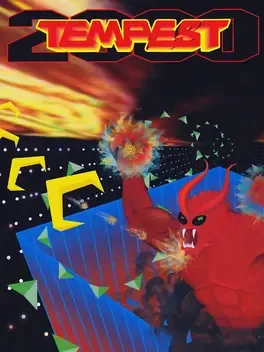
Tempest 2000 is a tube shooter video game. Taking control of the claw-shaped Blaster spacecraft from the original game, the player has to survive and travel across multiple levels until the end in an intergalactic war, battling against a variety of enemies that appear on the playfield.
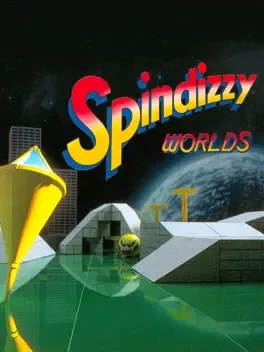
On it's most basic level, Spindizzy Worlds is, like its predecessor, similar to Marble Madness. Controlling GERALD, you must move through the isometrically viewed landscape (largely flick-screen on the ST). There are two skill levels; the harder one features more of the precarious ledges and falls of Spindizzy. Each one takes you to a different matrix of levels, which can be played in different orders and each consist of 10 screens, with a bonus level at the end. You have limited energy, which can be recharged by collecting crystals. Fuel is limited, and is reduced by contact with hazards - generating a replacement GERALD takes time. There are many gates which are opened by running into spaces of the same colour. There are also aliens to avoid, and most movement is along thin slippery ledges with heavily inertia-based controls.
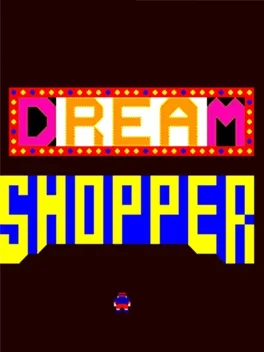
In one part, try to collect up to $10000 in merchandise. In the another part (the "Act I" and so forth) try to get past the enemies to your sweetheart. Sanritsu, the Dream Shopper maker, released 4 different machines in our database under this trade name, starting in 1978. Other machines made by Sanritsu during the time period Dream Shopper was produced include Rougien, Mahjong Kyou Jidai, and Space War.
Super Tetris 3 is yet another version of the famous soviet puzzle game. However, despite what the title may suggest, contained within are actually four different versions of Tetris: Tetris Classic, Familiss, Sparkliss, and Magicaliss. Tetris Classic, of course, is the basic version of the game, which comes with an endless mode and a 25-line "standard" mode. Familiss, as the name might suggest, is a family mode for up to four players simultaneously. Sparkliss, meanwhile, is very similar to Bombliss from Super Tetris 2, only with a medieval fantasy theme and different explosion patterns. Sparkliss includes both a stage mode and a puzzle mode. The most unique mode is Magicaliss, which has never shown up on any other version of Tetris. In Magicaliss, pieces come in three basic colors, and by rotating the piece, the player can choose between them. Creating a line entirely out of one color will clear all blocks on the screen of that color. There are also grey pieces, which can only be cleared by creating a line made entirely from one color, which will cause all grey blocks on screen to become that color. There are also rare rainbow pieces which will act as any color. Besides these additions, the game itself is basic Tetris. Tetris Classic, Sparkliss, and Magicaliss can also be played in a two-player battle mode, besides the four-player Familiss mode.

Hungry Dinosaurs is a variant of the board game Othello with a dinosaur setting. In each turn, one player gets to lay an egg into one grid of the 9x9 playfield. When a player manages to trap a row (horizontally, vertically or diagonally) of an opponent's eggs, i.e. having an one egg at each end of the row, they change colour. A round is over after a certain amount of time and whoever has the most eggs on the field, wins. One match consists of several rounds. In contrast to the real board game, up to four player can participate.
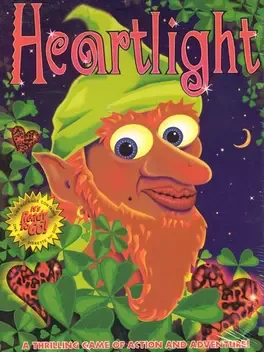
Heartlight is a puzzle video game originally developed by Janusz Pelc for the Atari 8-bit computers in 1990. In 1994, an MS-DOS port (Heartlight PC) was published by Epic MegaGames along with two other games by Janusz Pelc in the Epic Puzzle Pack. The shareware version has 20 levels and the full version (Heartlight Deluxe) has 70 levels. In 2006, Maciej Miąsik, co-author of the MS-DOS version, released it under the Creative Commons CC BY-SA 2.5 license as freeware. The source code became available too. In 2020, a web browser remake was released with updated graphics.
Equaline is a "one-stroke calculation puzzle" where you have to connect numbers and symbols with lines to complete a calculation. There is only one correct answer for each combination of nine squares, and the target number increases with each puzzle. It's a highly competitive action puzzle game.