
Neves

Buy
Part of collection:
Jewel Match
(last 3 games)

’Tis the season for chestnuts, mistletoe, and Match-3. Travel snow-clad lands across more than 200 huge levels and rebuild a cozy village. Then start decorating the houses for the festive season. Grab a hot chocolate while you play bonus games with jigsaw puzzles, clutter, or spot the difference.
Play a Match-3 game like you've never seen before! Journey back to the Baroque Era in this imperial Match-3 adventure! Traverse 180 vast levels and collect resources to construct a breathtaking palace.
More jewels to match!
Could be interesting
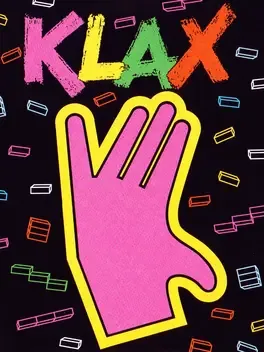
Klax is a 1989 computer puzzle game designed by Dave Akers and Mark Stephen Pierce. The object is to line up colored blocks into rows of similar colors to make them disappear, to which the object of Columns is similar. Atari Games originally released it as a coin-op follow up to Tetris, about which they were tangled in a legal dispute at the time.
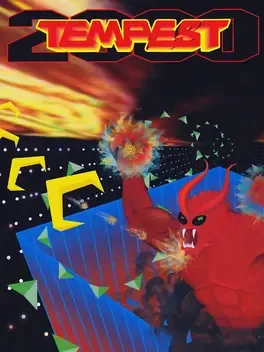
Tempest 2000 is a tube shooter video game. Taking control of the claw-shaped Blaster spacecraft from the original game, the player has to survive and travel across multiple levels until the end in an intergalactic war, battling against a variety of enemies that appear on the playfield.
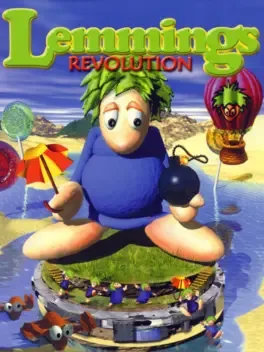
An installation in the Lemmings franchise where players control lemmings within cylindrical environments.
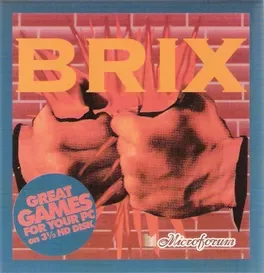
Brix is a puzzle game that can keep you playing for hours. The goal sounds simple: unite the colorful pairs of blocks. Once you see the lasers, lava pits, acid pools, elevators, and other hazards in Brix, however, you'll realize--it ain't so easy! In this logic game You can move different cubes. Place two or more cubes together to make them disappear. The goal is to make all the cubes disappear before the time runs out.
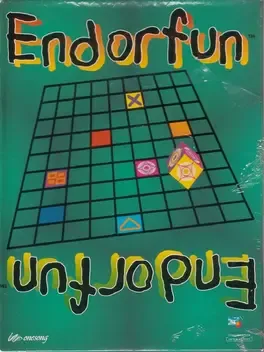
Players control a cube that collects colored tiles that correspond to the color of the top face of the cube.
An eShop exclusive puzzle game similar to Picross, except the numbers are embedded in the puzzle.
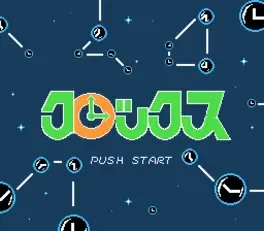
The fourth game featured as a coverdisk on the Japanese magazine Famimaga, Clocks is a Tetris variant in which clock faces must be placed together form larger shapes. Clocks, or Famimaga Disk Vol. 4 Clocks (and occasionally as "Clox"), is a falling blocks puzzle game that is superficially similar to Tetris or Columns. Single clock faces depicting one of four angles fall from the top and the player needs to manipulate and place them so they can form larger objects, such as simple formations like squares, diamonds and hourglass shapes to more object-intensive shapes like octagons and hexagons. The four angles include 180 degree lines ("12:30"), 90 degree lines ("12:15"), 135 degree lines ("~12:22") and 45 degree lines ("~12:07"). Once a clock face is placed, the lines from it extend to connect to any other lines that surround it. Placing lines in such a way that it forms a shape - for example, placing four 90 degree clocks in such a way to form a square - earns the player points and removes the clocks used to form the shape. Larger shapes are more risky but earn more points. The player is given some leeway to recover from mistakes: should the player hold the down button to make a clock fall faster, it'll destroy any clocks underneath. A misplacement, therefore, can be rectified with a correctly positioned clock if it falls quickly enough to crush the offending clock. However, the player can only do this a limited number of times per stage.
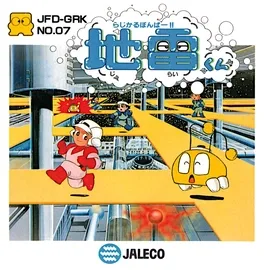
A strategy puzzle game developed by Jaleco involving blowing up connections between squares in a grid to trap opponents. Radical Bomber!! Jirai-kun ("Jirai" means landmine) is a strategic puzzle game from Jaleco that has more than a passing resemblance to Hudson's Bomberman franchise. However, rather than trying to defeat the opponents in a frantic real-time environment, the goal of Radical Bomber is to carefully think out a plan of action and find a way to trap the opponents by removing connections between each "square" on the map. Successfully isolating an opponent from the rest of the board causes them to forfeit the game, and doing this with every opponent allows Jirai-kun to move onto the next level.
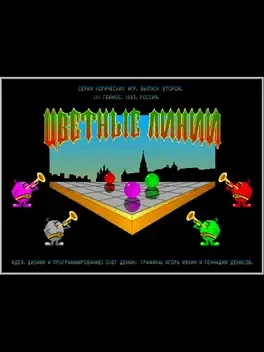
Players rearrange colored balls in order to create five in a row of the same color.
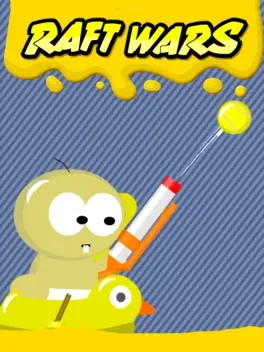
Raft Wars is a popular flash game from the late 2000s. It is a strategic shooter game similar to the popular mobile game Angry Birds. As the end of support for flash happened at the end of 2020, the developer and his team ported the game to the most advanced web platform HTML5 and released it on late 2019.