
Osman


Buy
Could be interesting
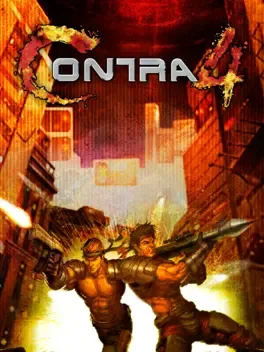
The action franchise that started it all is celebrating its 20th anniversary with an all-new adventure on Nintendo DS! Set after the events of Contra III: Alien Wars, the game follows mercenaries Bill Rizer and Lance Bean as they battle to save the world from a new extraterrestrial threat. Contra 4 takes advantage of the dual screens of the Nintendo DS to deliver larger than life action, with massive enemies, detailed platforming and mind-blowing set pieces.
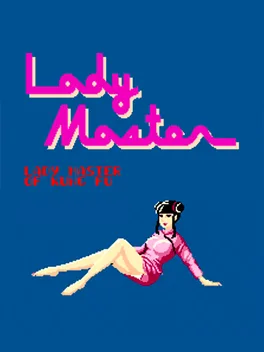
Lady Master of Kung Fu is 2D fighting game. Player controls a female - titular Lady. She is skilled in kung-fu fighting and in using nunchaku. Lady comes to the area of the big house, fighting with a bunch of opponents. The house has several floors, Lady must use the elevators. Some rooms are open - she can go to them, and fight there against a stronger opponent, for which she gets a bonus.
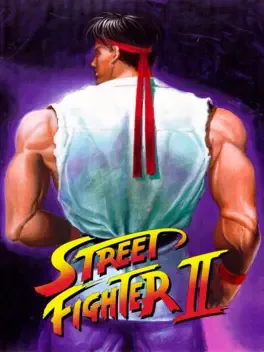
A sequel to Street Fighter, Street Fighter II improved upon the many concepts introduced in the first game, including the use of command-based special moves and a six-button configuration, while offering players a selection of multiple playable characters, each with their own unique fighting style and special moves. Street Fighter II is credited with starting the fighting game boom during the 1990s. Its success led to the production of several updated versions, each offering additional features and characters over previous versions, as well as many home versions. Some home versions of the Street Fighter II games have sold millions of copies, with the SNES port of the first Street Fighter II being Capcom's best-selling consumer game of all time as of 2008. Street Fighter II follows several of the conventions and rules already established by its original 1987 predecessor. The player engages opponents in one-on-one, close-quarters combat in a series of best-of-two-out-of-three matches. The objective of each round is to deplete the opponent's vitality before the timer runs out. If both opponents knock each other out at the same time or the timer runs out with both fighters having an equal amount of vitality left, a "double KO" or "draw game" is declared. Additional rounds will be played until sudden death. In the first Street Fighter II, a match could last up to 10 rounds if there was no clear winner; this was reduced to 4 rounds in the Champion Edition and onward. If there is no clear winner by the end of the final round, then either the computer-controlled opponent will win by default in a single-player match, or both fighters will lose in a 2-player match. After every third match in single-player mode, the player will participate in a "bonus game" for additional points. The bonus games include (in order) a car-breaking event; a barrel-breaking bonus game where the barrels are dropped off from a conveyor belt above the player; and a drum-breaking bonus game where drums are flammable and piled over each other. The bonus games were removed from the arcade version of Super Street Fighter II Turbo. As in the original, the game's controls use an eight-directional joystick and six attack buttons. The player uses the joystick to jump, crouch, move the character towards or away from the opponent, and guard against the opponent's attacks. There are three punch buttons and three kick buttons, each with varying strength and speed (Light, Medium, and Heavy). The player can perform a variety of basic moves in any position, including grabbing/throwing attacks, which were not featured in the original Street Fighter. Like in the original, the player can perform special moves by inputting a combination of directional and button-based commands. Street Fighter II differs from the original in that it features multiple playable characters, each with distinct fighting styles and special moves. Additionally, the player can "cancel" an animation by performing another move, enabling combinations of basic and special moves. Both of these features would be expanded upon in subsequent installments.
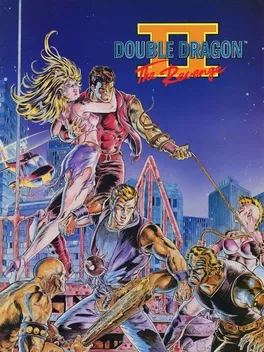
The original arcade version of "Double Dragon II" is essentially an improved version of the first game. The biggest change in the game's controls are in the replacement of the original's punch and kick buttons with two directional-based attack buttons (Left Attack and Right Attack) similar to Renegade. Pressing the attack button of the player's current direction will do a standard series of punches, while pressing the opposite attack button will perform a back kick. A few new moves are added as well, including a Hurricane Kick. Like in the original game, the arcade version of Double Dragon II is divided into four missions: a heliport, a lumber storehouse, a wheat field, and the new hideout of the boss. Each stage has its own boss character with his own theme. After defeating Willy (the final boss from the original game) in the fourth stage, the player will confront a double of their own character for the game's final battle. If two players reach the end together, then both will each to have to face their own clone for the final battle.
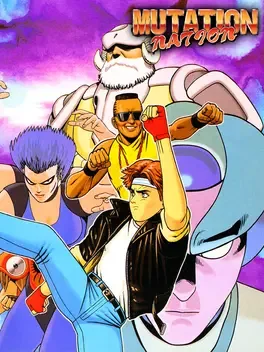
The Slum... an area of town completely forgotten. No one could imagine the cruelness suffered by innocent people who were transformed into horrible mutant creatures by genetic experiments. They hovered everywhere and completely took control of the town. Mutation Nation is a 1-2 player action game where you must control your hero and beat up any mutant that gets in your way, by either using your fists or one of four special attacks. A boss at the end of each area needs to be defeated if you want to proceed further through the game.
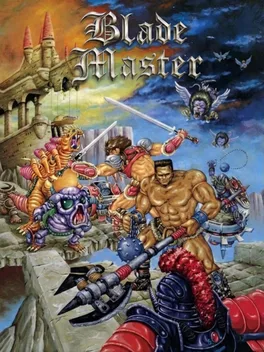
Blade Master is a scrolling hack and slash arcade game released by Irem in 1991. Two selectable heroes, Roy and Arnold, try to save their land from hordes of monsters. There are items to break and power-ups to collect, typical of this genre in the 1990s.
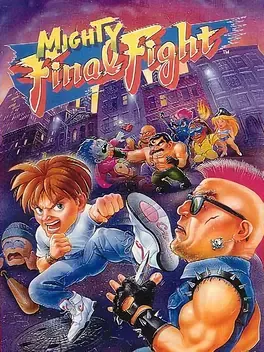
The Mad Gear Gang has spread crime and violence throughout the streets of Metro City. Only one man has enough guts to take the streets back from them, Mayor Mike Haggar. Now the Mad Gear Gang has kidnapped his daughter Jessica to bring him under their control. But they've made one mistake: Haggar's furious and he wants someone's head! Guy and Jessica's boyfriend, Cody, are joining Haggar to clean up the slime-filled streets and rescue Jessica. Along the way you'll find food to replenish your health, or better yet, search for weapons to knock the living daylights out of your enemies. So join Haggar and his friends as they try to free the city from the evil clutches of the Mad Gear Gang!

An intense action anime thriller comes to life in Oni. As an elite member of the tech crimes task force, Konoko is an agent on a mission to fight the evil Syndicate. But things are not always as they seem... Konoko is haunted by unknown demons of her past, and the truth threatens to send her over the edge.
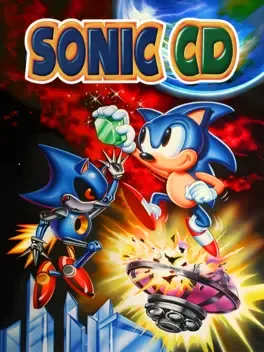
A fast-paced platformer that follows Sonic as he races through time-traveling zones to rescue past and future versions of stages and stop Dr. Robotnik’s time-altering plans. Combining classic Sonic speed and precision with CD-quality music, animated cutscenes, and branching time-based routes, it rewards quick reflexes and exploration to unlock true endings.
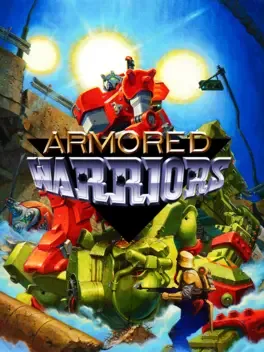
In the year 2281, the war spanning half a century over territory between the United World Forces and the Raian Kingdom had at last come to an end. But this peace was not to last. A year after a truce was signed between the two forces, former Raian army captain Azrael, who has converted himself into a cyborg in an attempt to become "the perfect warrior", has marshalled several thousand other cyborgs and declared war against the Raian Kingdom. Robbing mobile weapons from the army, this group of rogues has invaded the Raian capital of Merkid and has begun to abduct the civilians. The United World Government, receiving an emergency message from the planet Raia, has but one choice: to organize and dispatch an army formed around its elite corps, a squadron of warriors called "Bloody Armor", to eradicate the enemy forces and rescue the civilians. And so, in October 2282, the United World Forces begin to launch its attack upon the planet Raia. The most intense battle in human history is about to begin...