
Ryse: Legendary Edition


Buy
Could be interesting
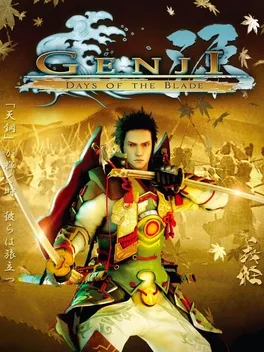
It's been three years since Yoshitune Minamoto and Benkei Musashibo, warriors of the Genji Clan, defeated the Heishi Clan in a war over the "Amahagane". The Amahagane are sacred jewels which grant the owners godlike powers, such as Kamui. Now, rumors are spreading of new, ungodly creatures fighting with Heishi warriors, even without the powers of Amahagane. Yoshitsune and his companions must draw their weapons again, and with the new strength given to them by the Amahagane, defeat the new evil to save all of Japan. Genji: Days of the Blade, sequel to the PlayStation 2 game Genji: Dawn of the Samurai, is an action game, based in ancient/feudal Japan, in which you must defeat a new, mysterious source of evil to save your country. You control one of four characters (changeable in real-time), each with their own weapons, abilities, strengths, and weaknesses. Yoshitsune Minamoto and Benkei Musashibo, the main characters of the previous game, join with Gozen Shizuka and Lord Buson to complete their quest. Yoshitsune is a young warrior who wields a katana in each hand, Benkei is a mighty warrior-monk who uses a war club and a naginata for weapons. Shizuka is a nimble priestess who is adept with chained blades, and Buson is a God of War from the Overworld who carries a double saber and can use supernatural powers. The game play involves fighting many enemies and bosses with regular attacks, combo attacks, and Kamui. Kamui is a power that you can use to summon a magical space around you in which you unleash multiple special attacks on surrounding enemies by pressing buttons in series as they appear on the screen. Your Kamui bar fills as you land successful hits on opponents. The characters travel through both levels based on real locations in Japan and fantasy locations, defeating everything from regular Heishi warriors to giant, mutated enemy crabs. The level design involves platformer elements and solving small puzzles, such as destroying Masho flowers scattered throughout an area to open a door. The game also has RPG elements; you collect Amahagane and Mashogane hidden around levels and from fallen enemies. They can be used to augment character stats and weapon attack power, respectively. You can also find new weapons and items such as herbs with healing properties, or scrolls that give you attack bonuses for a period of time.
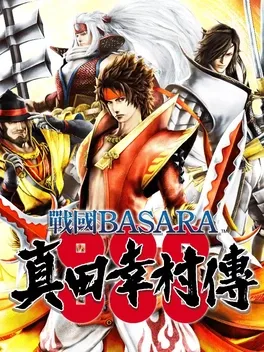
Sengoku Basara Sanada Yukimura Den is a spinoff game focusing on the life of one of the series' main characters, Sanada Yukimura, released August 25, 2016. This entry marks the beginning of the Retsuden Series, which was abandoned after poor sales of this game. As such this title marks the last entry in Sengoku Basara series as a whole.
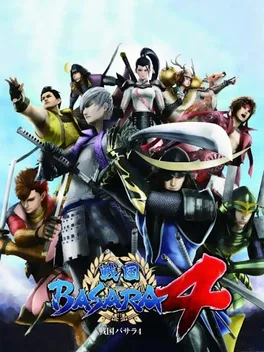
Sengoku Basara 4 is the latest entry to the Sengoku Basara series by Capcom and was released for the PlayStation 3 on January 23, 2014. The game focuses on the theme of Sengoku Genesis and centers around the beginning of the Sengoku Period. There is also an expansion to the game called Sengoku Basara 4 Sumeragi. For this entry in the series, character design was passed to Tooru Ookubo, chief designer for the anime series, instead of series standby Makoto Tsuchibayashi.

Onimusha 3 is the third game of the Onimusha series. The game retains elements from previous games in the franchise including the use of multiple special weapons in order to fight enemies and absorb their energy to enhance the weaponry. This time the player primarily controls both Samanosuke and Jacques in separate scenarios. The two are able to exchange items in order to solve puzzles. The development from this game started after the release of the PlayStation 2 which allowed the team to work on a 3D engine to design 3D backgrounds. In order to appeal to the Western market, the team set this game in Paris and chose French actor Jean Reno to portray Jacques. Onimusha 3 has been generally well received by publications for video games. Most of the writer's praise focused on the improved controls and the use of a 3D engine that allowed better combat and visuals, respectively. The game also generated good sales with over 1.5 million copies sold as of May 2008.
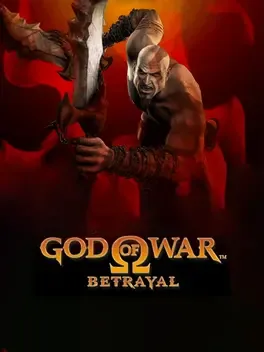
Betrayal is the only installment in the series to be released on a non-PlayStation platform and presented as a 2D side-scrolling game. Despite the limitations of the mobile platform, in comparison to its home console counterparts, it retains the action-oriented approach of its predecessors, with the same combination of combo-based combat, platforming, and puzzle game elements. Although God of War is primarily a home console series, Betrayal was praised for its fidelity to the series in terms of gameplay, art style, and graphics: "the real deal third game in the killer franchise". It received awards for "Wireless Game of the Month" (June 2007) and "Best Platform Game" (wireless) of 2007.
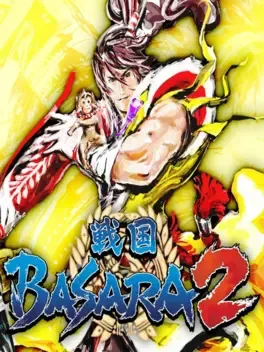
A new PlayStation 3 and PlayStation 4 entry into the longrunning Sengoku Basara series which follows the life of Sanada Yukimura
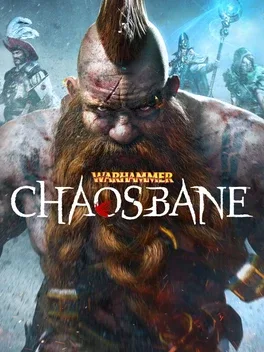
In a world ravaged by war and dominated by magic, you must rise up to face the Chaos hordes. Playing solo or with up to four in local or online co-op, choose a hero from four character classes and prepare for epic battles wielding some of the most powerful artefacts of the Old World.
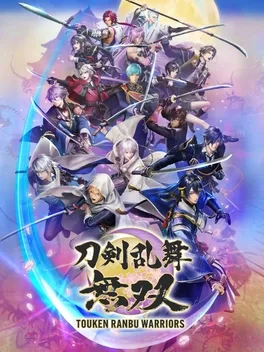
Touken Ranbu Warriors is an action console game for Nintendo Switch and PC via DMM Game Player.
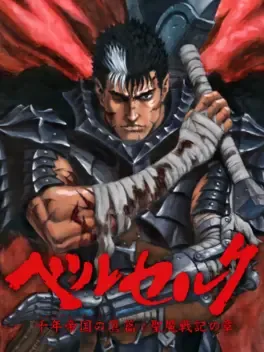
The second video game based on the manga Berserk. It was released by Sega-Sammy in Japan for the PlayStation 2 on October 7, 2004. Sammy licensed the game to YBM-Sisa for a Korean version, which was released at the same time.
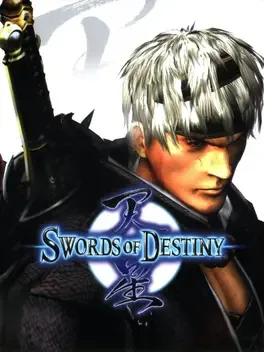
An action-packed sword combat game from Marvelous, with hyper-active, high-flying battling focusing on air combat action (including "Sword Time" for intense juggling airborne combos.) Music theme by Kaori Natori. Released under the full title Tensei: Swords of Destiny in early 2005 in Japan, this sword-based action game is set in China and focuses on airborne attacks which are referred to as "Sword Time." Playing as main character Raiun, you find yourself equipped with a legendary sword, the Tensei Ken. Each of the game's stages has multiple missions which are freely selectable by the player.