
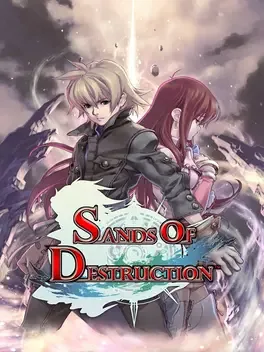
Sands of Destruction


Buy
Could be interesting
Sword Art Online: Hollow Realization is a Japanese role-playing game and the fourth game based on the Sword Art Online light novel franchise.
.Hack//G.U. Vol. 2: Reminisce is the second entry in the .hack//G.U. series containing: Vol. 1: Rebirth, .hack//G.U. Vol. 2: Reminisce and .hack//G.U. Vol. 3: Redemption. As in the previous .hack games, .hack//G.U. simulates a massively multiplayer online role-playing game as the player controls a character who starts playing it. Players assume the role of a participant in a fictional game called The World. While in The World, the player controls the on-screen player character, Haseo, from a third-person person perspective (with optional first-person mode). The player may control the camera using the game controller's right analog stick. Within the fictional game, players explore monster-infested fields and dungeons as well as "Root Towns" that are free of combat. They also can "log-off" from the game and return to a computer desktop interface which includes in-game e-mail, news, and message boards, as well as desktop and background music customization options. In Reminisce, an optional card game called "Crimson VS" becomes available. The player may save the game to a memory card both from the desktop and within The World at a Save Shop. After the player completes the game, a Data Flag appears on the save file, which allows the transfer of all aspects of the player character and party members to the next game in the series. This can also be applied to previous games if the player first finished the Reminsce or Redemption. Players can attack monsters in real time. However, the action pauses whenever the menu is opened in order to select magic to cast, items to use, or skills to perform. The player only directly controls Haseo, while the other characters are controlled by artificial intelligence. The player may either provide guidelines ("Free Will", "Rage", "Life", etc.) or issue direct commands (for example, to cast a particular magic at a particular enemy) to the computer-controlled characters. Monsters roam the environments freely or guard treasure chests. Once combat is initiated, via a "surprise attack" or the player being spotted, a wall erects around the combat area to prevent escape. Weapons give the player access to the Skill Trigger feature which allows them to perform a powerful attack at the cost of losing SPs. As an adept rogue character, Haseo can wield multiple weapons for close combat. Although Haseo can only use one weapon per battle, during Reminisce the player can change weapons in the middle of Skill Triggers. Under certain conditions, the player may execute an enhanced type of Skill Trigger called "Rengeki". These attacks deal greater damage and fill a Morale gauge, which allows the player and his team members to use a combination attack. Certain plot-related fights, called "Avatar battles", use a different interface which incorporates shoot 'em up gameplay elements. After depleting the opponent's health, players must charge up a "Data Drain" to end the battle. Root Towns are non-combat areas in The World. The player may restock on items, buy equipment, or chat and trade with other "players" of The World. The player may also undertake optional quests and visit guilds. A key feature of all towns is the Chaos Gate. This blue portal is used to travel between towns (called "servers") as well as access the fields and dungeons where battles take place. A password system controls the characteristics of each area. Depending on the characteristics of each word in the three word phrase, the resulting area may have different attributes such as prevalence of monsters or items, among other features.
The Seven Deadly Sins: Grand Cross - A cinematic anime game beyond your imagination!
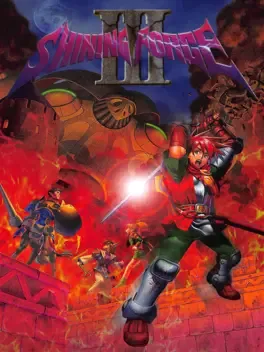
Shining Force III is a fantasy turn-based tactics role-playing video game designed for the Sega Saturn by Camelot Software Planning. It is a continuation of the Shining series. Comprising three separate but overlapping storylines, the Japanese version of Shining Force III was released in three volumes, known as: "Scenario 1 - God Warrior of the Kingdom", "Scenario 2 - Target: Child of God", and "Scenario 3 - "Bulzome Rising". In America and Europe, only Scenario 1 was released. The real ending to the game can only be viewed by completing all the games in the series.
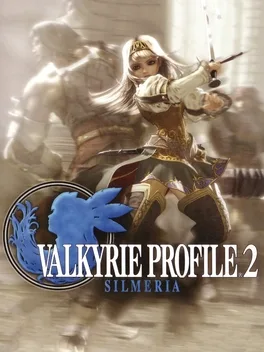
Valkyrie Profile 2: Silmeria is the second installment of the Valkyrie Profile series. Taking place hundreds of years before the original game, the story revolves around two characters living the same body, named Silmeria and Alicia. Together, the two characters work to stop a catastrophe that could cause war between the people and the gods. The game received generally positive reviews, citing its similarity to the original Valkyrie Profile game and its beautiful graphics, but had a convoluted interface and a high degree of difficulty. The game went on to be re-released as a Square Enix "Ultimate Release".
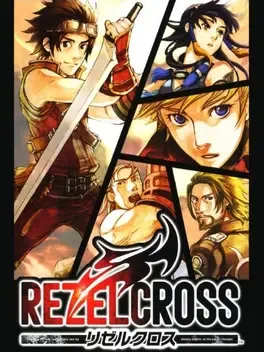
The world in Rezel Cross is undergoing an awakening after a comet passes by. Beasts undergo rapid evolution and dormant abilities in humans start to manifest. Increased strength, faster reflexes and agility transform a small number of humans into super humans known as "rezel". While the world is in constant flux Isle, Lefia and three other heroes gifted with rezel powers begin their tale. The game is split into 20 chapters and the heroes gain the powers of teleport, time pause, psycho kenesis, transformation and x-ray vision as they progress. In addition, the battles are in full 3D with an XMB like interface and the heroes get skill points to unlock new abilities and Rezel Arts as well as Hyper Rezels. The game has character designs by Eiji Kandeda who also did character designs for Aquarion and a script written by the team who wrote Arc the Lad III & IV.
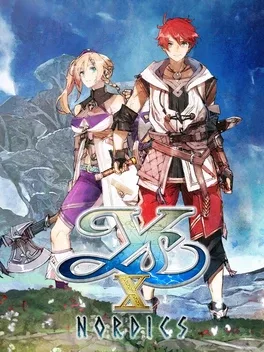
Ys X: Nordics is a brand-new adventure set in the northern sea Obelia Bay, featuring young adventurer Adol Christin as the protagonist. Please look forward to this latest title in the Ys series, from the development team that brought you Ys VIII: Lacrimosa of Dana and Ys IX: Monstrum Nox.
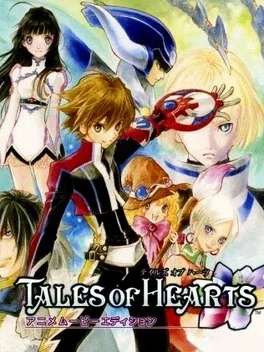
Tales of Hearts released as two different versions, each having a different style of cutscenes. The Anime Movie Edition uses anime-style cutscenes produced by Production I.G. Shing Meteoryte is a young man living in a small village by the sea and training in the ways of the sword under his grandfather's tutelage, who bequeaths to him an unusual weapon known as a Soma, which can harness the power of a person's Spiria--the embodiment of their heart and soul. Shing encounters a travelling pair of siblings, Kohaku and her brother Hisui. However, in an unexpected turn of events, Shing accidentally shatters Kohaku's Spiria Core, the source of her emotions. Now, the trio must embark on a journey to make Kohaku's heart whole once more.
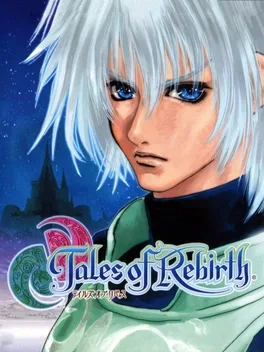
Tales of Rebirth is set in a world where humans (called Huma) and beast people (Gajuma) coexist in relative peace. The world's magical power is called Force, which manifests in various people as control over an element or aspect of the physical laws. In ancient times, after a war sparked when Huma attempted to enslave Gajuma, both races joined forces to found the kingdom of Karegia. An unspecified time before the events of the game, Geyorkias, the ruler of a spirit race called the Sacred Beasts, sought to destroy the Huma as their dark emotions were fueling a primordial destructive force known as Yuris: the other Sacred Beasts put a stop to Geyorkias' plan by sealing him away, then acting to nullify Yuris' threat. The story opens with the death of Karegia's king, Ladras Lindblum, poisoned by the royal adviser Zilva Madigan: during his final moments, he releases his power into the world, causing many humans to become possessed by Force, including Veigue, Annie and Tytree. As the king has failed to name a successor, Karegia enters an interregnum at his death.
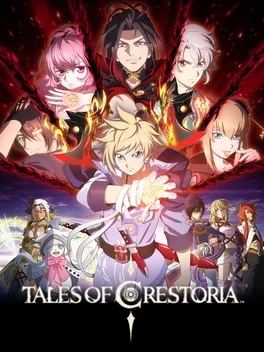
Live. Even if it's a sin. Tales of Crestoria is an RPG designed for mobiles, presented to new players and series' fans alike, and set in a fully-realized original world. The game stars Kanata, a boy bears the stain of a crime for which he can never atone. He and his fellow transgressors set off on a quest to defy the very rules of their world. More than 50 colorful characters from the likes of Kosuke Fujishima and Mutsumi Inomata are brought to life as beautiful 3D models, with smooth controls allowing for exhilarating battles. Enjoy exploring the world together with fellow transgressors and experience their struggles, growth and bond. A truly dramatic story where beliefs are worth risking everything for. All of this serves to tell the unforgettable story of Kanata and his close-knit band of criminals. Experience their adventure in the palm of your hand.