
SF-HiSplitter


Buy
Parent game
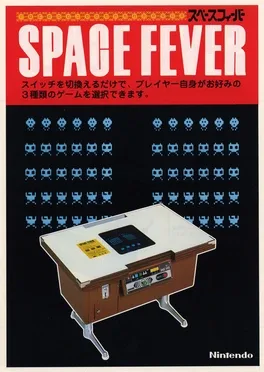
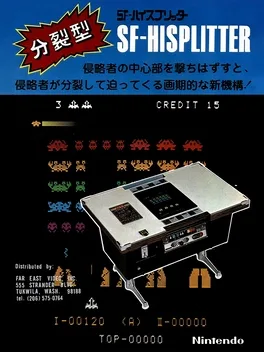
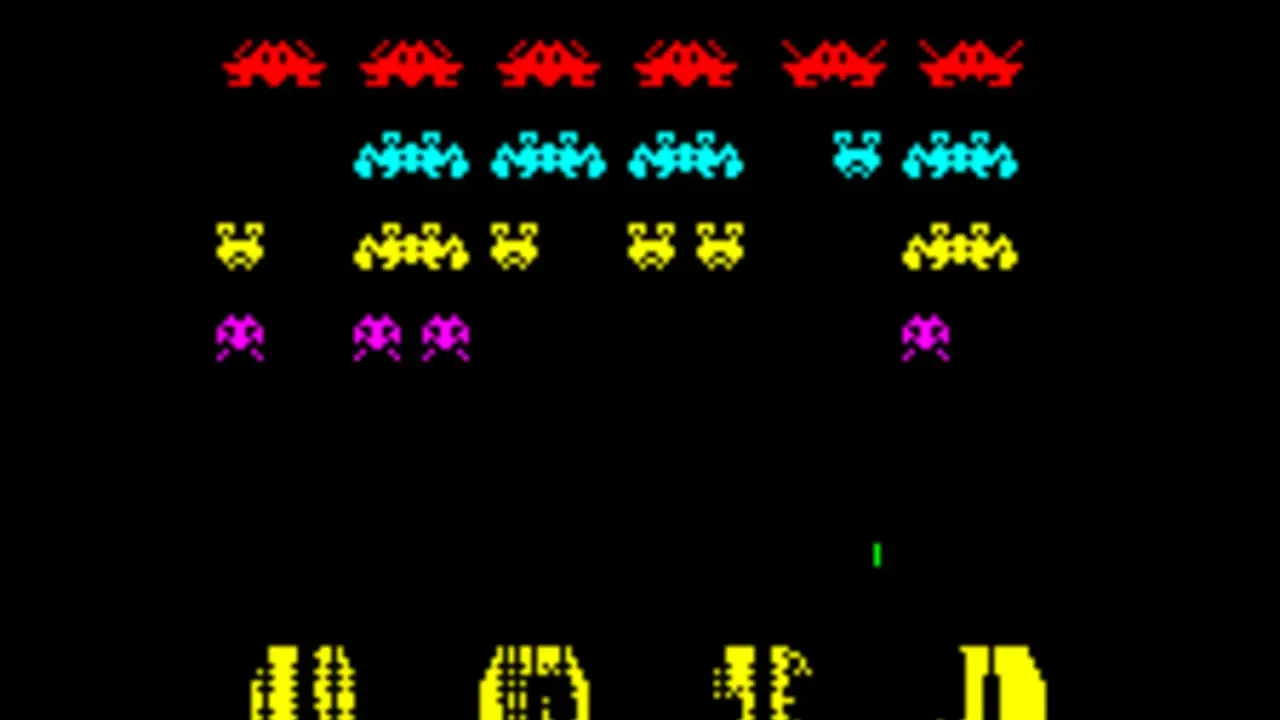
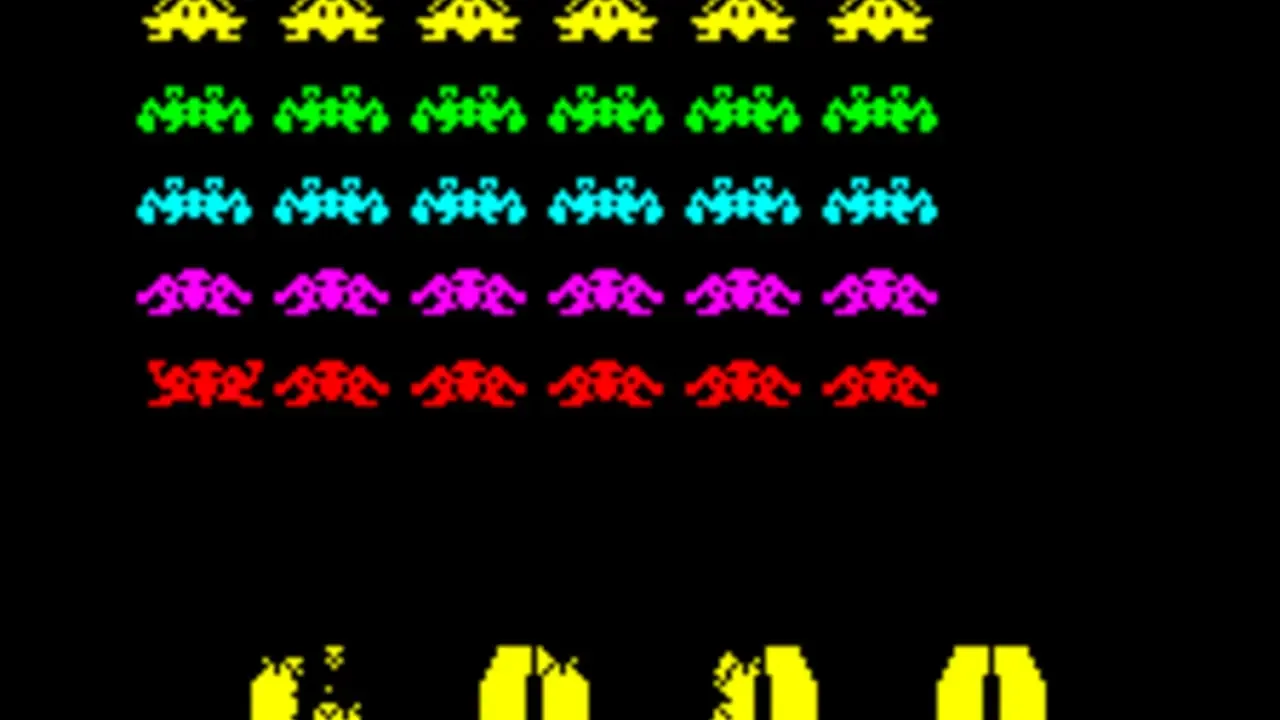
Shoot aliens as they move across the screen. Shoot the spaceship for extra points. Choose one of three games. Space Fever is a 1979 arcade game by Nintendo R&D2. Some sources claim that Ikegami Tsushinki also did design work on Space Fever. It was released in both monochrome and color versions. The gameplay is similar to Space Invaders, which had been released by Taito in 1978. It was distributed by Far East Video. The gameplay of Space Fever is reminiscent of Space Invaders (1978), where the player controls a laser cannon situated at the bottom of the screen and must defeat waves of enemy aliens. The aliens are arranged in rows and slowly move to the edge of the screen, before descending and continuing in the opposite direction. As more aliens are defeated, they increase in speed. A UFO will occasionally appear towards the top of the screen, which can be shot down for bonus points. There are three game modes that change the way the aliens move; the first presents two formations of enemies that move in opposite directions, the second continuously adds additional rows of aliens, and the third is functionally identical to Space Invaders.
Part of collection:
Space Fever

Shoot aliens as they move across the screen. Shoot the spaceship for extra points. Choose one of three games. Space Fever is a 1979 arcade game by Nintendo R&D2. Some sources claim that Ikegami Tsushinki also did design work on Space Fever. It was released in both monochrome and color versions. The gameplay is similar to Space Invaders, which had been released by Taito in 1978. It was distributed by Far East Video. The gameplay of Space Fever is reminiscent of Space Invaders (1978), where the player controls a laser cannon situated at the bottom of the screen and must defeat waves of enemy aliens. The aliens are arranged in rows and slowly move to the edge of the screen, before descending and continuing in the opposite direction. As more aliens are defeated, they increase in speed. A UFO will occasionally appear towards the top of the screen, which can be shot down for bonus points. There are three game modes that change the way the aliens move; the first presents two formations of enemies that move in opposite directions, the second continuously adds additional rows of aliens, and the third is functionally identical to Space Invaders.
Could be interesting
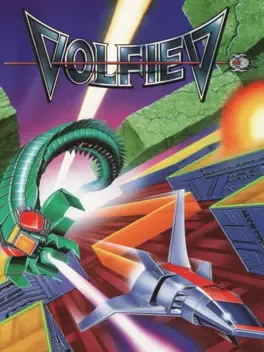
Once in the game, using the arrow keys you can move the 'Scanner' ship around the 'Shield Line' at the parameter of the playing area. While moving around this edge the ship is protected from the aliens by a shield indicated by a glowing circle around the ship. This shield is not infinite and care should be taken to complete each level as quickly as possible. A counter indicates the level of shield that you have: when it reaches zero then any contact with an alien is deadly whether you are on the 'Shield Line' or not. The idea of the game is to cut areas out of the screen without touching any of the aliens. This is done by pressing the SPACE key which initiates the 'Laser Cutter' and moving off the 'Shield Line' and rejoining it somewhere else. While you are in the process of drawing a line, your shield is inactive and touching an alien is fatal. Similarly, if one of the aliens touches the line then it will send a charge down the line towards you and you must quickly return to the safety of the edge before it reaches you. When you rejoin the 'Shield Line' the area that does not contain the 'Boss' alien will be filled (points are gained by trapping the other aliens) and the 'Shield Line' will be adjusted to surround the area that is left. The level is completed when a certain percentage of the total area has been filled in. This percentage starts at 80% but may increase in the later levels.
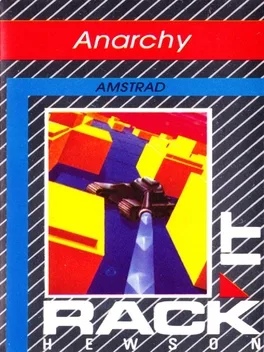
Viewed from above in levels with simple sideways scrolling, the objective on each level is to shoot each of the weapons crates, before going through the newly-opened exit. Guard droids must be avoided, but shooting them can leave them inactive for a short period of time, and they can now be shot or hit to push them in that direction, which can be used strategically to make more paths available. There is a 2-minute time limit on each level. Every 5th level has a nuclear weapon guarded by a seeking enemy droid, which continually follows you.
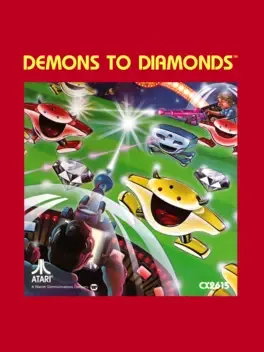
Players attempt to shoot demons in a "cosmic carnival" and then pick up the diamonds left behind by them, while dodging shots from enemy skulls. The player operates a laser base at the bottom of a multi-row playfield, using the paddle controller to move it from side to side and the controller's action button to fire a laser beam vertically up the playfield. The player can control how far onto the playfield the beam advances by releasing the button at the desired height. The player receives one point for each demon and ten points for each diamond successfully shot. Points are multiplied by the distance from the base to the target. For example, a demon shot one row above the player is worth one point, while a demon shot four rows above the player is worth four points. In multiplayer mode, the second player operates a laser base at the top of the screen, firing from top to bottom. Again, the second player must shoot demons that match the color of its gun in order to produce diamonds. However, diamonds may be shot by either player. Also, skulls are capable of shooting both up and down the playfield. In select variations of the game, the players can shoot their opponent's laser gun in order to deplete their stock of extra lives. In both single and multiplayer versions, players begin with five lives. One life is lost when the player's laser base is hit by a laser beam fired by a skull or by an opponent, depending on the game variation being played. The game ends when all lives are lost; in multiplayer versions, the surviving player receives a bonus for each life remaining.
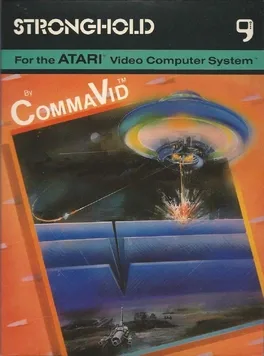
On one of your patrols in deep space you encounter an abandoned base whose self-defense mechanisms are still functional. Upon detecting your presence the base launches several drones to destroy you. After having conquered three of these attack waves a force field containing of three layers will form at the bottom auf the screen protecting a SAM crawler. Your objctive now ist to shoot a gap into the horizontally moving force field in order to eliminate the SAM crawler while still being under attack by hostile drones. As soon as you breached the force field you have to pay attention not being shot down by the SAM crawler which will exploit the fact of you destroying the force field. The game comes with 16 game variations, some of them allowing you to use rapid fire while others make the attack drones invincible for your missiles or produce drones which clone themselves. Still some variants create a force field which will descend from above and is minimzing the space you are able to move in.
Shoot aliens as they move across the screen. Shoot the spaceship for extra points. Choose one of three games. Space Fever is a 1979 arcade game by Nintendo R&D2. Some sources claim that Ikegami Tsushinki also did design work on Space Fever. It was released in both monochrome and color versions. The gameplay is similar to Space Invaders, which had been released by Taito in 1978. It was distributed by Far East Video. The gameplay of Space Fever is reminiscent of Space Invaders (1978), where the player controls a laser cannon situated at the bottom of the screen and must defeat waves of enemy aliens. The aliens are arranged in rows and slowly move to the edge of the screen, before descending and continuing in the opposite direction. As more aliens are defeated, they increase in speed. A UFO will occasionally appear towards the top of the screen, which can be shot down for bonus points. There are three game modes that change the way the aliens move; the first presents two formations of enemies that move in opposite directions, the second continuously adds additional rows of aliens, and the third is functionally identical to Space Invaders.

A classic shooter (horizontal scroll) created in pixel art, with a great nostalgic feeling. Gala is a space rider and she's got an only mission: Save the world from the robot invasion. In this nice game (with a fantastic retro-game taste) you'll have power ups that will increase your power, you'll have the ability to enhance your level (and upgrade your spacebike in 3 different models) playing in more than 25 stages. You'll be good enough to reach the final boss and defeat him?
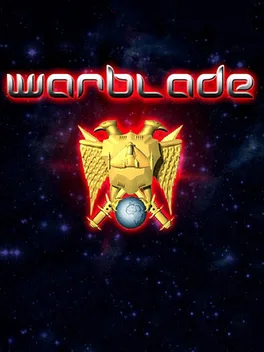
Warblade is a shareware computer game for Microsoft Windows and OS X, written by Norwegian developer Edgar M. Vigdal. The Windows version runs well on Linux under Wine. It is also available for retail in the App Store for iOS devices (in iPhone/iPod Touch and iPad versions). The game is a 2D space shooter in the vein of the perennial classic Galaga. It is a rewrite and modernization of a popular Amiga shareware game, Deluxe Galaga, which was written by the same author back in the mid-1990s. Where technically possible, the graphics and sounds are respectful to their Amiga origins.

A small, fast-paced game inspired by SEGA’s "Fantasy Zone" series. Play through four worlds in frenetic arcade action as you help the hero, Opbot, evade aliens, enemies, and things from another dimension on their way to freedom!
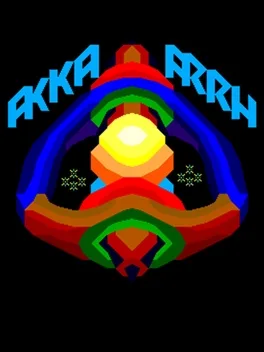
Akka Arrh is a previously unreleased prototype game created 1982 for the arcade. It saw it's first release in 2022 as part of the the Atari 50: The Anniversary Celebration.
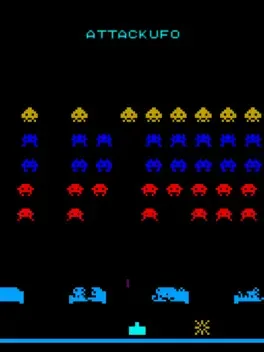
Space Invaders clone released by Ryuto Electric Co. in 1980.