
Shin Seikoku: La Wares


Buy
Could be interesting
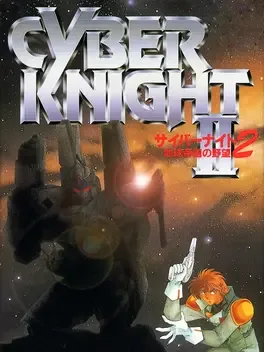
Cyber Knight 2 is a direct story sequel to the original (whose translation was also done by Aeon Genesis.) After the Swordfish´s crew reappears in known space, they are apprehended and imprisoned by the Earth Federation, a new military dictator having seized all of the Swordfish´s alien technology developed in the distant galaxy. It is a time of civil war amongst the federated planets, and the crew has been thrown directly into the center! Soon, new weapons called Metalliforms are created, which the General intends to use to conquer the galaxy! This thing´s moved really fast. It took just under two months, but it´s at the point where the game is not only fully playable, but it´s also one of the nicest pieces of work I´ve done yet. Seriously, the hacking on this is really pretty. Variable-width font for the main dialogue, multi-line 8x8, text hacked to allow more space... You name it, this thing´s got all the bells and whistles. The gameplay is fantastic, too. It´s got everything about the original Cyber Knight that was refreshing and nifty, cleans up the spotty bits that were a little aggravating, and improves on the forumla ten times over. This game is seriously amazing, folks. I haven´t had this much fun playtesting a game since Shin Megami Tensei. Even if you didn´t like the original Cyber Knight, chances are you´ll love this one. The story´s better, there´s an autobattle, there are even more neoparts, the star map interface is greatly improved, your "inactive" characters are automatically relegated to Support Modules and are able to not only gain combat experience but also use their skills and sometimes even finish battles before they even begin... The list goes on! It´s done and there shouldn´t be any problems, so play and enjoy!
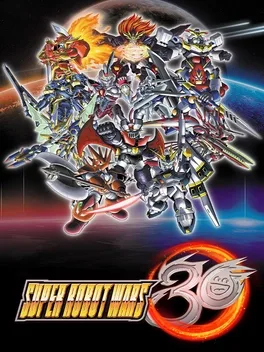
30 years on, the battle for our world's future continues. Super Robot Wars is a tactical RPG that brings characters and robots from a variety of mecha anime together to battle their mutual foes.
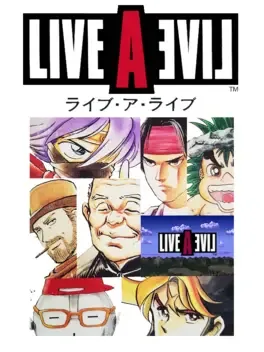
Live A Live's story is split across seven seemingly unrelated chapters that can be played in any order, based on popular genres such as Western, science fiction, and mecha. Each chapter has its own plot, setting, and characters. Although the basic gameplay is the same throughout the game, each chapter adds a new factor to the basic formula, such as the stealth elements in the ninja chapter. After the first seven chapters are completed, two final chapters take place to establish the connection between the seven previous and resolve the story.
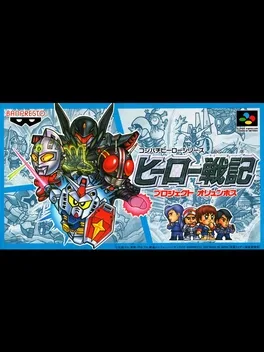
Hero Senki is a Role-Playing game, developed by WinkySoft and published by Banpresto, which was released in Japan in 1992.
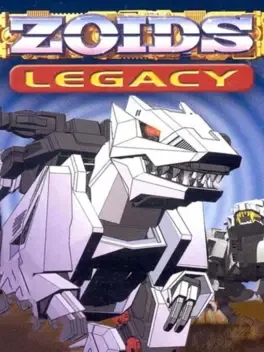
At the outer reaches of the universe, the human inhabitants on the Planet Zi remain locked in combat. The population, divided between good and evil, uses gargantuan life forms called Zoids to battle each other for control of this world. During a recent weapons experiment, Planet Zi underwent an accidental time-space fusion, creating a collision of Zoids warriors from two eras, the Chaotic Century and the New Century. Now, all hopes of returning Planet Zi to normal rest with Zeru, a promising Zoids warrior. Help Van, Fiona, Bit Cloud and Zeru use the full power of the ZOIDS to bring peace to their world. As the story unfolds, players can customize and upgrade their own unique Zoids to improve its efficiency and perform combination attack moves. Released in Japan as Zoids Saga II, Legacy features more than 140 different types of Zoids, each can be customized with different weapons and new color schemes.
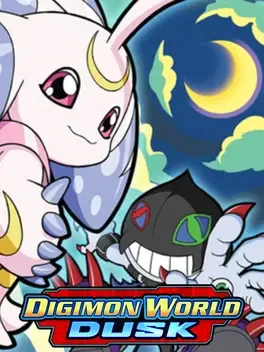
Digimon World Dusk, originally released as Digimon Story Moonlight in Japan, is a Digimon video game for the Nintendo DS handheld game console. It was released in Japan on March 29, 2007 and North America on September 18, 2007. It serves as the second game in the Digimon Story series, though it was marketed as a game within the Digimon World series in North America.
Galaxy Robo is a sci-fi strategy game from Copya System and Imagineer. The player directs a group of mech pilots, each riding distinctive bi-pedal suits and other vehicles. The game is structurally similar to Fire Emblem: the player moves all their units for their turn, either fighting enemy units or performing other tasks, and then control switches to the opponent. When two units meet in combat, a cutaway cutscene shows the aggressor landing (or missing) a hit, and the unit statistics underneath tell the player how much damage was caused. The game was a Japanese exclusive. It was one of a handful of games to use the SNES Mouse peripheral.
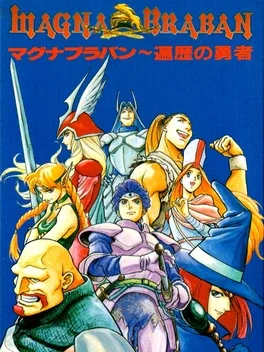
Magna Braban: Henreki no Yuusha is a Japanese-style RPG with party-based combat and random enemy encounters. The game's main view is an overhead map of a specific location, such as a town, where the characters move and can interact with NPCs. Upon leaving an area, the view changes to a larger overworld map showing locations of interest. The battles are viewed from an isometric perspective and the characters automatically engage and perform their actions. While the player does not directly control any of the characters, they can pause the battle at time and assign new strategies (such as melee, use long-ranged attacks or use Magic) to each character. Experience points and gold are awarded after each battle, the later of which can be used to purchase equipment and items.
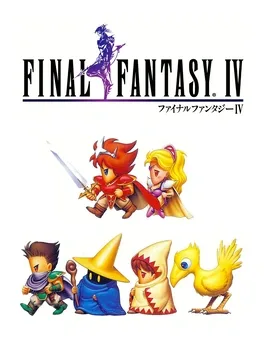
FINAL FANTASY IV is the fourth main installment in the FINAL FANTASY series, developed and published by Squaresoft. It was released in July 1991 for the Super Nintendo Entertainment System in Japan, and released as FINAL FANTASY II in North America in October 1991 with alterations made due to Nintendo of America's guidelines at the time.
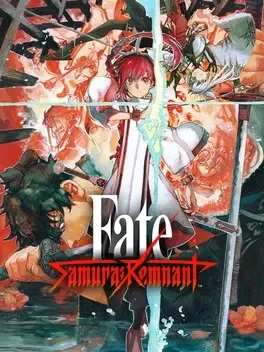
Throughout the Fate franchise, pairs of masters and heroic spirits —also known as servants— have been fighting across history in a series of Holy Grail Wars, with the winning duo receiving an ancient artifact that grants wishes. Fate/Samurai Remnant continues the series’ epic Holy Grail War in the fourth year of the Keian Era, Edo Period Japan. It has been several decades since the end of a turbulent, blood-soaked era, and while the people are finally enjoying peace and tranquility, a battle between seven pairs of masters and servants is about to begin as the “Waxing Moon Ritual” unfolds in the shadows. This is where the game’s hero, Miyamoto Iori, a young man in Asakusa, finds himself caught in the violence alongside his servant Saber, as they fight to be the last pair remaining in order to receive the granter of wishes, the “Waxing Moon Vessel”.