
Silver Jiken


Buy
Part of collection:
Shirubaa Jiken
(last 3 games)

Red, Blue, and Green is a set of three short stories released in the Suda51 Official Complete Book. They expand on certain aspects of The 25th Ward: The Silver Case and its remake. While the book was not released in English, the text was translated and transferred into Film Window form by members of the fan community. The three chapters are known as redout, blueout and greenout, following the same naming pattern as the new Correctness chapters of the 25th Ward remake. They expand on the roles of Aoyama, Akama and Kosuke Kurumizawa, and introduce a new major character, Midori Midorikawa.

The remaster of The Silver Case sequel, originally released on mobile devices, that was known as "Silver Jiken: 25-Ku" in Japan or "The Silver Case: Ward 25" in English. This is the first time the game has been released outside of Japan.

This is the first time "The Silver Case" has been fully localized to English. In this hit, the player takes control of the protagonist, a member of the Special Forces Unit "Republic", from a first-person perspective. The game takes inspiration from the adventure and novel genres, leading the player through an in-depth story in which the truth is gradually revealed as they solve various puzzles, offering a fresh and unique experience.
Could be interesting

The Suiri is a mystery solving adventure game where the player tries to solve 18 different cases. Each cases consists of searching various locations for clues and then making deductions and drawing conclusions. The game is viewed from 1st-person perspective with various zoomed-in areas of interest where player can often interact with in more detail.

The first game in the Jinguuji Saburo series was released on the NES in 1987. The series told the different cases of a 32 years old detective named Saburo Jinguuji out to solve deadly crimes, that is supported by a cast which includes his assistant Yoko Misoni and local police inspector Sanzo Kumano.

Mikagura Shoujo Tanteidan makes use of an inference trigger system in which players have to detect points that need attention or are contradictory during conversations and look for suspicious spots in crime scenes to find out the truth. Have fun playing detective with the Mikagura girl detectives today!

Echo Night is a mystery adventure video game developed by From Software. The story revolves around Richard Osmond and his journey to find out what happened to the ship Orpheus, which mysteriously disappeared from the sea. The story will uncover too the mystery about two stones which contain some kind of power.

Fūraiki is a visual novel blending photographic backgrounds with anime-style character overlays. The player character is a travel blogger and photographer, who travels to Japan's northernmost island of Hokkaido to document his journeys for his blog. On the boat to the island, he encounters a number of young girls also traveling there, whom you will have additional opportunities to meet during the main part of the game.

Zoku Mikagura Shoujo Tanteidan~Kanketsu Hen~ is an adventure game that lets players enter into the mystic Taisho and early Showa periods and find out the truth behind each case. The number of scenarios has been increased largely and the “inference trigger” feature is kept intact to deliver the most enjoyable detective game experience.
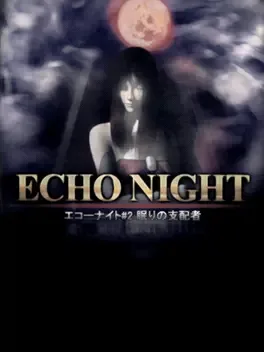
Echo Night 2: Nemuri no Shihaisha is a first person adventure. Like the first game, Echo Night 2 is played from a first-person perspective, but unlike most other first-person games there is no use of firearms in the game. When confronted by a ghost the player must turn on the lights in the room by means of a light switch. The player is often transported into the past via the passengers or certain objects. Once the player fulfills a task important to a spirit they will vanish and drop an "Astral Piece" which can be used to get a different ending scene.

A visual novel adapted from the book Yasoukyoku ("Nocturne") by Jirou Akagawa, which contains two murder mysteries.

Suikoden is a Japanese-style role-playing game with several unusual additions. There are three kinds of combat in the game, the most common one being the traditional turn-based party combat (players can have up to six people in their active party). Magic runes can be equipped on the player's characters which allow limited usage of offensive and healing spells. There are also a few army battles, where the player must control whole units of fighters, archers, magicians, etc., and one-on-one fights (duels).

Devil Dice is a unique puzzle game, where the player controls a small devil that runs around a grid covered in large dice. The player can both stand atop dice, and stand on the ground (with the dice towering above). When standing on the dice, the player can move from die to die, or can roll a die in the direction he or she runs, revealing a different face as the die rotates. Creating a group of adjacent dice with identical pips—the size of which must be at least the number of pips—causes those dice to slowly sink into the field before disappearing. Chain reactions are possible by adding additional dice to a sinking set. Different types of dice are available in some modes, with different properties to make the game more challenging. It was originally created by developer Shift on the "homebrew" Yaroze platform, and later turned into a commercial game. Released in 1998, it is one of only a handful of games to make the leap from the Yaroze to commercial release. The game is a million-seller and a demo version was released as a PlayStation Classic game for the PlayStation 3 and PlayStation Portable on November 7, 2007.