
Stardust Arena


Buy
Could be interesting
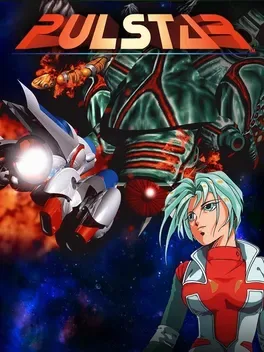
The basic gameplay is simple: progress through the levels in the spacecraft, collecting powerups and protecting the spacecraft from destruction. The game has very obvious similarities in design and gameplay to R-Type. It is actually believed that some ex-Irem employees left the company to join Aicom, which used to be a subcontractor for various coin-op manufacturers like Jaleco or SNK. Despite the familiarities, Pulstar is not without innovations. There is the option of using the weapon power bar, which consists of two halves. The right-hand side of the bar turns blue when the fire button is depressed. When fully charged the ship delivers a devastating emission of energy. The left-hand side turns red when it is continually pressed, shooting out a barrage of smaller, rapid blasts. The in-game visuals are mostly pre-rendered 3D graphics, which gives the interactive elements a far more realistic appearance. Great care was taken to really place the player into the world of the game, with cinematic style cut scenes and pre-rendered movies. There is a hefty reliance on strategy and not just blasting everything in sight. Using the charged weapon is key, and requires careful precision. Also, once a power up is obtained, a small orb appears at the posterior end of the ship. This can be used as an advantage by deflecting/absorbing oncoming enemy fire and taking out small enemies that run into it.

You are Frald Rancer and control a space ship which must journey from your home planet to outer space to defeat enemy invaders. Once all the enemies are defeated then return home. The game moves in a forward direction where the screen objects move towards and down to the player. Approaching enemy ships are small, in the distance, and become larger and move faster as they approach the player. The player controls a fighter at the bottom of the screen, which can only move from side to side. Shots can be fired at a diagonal, as well as straight, by twisting the joystick from side to side. At certain stages, ground targets will appear and can be destroyed by using the "Burn" button. The laser disc generated backgrounds are largely non-interactive during game play. They form the backgrounds on which the game is played on. Scenes do work in with the backgrounds, however that is the extent. Some backgrounds appear as they should have elements of interactively, however, were not used in the release of the game. These include scenes where the player is going through an asteroid field and asteroids fly towards the player. Another scene is in the crystal caverns, where there are many obstacles which could have been made to be avoided. These are only two of many scenes which could have had interactive elements. The game may have been decided to have been too hard to play with these background obstacles and computer fighters to play. Hence removing the background interactively to make the game more playable. The game starts with the player in Frald Rancer's home city, then taking off into outer space via a fly-by of the city. The backgrounds are very Sci-Fi and are fantasy themed. They are very interesting, more so than the game. The music from the laser disc also complements the laser disc video very well and makes up for the sometimes annoying, computer generated sounds.
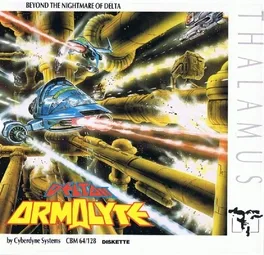
The aim of Armalyte is to progress to the end of a long, horizontally-scrolling level where the screen will cease scrolling and battle will commence with a Boss. Beating the Boss allows the player to progress to the next level. There are eight levels in all. Smaller Bosses are encountered midway through each level and these also have to be beaten to progress further. During each level the player encounters numerous small enemy ships, many of which fly in fixed formation. Levels also feature scenery which can destroy the player's ship if touched. Weapons can be upgraded through an upgrade system.

Use creative combat tactics and skill shots to earn high scores as you teleport through city streets and rooftops in an awe-inspiring ballet of bullets. Tear apart your robot foes and use them to fend off the enemy onslaught. Unlock, customize and test weapons before taking on challenges that put your newfound skills to the test!
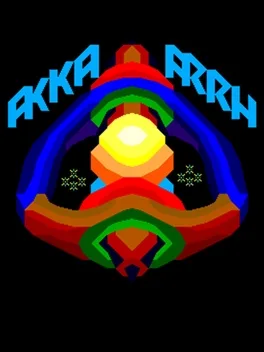
Akka Arrh is a previously unreleased prototype game created 1982 for the arcade. It saw it's first release in 2022 as part of the the Atari 50: The Anniversary Celebration.

A small, fast-paced game inspired by SEGA’s "Fantasy Zone" series. Play through four worlds in frenetic arcade action as you help the hero, Opbot, evade aliens, enemies, and things from another dimension on their way to freedom!
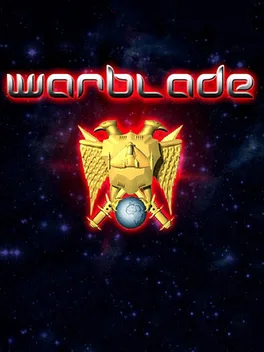
Warblade is a shareware computer game for Microsoft Windows and OS X, written by Norwegian developer Edgar M. Vigdal. The Windows version runs well on Linux under Wine. It is also available for retail in the App Store for iOS devices (in iPhone/iPod Touch and iPad versions). The game is a 2D space shooter in the vein of the perennial classic Galaga. It is a rewrite and modernization of a popular Amiga shareware game, Deluxe Galaga, which was written by the same author back in the mid-1990s. Where technically possible, the graphics and sounds are respectful to their Amiga origins.
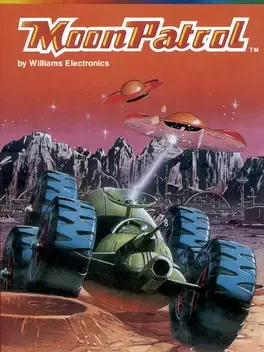
Moon Patrol is a side-scrolling shooter that puts players at the controls of a six-wheeled moon rover that can jump and shoot. The goal is to move through the entire course as quickly as possible while shooting enemies for additional points. Cannons are mounted on the front and top of the vehicle, and both fire simultaneously when the fire button is pressed. Rocks, mines, and pits in the course prevent you from just holding to the right for maximum speed. Rocks and mines can be shot, but pits must be jumped. Some enemies fire shots that create new pits in the course, forcing players to react quickly.
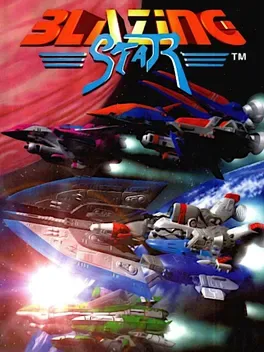
Blazing Star is a scrolling shooter video game for the Neo Geo home game system. It is the sequel to the acclaimed Neo Geo shooter Pulstar, which was itself a close cousin to the R-Type franchise. A typically hefty Neo Geo ROM at 346 Mb, the game makes extensive use of pseudo-3D prerendered sprites, brief anime and CGI cutscenes (mostly during the intro sequence), and frequent Engrish voice samples and captions. While Blazing Star was superior in many respects to previous shooter games, some fans compare it unfavorably with Pulstar on the basis that Blazing Star was overly easy and there are those that prefer the simpler 2D sprite look over the prerendered sprites that came to dominate many of the more recent shoot-em-ups.
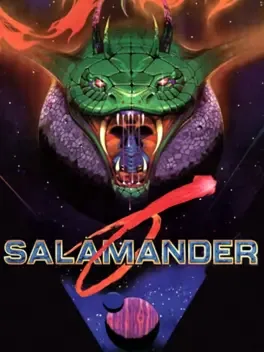
Salamander is a scrolling shooter arcade game released by Konami as a spin-off to Gradius. It introduced a simplified power-up system, two-player cooperative gameplay and both horizontally and vertically scrolling stages. Some of these would later become the norm for future Gradius games.