
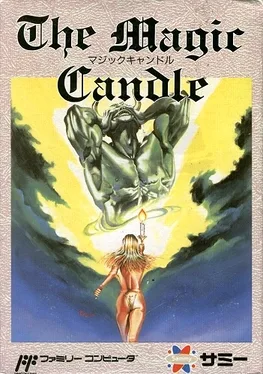
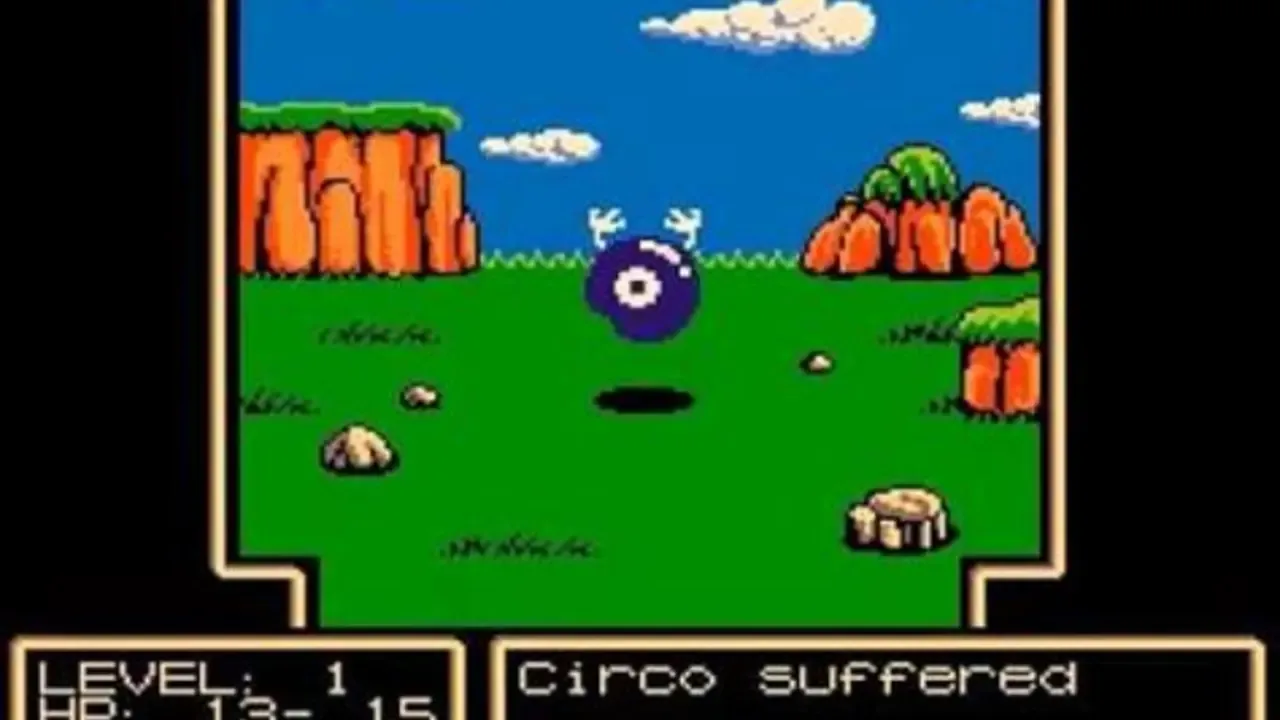
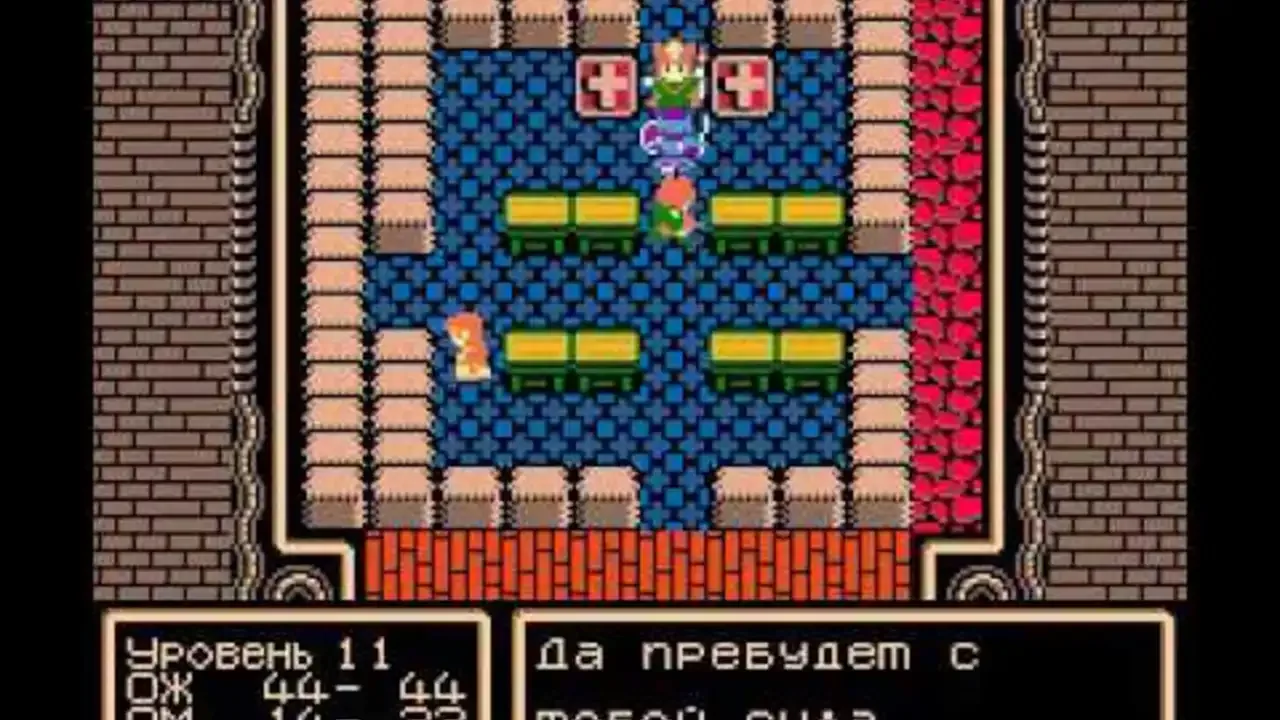
The Magic Candle


Buy
Could be interesting
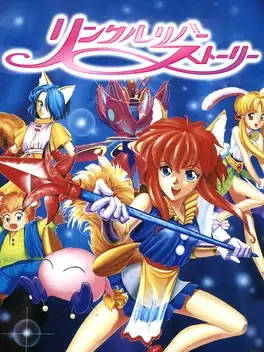
Linkle Liver Story is an action-oriented RPG that takes place on a distant planet called Mamuuna whose inhabitants are humans with animal qualities. The story centers around the "Mother Flower" which gives life to all new beings on the planet when one day it disappears.

In a fantasy world inspired by Indian folklore, the end of mankind draws nigh. Can you break the cycle before humanity is doomed? Up to four separate scenarios are available for players to enjoy, with a magic system that gives the player total creativity in combat!
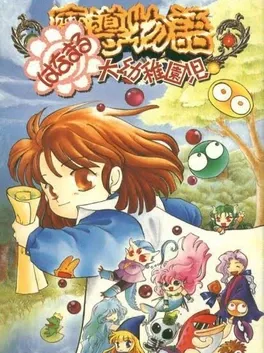
Madou Monogatari: Hanamaru Dai Youchienji is a role-playing video game for the Super Famicom released in Japan on January 12, 1996. The objective of the game is to collect eight gemstones hidden around the world.
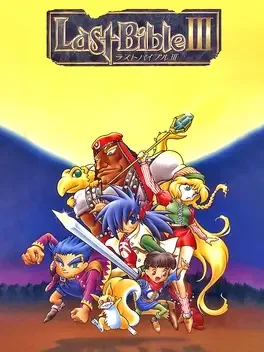
Last Bible III is the final entry in the Last Bible trilogy. Unlike the first two games, this game was not released on a portable system. The game follows Ciel, a boy who leaves his home town to travel to go on a journey.

Live A Live's story is split across seven seemingly unrelated chapters that can be played in any order, based on popular genres such as Western, science fiction, and mecha. Each chapter has its own plot, setting, and characters. Although the basic gameplay is the same throughout the game, each chapter adds a new factor to the basic formula, such as the stealth elements in the ninja chapter. After the first seven chapters are completed, two final chapters take place to establish the connection between the seven previous and resolve the story.
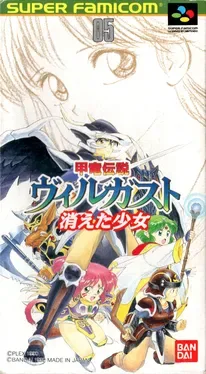
A fantasy RPG for the Super Famicom. Notable for allowing up to five party members in combat and breaks the usual 9999 limit for health. Never released outside of Japan, but fan translations exist.
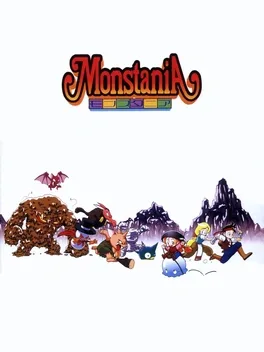
The hero of the game is Fron, a sixteen-year old boy who lives on the island of Monstania. One day, strolling in the forest, he notices a strange light. The light lead him to a clearing, and then suddenly disappeared. But Fron realized what was the meaning of that light - it was a fairy! Of course, everybody knew that fairies had been long extinct, but Fron never believed in that. All his life he wanted to meet a real fairy, and now, when the opportunity has come, he firmly decides to find her. His girlfriend Tia helps him on the dangerous journey, during which they meet a mysterious little girl named Chitta, and get involved in a grand adventure, that will ultimately lead them to the battle against the dark force that threatens the whole Monstania! "Monstania" has a somewhat unusual gameplay within the frames of console RPGs. You don't explore the world in the game: it is entirely linear and takes you to the next destination by itself (only at a few points you can choose where to go next by selecting an appropriate answer). Once within the location, you cannot leave it until you complete all your objectives there, which then take you to the next location. The objective is usually a large strategic battle. You navigate your party members on the battle field, attack with melee and long-ranged weapons, and use special technique which require action points. Unlike most other turn-based strategy games, an enemy makes a move immediately after you did the same with one of your characters, without waiting for the "enemy turn". The RPG element is not very significant: your characters level up automatically after each battle. There are also some puzzles to solve in certain locations.
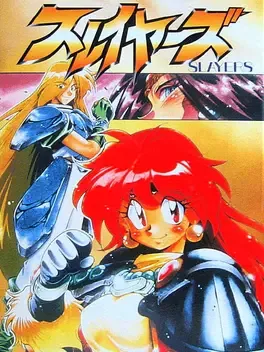
Slayers is a role-playing video game adaptation of the Slayers light novel series developed by BEC and published by Banpresto for the Super Famicom (SNES) exclusively in Japan in 1994. Powerful, avaricious sorceress Lina Inverse travels around the world, stealing treasures from bandits who cross her path. Her latest victims, a band of thieves, wait in ambush in a forest, thirsting for revenge. When Lina is about to effortlessly pummel her would-be attackers, the swordsman Gourry Gabriev suddenly announces his presence. Assuming Lina to be a damsel in distress, the foolish yet magnanimous man confronts the brigands in order to rescue her. After defeating them posthaste, the oblivious cavalier decides to escort Lina to Atlas City. Though not very keen on this idea, she ends up accepting his offer. However, without realizing it, Lina has chanced upon a mighty magical item among her most recent spoils. Now two mysterious men are hunting the young magician and her self-proclaimed guardian to obtain this powerful object for apparently nefarious purposes. This way they begin their adventure, one where the fate of the world itself may be at stake.
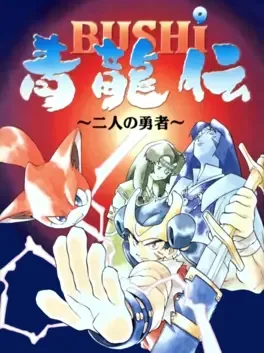
Bushi Seiryuu-den: Futari no Yuusha is a Role-Playing game, developed by Game Freak and published by T&E Soft, which was released in Japan in 1997.
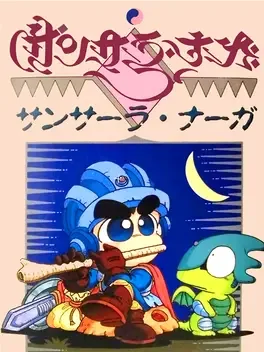
Sansara Naga is a role-playing video game that was published by Victor Music Entertainment exclusively to Japan for the Family Computer on the 23rd of March, 1990. A fan-translation was finished and released in 2013 on the 28th of December for Sansara Naga by the hacking and translation group Stardust Crusaders. Sansara Naga is set in the fantasy-filled lands of India during the Vedic age and also mixes elements of Japanese folklore such as the legend of Brahman Umibouzu ("sea bonze"). Many of the NPCs in game will tell you that Cows are sacred animals and a few will mention the Tower of Ṛta Satya. There is a set of armor in the game called Dharma Armor, which will prevent the player from dealing or being dealt damage. The story revolves around a Boy/Girl that steals a treasured Ostrich egg from the village of Orissa and decides to reflect upon one's actions; aspiring to become a Dragoon to restore their lost honor. The protagonist will set out on an adventure saving lives, performing good deeds, and raising a newly hatched dragon. There are bosses and many NPC street vendors will attempt to scam you with defective items or attempt to mug you. While the main protagonist does not level and their base stats are fixed at 40 STR, 40 DEF—The dragon that you raise does level. More unique game mechanics to this game include the ability to feed dead bodies to your dragon to raise his level, enchanted armors, field map events, hidden landmarks, a few side quests, and mini-games. Sansara Naga's gameplay and gameplay mechanics are similar to those of Dragon Quest I, Pokémon and Earthbound. The Silver Mountains are also referred to as Heaven.