
Trigger


Buy
Could be interesting
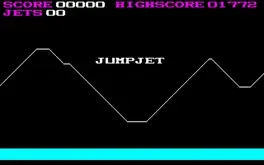
Jumpjet was an action side-scroller in which the player piloted a jet to complete four missions, culminating in a "final" boss fight against the "Head of Doom". Defeating all four levels would bring the player loop the player back to the first mission. Play would continue as such until the player ran out of lives.
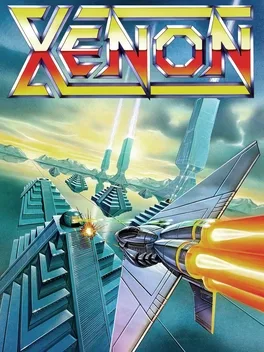
Xenon is a 1988 vertical scrolling shooter computer game, developed by The Bitmap Brothers and published by Melbourne House which was then owned by Mastertronic. Xenon was followed in 1989 by Xenon 2: Megablast. The player assumes the role of Darrian, a future space pilot called into action by a mayday report from his superior on a nebula space station. As of late, the colonies of mankind have been under attack by mysterious and violent aliens called the Xenites and it is finally time for Darrian to engage them. Unlike most scrolling shooters, the player can move in any direction instead of straight up. The player craft has two modes, a flying plane and a ground tank. The transition between crafts can be initiated at almost any time during play (except during the mid- and end-of-level boss sections, as well as certain levels where a certain mode is forced), and the mode chosen depends on the nature of the threat the player faces. Destroying some enemies released power-ups the player could catch to enhance their ship.
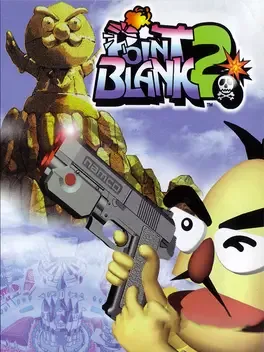
Point Blank 2 is the sequel to the now classic arcade game Point Blank, which was converted to the PlayStation in 1998. Using the Namco built GunCon (an arcade-like light gun), it offers 70 new shooting galleries, different party modes and a new single-player game.
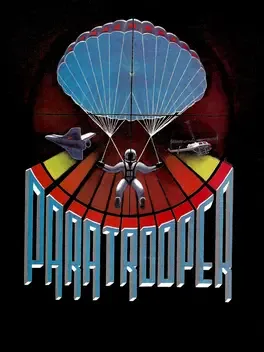
Paratrooper is a single screen arcade action game where the player controls a stationary machine gun turret trying to shoot down all incoming enemies. The turret has unlimited ammo but a limited angle of fire (up to 90 degrees left and right). At first, helicopters start appearing from both sides of the screen's upper part. Paratroopers are jumping down from those helicopters; if four or more of them touch the ground, they will form a human ladder, climb up to the turret, and destroy it. To avoid that, the player has to shoot either the paratroopers themselves or their parachutes - for different effects but the same results. After the player has withstood several waves of helicopters, bomber planes start appearing. These planes shoot bombs directly at the turret, which do not miss and destroy it right away. To counter that, the player can either eliminate the plane before it has the chance to drop the bomb, or destroy the bomb itself in mid-air. Shooting bombs scores the most points (50). Surviving this stage effectively puts the game on an indefinite loop, with more helicopter and bomber plane stages alternating with increased difficulty. There are no continues and the player has to start over if the turret was destroyed.
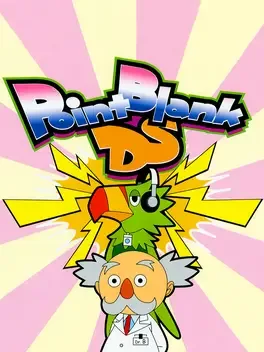
Point Blank DS turns your stylus into a light gun in this port of classic arcade game
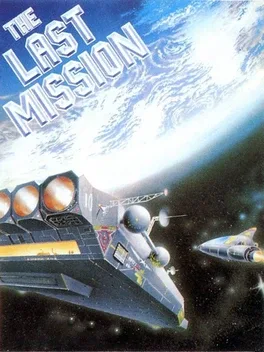
Following a robot rebellion, humans have fled the Earth for the planet Nova. They have sent the robot OR-CABE-3 back to Earth to obtain the secret defense plans of the enemy robot base. The player takes control of OR-CABE-3 as it attempts to escape the enemy base with the plans and board a spacecraft for Nova.
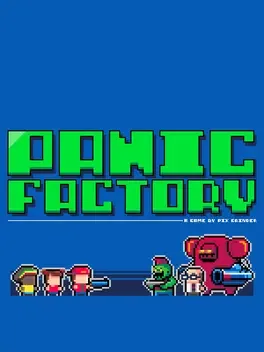
A group of environmental activists have entered the industrial complex of the infamous Dr Paiipozz and his monstrous mutants. Will you escape from the Panic Factory alive?
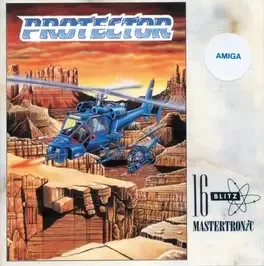
Protector is a strategic two-player shooter where you must gather supplies and return them to your base to eventually build a bomb and destroy your opponent's base. Each player pilots a helicopter with limited ammo and fuel, requiring frequent refueling and rearming. Supplies must be transported one at a time, and getting shot causes you to drop them and take damage. Once enough supplies are gathered, the final task is to deliver and drop the bomb – all while dodging and attacking.
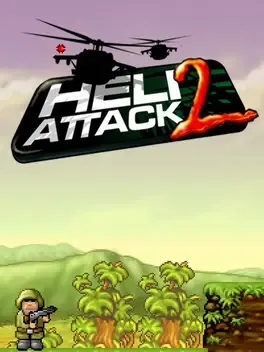
Helicopters come at you in waves, your mission is to take as many choppers down as possible. Pick up weapons and upgrades being dropped by your allies.
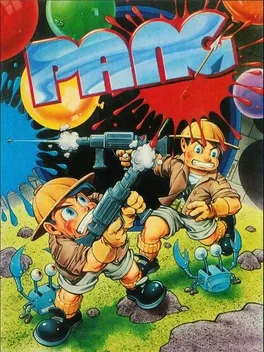
Pang, originally released in Japan as Pomping World and in North America as Buster Bros., is a 1989 arcade action game developed by Mitchell Corporation. Its core gameplay is similar to the 1983 Japanese MSX game Cannon Ball, also released that year for the ZX Spectrum as Bubble Buster. Players embark on a round-the-world quest to destroy bouncing balloons that are threatening landmarks and cities across the globe. The game features 50 stages set in 17 locations, including Mt. Fuji, Mt. Keirin, the Temple of the Emerald Buddha, Angkor Wat, Ayers Rock, the Taj Mahal, Leningrad, Paris, London, Barcelona, Athens, Egypt, Kenya, New York, Maya ruins, Antarctica, and Easter Island. Later versions added additional locations. Each stage includes a background depicting local landmarks, along with a unique arrangement of blocks, some destructible, some permanent, and some hidden with bonus items. Stages begin with balloons of various sizes; the largest balloons split into smaller ones three times before disappearing after the fourth hit. Players start with a single harpoon, though special weapons can drop when balloons are popped. At certain points, food items worth bonus points may also appear. Contact with any balloon results in the loss of a life. In two-player mode, if both players touch a balloon at the same time, only Player 1 loses a life. Similarly, when both reach a bonus or weapon simultaneously, only Player 1 collects it. Players begin with three to five lives depending on dip switch settings, with extra lives awarded upon reaching specific score thresholds. A stage is cleared when all balloons are destroyed, and the game concludes after all stages are completed, ending with the heroes driving their jeep into the sunset on an Easter Island beach.