
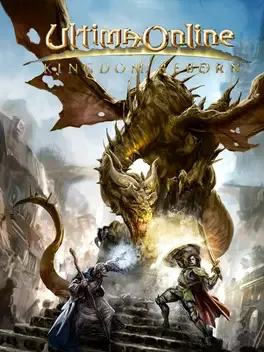
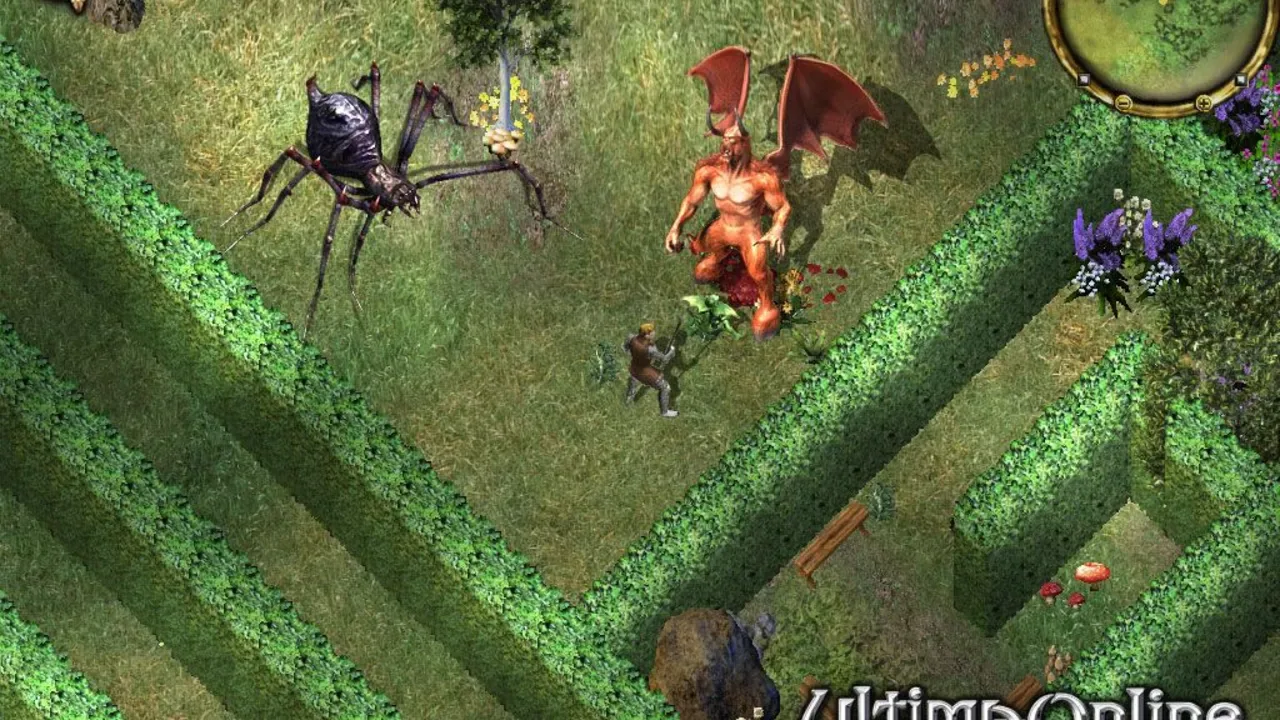
Ultima Online: Kingdom Reborn


Buy
Parent game

Ultima Online is the product of Richard Garriott's idea for a fantasy game involving several thousand people who can all play in a shared fantasy world. It is responsible for grandfathering the genre of the MMO, and showing the industry that MMO's were the next era of gaming.
Part of collection:
Ultima
(last 3 games)
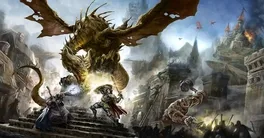
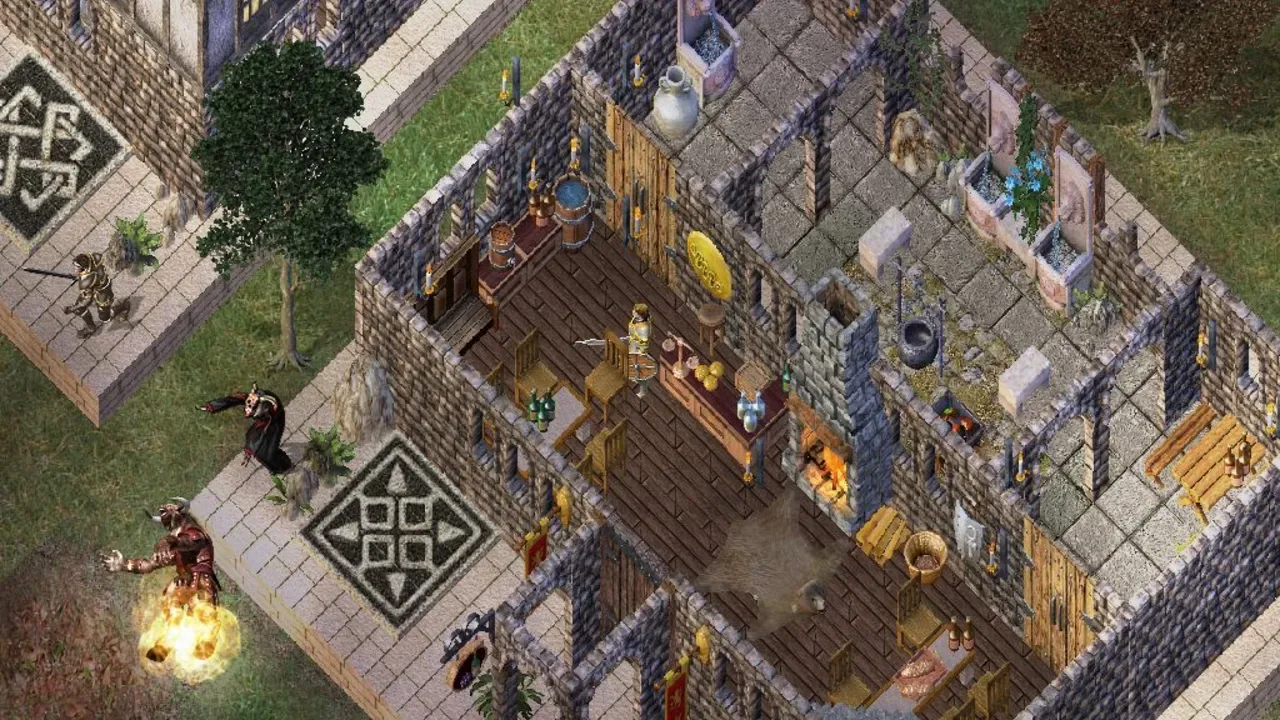
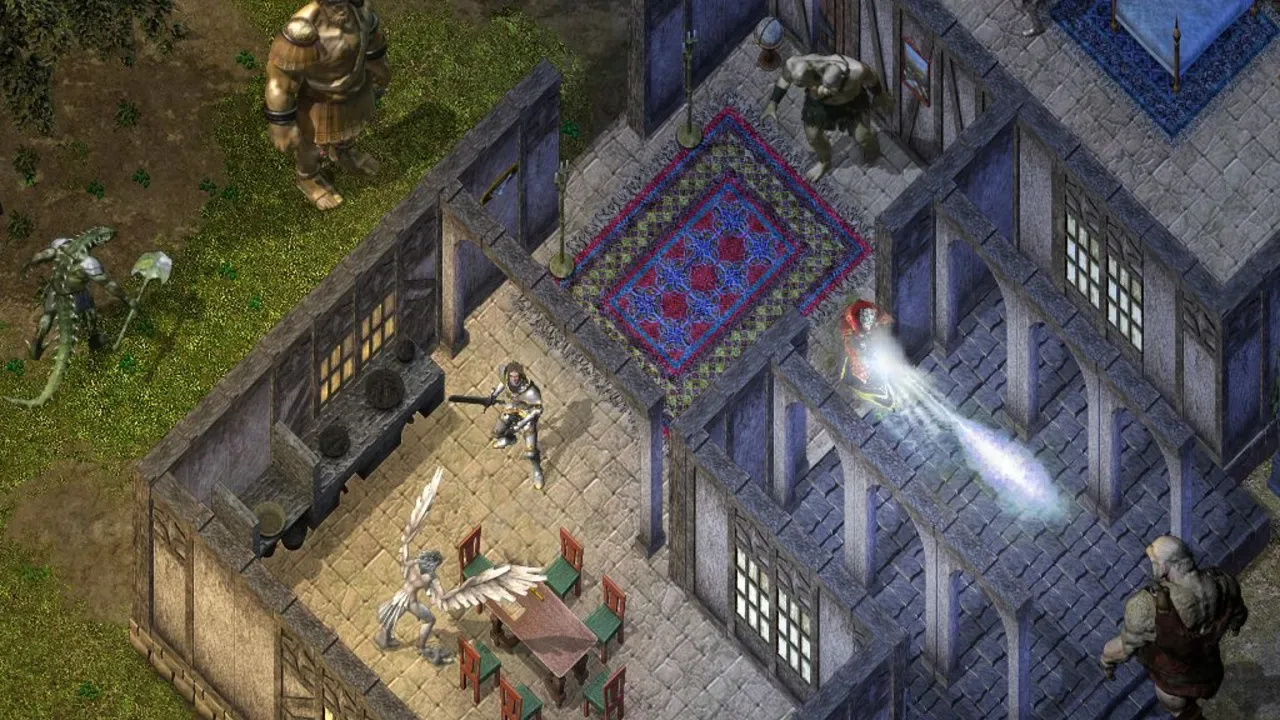
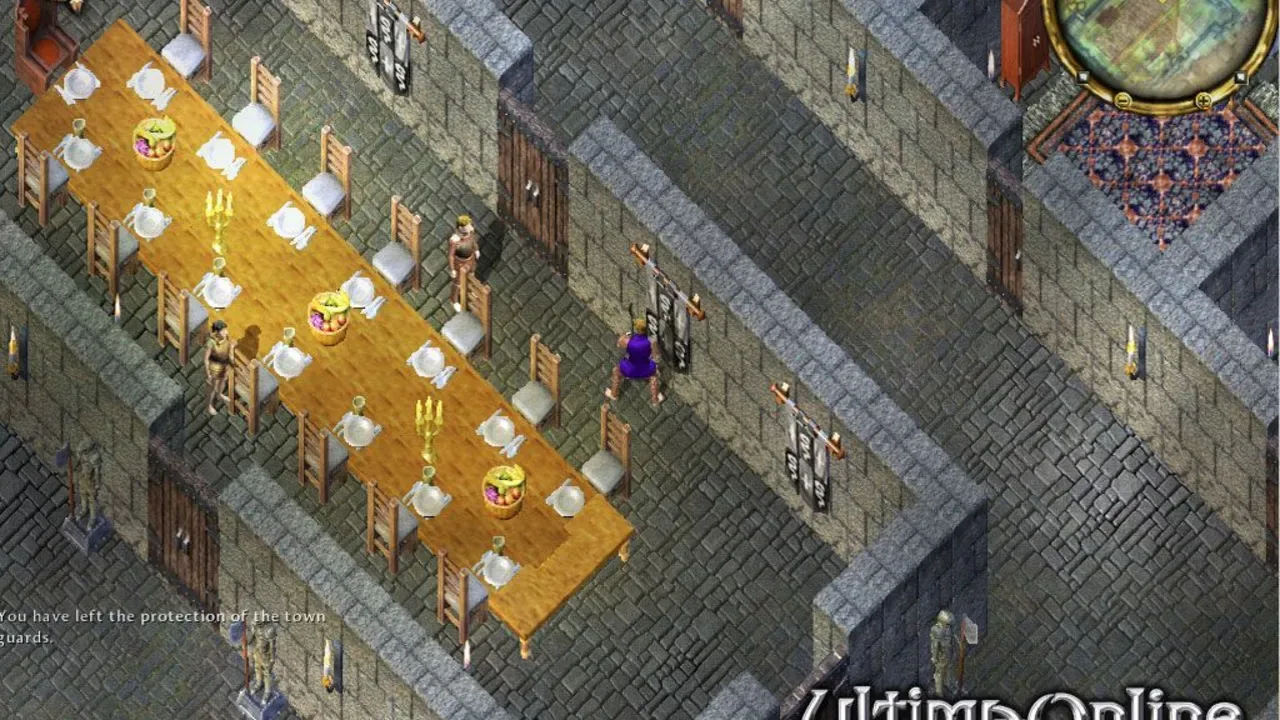
Are you tired of the same old games that lack accomplishments, true friendships, epic battles, and a sense of free will? Come and join Kingdom of Britannia Were anything is possible. † Explore a mysterious land, tame wild creatures, and powerful beasts? ‡ Perhaps you would rather pick up a sword and shield, and hunt murderous bandits, or master the dark secretes of necromancy. † Maybe you are a more of a merchant, or craftsman, with many professions and craftables to choose from.
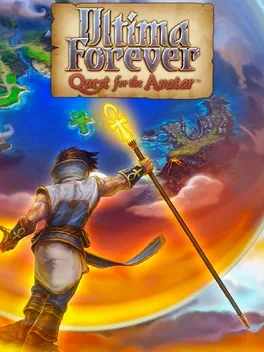
Play as a fighter or a mage as you take on Lady British's challenge in this free-to-play Ultima IV follow-up.
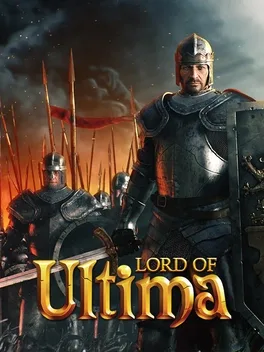
A browser based city building strategy game by EA. Create your own empire and defend it from others!
Could be interesting
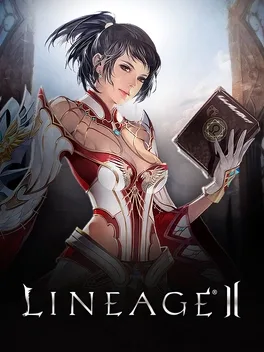
Lineage II. The legend that started it all. MMORPG with a huge open world and a variety of social features. Become a powerful warrior, play a new class (the Death Knight) and join the fight for dominance!
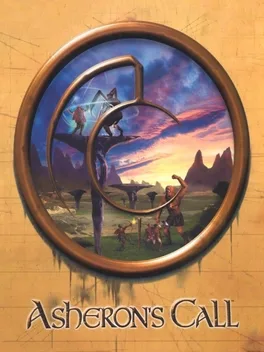
Asheron's Call (AC) is a fantasy MMORPG (massively multiplayer online role-playing game) for Microsoft Windows-based PCs developed and published by Turbine Entertainment. Though it was developed by the Turbine team (with Microsoft's extensive assistance), it was published as a Microsoft title until 2004. The game was set on the island continent of Dereth and several surrounding smaller islands and archipelagos on the fictional planet of Auberean. The game was played in a large, seamless 3D virtual world which could host thousands of players' characters at a time. Released on November 2, 1999, it was the third major MMORPG to be released and was developed at the same time as Ultima Online and Everquest. After initial success, its subscription numbers dropped as newer MMORPGs moved into the market. Its host servers remained online for over 17 years after the game's original launch.
In this online RPG of Korean origin, the player can explore the medieval world of Lineage as one of the four available character classes: elf, knight, prince, or wizard. Knights are physical fighters, wizards are proficient in magic, while playing as an elf or a prince require a combination of both. After you create a character, your main goal in the game will be to gain enough experience and to join one of the existent blood pledges, which are equivalent to guilds in other games. As a prince, you can also create your own blood pledge.
Dark Age of Camelot is a 3D medieval fantasy MMORPG that combines Arthurian lore, Norse mythology and Irish Celtic legends with a dash of high fantasy. It is set in the period after King Arthur's death and his kingdom has split into three parts which are in a constant state of war with each other. DAoC includes both PvE and RvR combat, players can choose to adventure alone or join groups to get completion of credit in large-scale PvE encounters and for communication purposes in RvR.
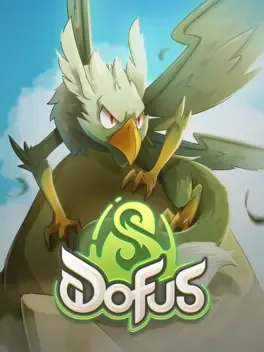
Dofus is a tactical turn-oriented massively multiplayer online role-playing game (MMORPG) developed and published by Ankama Games. It is primarily a pay-to-play game, though it still offers a limited amount of free content.
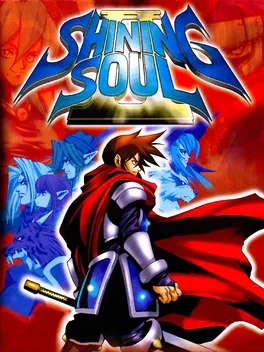
As monsters begin to appear in the kingdom Klantol, King Marcel announces a grand tournament at the coliseum to find a hero that can protect the country. Now, as a mighty Brawler, Priestess, Dark Wizard, or Ninja, you must accept the king's challenge. Each character has certain strengths and weaknesses that can mean the difference between victory and defeat in single-player, multiplayer, or cooperative multiplayer modes. In addition to valuable weapons and armor, you can equip your party with Force Links, which, when combined, create a Shining Force--a powerful weapon capable of decimating the enemy forces.

RYL: Path of the Emperor is a massively multiplayer roleplaying game that aims to create increasingly difficult and challenging gameplay as players progress deeper into the quest. In the game, players assume the role of a Warrior, Cleric, Wizard, or Thief (over 20 classes) and explore the many beautiful and exotic locations within the game where they meet other players, complete quests, fight monsters and other players. Path of the Emperor features more than 400 quests (or missions) for players to play through, a compelling battle system, a "skill system" that allows players to define their character's "class" over time, as well as the ability to own virtual real estate within the game. Players can become feudal lords or leaders of clans or bands of warriors.
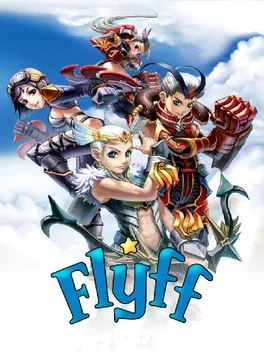
Flyff (short for Fly for Fun) is a fantasy MMORPG by Korean development company Gala Lab (formerly Aeonsoft & nFlavor). Flyff is a fairly typical party-oriented grinding game where no character can do everything; efficient play requires working in groups to level up by killing monsters, or Masquerpets. Its main distinctiveness lies in its flying system: flying is the normal method of transportation for characters above level 20. Flyff is hosted in 13 countries and 10 languages and is played by over 30 million people. GAMEPLAY: Players control an avatar that spends most of its active time fighting and most of its inactive time running a shop. Character classes are chosen at level 15 and sub-classes at levels 60 and 130, referred to as the first, second, and third job changes. The job changes are obligatory—when a character reaches the requisite level, experience gain stops until the completion of one of the job quests. At level 120, the character can become a Master, returning to level 60 with enhanced powers and able to work its way back up to level 121 and become a Hero. As of version 17, Heroes may select a third job class at level 130 and level up to the current cap of 150. Levels are gained based on experience, which can be acquired by killing Masquerpets and by performing quests. Quests generally involve killing specific Masquerpets and collecting the different quest objects they drop; a typical early quest is that of "Party of Is," with the requirement of collecting 7 Chupims through killing Pukepukes. At each level, the character receives skill points that can be invested in skills available to its job(s). There are two types of skills: those used for attacking and those used for protection and/or enhancement. Skills may have cool-down times and may cause status effects, with confusion, stun, and bleed among the most common effect. It is not possible to acquire maximum levels in all available skills until becoming a level 60 Master. Characters can be improved by acquiring objects such as improved equipment. Masquerpets drop equipment, the in-game currency penya, consumable items such as food and potions, and quest objects, or players can purchase equipment from other players note this is usually extremely expensive because of the high quality gear that can be acquired this way. These can all be traded between players; Flyff gameplay involves large amounts of buying and selling in order to collect desired equipment. Most equipment items have minimum levels at which they can be used. Combat Flyff features melee, ranged and magic combat, with different skills available to different classes. Health points, fight points, and magic power bars are able to be replenished through food, vital drinks and mana refreshers; some classes depend on assists to heal them with magic. PvP Player versus player (PvP) combat is allowed on all servers without penalty in the form of dueling. Both players must be over level 15, and within 30 levels of each other, then they must confirm the duel first unless they are within the PvP Arena, a free-for-all environment found on all servers. Player killing is allowed only on the Yetti server and carries a high penalty. SOCIAL SYSTEMS: Lord System Introduced in version 12, the Lord system allows eligible players to be voted as the Lord of their server for 2 weeks. Players must have obtained Hero or Master status to qualify as a Lord candidate. While a Lord, a player may introduce a number of events on the server. Lords are taxed between 0 to 20% on all NPC purchases and returns and are given a portion of all player taxes. 10% of eligible voters must participate in the Lord vote for a Lord to be chosen. To vote for a candidate, a player must be at least level 60 and must have logged in to the game within the last 30 days. Each player may only vote for one candidate per election. Party System Players who join a party gain increased experience and loot. A lone player does not benefit from or harm a party. A party starts as a Regular Party, in which experience is distributed evenly among party members in the same location. At level 10, the party becomes Advanced, at which point experience can be distributed to players based on their amount of damage done. An Advanced Party may have up to 8 players; having this many players in a party increases player experience with each monster killed during training. Guild System Guilds allow players to socialize; players within a guild can chat with each other and many in-game activities are guild-based. Guilds have a hierarchical chain of command, consisting of the Master/Leader, Kingpins, Captains, Supporters, and Rookies. The guild master may change the permissions for guild members, allowing members to withdraw items or money from the guild bank, rank-up or de-rank other members, and be paid daily. Guilds are able to choose an emblem and cloak to represent themselves and have the use of a warehouse. When a guild reaches the appropriate guild level, increased by supporting the guild through quest items and Penya, the guild master may create guild cloaks at a cost that sport the guild's symbol. A large amount of Flyff end-game content is guild-related. Guild Siege This event, held on Saturday in channel 1 of each server, allows guilds to compete in a free-for-all environment. A total of 8 Guilds may enter, and each Guild may have 10 players. To compete, the Guild leader must place a bid; the 8 highest bidders compete. Clockworks War The Clockworks War is a guild dungeon that guilds of any level may enter a single time. If the guild fails against the dungeon boss, its players may reattempt to win as many times as necessary for a time period of one hour. Only one guild is permitted inside the Clockworks Arena at a time. Couple System The couple system, implemented in Version 13, allows a marriage-style connection between two characters. Characters who become a couple are granted special buffs and skills and receive gifts with new couple level gained. Mentor/Pupil System The Mentor/Pupil system, implemented in Version 15, allows any player level 91 or above to take on any character who has not completed their second Job Change as a pupil after completing the mentor qualification quest. This Mentor/Pupil bond provides a special bonus to experience gained by both mentor and pupil while both characters are logged on to the same server. Additionally, upon the pupil reaching certain level marks, the mentor gains 'Mentor Points'; as the mentor gains more of these points, additional pupils may be taken on, to a maximum of 3 pupils when over 100 Mentor Points are gained. These additional pupils grant increases to the experience bonus of the mentor; the other pupils' experience bonus' remain unchanged. While no action apart from the initial bonding is necessary within the Mentor/Pupil relationship, mentors are encouraged to help their pupils with advice, quests, and/or occasional gifts. If at any time either pupil or mentor becomes dissatisfied, the player may cancel the bond. The Mentor Points of a mentor who loses all pupils returns to 0 and must be regained through new Mentor/Pupil bonds. OTHER GAME SYSTEMS: Events Events involving rare drops and extra experience are held almost every week by the gamemaster team. Maintenance is held every Tuesday evening (gPotato) and Thursday noon (FlyFF PH). Collector System Re-Introduced in version 11, the Collector System allows players to collect rare and unique game items through the use of a Collectors. Private Shops Players can open private shops, in which held items can be sold at any price. Other players can enter these shops and purchase the items within, with the purchase money transferred to the shop owner's inventory. Raising Pets Players may keep seven types of Raised Pets, which start out as eggs that may be dropped by any Masquerpet level 20 and above. An egg can be hatched by the Pet Tamer NPC after feeding the egg 50,000 pet feed. To evolve a pet, players must complete quests given by the Pet Tamer. Pets must also be fed to keep them alive. Each Raised Pet has five levels and three appearances. A player accompanied by a pet receives additional stat points based on the type of pet. Elements Monsters are generally associated with a particular in-game elements, of which there are five. Each element is vulnerable to one element and resistant to another. Weapons and armor can be "elemented", conferring advantages against monsters of some types and disadvantages against others; many aggressive spells are also elemented. Cash Shop Flyff uses a micropayment system through which users can obtain 'Game Cash'. Game Cash can be exchanged for premium items not otherwise available in the game, including clothing, potions, different kinds of scrolls and pick-up pets. DEVELOPMENT: In December 2002, Aeonsoft developed the first provisional prototype of the game, called Clockworks Ltd. In September 2003, the company changed the game's name to Flyff, and began its first closed beta in Korea. In July 2004, it won the Game of the Month award from the Korean Ministry of Culture, Sports and Tourism. Over the next year, it was launched in three more countries: China, Taiwan, and Thailand. In October 2005, the US received the closed beta, which ran for a month before Flyff was commercially launched in December. TECHNICAL DEVELOPMENT: Game mechanics Aeonsoft employs its own in-house core technology. The world object engine uses load balancing middle-ware, multi-thread and parallel game logic processing. The 3D flying engine uses faster process with vector and collide mesh and 3D space divided by Octree System. Its network sync engine utilities packet optimization by object move estimation, client-side sync calculation, and object move calibration processes.
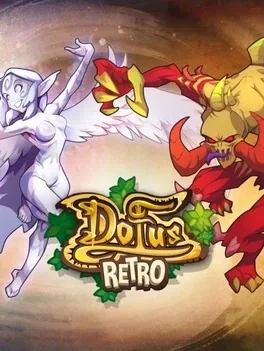
Dofus Retro is a new server option for Dofus released in 2019. The goal of Retro is to let players experience Dofus as close as possible to what it was before the graphical overhaul that came with 2.0. Certain players have a very special affection for Version 1.29 of the game DOFUS. That's why there are new servers allowing them to rediscover the game as it was almost ten years ago. Two 1.29 servers - Eratz and Henual - have always persisted. Historically, Ankama kept them so they wouldn't be unfairly disadvantaging their Latin American players, whose computers may not necessarily have been able to keep up with the performances required to enjoy DOFUS 2.0 to the fullest. Now, all of their players can enjoy it simply by subscribing.