
Warrior Blade: Rastan Saga Episode III


Buy
Part of collection:
Rastan
(last 3 games)
A four-player fighting game developed by Saffire for the Xbox, PS2, and GameCube. Its gameplay drew comparisons to Power Stone, though not many favorable ones.
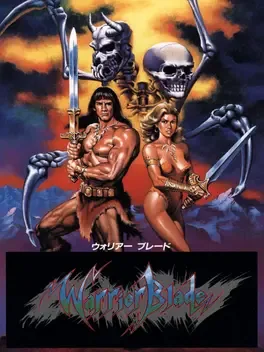
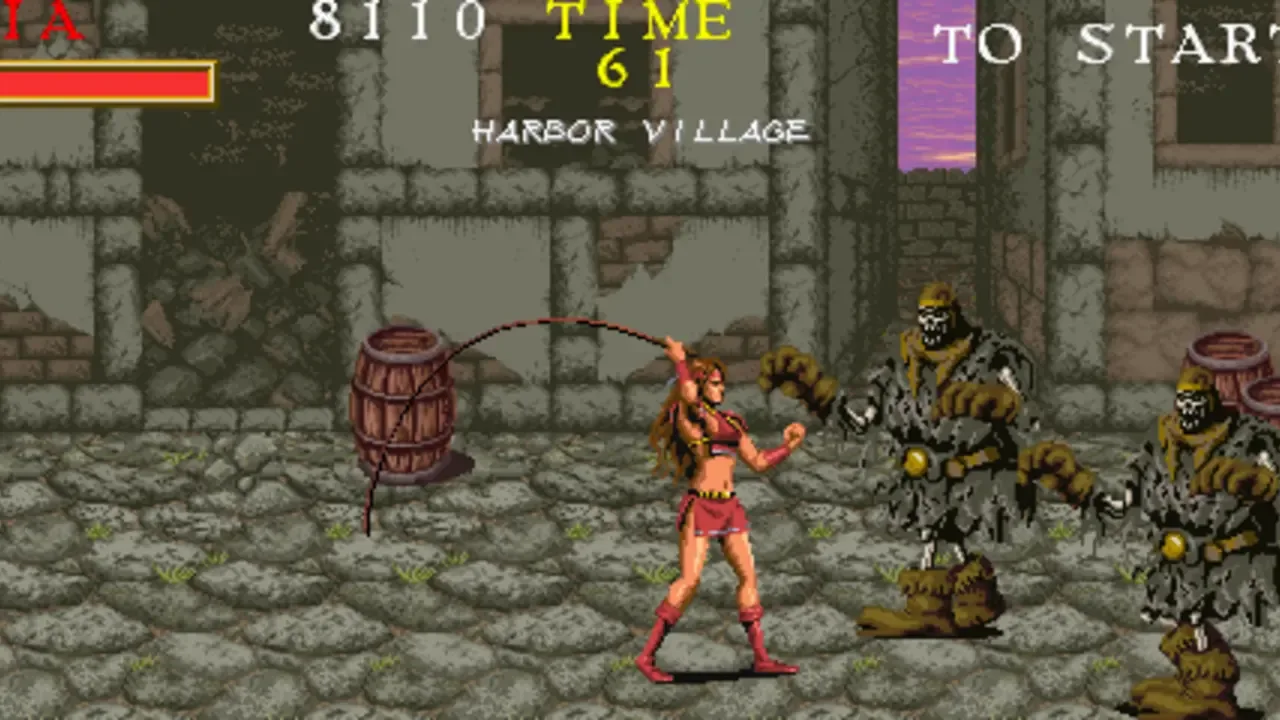
Warrior Blade in the final game in the Rastan series by Taito. Unlike the Previous two games, Rastan III is a beat-em-up.
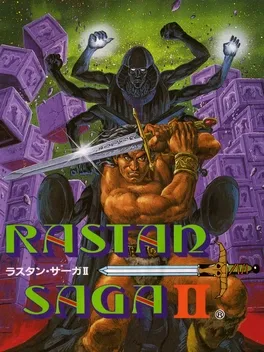
Rastan Saga 2 is the sequel to Rastan, containing the same hack-em'/slash-'em gameplay as the original. You are a warrior who must get through a number of levels, and trying to collect gems which can only be obtained by defeating the end-of-level bosses. Collecting power-ups along the way awards you with extra life or better weapons.
Could be interesting
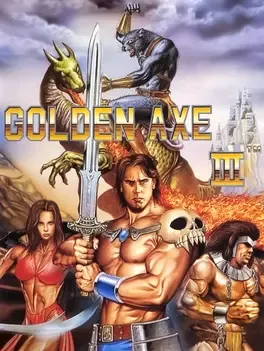
Chaos is spreading across the land once again as the Prince of Darkness arises to conquer the world. To stop him and retrieve the legendary Golden Axe, four heroes step forward to accept the challenge.
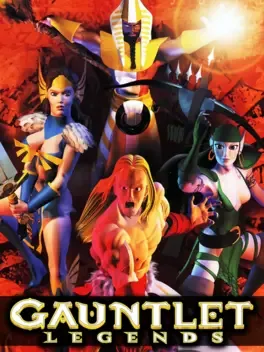
Gauntlet Legends is an arcade game released in 1998 by Atari Games. It is a fantasy themed hack and slash styled dungeon crawl game, a sequel to 1985's popular Gauntlet and 1986's Gauntlet II and marks the final game in the series to be produced by Atari Games. Its unusual features for an arcade game included passwords and characters that could be saved, enabling players to play over the course of a long period.
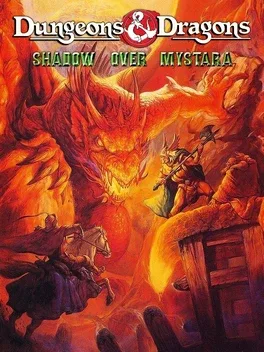
Shadow over Mystara is a side-scrolling beat-'em-up with role-play elements that make it stand out from other similar games released at the time. In addition to the original four heroes found in its predecessor, Dungeons & Dragons: Tower of Doom (Cleric, Dwarf, Elf and Fighter), Shadow of Mystara adds a Thief and a Magic-User to the selection. Furthermore, with the inclusion of two separate versions of each character's sprite set, the game allows up to two players to select the same character (in Tower of Doom each of the characters could only be selected once), effectively giving the game 12 "different" characters to choose from. The two Clerics and two Magic Users also have subtle differences within their spell books. The controls are using four buttons: Attack, Jump, Select (brings up a small inventory ring around the character allowing the player to choose what item is set in the Use slot) and Use. The Cleric, Elf and Magic-User also have two extra rings for their spells, with the Jump button used to switch from ring to ring. While the game uses the same kick harness as the previous game, the Select and Use buttons are reversed. Shadow over Mystara also introduced a selection of special moves which are executed by moving the joystick and tapping the buttons in certain combinations, in a way similar to the Street Fighter series. The characters (except for the Magic-User) have a Dashing Attack as well as a Rising Attack which can be used to combo monsters or even juggle them in the air. Most characters (again, with the exception of the Magic-User and also Cleric) also have a Megacrush, a move common to nearly all of Capcom side-scrollers, which damages all enemies standing close enough to the character but in turn also damaging the player themselves.
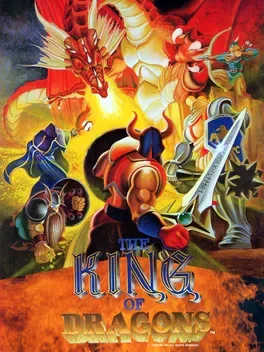
The game has 16 levels, though many are quite short. Much like Capcom's Knights of the Round, King of Dragons features an role-playing video game-like level advancement system. Points scored for killing monsters and picking up gold count towards experience, and the character gains levels at regular intervals. With each level, the character's health bar increases, other attributes such as range improve, and the character also becomes invulnerable for a few seconds. Along the way, different weapon and armor upgrades for each character may also be picked up. King of Dragons features a simple control system that consists of a single attack button, and a jump button. By pressing both buttons, the character unleashes a magical attack that strikes all enemies in screen (its strength varies according to the character used) at the expense of losing energy. The fighter, cleric and dwarf can also use their shield to block certain attacks by tilting the joystick back right before the impact. This is one of the many Capcom games to feature the yashichi power-up item. There are three such power-ups hidden throughout the game, each giving the player an extra continue.
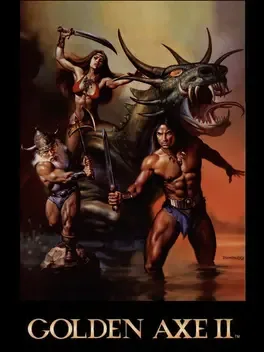
The Lord of Darkness, Dark Guld, has arisen again. Wielding the famous Golden Axe, he has destroyed entire countries with his evil clan, forcing the world into chaos. Once again, three brave warriors stand up to face the oppressors, and won’t rest until the Golden Axe is returned to its rightful place.
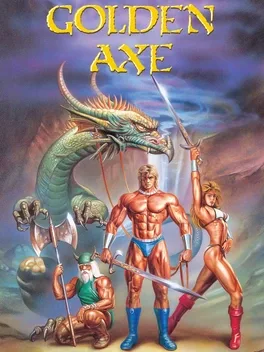
Progress is made through the game by fighting through Death Adder's henchmen, including men armed with clubs and maces, skeleton warriors, and knights. Players are able to attack using their weapon, jump and cast spells that hurt all enemies on the screen. The force of this magic depends on the number of "bars" of magic power currently available. The bars are filled by collecting blue 'magic potions' attained by kicking little sprites who then drop the potions. These sprites appear during regular levels and during bonus stages in between levels. The male warrior Ax is able to cast earth spells. The dwarf Gilius, casts lightning spells and the female warrior Tyris casts fire magic. Each character has a different number of maximum magic bars and varying ranges of attack. Various steeds known as bizarrians are found in the game. These can be ridden when the enemy rider is knocked off, or if one is found dormant. The least powerful steed is known as the Cockatrice, which can be used to knock down enemies with a swipe of its tail. The more powerful dragon, which can either shoot fireballs or breathe fire, is found later in the game.
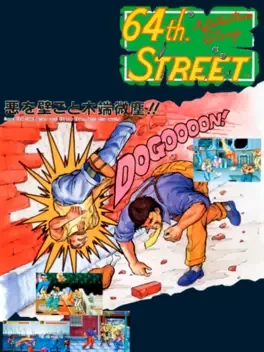
Players One and Two start with the two selectable protagonists, Rick and Allen. Each private detective uses different fighting styles, attempt to solve cases by beating up each criminal they encounter. Lots of special items can be found by throwing enemies into the background and breaking things, typical of this popular genre in the 1990s arcades. Along the way they are harangued by all manner of thugs and toughs, whose costumes range from 1980s hip-hop wear to stereotypical pirates. The bosses are tough by way of strange special attacks.
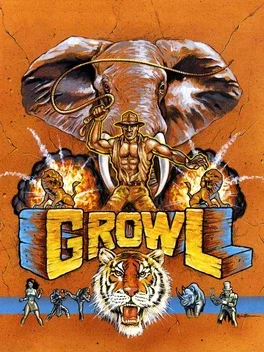
The player begins the game by choosing from one of four different forest rangers, each with a different amount of health, attack strength, and jumping height. The game's controls consists of an eight-way joystick for moving the character and two action buttons (attack and jump). The player can perform a variety of different attacks (punches, kicks, and finishing blows) depending on the position of an enemy. By pressing both buttons while surrounded by enemies, the player can perform a special attack that strikes every enemy around him. By pressing both buttons while holding the joystick upwards, the player will perform a longer jump. The player can procure weapons by destroying barrels and wooden crates or disarming certain enemies. There are a total of eight weapons which can be obtained: three melee weapons (a pipe, a sword and a whip), two throwing weapons (knives and hand grenades), and three firearms (a pistol, a machine gun, and a rocket launcher). The barrels and crates can also be picked up and thrown at enemies as well. When the machine gun or rocket launcher runs out of ammunition, these are still wielded by the player as melee weapons. The pistol, on the other hand, is thrown by the player after all of its bullets are used. The player can drop his current weapon by pressing down and attack while wielding it. If a weapon lies on the ground after a certain period, it will vanish completely. There are seven regular stages (called rounds) and a bonus game, for a total of eight stages. The locations include a city, a moving train, a boat, a jungle, a cavern, and the hideout of the poachers. There are six types of enemy characters throughout the game, excluding the final boss (who has two forms). There are also animal helpers that will help out the player after they're rescued from a poacher, such as an eagle, a herd of deer, and an elephant.
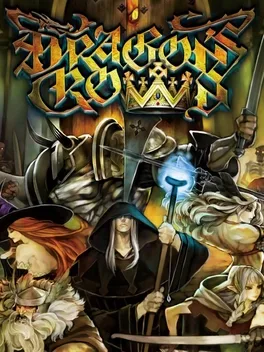
Dragon's Crown is a multiplayer hack-and-slash beat'em up game with breathtaking visual style, a design built around cooperative play, epic boss fights, and the ability to discover a new adventure in every play session. Developer Vanillaware deftly marries stunning hand-drawn and animated art work with deep, action-packed hardcore gameplay. Dragon's Crown allows up to four players to team up locally or online to clear out monster-ridden dungeons, discover precious treasure, and destroy awe-inspiring bosses. Its unique, highly replayable design means that every time players can boot up and log on, they can expect a different experience. Unparalleled in their unique style, Vanillaware painstakingly hand-paints every detail, be it a blade of grass or the scales on the game's impressive dragons. The game becomes a lush, vibrant storybook come to life when everything starts to animate in gorgeous full HD.
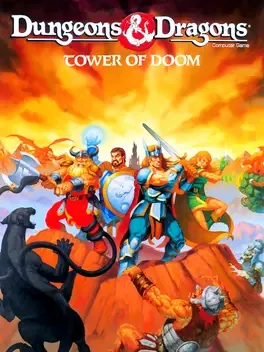
Tower of Doom is a side-scrolling arcade game featuring four different characters (cleric, dwarf, elf, fighter) fighting iconic Dungeons & Dragons monsters. Bosses include a troll that regenerates unless burned, a large black dragon, the dreaded Shadow Elf (Mystara's equivalent of the drow), a beholder, the optional superboss Flamewing (a great wyrm red dragon) and the final boss Deimos (an archlich). At points in the game the players are presented with a choice of paths to take to continue progress. Each path goes to a different area, and it is impossible to visit every area in a single play. The gameplay is more technical than the average on beat'em up games. In addition to the usual basic attacks and jumping it includes blocking, strong attacks, turning attacks, dashing attacks, crouching and evading. It also requires the use of careful tactics, as most enemies have the same abilities as the heroes and can out-range them, too. Daggers, hammers, arrows and burning oils can be used as throwing weapons, and many enemies have similar weapons. Spells can be used by means of magical rings or by the two playable spellcasters (a cleric and an elf).